
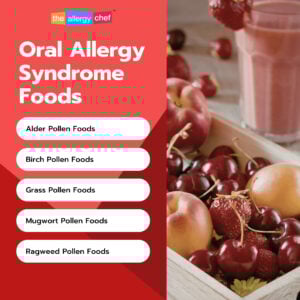
Today we’re going to take a look at all things Oral Allergy Syndrome (OAS), now called Pollen-Food Allergy Syndrome (PFAS). If you only need the oral allergy syndrome chart, click here, and I’ll email it to you.
My chart includes information on individual pollens, as well as a visual chart that encompasses all 5 of the pollen allergy foods so you can see the overlap between them.
I want to say this upfront, loud and clear. Anaphylaxis happens with OAS in less than 5% of cases. Some doctors like to say it never happens, but we all know that no two people are the same and in the free-from community, there are no absolutes.
What is Cross Reactivity
Now, let’s take a look at cross-reactivity and what it is exactly. In simple terms, this is how cross-reactions work:
- You’re allergic to mugwort pollen, sunflower, tomato, cabbage, and peanuts.
- Your immune system knows what those plant and food proteins look like.
- You eat something that has a protein structure that “look similar”, your immune system is “confused”, and you have a reaction.
- The food with similar proteins is something you’re not allergic to, however, because the proteins looked similar enough, your immune had a reaction.
Another way to think about this is a case of mistaken identity. It’s almost like when you glance and see someone you think you know, only to do a double take and realize you have no idea who they are.
Oral Allergy Syndrome (OAS), Now Called Pollen Food Allergy Syndrome (PFAS)
Oral allergy syndrome, now called pollen food allergy syndrome, is a special type of food allergy. As the name implies, the allergic reactions happen in the mouth (oral). In fact, the fact that most of the allergic reactions are limited to the mouth and throat are what makes this type of food allergy so unique. It’s also why some doctors don’t always make the connection right away.
In easy to understand terms, here’s how oral allergy syndrome works:
A person has a mugwort pollen allergy and needs to avoid a specific list of foods because the proteins in said foods “look similar enough to the mugwort pollen” to their immune system that it causes a reaction. They can experience food allergy-like symptoms when consuming foods related to mugwort.
This is cross-reactivity, however, not every person with pollen allergies manages pollen-food allergy syndrome. In almost every OAS/PFAS patient, all allergic reactions occur above the collar bone, and mainly in the mouth and throat. In some rare cases, the reaction happens outside of this scope, but it’s still OAS.
Many OAS/PFAS patients are able to tolerate the cross-reactive foods if they’re well cooked first, as this denatures the protein so their immune system can “clearly see” that this isn’t the environmental pollen, but something else.
No Two People are the Same
When it comes to an immune system being “confused”, each person can have a different experience and allergic response.
For some, there’s a threshold involved, and they may be able to eat some raw fruits and raw vegetables that are known to be cross-reactive, and so on. The allergic reaction varies from person to person, but there are some common reactions with oral allergy syndrome which I’ve cover further down in this article.
Not Everyone Needs to Avoid Specific Foods (and safe foods will differ)
Not everyone who has a pollen allergy needs to avoid foods related to said pollen. In fact, only someone managing oral allergy syndrome/pollen-food allergy syndrome needs to avoid the pollen related foods.
Even though these patients can experience food allergy-like symptoms when consuming foods related to the pollen, it’s important to know that reactions and safe foods will differer patient to patient.
Allergy Season & Pollen Counts
When managing OAS alongside environmental allergies, it’s important to keep a close eye on pollen counts in your area each year if you’ll be consuming foods related to what you’re allergic to. Many people have reported that their pollen food allergy syndrome symptoms are worse when there are higher pollen counts and they’re consuming cross-reactive foods.
During pollen season, you’ll also want to be aware of the wind in your area. For some people, keeping windows closed on high wind days is especially helpful.
Remember, no two people are the same and in rare cases, patients can experience more severe allergic reactions, especially with continued exposure to trigger foods. Additionally, not everyone with oral allergy syndrome can consume food triggers, even when they’ve been cooked or peeled.
You can read more information about OAS/PFAS in this article from Allergic Living, and this helpful info from the Allergy Foundation of America.
Pollens Involved with Oral Allergy Syndrome/PFAS
There are five specific pollens at play where OAS is concerned:
For each pollen, there are a list of potential cross-reactive foods. These foods can cause allergy-like symptoms to “random” things you may eat. Further down in this article you’ll find a list of foods that have the potential for a cross-reactive reaction, based on the pollen. If you’d like a more thorough compilation of foods to avoid, be sure to download my OAS guide. My guide includes information from several major institutions and experts in the field.
Should you find yourself reacting to different foods outside of the scope of the pollen you’re allergic to and oral allergy syndrome, make an appointment with your allergist. You’ll want to check for a latex allergy (which also comes with cross-reactivity), as well as straightforward IgE mediated food allergies.
Common Symptoms of Oral Allergy Syndrome/PFAS
PFAS/OAS symptoms tend to have a limited scope, and rarely does that include a severe allergic reaction such as anaphylactic shock (documented in less than 5% of cases).
However, what makes OAS so incredibly unique is that most of the allergic reactions are limited to the mouth and throat. Additionally, the reactions generally happen when consuming raw fruits and vegetables (I’ll cover this more further down). The allergic reaction varies from person to person, but there are some common reactions seen with oral allergy syndrome, listed below.
Whilst serious reactions that lead to anaphylactic shock are rare with OAS patients, reactions should still be taken very seriously.
This is by no means an exhaustive list of symptoms, however, these are commonly seen in those with OAS. Remember, no two people are the same. You may experience something not on this list in relation to PFAS such as trouble breathing, or symptoms outside the scope of your mouth and nose.
The most common symptoms of OAS/PFAS include:
- Chronic Sore Throat
- Generalized Mouth Discomfort
- Hives Around Mouth
- Hoarseness of Voice
- Itchy Mouth or Itchy Lips
- Chronic Runny Nose
- Scratchy Throat
- Sneezing
- Swelling of the Mouth, Lips, Throat, and/or Tongue
These oral symptoms can increase in severity for some people during high pollen count years, but also if they continue to eat the food (even when peeled or cooked). Be sure to keep a detailed food journal as you go through food trials, should you choose to eat cross reactive foods.
Remember, severe symptoms tend to be rare, as is a life-threatening reaction. Should you notice an increase in symptoms, stop any food trials (or consuming foods with cross-reactivity) and work with your medical care team so they can give you the best advice on next steps (and for possible further testing).
OAS and Children
It will be a lot more difficult to diagnosis OAS in young children, as they don’t have the same language skills as older children. Since traditional allergy testing isn’t always applicable, you’ll want to take note if your child complains when eating raw foods.
Keep a journal, and reach out to their care team. You should also pause feeding them foods that cause complaint. Note: complaint as in, “my throat is spicy”, or, “this food hurts my mouth” not, “this doesn’t taste like ice cream”.
The journal will be worth its weight in gold 10000x simply because it will be easier for the doctor to review the list and make possible connections to pollen proteins.
Additional Oral Allergy Syndrome Information & Resources
- Alder Pollen Allergy Information
- Birch Pollen Allergy Information
- Grass Pollen Allergy Information
- Mugwort Pollen Allergy Information
- Ragweed Pollen Allergy Information
 |
 |
 |
 |
 |
 |
Cooking Raw Fruits and Raw Vegetables
When some patients with OAS peel the food and/or cook the foods related to the pollen they’re allergic to, they self-report that they’re able to eat the food without having an allergic reaction. This is attributed to the denaturing of the protein. Once cooked, the similar proteins that normally cause the allergic reaction “look different enough” to the immune system and it now knows that the food is fine.
For example, a patient may have an OAS reaction to raw apple, but be perfectly fine eating applesauce, and that’s because the food proteins no longer look like pollen proteins to their immune system, and the result is an elimination of the allergic symptoms.
Whilst heat-based cooking denatures and sometimes destroys proteins in food, this isn’t the case for everyone with OAS. Also keep in mind that tree nuts don’t break down the same as a fruit vegetable during heat-based cooking, and these should be approached with great caution.
In some individuals, cooking and peeling eliminated the reaction, whilst in others it only reduced the reaction. Personally, I’m a fan of no reaction, and that’s because I think about the long term consequences of continued exposures and reactions. You’ll have to decide what’s best for you and your household.
Helpful Ingredient Substitutions & Swaps
If you need to eliminate any of these specific ingredients from your diet, here are fantastic articles that share creative workarounds.
- Apple Substitutes
- Banana Substitutes
- Carrot Substitutes
- Celery Substitutes
- Legume Substitutes (Beans, Peas, Lentils)
- Nightshade Substitutes
- Tomato Substitutes
Oral Allergy Syndrome Chart
Here’s a list of foods known to be cross reactive with the five major pollens associated with pollen-food allergy syndrome. On the website, it’s harder to format a chart, so if you’d like a printable oral allergy syndrome chart, click here and I’ll email it to you.
My guide is not only the agreed upon foods to avoid (listed below), but a comprehensive compilation of what all the experts have said can cause symptoms. I’ve also put together a handy colour coded five pollen chart so you can see where each food lands.
Alder Tree Pollen Cross Reactive Foods
These are the foods all major institutes and specialists agree you may need to eliminate for OAS management.
Remember, you can download the chart formatting if a list isn’t how your brain likes to see the information.
Birch Tree Pollen Cross Reactive Foods
- Almonds
- Apple
- Apricot
- Avocado
- Banana
- Beans in General
- Carrot
- Celery
- Cherries
- Chicory
- Coriander/Cilantro
- Cumin
- Dill
- Fennel
- Fig
- Green Pepper
- Hazelnuts
- Kiwi
- Lentils
- Mango
- Nectarine
- Parsley
- Parsnip
- Peaches
- Peanut
- Pears
- Peas
- Plums
- Prunes
- Potato, White
- Soy Bean
- Strawberry
- Tomato
- Walnuts
- Wheat
Grass Pollen Cross Reactive Foods
There are more potential foods to avoid, which are covered in my guide. These are the foods that are agreed upon by most institutions:
- Fig
- Kiwi (green, gold, and red kiwis)
- Melon (cantaloupe, honeydew melons, etc.)
- Orange (all types of oranges including navel, cara cara, blood oranges, etc.)
- Peanut
- Potato, White
- Tomato (heirloom tomatoes, cherry tomatoes, roma tomatoes, etc.)
- Watermelon
Mugwort Pollen Cross Reactive Foods
Warning: In addition to these three foods, it’s possible you may need to avoid some herbal teas (including chamomile), peanut, kiwi, potato, honeydew melon, cantaloupe, watermelon, hazelnuts, oregano, basil, thyme, carrots, fennel, parsley, and many more.
I’m not exaggerating when I say the potential list is considerably longer, based on my compiled data of available information, so be sure to download the chart.
Ragweed Pollen Cross Reactive Foods
- Artichoke
- Banana
- Cantaloupe
- Chamomile Tea
- Cucumber
- Hibiscus
- Honeydew
- Melon
- Pepper
- Squash
- Sunflower Seeds
- Watermelon
- Zucchini (courgette)
Answering Your Questions About Oral Allergy Syndrome
Will allergy shots cure me of oral allergy syndrome?
No. Allergy shots are designed for conditions such as hay fever and seasonal allergic rhinitis. However, as I love to say, no two people are the same. Some studies are starting to suggest that allergy shots can help in some patients in the reduction of symptoms (not a cure).
I suggest talking with your doctors, and even getting a second opinion, to find out what’s possible for you, as there are many factors they’ll need to consider.
Are there other pollen allergens that can cause an OAS reaction?
I have yet to come across any evidence or studies that suggest pollens outside of the five I’ve listed can cause OAS symptoms. That may change in the future, but for now, it’s just the five.
If I have severe seasonal allergies, does that mean I will have oral allergy syndrome?
No, there’s no guarantee that you’ll have pollen-food allergy syndrome, no matter how severe your seasonal allergies are. However, if you notice you’re having allergy-like symptoms to fresh fruits and fresh vegetables, talk with your healthcare provider (and also keep a detailed food journal).
They can help you assess what you react to and if it could be oral allergy syndrome. Alternatively, they may have you tested for IgE food allergies if you’re reacting to foods outside of the scope of the pollen(s) you’re allergic to.
Will allergy testing confirm if I have oral allergy syndrome?
Whilst both skin prick tests and blood tests may be used to help determine your allergies, unfortunately, they aren’t always accurate when oral allergy syndrome is involved. In some patients, their skin prick test is positive to the foods that cause their oral allergy syndrome allergic reactions. In other patients, they get false negatives from their allergy test results (both skin test and blood test).
If your tests are inconclusive, you may be asked to do an oral food challenge. That’s where you eat the food in your doctor’s office and they monitor you for a reaction. During a challenge, your heart rate will usually be raised as well to ensure it’s a true pass. However, know that you can decline a challenge and simply avoid eating the food.
What it will all boil down to in the end is you. If eating a particular food causes you to feel unwell, stop eating the food, even if you don’t have a test to prove you’re allergic to said food.
Can I experience anaphylactic shock if I have food allergies related to my pollen allergies?
It’s very rare that someone with oral allergy syndrome would experience anaphylaxis, however, it’s not impossible. In some cases, the swelling of the throat is so severe the patient can’t breathe. Other severe reactions can include difficulty breathing from chest tightness, and other forms of severe swelling. In some cases, the patient is prone to having severe allergic reactions, and that can carry over to oral allergy syndrome reactions.
Your healthcare provider can review your medical history and advise you on what you’re most likely to experience, however, you should always be prepared, be cautious, and take your diagnosis seriously. In some patients, continued exposure to known allergens elicits a more severe response/reaction with each exposure.
Now that you know that, have hope in this: most individuals with oral allergy syndrome never experience severe adverse reactions. Some even report that their allergic symptoms tend to be mild symptoms, though, that’s a subjective term. I just don’t want you walking around, scared to death of something that may never happen to you. Hence, work with your healthcare provider, as they can give you a lot of insight.
Will taking digestive enzymes help with oral allergy syndrome?
Unfortunately, no. Digestive enzymes help break down foods as they’re in the stomach and as they move through the intestines. Those with oral allergies wouldn’t have the reactions neutralized by the digestive enzymes.
On the flipside, if you have digestive issues, the digestive enzymes could still have some benefit for you, just not where the oral allergies are concerned.
Can OTC allergy medicine eliminate OAS symptoms for my birch and grass allergies?
Unfortunately, no. OTC allergy medicine is for the management of seasonal allergy symptoms (coughing, wheezing, general itchiness, etc.). I have yet to see any evidence that suggests that it can be used for the treatment of oral allergy syndrome.
Is it possible to experience nausea or abdominal pain with oral allergy syndrome?
This is a great question. Yes, it is possible, however, it’s a lot less common. One of the hallmarks of oral allergy syndrome is that almost all reactions happen in the mouth and throat. For some individuals, it’s above the collar bone, as they can get headaches as well.
It’s more rare for a patient to experience symptoms below the collar bone, however, that doesn’t mean it’s impossible. It’s always important to remember that no two people are the same.
However, I’ll also add this. If you regularly experience symptoms outside of the standard scope of oral allergy syndrome, ask your medical team to confirm that you don’t also have a specific IgE food allergy as well. It’s possible to have both conditions, so you’ll want to know how you might respond to an allergenic food.
Is oral allergy syndrome a true food allergy?
Whilst one could argue that it’s a mild form of food allergy, the truth is that no, oral allergy syndrome is not a true allergy as defined by a reaction that’s elicited by IgE antibodies.
That’s the key here: the mechanism that causes the reaction. A good example is a food intolerance. It’s not IgE mediated, but it can cause a lot of physical pain in some people, just not anaphylaxis which is IgE only.
Even though it’s not a true IgE food allergy, the reactions shouldn’t be taken lightly. In some patients, reactions can increase in severity if cross-reactive foods are still consumed.