

It’s time to talk about all things avocado allergy. Managing an avocado allergy sounds easy on the surface, however, about a decade ago, it became infinitely harder.
The biggest reason for this change: avocado oil is the cool new kid on the block that everyone is in love with and it’s used across a wide range of food products.
So, today I’m going to take you through all the facts and by the time you’re done with this article, you’ll feel well equipped to manage your avocado allergy, and know all the ins and outs of avoiding the well loved fruit.
Let’s start with food allergy basics, then we’ll move on to how you can avoid avocados, how they’re used in food, as well as cross reactive allergenic conditions.
This article covers a lot of ground so be sure to use the table of contents to jump around as you see fit.
What is an Avocado
An avocado is a large edible fruit with a pear shape and green creamy flesh that has a butter-like consistency when ripe.
Primarily grown in California, Mexico, and South America, avocados are picked unripe, then continue to age and ripen. In fact, if you’re allergic to corn like I am, you know that most avocados are sprayed with a ripening gas that’s corn derived.
Avocados are grown in warmer climates, but are pretty durable and can easily be shipped and transported to colder locations. They’re part of the Lauraceae family, and botanically are classified as a single seed large berry rather than a drupe or stone fruit.
Other notable plants in the Lauraceae family include cinnamon, bay, and sassafras.
Avocados have culinary uses in both sweet and savory recipes, plus, there are many ways to use avocado oil, which we’ll cover further down in this article.
What is a Food Allergy?
A food allergy is a response by your immune system that’s triggered by a protein that your body sees as a threat. This is not the same thing as a food intolerance (sometimes called a food sensitivity), or an autoimmune disease.
If you suspect you have a food allergy, ask your healthcare provider/main MD to refer you to an allergist for allergy testing where blood tests and/or a skin prick test can be ordered to determine if you have an allergy. Know that tests are not 100% accurate, but are still a good diagnostic tool.
A “true” food allergy is IgE mediated, and the immune system usually elicits a reaction within immediate ingestion to four hours. Outside of that window, it’s usually suspected that you have a food intolerance. In addition to immunoglobulin e, there are 4 other Igs that play a role in food intolerance and histamine reactions.
There are some types of allergenic diseases that are “true” food allergies and the reactions happen outside of the four hour window. Additionally, a person can have a more rare or complex case and suffer from delayed reactions (which can still be “true” food allergies).
Contact & Airborne Reactions
In some patients, they have what’s called contact or airborne allergy as well. This tends to be more common in those with a tree nut allergy or peanut allergy, and is very rare in those with an avocado allergy.
In their case, a reaction can be triggered by touching avocados, or by breathing in its particles (like when cooking or baking).
Food allergies can be life threatening and should always be taken seriously. Work with your allergist and healthcare providers to create an action plan that will meet your needs.
Avocado Allergy Symptoms
Food allergy reactions can vary among patients, as no two people are the same. Some allergy symptoms of an avocado allergy include:
- Swelling of the Lips
- Swelling of the Tongue
- Swelling of the Throat
- Itchy Mouth and/or Throat
- Tingling of the Mouth, Lips, or Throat
- Shortness of Breath
- Difficulty Breathing or Asthma Symptoms
- Wheezing
- Skin Rash and/or Severe Redness of the Skin
- Itching
- Hives
- Racing Heart Rate
- Decreased Blood Pressure
- Impending Doom/Dread
- Dizziness
- Fainting/Loss of Consciousness
- Severe Stomach Pain
- GI Distress or Abdominal Pain
- Nausea
- Vomiting (including projectile vomiting)
- Diarrhea
- Blood in Stool
These symptoms are more the more severe symptoms of the allergic reaction spectrum, and can indicate anaphylaxis. It’s critical that if you see these avocado allergy symptoms, you recognize that this is a medical emergency and you need to seek immediate medical help.
If you have a known allergy, follow your action plan including the use of an epipen if you have one, or prescribed antihistamines.
Milder reactions can include a persistent cough, runny nose and/or sneezing, eczema, persistent congestion, allergic rhinitis (inflammation of the nose membrane), mild skin reaction, and more. However, milder symptoms don’t mean you should let your guard down, or take your allergy less seriously.
Three Critical Points
There are hundreds of symptoms a person can experience during an allergic reaction, but it’s important to know three things about avocado allergy symptoms and allergic reactions:
- Not every reaction is anaphylaxis. People can have a “non-traditional” avocado allergy reaction to food (or have mild symptoms) and still be allergic to avocados.
- Should a person experience anaphylaxis, or you see signs of anaphylaxis, it’s important to seek immediate medical treatment (use your epinephrine auto-injector if you have one). When left untreated, anaphylaxis can lead to anaphylactic shock, which can cause death.
- Previous allergic reactions don’t predict future reactions (or the severity of future reactions). In some patients, continued exposure to known allergens can cause more severe reactions each time. This is why strict avoidance of allergens is so important.
How Kids May Talk About Food Allergies
A child may talk about a food allergy differently than adults. Many children will say things like “my mouth is spicy” or “there’s a frog in my throat”.
They’re trying to express what the reactions feel like to them with language or experiences that are familiar to them. Always take note of these types of statements from a child, as they can indicate a serious medical situation.
If needed, don’t hesitate to seek medical treatment, and be sure to ask your doctor for a referral to an allergy specialist.
You May be Asked to Do an Oral Food Challenge
A food challenge, sometimes called an oral challenge, is when an allergy patient eats a food they’ve tested as allergic to, or for a food where the results were inconclusive, under the supervision of their doctor and/or medical team. The goal of the challenge is to confirm the positive results or to determine if the patient isn’t allergic to the food.
There are several steps involved with a proper oral food challenge, including raising the patient’s heart rate to make sure a reaction doesn’t happen. If you’ve been tested for an avocado allergy, or other food allergy, you may be offered an in-office oral food challenge to ensure the test results are accurate. A lot of people wonder, is this a good idea, or a really bad idea.
Honestly, it depends. Let’s say you had a severe reaction to avocados in the last year, and that’s what prompted you to get tested. Since a reaction is already known, in that case, an oral food challenge would be a bad idea. On the flip side, let’s say you were diagnosed as allergic to cinnamon and spicebush after a panel was run alongside other foods.
Perhaps your allergist was concerned about potential reactions to other members of the Lauraceae plant family due to your unique medical history, and feels it’s in your best interest to challenge related foods. In that case, an oral food challenge could be very helpful.
How Challenges Can Help
Food challenges are also used to confirm if someone has outgrown an allergy (this is a lot more common in kids). For some kids, they’re diagnosed at an early age with really high numbers on their test results and the food(s) will be avoided for years.
During a checkup, their allergist may note that their numbers have decreased dramatically, and it would be safe to do a food challenge. Many food allergy parents are understandably nervous, and some choose to move forward with the challenge whilst others decide they’ll continue to avoid the food(s).
In some cases, an allergic individual may not be offered an oral food challenge by their allergist, even with a reduction in numbers, and that’s because of other risk factors (including a history of severe allergic reactions).
Know that food challenges are completely voluntary, and you don’t have to do anything you’re uncomfortable doing, nor do you have to subject your children to them. At the end of the day, do what’s best for you and your children.
How to Grocery Shop When Managing an Avocado Allergy
When it comes to shopping with an avocado allergy, know that food labels on products will always be your first line of defense. Avocados can hide in a lot of foods, which I’ll cover further down in this article.
You’ll want to grab a product and turn it over to the nutritional panel and usually near that, you’ll see a list of ingredients. Read them carefully and look for avocado. When there are are a lot of ingredients, use a finger to trace under the lines, which drags your eyes along, and ensures you don’t accidentally skip over a line.
If you see natural flavors, or other questionable ingredients, take a picture of the product. When you get home, email companies and find out about the products before purchasing them.
Note: In most commercial products, you’ll see Avocado Oil, as avocado flesh has limited applications.
The Biggest Tips I Can Give You
When you’re new, stick to basic foods (raw meat, seeds, fresh fruits & vegetables, basic grains like rice, legumes, etc.). The more basic the food, the less likely you’ll run into avocados.
The best advice I can give you: learn to cook and bake at home. Develop a passion for nourishing yourself and find joy in the kitchen. You can create a wide range of safe and delicious foods at home.
The 30% Group
The one thing you’ll want to know about yourself when it comes to shopping is if you can tolerate traces of avocados in your food. About 30% of people with food allergies self-report that they’re unable to eat foods that have been made on shared equipment with what they’re allergic to, due to these traces of allergens.
No matter what country you reside in, if shared equipment is an issue, you need to contact companies before purchasing pre-made items.

Avocado Labeling Information
Most regulating bodies require food companies to use plain language on the food labels (this is especially helpful with an egg allergy which we can talk about another time). What this means is that in the ingredient statement, you won’t see “Persea americana” on the label (the scientific name for avocados) but instead you’ll see “avocado”, “avocado oil”, or something along those lines.
Avocado oil and avocado extract have some use in bath, body, and cosmetic products (in addition to some food products). You’ll want to contact brands if you manage a contact allergy, or have concerns about applying avocado to your skin.
Avocado Free Diet Types
There are a few diet types that are free from avocados:
- Birch Pollen Free Diet
- Latex Free Diet (avocado is in the high cross-reactive group)
- Low FODMAP Diet
- Low Histamine Diet (strict)
- Low/No Oxalate Diet (avocado is in the moderate to high group)
- Nickel Allergy Diet
You’ll be able to find recipes online for all of these diet types, but you’ll be very hard pressed to find restaurants or pre-made foods for these diet types. There are some options for the Low FODMAP diet, but not a truck tonne.
If you manage an avocado allergy, along with other dietary restrictions, be sure to check out the Advanced Recipe Search on RAISE. You can mix and match over 100 filters for food allergens, food families, special diets, and much more.
Cross Reactivity
When it comes to avocados, they fall into several other categories of allergenic diseases. I won’t go into all of them, but the two I want to highlight are oral allergy syndrome, and a latex allergy.
In simple terms, this is how cross-reactions work:
- You’re allergic to avocados, kiwis, celery, and peanuts.
- Your immune system knows what those proteins look like.
- You eat something that has proteins that “look similar”, your immune system is “confused”, and you have a reaction.
- The food with similar proteins is something you’re not allergic to, however, because the proteins looked similar enough, your immune system readied the troops.
Another way to think about this is a case of mistaken identity. It’s almost like when you glance and see someone you think you know, only to do a double take and realize you have no idea who they are.
Oral Allergy Syndrome Connection
Oral allergy syndrome (OAS), now called pollen food allergy syndrome, is a special type of food allergy. As the name implies, the allergic reactions happen in the mouth (oral). In easy to understand terms, here’s how it works:
A person has a birch pollen allergy and needs to avoid a specific list of foods because the proteins in said foods “look similar enough to the birch pollen” to their immune system that it causes a reaction.
This is cross-reactivity, however, not every person with pollen allergies manages pollen-food allergy syndrome.
In almost every OAS/PFAS patient, all allergic reactions occur above the collar bone, and mainly in the mouth and throat. In some rare cases, the reaction happens outside of this scope, but it’s still OAS.
Many OAS/PFAS patients are able to tolerate the cross-reactive foods if they’re well cooked first, as this denatures the protein so their immune system can “clearly see” that this isn’t the environmental pollen, but something else.
Know the Pollens
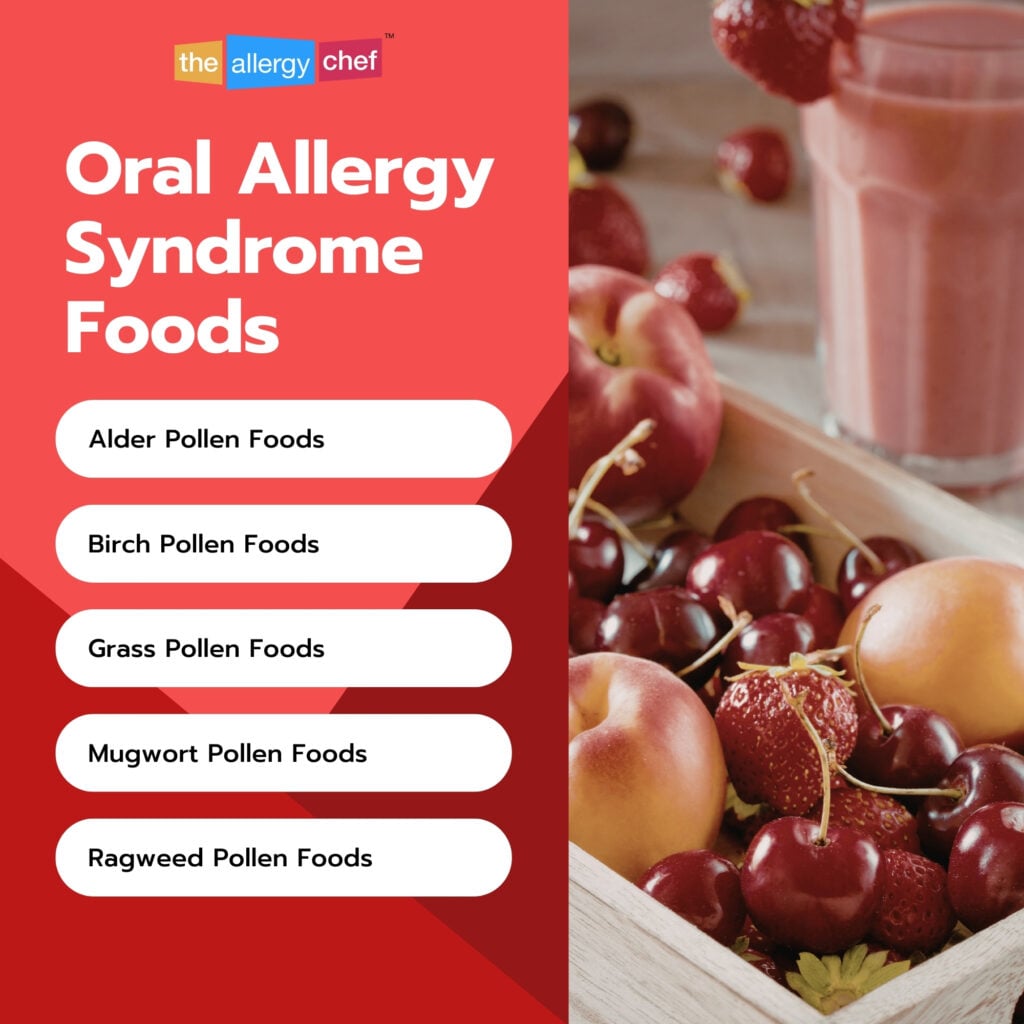
There are five major pollens at play where oral allergy syndrome (OAS) is concerned: Alder Pollen, Birch Pollen, Grass Pollen, Mugwort Pollen, and Ragweed Pollen.
In the case of avocado, it’s cross-reactive with birch pollen. If you’re allergic to birch, and seem to have allergy-like symptoms to avocados and other “random” foods, you may have OAS and should schedule an appointment with your doctor.
Other foods that can be cross-reactive with birch pollen include apples, bananas, carrot, buckwheat, dill, kiwifruit, peas, soy, tomato, walnut, and many more.
If you’d like to read more about OAS and see cross-reactive fruits and vegetables, check out this article here on my website.
 |
 |
Latex Allergy Connection
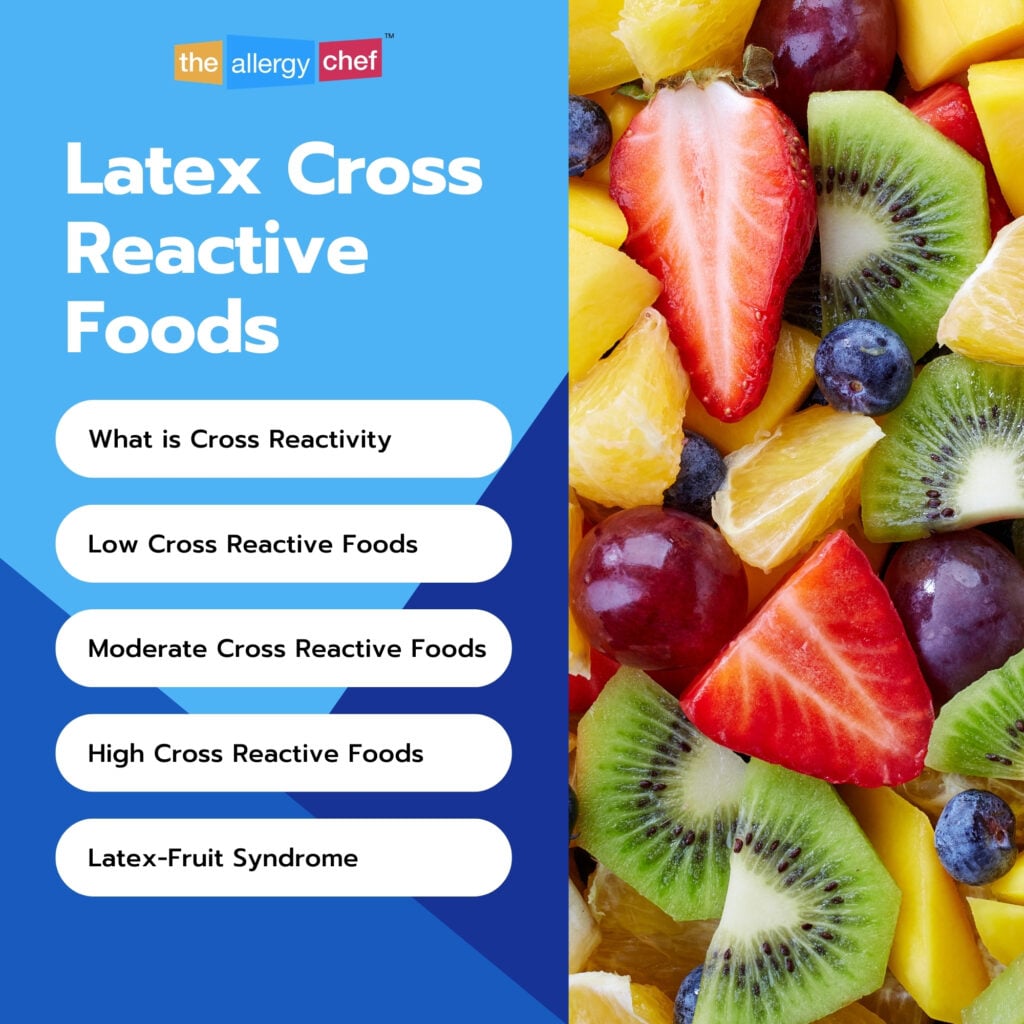
Many patients with a latex allergy have to eliminate foods that are cross reactive with latex. Foods fall into three categories: low cross reactivity, moderate cross reactivity, and high cross reactivity.
For example, common foods that are moderately cross reactive with latex include papaya, melons, potato, and tomato.
Avocado however, falls into the high cross reactive category. Other high cross reactive foods are banana, chestnut, and kiwi. If you manage a latex allergy, and need to eliminate moderate and high cross reactive foods, avocados are off the menu until your medical team can help you determine which foods might be good for an oral challenge.
If you’d like to learn more about a latex allergy and cross reactive foods, read this article.
Latex-Fruit Syndrome
Within the standard cross-reactivity for latex across the three categories, there’s also latex-fruit syndrome. These are specific fruits that are notoriously known to cause an issue for someone with a latex allergy. Some of the fruits in this category are:
- Fig
- Mango
- Passion Fruit
- Pineapple
- Orange
- Strawberry
Critical Cross Reactive Info
It’s important to understand that cross reactivity is hyper individualized, and there’s no allergy testing (skin testing or blood testing) that can accurately predict how you will respond to these foods.
Work with your medical care team, do food trials as needed, and keep a detailed food journal, and learn which foods are safe for you to consume, and what you’ll need to avoid.
Different Names and Parts of Avocados
There are a lot of usable parts of avocados, along with different forms of avocado, and you may see them on food packages. These are the names to be aware of:
- Avocado
- Avocado Extract (mainly used in bath and beauty products)
- Avocado Flesh
- Avocado Oil (taken from the flesh, not the pit)
- Avocado Pit (also called an Avocado Stone)
List of Popular Avocado Varieties
There are about 50 popular types of avocados, mostly grown in North and South America. Whilst there are more, the top 50 are what you’re most likely to see in grocery stores and farmer’s markets.
Each variety will have a different fat content, and primary use. Generally, avocados are rated for guacamole or snacking, with snack being a very loose term. Here are the most popular varieties of avocado:
- Bacon Avocado
- Fantastic Avocado (talk about a great name)
- Fuerte Avocado
- Hass Avocado (Also called Florida Hass and Haas)
- Joey Avocado
- Oro Negro Avocado
- Poncho Avocado (Also called Pancho, and is one of the most hearty varieties)
- Reed Avocado
- Russel Avocado
- Winter Mexican Avocado
Avocado Allergy: List of Foods to Avoid
When you’re managing an avocado allergy, know that there are foods that naturally contain avocado products. When you see these food products, you’ll know right away that avocados are most likely present.
- Avocado Fries
- Avocado Margarita
- Avocado Shake
- Cado Dairy Free Ice Cream
- Féroce
- Guacamole
- Guasacaca
- Jus Alpukat (an Indonesian drink, literally avocado juice)
- Specific Sushi: California Roll, Rainbow Roll, Seattle Roll (other types might have avocado, but these three styles specifically include avocado by default)
Hidden Sources of Avocados: List of Foods That Can Contain Avocado
This is not an exhaustive list. Avocados can be used in a wide range of applications, in both sweet and savory foods.
Avocado oil, along with natural flavours, will be the two biggest issues you’ll run into when managing an avocado allergy. The good news is that it’s rare that avocado will part of a brand’s natural flavour blend.
However, this means that you’ll need to call a lot of companies to confirm that their products are safe for you to consume.
Just because a product type is on this list doesn’t guarantee the presence of avocados (or the opposite). It means that you need to really, really, really read ingredient labels carefully and reach out to companies if there’s any doubt.
- AIP Paleo Foods
- Any processed food with a label buzzword/claim of “added fruits & veggies”
- Asian Rice Bowls
- Baked Goods (breads, buns, desserts, etc.)
- Bath & Body Products (makeup, toothpaste, soap, shampoo, skin creams, etc.)
- Candy (not nearly as present in chocolate, but can be present in other styles)
- Chips
- Condiments
- Crackers
- Crema (a specialty type of sauce that can contain avocado)
- Dairy Free Products (yogurt, ice cream, etc.)
- Deep Fried Foods (usually from the fryer oil)
- Desserts (all types including cake, cookies, hand pies, pastry, and everything else in between)
- Egg Free Mayo
- Fruit Snacks
- Health & Wellness Focused Products
- Ice Cream & Frozen Desserts
- Meat Marinades
- Meatballs
- Muffins
- Natural Flavors
- Packaged Snacks
- Paleo Products
- Poke Bowls
- Raw Vegan Cheesecakes
- Salad Dressings & Vinaigrettes
- Salads
- Snack Bars
- Sandwiches & Wraps
- Sauces
- Sausages
- Seed Oil Free Foods (growing trend, high use of tallow and avocado oil)
- Supplements (especially vitamins with a “fruit and/or vegetable blend” added to boost the nutritional value)
- Sushi
- Tacos
- Vegan & Vegetarian Foods (including meat alternatives)
- Veggie Chips & Veggie Straws
Natural Flavors Warning
Since avocado isn’t a major allergen, companies don’t need to disclose on packaging if it’s present in an ingredient such as natural flavor. Unfortunately, this term encompasses thousands of individual substances, chemicals, and compounds.
The only way to find out if avocados are present is to call the company and request the details. Explain that you have an avocado allergy and you need to know about each of the ingredients in their natural flavours.
Some brands will say things like “it’s proprietary”. If you run into that, walk away. Companies that can’t be transparent don’t deserve our support.
Bath & Body Warning
Avocado is commonly found in makeup and a random assortment of bath and body products (including natural perfume, lotions, and cosmetics). If you have a contact allergy, or you’re not comfortable applying avocados to your skin, you’ll need to take your time to find safe options.
In the meantime, you can start with a basic olive oil soap that’s only 3 ingredients and it gets the job done (yup, you can even use it as a shampoo). It’s not fancy, but it’s safe.
Eating Out at Restaurants with an Avocado Allergy
If you’d like to eat at a restaurant whilst managing an avocado allergy, you’ll have to do a lot of investigating before choosing to dine out. The biggest issue you’re going to run into: the hidden sources of avocados.
Avocado isn’t a spice like thyme, paprika, or marjoram, so it won’t be in a lot of places. However, it can easily be in a number of menu items due to avocado oil.
Even foods that don’t sound like they would contain avocados absolutely can, because if you’re at a low quality or mid range quality establishment, they’re not using top of the line, super clean ingredients. They’re using pre-made components that can contain natural flavors and so on. See the problem?
Now, that’s not to say that you can’t or won’t find an avocado free meal. You will absolutely find one. In fact, basic meat dishes will be your best bet because the raw meat will be free from avocados. However, you may need to get used to piecing together a meal from the menu such as simply seasoned steak + steamed rice + a side dish of steamed veg.

Types of Restaurants to Explore
The absolute safest option will be an expensive farm-to-table restaurant directly on a farm where everything is made from scratch. In those environments, they control a lot of moving parts, and have so much control over the ingredients and can accommodate individuals with food allergies.
Outside of that, there isn’t a single cuisine that will be naturally avocado free. Paleo restaurants might be able to serve you a little easier, but avocados will still be present (especially in sauces and it may be their primary cooking oil since it isn’t a seed oil).
Steak houses are another good option, as they should be able to season a basic piece of meat and cook it in a clean pan for you. I’d be on the lookout for restaurants that advertise clean ingredients, and organic ingredients. However, that’s a double edged sword because they’re also more likely to use avocado oil as a cooking oil. Yet, they won’t have as many products that contain natural flavors etc. to work around. As long as they have clean pans and alternative cooking oils and fats, you should be OK.
Italian restaurants might get you a little more mileage, as well as pizza shops. These establishments are less likely to have lots of avocado on site. Additionally, an Italian restaurant (especially one of quality) is more likely to use olive oil.
Cross Contact and Cross Contamination
Cross-contact and cross-contamination are not the same thing. When talking with food professionals, it’s important that you use the correct terminology. Cross-contamination refers to pathogens (e. coli, etc.), and cross-contact refers to allergens.
Please read the article on this page to learn more about cross-contact, and how you can work towards preventing it.
Deep Fryer Warning
If the fryer uses avocado oil, or fries any food that contains avocado, the fryer is contaminated with avocado.
Avocado Substitutes & Avocado Alternatives
The great news about removing avocados from your diet is that you won’t run into too much trouble finding great substitutions. Here are a few options to get you started.
Avocado Substitute (General)
To replace avocados, you have to look at high fat + very mild flavoured foods. Here are several combinations that you can use as a base:
- Cashew + Oven Roasted Japanese Sweet Potato (specifically Japanese)
- Cashew + Oven Roasted White Carrots
- Cashew + Oven Roasted Butternut Squash
When using this substitute style, you’ll oven roast the veg on parchment paper, without oil. When it’s easy to pierce with a fork (fork tender), pull the tray out of the oven and cool. Next, blend with cashews and just enough milk of choice to bring it together. Use the milk sparingly, since the goal is thick and creamy, not a smoothie. Finally, season with a pinch of sea salt or smoked salt. The end result is a creamy, rich “spread” with low flavour, that can be used in place of avocado.
If you opt for the squash option, use a small amount of squash, as to not have a forward flavour of squash.
You can use this concept and even make a faux avocado free guacamole. Use the sweet potato base, add diced onions, diced tomato, spices, and suddenly you’ve got a tasty dip with guacamole vibes.
Avocado Oil Substitute
For stove top cooking and oven roasting, olive oil is the best 1:1 substitute for avocado oil. They have a similar profile, and will perform nearly identically.
For frying, tiger nut oil (tuber, not a tree nut) is one of the best substitutes for avocado oil. The next best choice will be organic sunflower oil.

Avocado Substitute in Salad
Replacing avocado on a salad really comes down to texture.
Avocado Substitute in Sushi
A great way to replace avocado in sushi is to use edamame (soy). You’ll cook the edamame according to the package insurrections (there’s usually a boiling step).
Allow the edamame to cool, then transfer to your food processor with cashews, sea salt, and a little water. Process until super smooth and you should have something that resembles smashed avocado. Use that inside your sushi rolls.
Make sure you use all appropriate sushi seasonings and toppings (ginger, wasabi, sesame, etc.) so you don’t feel like something’s “missing”.
Answering Your Avocado Allergy Questions
If I have pollen and latex allergies. Should I avoid some fruits and vegetables?
Maybe. On the surface, no, you don’t need to avoid any foods since latex/rubber is a non-edible substance and pollen is environmental, not a food.
However, there’s the issue of cross reactivity. Unfortunately, there’s no way to predict if you’ll have to avoid specific fruits and vegetables due to your pollen and latex allergies.
You’ll want to work with your medical care team, as they can order supervise an oral challenge, and give you great guidance based on your case history and any relevant test results.
During this time, make sure you’re keeping a detailed food journal, that way, should symptoms develop, you’ll know what you’ve eaten and what the cause may be.
This article here on my site has info on pollen cross reactive foods, and this article has info on latex cross reactive foods.
Is an avocado intolerance the same thing as an avocado allergy?
No, an allergy and an intolerance (sometimes called a sensitivity) are two different medical conditions that have different pathways that elicit the responses. However, both will have the same approach in avoiding eating avocados.
An avocado food allergy is IgE mediated, and can cause severe reactions, including death, if not treated. FYI, death is very rare in the grand scheme, as almost all food allergy patients respond well to treatment for their food allergy symptoms.
A food intolerance on the other hand is a condition that can have a whole range of symptoms, not mediated by IgE antibodies, including skin reactions, GI & digestive distress (cramping, bloating, diarrhea, etc.), headaches, and more. What’s even more interesting is that in some patients, food intolerance symptoms can last up to 28 days (where food allergy symptoms are usually completely cleared after treatment, with some recovery time).
For your overall health, well-being, and safety, when managing a n avocado food allergy, you’ll want to make sure your meals are free from avocados, avocado oil, and avocado extract.
If you have a food intolerance (sometimes called a food sensitization or food sensitivity), talk with your doctor about the consumption of avocados via the form of natural flavors and avocado oil (in small amounts). You may not need to avoid avocados down to that degree since you’re managing an intolerance, not an allergy diagnosis.
If I’m allergic to birch trees, can I still eat avocados?
There’s a good chance that you’ll still be able to eat avocados, even with a birch tree allergy. Not all individuals with pollen allergies experience cross-reactivity from fruits and vegetables.
However, if you find that you have any kind of itchiness in your mouth or throat, digestion discomfort/issues, or any other symptom when eating avocados, stop eating them and work with your medical team.
In addition to avocados, if you have any symptoms when eating almond, buckwheat, kiwi, onion, parsley, and other foods cross-reactive with birch pollen, work with your medical team. There’s a reasonable chance you’re dealing with cross-reactivity, and they can help you determine the best path forward.
This article here on my site dives a lot deeper into oral allergy syndrome. You can also browse this section on allergy information where I cover a range of foods and food groups that may be of interest to you.
As a vegan, what creamy foods can I use if I have cashew and avocado allergies?
This is a great question, since those are two of the power lifters in the creamy vegan foods category.
Coconut products can stand in place of cashews in some applications, and even make a really good raw vegan cheesecake. Yanno, in case you were wondering.
Other nuts and seeds can get creamy when blended well, but it’s not going to quite hit the same.
You’ll want to experiment with something like almonds + beans + salt + spices + little milk of choice to create a creamy concoction that can be used like a spread or even as the base of a dip.
Eggplant when blended with the right ingredients can also make something creamy, but there will be a distinct taste. That’s something to keep an eye on since avocados and cashews are pretty low flavour in the grand scheme.
What’s a good avocado substitute for tacos?
When it comes to taco toppings, a good avocado substitute would be a cashew cream made with a little dried spinach and frsh chopped parsley. You’ll get some flavour notes from the herbs, and the creamy mouthfeel from the cashew. However, it needs to be on the thicker side if you want it to remind you of avocado, rather than just a delicious sauce.
If you’re up for something tropical, papaya slices or mango slices could both be a good substitute. They have flesh that’s in the same neighborhood as avocado. Whilst it won’t be a perfect 1:1 substitute on all fronts, it’s a solid option.
What healthy fats can I feed my baby with tree nut and avocado allergies?
I’d suggest seed butters a good option for your baby. They can be easily mixed into other foods as well (such as cream of wheat or cream of buckwheat which is GF).
Seed butters come in different flavours, and are loaded with healthy fats. You can also add them to smoothies, savory meals (like peanut chicken, but with a seed butter), and so on.
If your baby isn’t allergic to peanuts (peanuts are legumes, not tree nuts), you can lean into that as well as an option for healthy fat.
Some cold press, high quality oils are also healthy fats that you can easily add into your baby’s diet. Organic extra virgin olive oil and organic tiger nut oil (tuber, not a tree nut), are two of my top pics (and super high quality) for healthy fats in the oil department.
I have allergies to avocados and tomatoes. What can I use for salsa and guacamole type dips?
First, I’m going to point you towards this tomato substitutes article. If you’re allergic to tomatoes and nightshades, you’ll want to read this nightshade substitute article instead. These articles will have lots of ideas you can try for replacing tomatoes. The easiest option will be tomatillos, assuming you can have other nightshades.
Making something that’s like a guacamole, but without avocados is going to be about texture, temperature, and the other ingredients you add (red onion, lime juice, etc.).
The top two neutral bases I can suggest will be white beans, and white yam. Each are pretty neutral in flavour, and you can soften them, then process them in your food processor. From there, add other traditional guacamole ingredients and you’ve got a fauxamole that can pass for something tasty.
How easy is it to find avocado free cosmetics?
When you’re new, I think you’ll face a little difficulty when sourcing your cosmetics. However, as you get the hang of things, it will be pretty easy to find cosmetics.
This isn’t something I dabble with much, so the best advice I can give is to start with transparent, organic brands. When it comes to cosmetics, I’ve found that it’s much, much easier to get information from those types of brands.
Is there a treatment or cure for an avocado allergy or food allergies?
There is no cure for food allergies, but food allergy research is progressing each day and learning more about how the immune system works. The medications that are referenced with food allergies (OTC & Rx) are to treat the symptoms, not the underlying cause.
We may see a cure in the future, but for now, the only approved avocado allergy treatment at the time of this writing is called Oral Immunotherapy (OIT).
OIT is never guaranteed to work. In fact, when someone passes, we say they’re “in remission”, not “cured”, as there are no cures for food allergies. Know that results vary from one individual to the next because this is all a science of the immune system. Since no two people are the same, it’s impossible to predict 100% of the time how individuals will respond to OIT.
During treatment, patients ingest small amounts of what they’re allergic to. Some start at less than a 1 gram dose, and for reference, an ounce is 28 grams. This is done in hopes of having the immune system build tolerance. Some patients do well with this therapy and some patients never get past the first dose because of how sensitive they are to the allergen.
One the thing about OIT that people don’t talk about enough is that just how you can gain tolerance, you can lose it as well. I’ve also met people in this boat where they passed OIT, then a few years later woke up one day and had a severe allergic reaction (to what they had been cleared to eat).
Additionally, those with EOE have a higher risk of developing more issues if they undergo OIT. This type of science is, in my opinion, poorly understood, and all you can do is do your best and work with the knowledge you have and the guidance your medical team provides.
I’m sure there will be more studies for us to examine in the future, but for now.
When it comes to OIT, really assess what it can do for you, and what your goals are. If the risk seems worth it, as an adult, I say go for it. If you’re managing a child, it’s different because of consent.
It’s really important that children give fully informed consent before you introduce known food allergens to their system (something a lot of parents overlook). This is doubly true if your child has a complex case.
Think of it this way: would YOU want something done TO you, or WITH you? There’s a big difference in those two scenarios.