
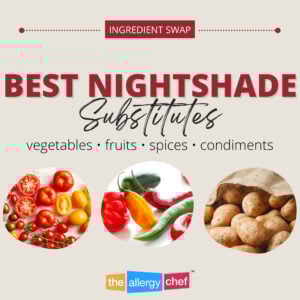
Today, we’re going to look at the best nightshade substitutes for a range of recipes and applications. Most recipes are going to call for nightshades that are vegetables, rather than fruits. Be sure to jump around using the table of contents so you can get straight to what you need most.
If you’re new to being nightshade free (food allergy, food intolerance, special diet, etc.) and want to see a complete list of nightshade foods to avoid, refer to this article.
Note: The tomato substitutes in this article are nightshade free options. If you’re only allergic to tomatoes, and can eat other nightshades, refer to this Tomato Substitute article instead.
What are Nightshades
A nightshade plant is part of the Solanaceae family. It’s made up of more than 2,500 individual plants (including some poisonous flowering plants).
This family of plants includes flowers and other non-edible species, along with lots of edible fruits and vegetables. Many have a high amount of alkaloids, making them ideal for food and medicinal purposes.
The nightshade family of vegetables and fruits includes potatoes, tomatoes, eggplants (aubergine), and peppers. In fact, these four ingredients are the most popular nightshade vegetables of the entire solanaceae family and you’ll find them in cuisines all around the world.
Note: All varieties of sweet potatoes and yams are not part of the nightshade family (despite the name).

Potato Substitutes for Different Applications
All forms of potatoes are nightshades, including gold potatoes, red potatoes, Yukon potatoes, Russet potatoes, fingerling potatoes, and more. Sweet potatoes, whilst they share a common name, are NOT nightshades. Here are ingredients you can use to swap for potatoes in different applications:
Potato Substitute for Beef Stew
In a classic beef stew, the easiest potato substitute will be white yam. Wash, peel, and cube like you’re working with nightshade potatoes, and make your recipe as you normally would.
Additional potato substitutes: Japanese Sweet Potato, Celeriac, Parsnips. These three vegetables are all good for stew cooking, with an extended cook time if needed.
Replacements for Cubed & Roasted Potatoes
White yam and Japanese sweet potato are both going to be excellent substitutes for a roasted potato. They aren’t the same thing, but are sold in the same section near sweet potatoes. White yam has a tan skin and Japanese sweet potato have a purple-maroon skin.
These are both on the firm side and can hold up very nicely to being roasted.
Potato Substitute for Curry
Hands down, white yam will be the best potato swap for a curry recipe. Second to this is Japanese yam. Both of these vegetables have lots of the same qualities you’ll find in potatoes, and are hearty enough to stay together in a curry.
If you’re unable to have those ingredients, slice trumpet mushroom stems, and hard sear them in butter/fat/oil on the stove top. Once they’ve caramelized a bit, transfer them to your oven to finish cooking. You want them seared on the outside for texture, but soft-ish in the center. Once they’re done cooking, fold them into your curry just before serving.
Potato Swaps for French Fries
Sweet potato fries are going to be an easy swap. You can also purchase these in the freezer section of many grocery stores.
If you’re into clean and organic ingredients, and like to avoid seed oils, check out this brand.
For an unconventional take on fries, use a mid range apple that’s only just barely sweet. Cut your apples to resemble fries, coat with seasoned flour, and deep fry. Been there, fried that, everyone loved it.
You can also take this unconventional approach with ingredients such as Jerusalem artichoke, turnip, rutabaga, and celeriac. However, some hard veg needs to be par-cooked before you coat and fry to ensure the center is the texture you want.
Best Potato Substitute for Hash
If you’re making a breakfast hash on the stove top that calls for diced potatoes, the best substitute is diced Japanese sweet potatoes. It’s a 1:1 substitution by weight. White yam works as well, but Japanese sweet potato has the edge by about 10%.
You can also make hash with orange fleshed sweet potatoes, however, as they cook, they get pretty soft and fall apart a little where the Japanese style will hold the structure better.
A hash can be made with other hard root vegetables such as turnip, however, those are all going to add a seriously earthy quality to the meal. If you can have the above options, stick with those.
Potato Swaps for Mashed Potatoes
Top Pick: Celeriac + Parsnip + Japanese Sweet Potato
To use this combo, you’ll peel, cube, and boil 60% Japanese sweet potato + 20% parsnip + 20% celeriac.
Once they’re fork tender, process them through a potato ricer, then combine with a butter or cream of choice. This multi-pronged approach will get you a pretty good texture.
Runner Up: Japanese Sweet Potato + Heavy Cream
Japanese sweet potato, standalone, are pretty firm, even when cooked well. However, there’s a fine line because once you’ve boiled them too far, they’re just mush and the texture won’t be right.
To correct this, boil until just fork tender, run through a potato ricer, then combine with enough cream or heavy cream to take yourself to mashed potato land.
Potato Substitute for Pot Roast
Large cubes of any of the following vegetables would be a suitable substitute for potatoes in your pot roast recipe:
- Celeriac
- Parsnips
- Steamed Beets (when peeled, cubed, and steamed, red beets have a buttery/potato quality)**
- Tokyo Turnip
- White Yam
**Beets should be steamed separately, then folded into your pot roast before serving.
Scalloped Potatoes/Potato Gratin Alternatives
I’d suggest white yam for a pretty neutral taste. You can layer in a little Japanese sweet potato if you’d like the texture to be a bit more interesting.
You’ll want to use a mandolin slicer for this since it’s difficult to get consistent slices with these vegetables when cutting with a knife.
You can also take this in a very non-traditional direction and use root vegetables such as carrots and beets in addition to the white yam. The colours (and nutrients) will be stunning, and there will be more earthiness, but also a little sweetness in the final dish.
Potato Alternatives for Shredded Potatoes
Orange flesh sweet potato, purple flesh sweet potatoes, and parsnips are all fantastic alternatives for shredded potatoes.
If you’re making a hash brown or potato cake, you can also experiment with using a combination of the ingredients for a fun flavour profile.
Potato Substitutes for Soup
If you’re making a blended creamy potato soup: Japanese sweet potato + parsnip will be a good replacement. Use 70% Japanese sweet potato and 30% parsnip for the best texture when making this potato swap.
If you have a soup where it calls for cubes of potatoes, you can use parsnip or white yam in its place. Radishes and turnips are another great alternative in soups, but will add a more earthy flavor to your soup.
Stew Swaps for Potatoes
If your stew calls for cubed potatoes, use a combination of peeled and cubed celeriac + Japanese sweet potato OR celeriac + white yam. Celeriac should be 30 – 40% of the blend.
If your stew doesn’t have a super long simmer time, radishes and turnips can make a great addition to your stew, but they will bring some flavour to the table, so make sure you like them.
Also know, you can skip the potatoes in a stew recipe and use something like beans instead. You still have a lovely layer of texture, the flavour isn’t too intense, and it’s an easy swap to make.
More Delicious Nightshade Substitutions
Tomato Substitutes
Tomatoes are very common in a range of recipes. The substitution will vary based on what you’re trying to make.
For fresh applications, lean into foods such as gooseberries (not cape gooseberries, which are nightshades). White dragon fruit will give you a similar water content and texture as tomatoes, but not the same taste. However, if you were to add dragon fruit to a salad with umami ingredients, i don’t think you’d be all too let down.
For sauces, look info “Nomato Sauce”. These are special sauces designed for people on the AIP Paleo diet, which is a nightshade free diet. KC Naturals is one of the more popular brands that sells these sauces. You can also find recipes online. There are options for pizza, pasta, marinara sauce, and more.
Eggplant/Aubergine Substitutes
One of the best substitutes for eggplant will be zucchini, depending on the cut and use. Another good alternative will be a firm mushroom like a king trumpet, especially for frying.
For something like an eggplant Parmesan, go with a firm mushroom. For something where the eggplant is mixed in with other vegetables, go with the zucchini.
Substitutes for Bell Peppers
When it comes to replacing a bell pepper, you want to think about the fresh flavour, crisp bite (when raw), and the touch of sweet they bring to the table.
Kohlrabi, from the cabbage family, can be an excellent substitute, when paired with a touch of sugar and a bit a wasabi. This three pronged approach will work well in cooked applications.
For fresh bell peppers, consider a pairing of shredded cabbage and carrots. It’s going to lean in the slaw direction, but, those two ingredients are going to bring you into the crisp and fresh realm, which is what we’re aiming for.
Substitutes for Spicy Peppers
Spicy peppers are going to be best replaced by wasabi (cabbage family), or ginger. You can also bump up the spice with fresh ground black pepper (combined with one of the other two ingredients).
Substituting Goji Berries in Snacks
You’re most likely going to see goji berries in a healthy trail mix recipe or some kind of homemade granola bar recipe (or other snack bar).
For function, you can swap in any other dried fruit, however, you need to chop it down nice and small since a goji berry is pretty small (a little thinner than a raisin, but also a little longer than a raisin).
For flavour, the best combo will be dried cherries + dried golden raisin OR dried mulberries + dried golden raisins.
Best Substitutes for Nightshade Spices
Great recipes start with amazing flavor. However, a lot of recipes and products will include spices from nightshade plants. These are nightshade ingredients that you’ll see in a wide range of recipes and packaged & prepared foods:
- Cayenne Pepper
- Chili Pepper
- Chili Powder
- Chipotle Powder
- Curry Powder (the blend usually contains at least one spice from the nightshade family)
- Garam Masala (type of Indian spice blend)
- Taco Seasoning Blend
- Paprika (made from bell pepper)
- Red Pepper
When cooking at home, one of the top tips I can give you is to invest in culinary books that are reference books, rather than recipe books. A reference book is more like a lot of suggestions rather than a strict formula to follow. This is a book that I tell everyone with food allergies to purchase.
One of the best things about it is how it shows you a list of combinations, and their volume/presence in a recipe.
Replacing Heat Spices
If you like eating spicy goods, the easiest way to bring the heat will be wasabi + ginger. It’s not going to be the same type of heat that you’ll find in cayenne pepper and chili peppers. However, it will still make your nose run when used in the right amounts.
Replacing Fruity Spices (Peppers)
If you like meals that are loaded with ingredients such as paprika or ancho chili, you’re going to want to lean into spices such as cinnamon, grains of paradise, ginger, black pepper, and cumin.
For example, if a recipe calls for smoked paprika, one of the best ways to bring the flavour back in is with a little ginger + smoked salt + sumac. This blend will give you a little zing, a little fruit, and depth.
Creating Nightshade Free BBQ Meals
The flavors of BBQ are loaded with nightshades galore, no matter which part of the world it comes from. To build up delicious BBQ dishes, you’ll want to use:
- Onion
- Garlic
- Cumin
- Cinnamon
- Black Pepper
- Sumac
- Ginger
- Grains of Paradise (these seeds bring flavor and a little kick)
You can use butternut squash as your base if you’re making a BBQ sauce, and it works wonders. Don’t forget to add vinegar, molasses, liquid smoke, and sugar (maple and brown sugars are awesome in BBQ) to round out your BBQ flavors.
Cooking Indian Dishes Without Nightshade Spices
If you love a good Indian meal, I’m sure you know that it usually contains nightshades. However, there are other seasonings you can lean into that will bring depth, and lots of Indian notes. Here’s a great nightshade free curry spice blend recipe you can start with:
- 1 tsp Dried Parsley Leaf (Mountain Rose Herbs sells this)
- 3/4 tsp Turmeric
- 1/2 tsp Fenugreek
- 1/4 tsp Ground Mushroom
- 1/4 tsp Thai Basil
- Pinch Black Pepper (or other ground peppercorns)
You can use this ratio and scale up to make a batch of seasoning. Keep in mind, you can change those numbers as you see fit (one of the perks do making it yourself from scratch).
To use this, combine all of your spices together and mix well. Then, the next time you want to make a dish with “curry powder”, use this as a 1:1 ratio substitution.
Nightshade Free Spices & Herbs by Cuisine Type
You may find that cooking from scratch at home is the safest way to dine and prevent health problems. If that’s the case, I want to encourage you to explore recipes from around the globe.
Many international recipes tap into spices and herbs that are nightshade free. Below, I’ve listed the most common spices for each cuisine, minus the nightshades.
This can also be a good list to use to build a robust spice pantry so you can make a variety of delicious meals at home.
Note: You don’t need to use all the spices in one dish. These are seasonings commonly found in each region. Also, * indicates a seasoning you use in small amounts, as it can overpower your dish.
There are also bonus items listed that aren’t dry spices, but still great ingredients to tap into.
African & Moroccan Spices
Cardamom, Cloves*, Chive, Cilantro, Cinnamon, Coriander, Cumin, Fenugreek*, Garlic, Ginger, Mint, Onion, Saffron*, Sage, Rose*
Chinese & Japanese Cuisines
Basil, Cardamom*, Coriander, Garlic, Ginger, Miso, Scallion, Sesame*, Star Anise*, Wasabi* (Mirin as a bonus, it’s a rice vinegar)
Greek & Turkish Cuisine
Anise*, Cilantro, Cinnamon, Clove*, Dill, Fenugreek*, Garlic, Marjoram, Mint, Onion, Oregano, Parsley, Poppy Seed*, Saffron*, Sesame*, Sumac, Thyme
Indian Spices
Anise*, Black Pepper*, Cardamom, Cinnamon, Cloves*, Cumin, Garlic, Ginger, Fennel Seed, Fenugreek*, Mint, Mustard*, Onion, Rose*, Saffron*, Sesame*, Tamarind, Turmeric
Italian & Sicilian Spices
Basil, Garlic, Leek, Marjoram, Onion, Oregano, Parsley, Rosemary*, Sage*, Thyme, White Pepper* (cooking wine as a bonus)
Mexican & Spanish Seasonings
Cilantro, Cinnamon, Coriander, Cumin, Garlic, Onion, Parsley, Saffron* (pineapple as a bonus)
In Mexican cuisine, also look into huitlacoche, also called corn smut, which is a type of corn fungus (sometimes called corn mushroom).
Thai & Balinese Spices
Basil, Cilantro, Coriander, Cumin, Galangal, Ginger, Kaffir Lime Leaf*, Lemongrass, Mint, Tamarind, Turmeric, Sesame* (peanut, mango, and lime as a bonus)
Creating a Nightshade Free Meat Rub
If you love creating spice rubs, or grilling chicken, pork, beef, and more, you know that a good spice blend is the foundation to success. Well, that and knowing how to control your flame.
You can build a great basic spice rub with:
- Onion
- Garlic
- Celery Seed
- Ground Mustard
- Maple Sugar
- Marjoram
- Black Pepper
- Maple Sugar (you can also use coconut sugar, date sugar, light brown sugar, and dark brown sugar)
This is just one of hundreds of spice combinations that you can create, all naturally nightshade free. Another way to learn good spice blends is to look into recipes that are flavour forward, but naturally nightshade free.
A few examples include Steak au Poivre, Lavender Chicken, Rosemary Lamb, and Coffee Steak. Some coffee rubbed steak recipes call for nightshade plants, however, this recipe from Whitney Bond is nightshade free (and sounds fantastic).
Note: Really watch the amount of lavender you use because when it’s right, it’s AWESOME, when it’s wrong, it’s soap. Like, wash your mouth out with soap.
More Spices & Flavoring Agents to Explore
Whether you’re making a main course, side dish, or breakfast, it’s so important to explore every option available to you. Honestly, that’s what’s made me such a strong free-from chef: I explore ingredients from all over the globe, and in non-traditional combinations.
When it comes to bringing in more layers of flavor to your meals, here are some flavouring agents you shouldn’t ignore:
- Asian Sauces (soy sauce, fish sauce, Chinese cooking vinegar, Japanese rice wine, etc.)
- Balsamic Glaze (think balsamic vinegar but even better)
- Caviar (great for texture and salinity)
- Ground Mushroom Powder (get a spice grinder and make exotic blends at home, for less money)
- Fermented Foods (sauerkraut, fermented seaweed, rice koji, etc.)
- Fruit & Veg Powders (beet, carrot, spinach, etc.)
- Liquid Smoke
- Prepared Mustard (dijon, honey, brown, etc.)
- Smoked Salt
- Soy Free Sauces (coconut aminios, pea protein-based “soy sauce”, etc.)
- Sugars & Sweeteners (date, coconut, agave, maple, etc.)
- Vinegar (there are SO many, check out this brand as a starting point)
This is by no means an exhaustive list, but I hope it inspires you to build out your pantry so you can always have something safe and delicious to eat.
Nightshade Substitutes in Baking & Frying
In standard baking, it’s rare that you’ll run into nightshades. If you like to take a walk on the wild side, you may see ground peppers (cayenne, etc.) or maybe a goji berry on a menu.
In gluten free baking however, potato starch is a very, very common ingredient, so let’s look at swaps.
Heat Peppers: If you run into cayenne etc., use ground ginger, and add a tiny bit of wasabi to your batter to pump up the spice a little more.
Goji Berries: Raisins, chopped dried cherries, and golden raisins are all good choices. For the best flavour, use a blend of chopped dried cherries and golden raisins.
Potato Starch in GF Cookies: Tapioca Starch
Potato Starch in GF Cake: 20% Arrowroot + 80% Tapioca Starch
Potato Starch in GF Pancakes & GF Waffles: 20% Arrowroot + 80% Tapioca Starch IF the recipe doesn’t call for arrowroot. If the recipe already has arrowroot, use 20% White Rice Flour + 80% Tapioca Starch
Potato Starch in GF Frying: Cornstarch is top pick, followed by rice flour, then arrowroot.
Nightshade Free Condiments
Rather than give you a long lecture on building the best nightshade free condiments from scratch, instead, I’m going to share these helpful links. These companies have already created nightshade free condiments and the thing is… when you manage a health condition such as a restricted diet, sometimes, you just want to buy something and move on.
- Nightshade Free Ketchup
- Nightshade Free BBQ Sauce
- Nightshade Free Pasta Sauce
- Nightshade Free Pizza Sauce
Now, if you want to make stuff at home from scratch, lean into cream based sauces and condiments first. These will won’t usually contain nightshade spices, and when they do, it’s easy to make changes to recipes you find online.
Second, look up “nomato sauce recipe” or “nomato [condiment name] recipe” online, and you’ll find all sorts of delicious options. My favourite way to make tomato free sauces is to lean into squash. The texture is fantastic, and it brings a natural sweetness (along with great health benefits) to the table.
Nightshade Free Recipes
Below, you’ll find some incredible recipes that are all nightshade free, but gluten free and very allergy friendly as well.
If you’re managing an elimination diet, have multiple food allergies, or manage several dietary restrictions, be sure to check out the Advanced Recipe search on RAISE. You sort through over 700 recipes by using more than 125 filters for individual allergens, a food group, and many others.
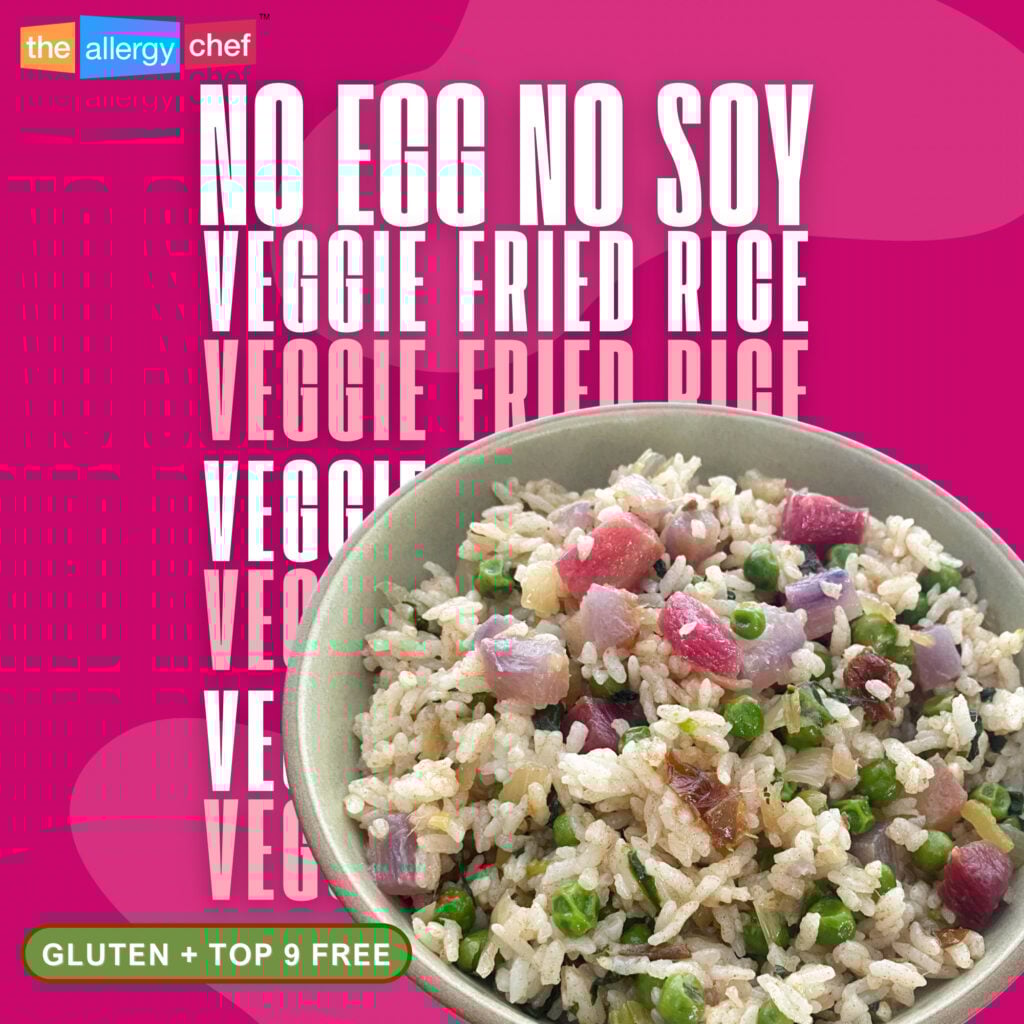
- Egg & Soy Free Fried Rice Recipe
- Truly Corn Free Pancakes (gluten free, no potato starch)
- Nightshade Free + Gluten Free + Vegan Butter Cookies Recipe
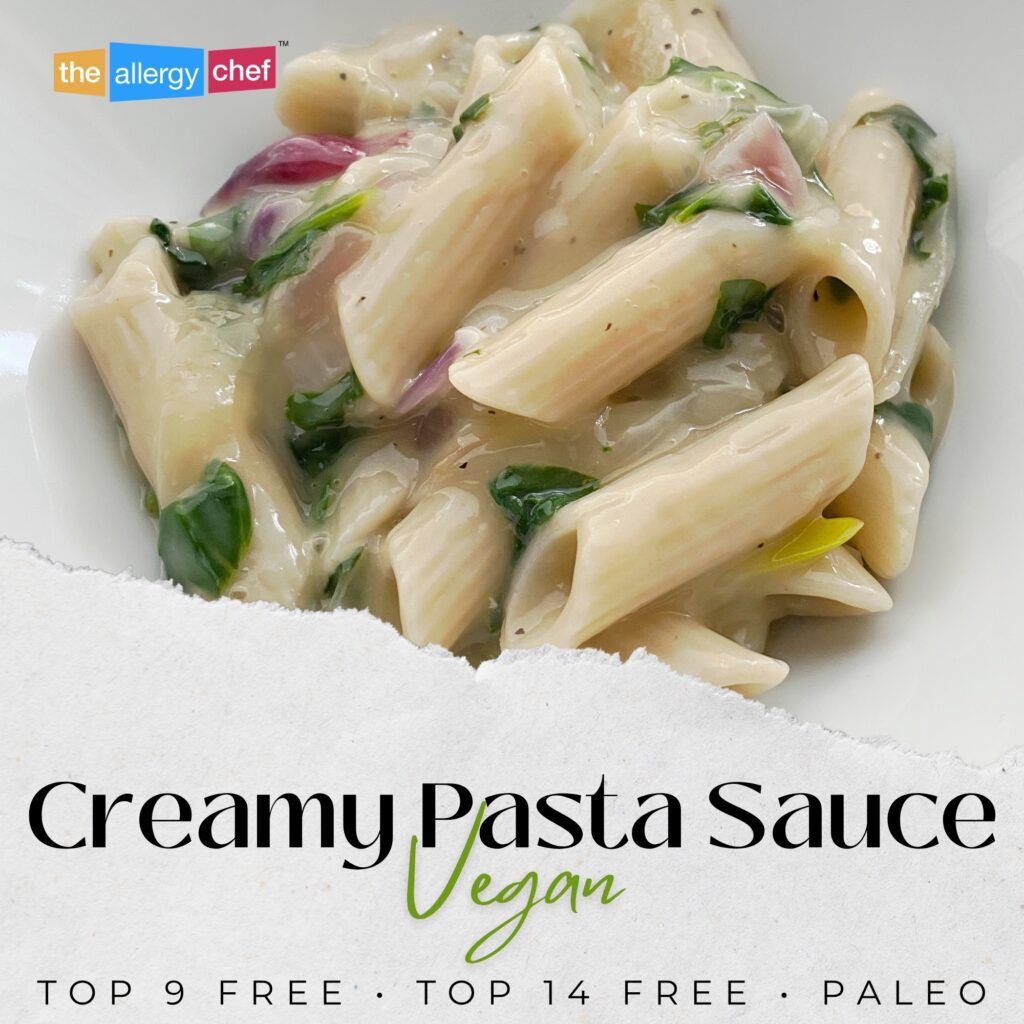
- Creamy Pasta Recipes & Ideas
 |
 |
 |
 |
Answering Your Questions About Nightshade Substitutes
What’s the best non-nightshade replacement for eggplant in fried eggplant?
For fried eggplant, I’m going to encourage you to lean into mushrooms and zucchini (courgette). You *might* also like cauliflower, but that’s going to depend heavily on the type of dredge you’re using.
King Trumpet Mushrooms are going to be the top choice because the stems are very meaty and will give you a nice bite, the way eggplant would.
Is golden milk nightshade free?
Many golden milk blends will contain ashwagandha, which is a nightshade vegetable. This particular blend that you can purchase is nightshade free.
If that brand doesn’t work for you, look for golden milk blends that don’t contain ashwagandha, a popular ingredient in the health and wellness space.
What’s a good way to season cauliflower rice without nightshades?
There are a lot of delicious ways to add flavor to your cauliflower rice. Here are a few seasoning combos to get you started:
- Onion + Garlic + Marjoram + Basil + Smoked Salt
- Lemon + Honey + Thyme + Salt
- Balsamic Vinegar + Onion + Garlic + Black Pepper + Salt
- Ginger + Garlic + Onion + Smoked Salt + Sesame Oil
I have legume allergy and nightshade sensitivity. Are there a lot of hidden ingredients I’ll have to avoid?
Anytime you’re managing allergies and sensitivities to whole food groups, it can be pretty rough waters when you’re new. I’m going to point you towards this article on legume allergies and information. It includes a list of hidden ingredients and products to avoid. Then, read this article on nightshades which includes products they’re commonly found in.
I won’t say there are tonnes of hidden ingredients, because they’re on food labels. It’s not like corn where there are hundreds of names and uses. Instead, it’s knowing what the names mean, especially for legumes (such as gums and binders).
I would also suggest the product scanning app called Fig. It doesn’t really reveal anything magical, but can be an extra set of eyes to ensure you didn’t miss anything, including derivatives.