
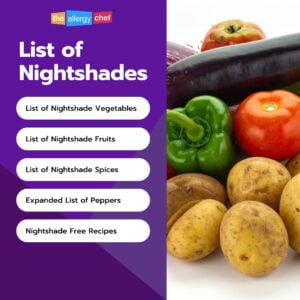
Today, we’re going to take a look at all thing nightshades. There’s nightshade fruits, nightshade vegetables, and nightshade spices to cover. Nightshade foods are used in a wide range of recipes, and this article covers in depth the different nightshade substitutes you can use in cooking and baking.
Want to download my handy PDF with a complete list of nightshades? Click here and I’ll email it to you. You can also print off this article which has all the foods listed.
Need information on nightshade substitutes (potatoes, tomatoes, eggplants, and more), read this handy article.
What is a Nightshade
A nightshade plant is part of the Solanaceae family, which is made up of more than 2,500 individual plants. This family of plants includes flowers and other non-edible species, along with lots of edible fruits and vegetables. Many have a high amount of alkaloids, making them ideal for food and medicinal purposes.
The nightshade family of vegetables and fruits includes potatoes, tomatoes, eggplants (aubergine), and peppers. In fact, these four ingredients are the most popular of the entire solanaceae family and you’ll find them in cuisines all around the world.
Nightshade plants also have medicinal applications, so if you manage some kind of nightshade allergy, be sure your medications (and supplements) are safe for you.
Note: All varieties of sweet potatoes and yams are not part of the nightshade family (despite the name).
Why Some People Avoid Nightshades
Not everyone can enjoy nightshade consumption for a range of reasons including:
- Autoimmune Disease
- Food Allergies (you can be allergic to one, some, or all nightshades)
- Food Sensitivities
- Elimination Diet for Medical Reasons
- Nickel Allergy (several nightshades are eliminated for a nickel free diet)
Some of the chemical compounds present in nightshades have been shown to contribute to chronic inflammation in some people. Those managing any kind of autoimmune condition or chronic illness are often advised to start an elimination diet to see if symptoms can be better managed. In some cases, these dietary restrictions are short term to give the body a chance to heal, and in other patients, these are permanent changes.
A few reasons someone may embark on an elimination diet:
- Inflammatory Bowel Disease
- Intestinal Permeability (also called leaky gut)
- Rheumatoid Arthritis & Joint Pain
Remember, no two people are the same. Work with your medical team to determine the best course of actions for your unique case. Keep a detailed food journal, and make sure your doctor is working for you (hire and fire as you see fit).

List of Nightshade Vegetables
This is a great nightshade vegetables list. To learn more about potatoes and peppers, continue to scroll down to see expanded lists of these particular nightshade plants.
- Ashwagandha
- Eggplant (Aubergine)
- Pepinos (sometimes called Melon Pear)
- Peppers (Bell Peppers, Hot Peppers, etc.)
- Pimentos
- Potatoes (white potatoes, brown/russet potatoes, gold potatoes, Yukon potatoes, red potatoes)
List of Nightshade Fruits
- Cocona (tropical fruit from Central America & South America, this gardener has quite the writeup on this plant)
- Cape Gooseberries (not the same as normal gooseberries)
- Garden Huckleberries
- Goji Berries (sometimes called Wolfberries)
- Ground Cherries
- Tamarillos (South American tree fruit that’s slightly sweet, slightly bitter, that’s a mix between tomato and persimmon)
- Tomatillos
- Tomatoes
- Yellow-Fruit Nightshade (a medicinal plant mostly used in India)
List of Nightshade Spices
- BBQ Spice Blend
- Cayenne Pepper
- Chili Pepper
- Chili Powder
- Chipotle Powder
- Curry Powder (the blend usually contains at least one spice from the nightshade family)
- Garam Masala (type of Indian spice blend)
- Taco Seasoning Blend
- Paprika (made from bell pepper, also called pimentón)
- Red Pepper
Misc. Nightshade Items
- Tobacco (tobacco products include cigarettes, dipping tobacco (snuff), chewing tobacco, gutka, and more)
- Pepper Spray (as in, the stuff you carry for self defense)
List of Foods That Commonly Contain Nightshades
- BBQ Sauce
- BBQ Seasoning
- Buffalo Sauce
- Chipotle Sauce
- Curry Powder (not all contain nightshades, and you can make this at home pretty easily)
- Fermented Foods Such as KimChi
- Gochujang (a popular Korean condiment)
- Japanese BBQ Sauce
- Ketchup
- Meat Rubs (chicken, beef, pork, etc.)
- Mole (Mexican, means “sauce” but a mole often contains nightshade ingredients)
- Old Bay Seasoning
- Pasta Sauce (tomato based, you can get white based that’s nightshade free)
- Pickled Foods, Pickles, & Relish (read labels carefully)
- Pico de Gallo
- Pizza Sauce (tomato based, you can get white based that’s nightshade free)
- Pomme Named Foods (pomme meaning potato in French)
- Salsa (red and green)
- Sambal (popular in South East Asian cooking)
- “Spicy” Sauces or “Hot” Sauces (think spicy mayo, hot honey, etc., the spice/heat is from peppers)
- Steak Spice
- Tabasco Sauce
- Taco Seasoning
Hidden Sources of Nightshades
Nightshades aren’t a major allergen, in any country that recognizes major allergens, with the exception of Tomato in South Korea. Outside of that one instance, if you have a nightshade allergy or nightshade sensitivity, it’s important to know that it can seem like a hidden ingredient in some foods. That’s because you’ll think about a product, and never think “that totally has potato (or other nightshade) in it”.
Here’s a non-exhaustive list of ways nightshade plants are used in a range of foods:
- Baked Goods (breads, cookies, cakes, etc., but especially gluten free baked goods)
- Baking Powder
- Breadcrumbs (usually from potato)
- Non-Nightshade Chips (as a flavouring agent, such as spicy tortilla chips)
- Condiments (ketchup, vegan mayo, etc.)
- Cottage Pie
- Dairy Free & Non-Dairy Products
- Fruit Pies (potato is often used as a thickening agent)
- Gluten Free Flour Blends & Gluten Free Baked Goods (almost always from potato)
- Meat Marinades
- Natural Flavours
- Salad Dressings & Vinaigrettes
- Shepherd’s Pie
- Soups
- “Spices” (some brands will say “spices, including paprika”)
- Spicy Foods (anything claiming to be spicy will usually contain some variety of peppers)
- Soup (as a thickening agent in a range of soup types)
- Stews
- Vegan & Vegetarian Foods
The best way to avoid nightshades is to start with the ingredients. As you read over ingredient lists, use your finger to trace under each line and drag your eyes along to make sure you aren’t scanning over lines.
You can also check out the Fig app, as I’ve heard good things about it. It’s a scanning app that looks over the ingredients, and issue you a warning based on what you tell the app you have to avoid.
If you’d like to dine out and enjoy a meal whilst avoiding nightshades, refer to this article on eating out with food allergies and dietary restrictions.
Expanded List of Potatoes
There are well over a hundred types of potatoes grown and sold around the world. This isn’t an exhaustive list, but will give you a good idea of what types of potatoes are out there.
- Adirondack Blue (commonly sold in the US as purple potatoes, has a purple skin and white flesh)
- Adirondack Red
- Agata
- Agria
- Almond
- Amandine
- Amarilla
- Andean Black
- Anya
- Avalanche
- Bamberg
- Banana
- Belana
- Bellarosa
- Bintje
- Blue Congo
- Bonnotte
- Colette
- Cultra
- Dejima
- Espirit
- Filea
- Fingerling
- Finka
- French Fingerling
- German Butterball
- Huayro
- Imilla
- Irish White
- Jazzy
- Jersey Royal
- Kennebec
- Marabel
- Navan
- Nicola
- Ozette
- Rooster
- Rosalind
- Rua
- Russet (there are several types, with brown being the most common)
- Russian Blue
- Sieglinde
- Victoria
- Vielotte
- Yellow Finn
- Yukon Gold
Expanded List of Peppers
There are a lot of peppers, grown all over the world. Sometimes, you’ll hear a term and if the person doesn’t add “pepper” to the end, it won’t sound like a pepper (for example: scotch bonnet, paprika, or jalapeño. Here’s a list of peppers grown around the world for culinary purposes.
List of Fresh Peppers
Note: This isn’t an exhaustive list, but covers what you’re most likely to see when dining out across a range of cuisines.
- Aji Dulce (similar to habanero, but MUCH more mild)
- Aleppo
- Anaheim
- Baklouti
- Banana
- Bird’s Eye (often seen in Thai food)
- Black Heart
- Black Hungarian
- Carolina Reaper
- Cascabel
- Cayenne
- Cherry
- Cheongyang (mainly seen in Korean food)
- Chilaca
- Chiltepin
- Chihuacle
- Cubanello
- Dangjo (mainly seen in Korean food)
- De Arbol (mainly used in Mexican and TexMex foods)
- Fresno
- Guntur Chilli
- Habanero
- Hungarian Wax Peppers
- Italian Sweet Peppers (common in Spanish cuisine)
- Jalapeño
- Kambuzi
- Labuyo (Filipino version of a bird’s eye)
- Mirasol
- Naga Viper
- NuMex Peppers
- Peperoncini (these are sweet and mild, and are common in Italian and Greek cuisine)
- Pepper X (currently the world’s hottest at 2,693,000 SHU)
- Pequin
- Peri-Peri (African version of a bird’s eye, you’ll sometimes see “peri-peri sauce”
- Piment d’Espelette
- Padrôn
- Poblano
- Prik Kee Nu (mostly used in Thai food)
- Scotch Bonnet (common in Jamaican cuisine)
- Serrano
- Shishito (more common in Japanese food, not spicy at ALL, and loved by chefs like myself that enjoy incorporating lesser known ingredients)
- Siling Mahaba (common in Filipino cuisine)
- Tabasco
- Xcatic
Fresh Pepper to Dried Pepper Conversion
When fresh peppers are dried, their name will sometimes change. This is good to know if there are particular peppers you can’t have. Here are the most common conversions:
- Bell Pepper = Paprika (also called pimentón)
- Anaheim = Colorado
- Chilaca = Pasilla
- Jalapeño = Chipotle
- Marisol = Guajillo
- Poblano = Ancho
- Serrano = Chile Seco
Nightshade Free Diet Types
The only diet type that’s 100% nightshade free is the Autoimmune Paleo Protocol Diet (also called AIP Diet). Other diet types will remove some nightshade foods, but not all.
For example, the Paleo diet is potato free, as is the traditional FPIES diet, Latex Cross-Reactive Free diet, and Grass Pollen Free diet. The GERD diet is free from tomatoes and peppers. I could continue to list diet types, but you get the idea. Some will be free from this or that, but not the complete list like the AIP Paleo diet.
Keep in mind however, if you’re only allergic to nightshade foods, and can eat everything else under the sun, following AIP recipes when you’re new is awesome. Once you get a handle on things, you’ll want to eat a full diet, as the AIP diet is very limited in terms of safe/legal ingredients.
Nightshade Free Products to Purchase
Thanks to the AIP Paleo diet, there are a lot of specialty nightshade free products you can purchase, including tomato free tomato sauce. I know. What a time to be alive! These products I’m sharing are the kind of items you’d think you can never find. There are a lot more out there, but there are some items that I think are pretty easy to make at home.
- Nightshade Free Sauces (they have a range of Nomato sauces (no tomato))
- Paleo Powder Seasoning (they have a range of AIP options)
- Faux Ranch Dressing Seasoning Mix (this brand has a lot of AIP products)
- BBQ Rub (this brand has a great founder’s story)
- Grains of Paradise (a seed based spice that has great peppery notes)
Remember, you can also lean into soy sauce, some Asian sauces, fermented products, vinegars, Indian condiments (some are nightshade free), Italian products (many creamy options are nightshade free), fresh herbs, citrus, and several other categories to bring flavour to your meals.
Nightshade Free Recipes
If you’re on the hunt for meals that are not only nightshade free, but gluten free and allergy friendly, I’ve got you covered! You can also use the Advanced Recipe Search on RAISE to explore over 700 recipes, and use more than 125 filters to mix and match for different allergens, food families/groups, and meal types.
- Sweet Potato Hash (this meal is fantastic for breakfast or dinner)
- Gluten Free Ginger Apple Crumble Cake (most GF cakes contain potato, this one doesn’t and people are in LOVE with it)
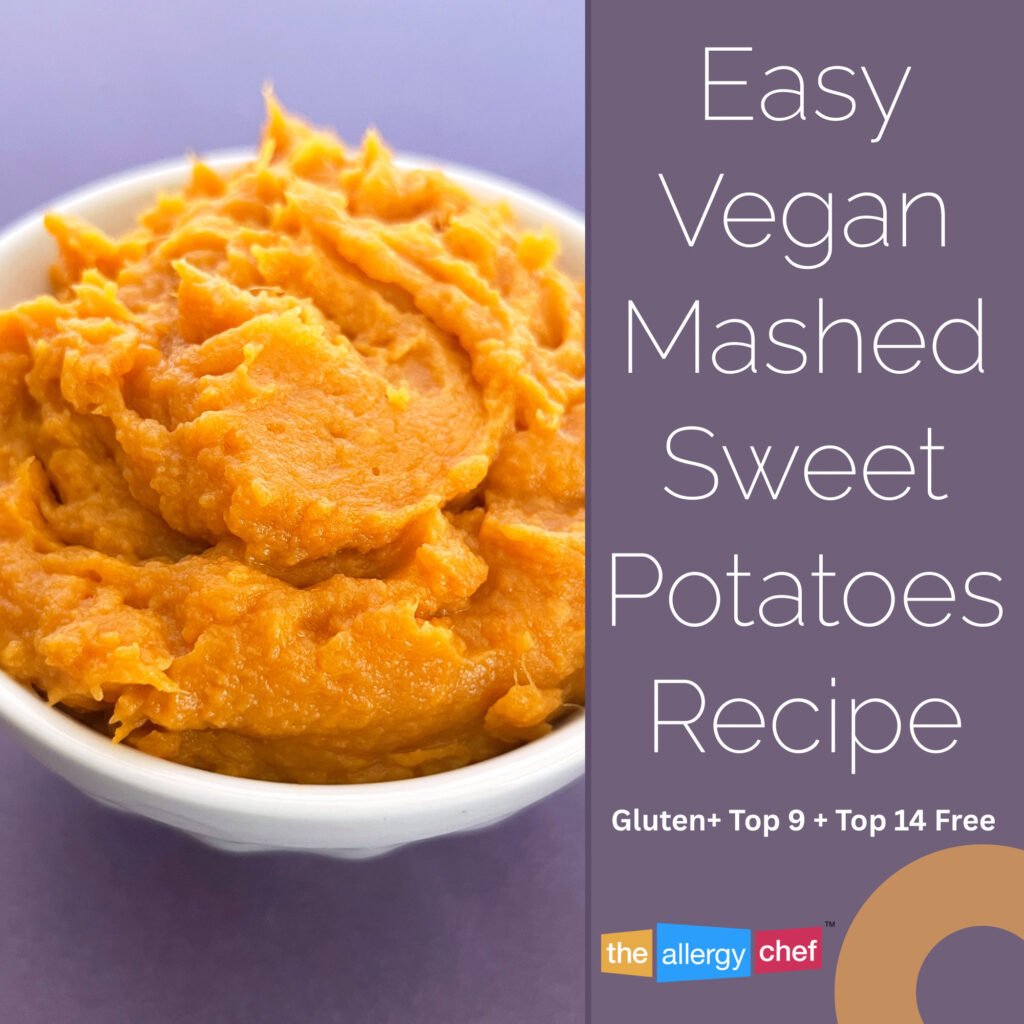
- Mashed Sweet Potatoes (super easy to make and great for sharing with others)
- Dutch Oven Cream of Mushroom & Pork Stew (loaded with flavor, grain free, top 9 free)
 |
 |
 |
 |
Answering Your Questions About Nightshade Foods
What’s a good substitute for the tomatoes in fried green tomatoes?
This is a tough one. Let’s assume you can have other nightshade vegetables. If that were the case, I’d suggest eggplants, and maybe even tomatillos. The latter will get you very close, but on the off chance you can’t have them, eggplant (aubergine) would be my second choice.
Now, let’s assume you need a nightshade free alternative. These are the vegetables I’d experiment with: carrots, parsnips, okra, delicata squash, salsify, summer squash (sometimes called yellow zucchini), persimmon, nectarine, and peaches.
Each of the vegetables is going to bring something that reminds you of tomato to the table. If you opt for carrot or parsnip, you’ll need to oven roast them for a bit so the get soft, allow them to cool, then dredge and fry.
Now, the fruits. I know, it’s a little out there, but… is it really? They’re going to bring that tomato flesh quality to the table along with the juiciness of a tomato. So, if you were to add a little smoked salt and mushroom powder to your dredge, would this be the worst idea in the world? Nope, I think not. I mean, we serve up grilled peaches all the time, so why not fry them?? If you opt for the fried fruit, consider a thick balsamic glaze dipping sauce as well.
Is it possible to purchase corn free + potato starch free baking powder?
Yes! Your first go-to option will be this one. It’s grain free and uses cassava as the starch. If you’d like to see more corn free baking powder, check out this article.
Is coffee part of the nightshade family?
Great news! Coffee isn’t a member of the the nightshade family. Also, whilst the name would have you thinking legume (coffee bean), it’s actually a seed. You can read about it more in this article.
Are leafy greens nightshade vegetables?
No, leafy greens including collard greens, kale, and chard aren’t nightshade foods.
Is black pepper a nightshade spice?
Whilst the name might suggest yes, the good news is that black pepper isn’t a member of the nightshade family. White pepper, green pepper, and pink pepper also aren’t nightshade plants.
If you have a cashew allergy, please note that pink peppercorns are cross reactive with cashew and should be avoided.
Are all root vegetables nightshades?
No, not all root vegetables are nightshades. For example, turnips, carrots, beets, and tiger nuts (tuber, not a tree nut) are all root vegetables, but not part of the nightshade family.
Refer to the nightshade vegetables list further up in this article to see what you’ll need to avoid.
Is it safe to eat green potatoes?
Potatoes, one of the most common nightshades, should not be eaten green if you plan to leave the skins on. Some feel green potatoes should be avoided completely, however, if you peel them VERY, VERY well, and there’s no green left, it’s generally OK to eat the potato flesh that remains. However, if you have health issues, it’s best to avoid green potatoes and stick to potatoes that don’t contain any green. Additionally, small children should not eat green potatoes because of their limited body mass.
The reason you’ll see safety concerns (and for good reason) is because green potatoes contain the alkaloid solanine, but in small amounts, and that’s the key. In large amounts, a healthy person can experience ill effects. The toxic compounds (chaconine and solanine) can cause GI pain & distress, vomiting, diarrhea, and more.
Also note that the green portion of the potato will be very bitter, so you really want to avoid them. If you have potatoes that are pretty green on the outside, you may want to toss them. On the other hand, if there’s only a little bit of green in one spot, it’s very easy to peel away, or cut off.
Are nightshades a common ingredient in snack foods?
Sometimes. Honestly, it depends on where you live. In some countries, you may see the use of peppers (especially spicy peppers) in a wide range of chips and snacks. In other countries, it’s not super common.
Here in the US where I live, nightshades are in a decent amount of foods. Here, the most common nightshade vegetables in packaged foods are potatoes and peppers. Potatoes are not only seen as chips, but potato starch can be in all sorts of foods. Spicy peppers are used as a flavouring agent, however, paprika can be used for colour. It’s bell pepper derived, and not spicy, so it just adds a nice hue to foods.
Is it possible to be allergic to chili peppers, but not other peppers?
It’s important to always remember that no two people are the same. Having said that, yes, this is possible. Anyone can be allergic to anything and in any combination.
What’s important to note is that the term chili peppers can refer to a variety of peppers. If you’ve had some kind of allergic reaction to chili peppers, schedule an appoint with your GP and request allergy testing. They’ll have to run a wide panel for you to determine which peppers you’ll need to avoid.
How can I replace tomato paste in recipes?
The key hallmarks of tomato paste will be the thickness, colour, and hint of umami flavour. I’d suggest using a homemade thick butternut squash puree + a little mushroom powder + a few drops of liquid smoke.
Will this scream “I am tomato, hear me roar”? No. Of course not. However, when used as part of a greater sauce or condiment recipe, you won’t be mad at it.