Today we’re going to talk about all things potato allergy. Managing a potato allergy sounds easy on the surface, however, it’s actually a lot harder than you’d think. The biggest reason it’s hard to manage: potato derivatives are used in a LOT of other foods.
This article is going to give you not only the basics, but equip you with a wealth of information to ensure you know how to truly avoid potatoes. Now, let’s take a deeper look at food allergy basics, overlapping conditions, hidden sources of potatoes, how to shop safely, and more.
Be sure to use the table of contents to jump around as you see fit.
What Is a Potato
A potato is a starchy tuber vegetable that grows underground, and it’s part of the nightshade family (Solanaceae). Potatoes are a staple crop all around the globe, and have a wide range of culinary uses.
Currently, there are somewhere around 5,000 different varieties of potatoes, making them incredibly versatile.
The most common types of potatoes you’ll see in stores are red potatoes, gold potatoes, and brown potatoes. Whilst the name may suggest relation, sweet potatoes are not part of the nightshade family like potatoes.
Related Articles
- Nightshade Ingredient Substitutes
- List of Nightshade Foods
- Oral Allergy Syndrome
- Latex Allergy Information
 |
 |
 |
 |
More About the Nightshade Family
A nightshade plant is part of the Solanaceae family. It’s made up of more than 2,500 individual plants. Many have a high amount of alkaloids, making them ideal for food and medicinal purposes.
The nightshade family includes potatoes, tomatoes, eggplants (aubergine), and peppers. In fact, these four ingredients are the most popular of the entire solanaceae family and you’ll find them in cuisines all around the world.
What is a Food Allergy?
A food allergy is a response by your immune system (via IgE antibodies) that’s triggered by a protein that your body sees as a threat. This is not the same thing as a food intolerance (sometimes called a food sensitivity) or an autoimmune disease.
If you suspect you have a food allergy, ask your doctor to refer you to an allergist for allergy testing where a blood test and/or a skin prick test can be ordered to determine if you have an allergy. Know that tests are not 100% accurate, but are still a good diagnostic tool.
Note: In our modern times, some doctors can set up the referral if you email them (rather than make an in-person appointment). If the reaction is skin based, include well-lit photos with your email and this will usually speed things up.
A “true” food allergy is IgE mediated, and the immune system usually elicits a reaction within immediate ingestion to four hours. Outside of that window, it’s often suspected that you have a food intolerance.
However, there are some types of allergenic diseases that are “true” food allergies and the reactions happen outside of the four hour window. Additionally, a person can have a more rare or complex case and suffer from delayed reactions (which can still be “true” food allergies).
Contact & Airborne Reactions
In some patients, they have what’s called contact or airborne allergy as well. This tends to be a bit more common in those allergic to tree nuts and peanuts, and is very rare in those with a potato allergy.
In their case, a reaction can be triggered by touching potatoes, or by breathing in its particles (like when cooking or baking).
Food allergies can be life threatening and should always be taken seriously. Work with your allergist and healthcare providers to create an action plan that will meet your needs.
Potato Allergy Symptoms
Food allergy reactions can vary among patients, as no two people are the same. Some allergy symptoms of a potato allergy include:
- Swelling of the Lips
- Swelling of the Tongue
- Swelling of the Throat
- Itchy Mouth and/or Throat
- Tingling of the Mouth, Lips, or Throat
- Shortness of Breath
- Trouble Breathing or Asthma Symptoms
- Wheezing
- Skin Rash and/or Severe Redness of the Skin
- Itching
- Hives
- Racing Heart Rate
- Decreased Blood Pressure
- Impending Doom/Dread
- Dizziness
- Fainting/Loss of Consciousness
- Severe Stomach Pain
- GI Distress or Abdominal Pain
- Nausea
- Vomiting (including projectile vomiting)
- Diarrhea
- Blood in Stool
These symptoms are more the more severe symptoms of the allergic reaction spectrum, and can indicate anaphylaxis. It’s critical that if you see these potato allergy symptoms you recognize this is a medical emergency and you need to seek immediate medical help.
If you have a known allergy, follow your action plan including the use of an epipen if you have one, or prescribed antihistamines.
Milder reactions can include a persistent cough, runny nose and/or sneezing, eczema, chronic or allergic rhinitis (inflammation of the nose membrane) and more. However, milder symptoms don’t mean you should let your guard down, or take your diagnosis less seriously.
Three Critical Points
There are hundreds of symptoms a person can experience during an allergic reaction, but it’s important to know three things about potato allergy symptoms and allergic reactions:
- Not every reaction is anaphylaxis. People can have a “non-traditional” potato allergy reaction to food (or have mild food allergy symptoms) and still be allergic to potatoes.
- Should a person experience anaphylaxis, or you see signs of anaphylaxis, it’s important to seek immediate medical treatment (use your epinephrine auto-injector if you have one). When left untreated, anaphylaxis can lead to anaphylactic shock, which can cause death.
- Previous allergic reactions don’t predict future reactions (or the severity of future reactions). In some patients, continued exposure to known allergens can cause more severe reactions each time. This is why strict avoidance of allergens is so important.
Children and Food Allergies
A child may talk about a food allergy differently than adults. Many children will say things like “my mouth is spicy” or “there’s a frog in my throat”. They’re trying to express what the reactions feel like to them with language or experiences that are familiar to them.
Always take note of these types of statements from a child, as they can indicate a serious medical situation. If needed, don’t hesitate to seek medical treatment, and be sure to ask your GP for a referral to an allergy specialist.
You May be Asked to Do an Oral Food Challenge
A food challenge, sometimes called an oral challenge, is when an allergy patient eats a food they’ve tested as allergic to, or for a food where the results were inconclusive, under the supervision of their doctor and/or medical team. The goal of the challenge is to confirm the positive results or to determine if the patient isn’t allergic to the food.
There are several steps involved with a proper oral food challenge, including raising the patient’s heart rate to make sure a reaction doesn’t happen. If you’ve been tested for a potato allergy, or other food allergy, you may be offered an in-office oral food challenge to ensure the test results are accurate. A lot of people wonder, is this a good idea, or a really bad idea.
Honestly, it depends. Let’s say you had a severe reaction to potatoes in the last year, and that’s what prompted you to get tested. Since a reaction is already known, in that case, an oral food challenge would be a bad idea. On the flip side, let’s say you were diagnosed with a tomato or eggplant allergy after a panel was run alongside other foods.
Perhaps your allergist was concerned about potential reactions to other members of the nightshade family due to your unique medical history, and feels it’s in your best interest to challenge related foods. In that case, an oral food challenge could be very helpful.
How Challenges Can Help
Food challenges are also used to confirm if someone has outgrown an allergy (this is a lot more common in kids). For some kids, they’re diagnosed at an early age with really high numbers on their test results and the food(s) will be avoided for years.
During a checkup, their allergist may note a dramatic drop in their numbers, and it would be safe to do a food challenge. Many food allergy parents are understandably nervous, and some choose to move forward with the challenge whilst others decide they’ll continue to avoid the food(s).
In some cases, an allergic individual may not be offered an oral food challenge by their allergist, even with a reduction in numbers, and that’s because of other contributing risk factors (including a history of severe allergic reactions).
Know that food challenges are completely voluntary, and you don’t have to do anything you’re uncomfortable doing, nor do you have to subject your children to them. At the end of the day, do what’s best for you and your children.
How to Grocery Shop When Managing a Potato Allergy
First, major allergens: All over the world, there are regulating bodies for food, pharmaceuticals, and more. For reference, here in the US, we have the FDA. Each of these bodies has determined the top allergens in their country. The US has the top 9, the EU & UK have the top 14, Japan has the top 7, and so on.
Nowhere in the world where major allergens are recognized are potatoes on the list. A potato allergy has a much smaller prevalence when compared to the majors, meaning you won’t see it called out on labels, like you what you’ll see with milk.
Potato can hide in a lot of foods, which I’ll cover a bit further down.
Shopping the Store
When you’re new and everything feels overwhelming, the best advice I can give you is this: stick to the perimeter of the store. Most items in the perimeter (raw produce, raw meat, seafood, dairy products, etc.) will naturally be potato free.
Once you move to the center aisles, potato will be a common ingredient. For example, some canned goods contain potato starch, even though it’s not a potato-based food. Snacks, breads, and even some brands of tortillas can all contain potato derivatives.
HUGE TIP
This is perhaps one of thee biggest tips when you’re newly diagnosed with a potato allergy: shop for Paleo foods at the grocery store. Potatoes aren’t considered Paleo, but sweet potatoes (not a nightshade) are. You’ll find items that taste great, and are all naturally potato free.
Once you have a handle on feeding yourself well, branch out and look for potato free versions of the foods you love, but had to eliminate. They’re probably out there, but when you’re new, sometimes it’s easier to set all of that aside and eat basic meals.
The 30% Group
One important thing you’ll want to know about yourself when it comes to shopping is if you can tolerate traces of potato in your food. About 30% of people with food allergies self-report that they’re unable to eat foods that have been made on shared equipment with what they’re allergic to, due to these traces of allergens.
If shared equipment is an issue, no matter what’s on the food label, you’ll need to contact companies before purchasing items. Potatoes have a pretty wide range of use across many product categories, so always do your due diligence.
Potato Labeling Information
Most regulating bodies require food companies to use plain language on the food labels (this is especially helpful with an egg allergy which we can talk about another time).
What this means is that in the ingredient statement, you won’t see “Solanum tuberosum” on the label (the scientific name for potato) but instead you’ll see “potato”, or “potato starch”, or something along those lines.
Potato Free Diet Types
There are several diet types that are free from potato:
- AIP Paleo
- Birch Pollen Cross-Reactive Free Diet (strict)
- FPIES
- GAPs
- Grass Pollen Cross-Reactive Free Diet (strict)
- Ragweed Pollen Cross-Reactive Free Diet (strict)
- Latex Cross-Reactive Free Diet
- Low/No Oxalate (potato is on the moderate to high side)
- Nickel Allergy Free Diet
- Paleo
- SCD
You’ll be able to find recipes online for these diet types, and you’ll be able to find pre-made food for the AIP Paleo and Paleo diet types. There are even quite few places to dine out that cater to the Paleo diet specifically. However, if you’re only allergic to potato, know that all of these diet types will over-eliminate for your needs.
If you manage a potato allergy, along with other dietary restrictions, be sure to check out the Advanced Recipe Search on RAISE. You can mix and match over 100 filters for food allergens, food families, special diets, and much more.
Oral Allergy Syndrome Connection
Oral allergy syndrome, now called pollen food allergy syndrome, is a special type of food allergy. As the name implies, the allergy symptoms happen in the mouth (oral). In easy to understand terms, here’s how it works:
A person allergic to a specific pollen must avoid a specific list of foods because the proteins in said foods “look similar enough to the pollen” to their immune system that it causes a reaction.
This is known as cross-reactivity, and you can do a deep dive on that term to learn more. Also know that not every person with pollen allergies manages OAS.
In almost every OAS/PFAS patient, all allergic reactions occur above the collar bone, and mainly in the mouth and throat. In some rare cases, the reaction happens outside of this scope, but it’s still OAS.
Many OAS/PFAS patients are able to tolerate the cross-reactive foods if they’re well cooked first, as this denatures the protein so their immune system can “clearly see” that this isn’t the pollen, but something else.
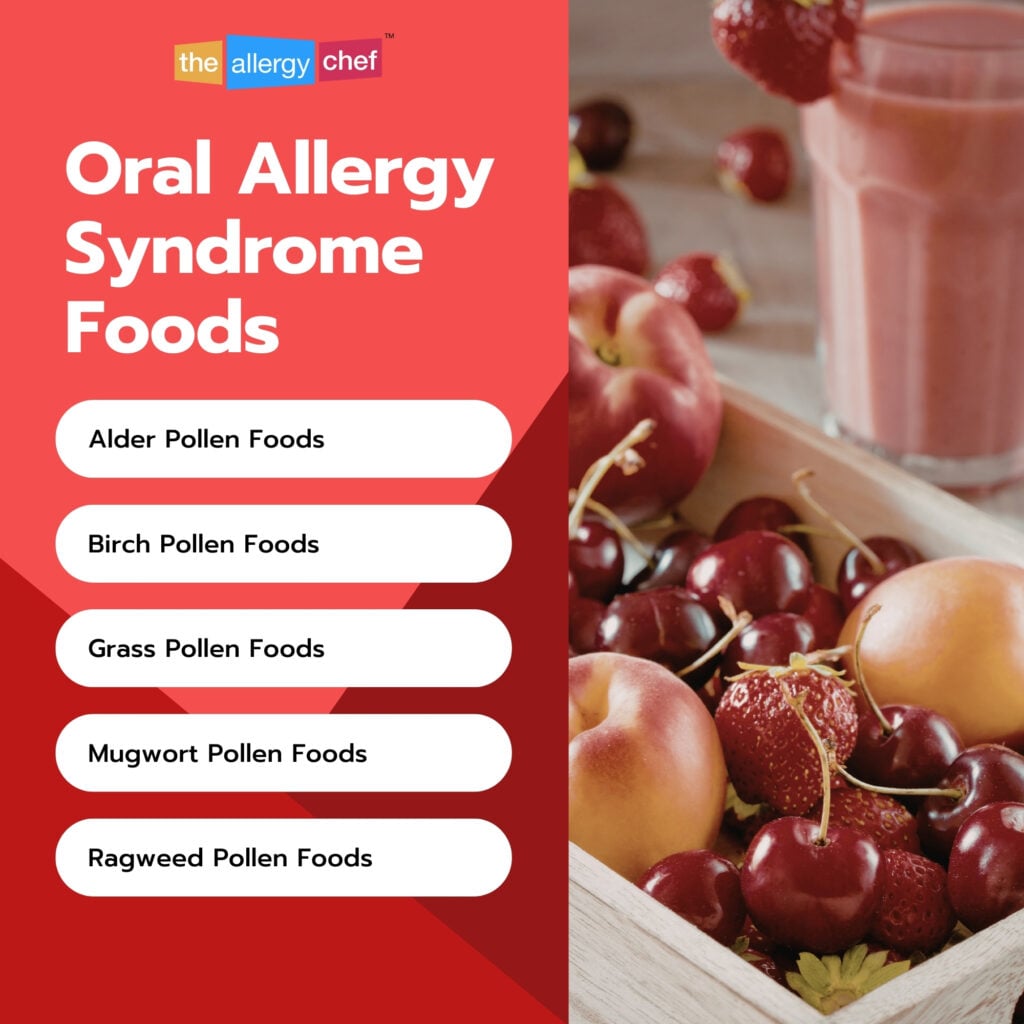
There are five major pollens at play where OAS is concerned: Alder Pollen, Birch Pollen, Grass Pollen, Mugwort Pollen, and Ragweed Pollen.
In the case of potato, it’s cross-reactive with birch, grass, ragweed.
If you’d like to read more about OAS and see cross-reactive fruits and vegetables, check out this article here on my website.
|
 |
 |
 |
Latex Allergy Connection
Many patients with a latex allergy have to eliminate foods that are cross reactive with latex. Foods all into three categories: low cross reactivity, moderate cross reactivity, and high cross reactivity.
Potato falls into the moderate cross reactive category alongside other foods such as carrot, celery, apple, and tomato.
If you manage a latex allergy, and need to eliminate moderate and high cross reactive foods, potatoes are off the menu until your medical team can help you determine which foods might be good for an oral challenge.
If you’d like to learn more about a latex allergy and cross reactive foods, read this article.
Different Names for Potato
Different forms of potatoes can have different names, and you may see them in a range of different foods. These are the names to be aware of:
- Potato
- Fingerling Potatoes
- New Potatoes
- Nightshade Potato
- White Potato
- Brown Potato
- Red Potato
- Potato Flour
- Potato Starch
- Potato Protein
- Potato Skins
Potato Allergy: List of Foods to Avoid
When you’re managing a potato allergy, know that there are foods that naturally contain potato products. When you see these food products from all around the world, you’ll know right away that potato allergens are present.
- Aloo Named Foods (aloo is the Indian word for potato)
- Älplermagronen
- Baked Potato (also called Jacket Potato)
- Batata Named Foods (batata can refer to potatoes in some languages)
- Bauernfrühstück
- Bonda
- Boxty (traditional Irish potato pancake)
- Cepelinai
- Chapalele
- Chips or Crisps
- Colcannon
- Cottage Pie
- Croquette
- Di San Xian
- Far Far
- Fish Pie
- French Fries
- Frozen Ready Meals (as a thickener or texture enhancer)
- Fondant Potatoes
- Gamja Named Foods (gamja is Korean for potato)
- Gnocchi
- Gratin (also called Scalloped Potatoes)
- Hash or Breakfast Hash
- Hash Browns
- Hasselback Potatoes
- Hot Hamburger Plate
- Knish
- Kopytka
- Korokke
- Latkes
- Mash (usually refers to mashed potatoes)
- Olivier Salad
- Papas Named Foods (papas meaning potatoes in Spanish)
- Patatas Bravas
- Pierogi
- Pomme Named Foods (pomme meaning potato in French)
- Potato Bread
- Potato Flakes
- Potato Nachos
- Potato Salad
- Potato Rosti (sometimes referred to as just “rosti”)
- Potato Waffle
- Potato Wedges
- Poutine (popular Canadian dish of fries, cheese curds, and gravy)
- Raclette
- Rappie Pie
- Rewena Bread
- Samosa
- Shepherd’s Pie
- Stamppot
- Tater Tots
- Tatties
- Tortilla Española
Hidden Sources of Potato: List of Foods That Can Contain Potatoes & Potato Starch
This is not an exhaustive list. Potato is used in a wide range of applications, especially in savory foods. Potato extract isn’t a super common ingredient, but can be present in some pre-made foods, so always take the necessary precautions and read labels (and contact companies if needed).
Just because a product type is on this list doesn’t guarantee the presence of potato (or the opposite).
- Bouillon
- Broths & Stocks
- Foods Labeled Gluten Free
- Baked Goods & Pastries (Cake, Cookies, Cheesecake, etc.)
- Candy (more common in vegan candies, but also in non-vegan candies)
- Casseroles
- Cereal
- Dairy Free Products (DF cheese, etc., usually as a thickener or filler)
- Fried Foods (via shared fryers, and/or in the batter)
- Fruit Snacks
- Gluten Free Foods (potato starch is VERY common in GF goods)
- Gravies and other thickened sauces
- Imitation Seafood (vegan tuna, imitation crab, etc.)
- Kosher Passover Foods
- Meat Marinades
- Medication (OTC and Rx, can be a filler in medications)
- Natural Flavors
- Noodles
- Pie Filling
- Processed Cheese
- Salad Dressings
- Sauces
- Snack Foods (pretzels, cookies, etc.)
- “Starches” or “Food Starch” (also sometimes called modified food starch)
- Soups
- Stews
- Stock Cubes (also called Bouillon Cubes)
- Supplements
- Vegan Foods (especially baked goods)
- Vodka
Potato proteins and potato derivatives also have uses in a wide variety of non-food items including bath & body products, adhesives, paper, and even packaging. Depending on your level of sensitivity, you’ll need to assess a range of non-food products.
For medications, you can get safe medication compounded and shipped to you.
Natural Flavors Warning
It’s not super common, but potato can be used as natural flavoring. Since potato isn’t a major allergen, it won’t be called out.
The term natural flavours encompasses thousands of individual substances and compounds. The only way to find out if potato is part of their blend of ingredients (natural flavours are usually a blend, not one item) is to call the company and request the details.
Explain that you have a potato allergy and you need to know about each of the ingredients in their natural flavours. Some brands will say things like “it’s proprietary”. If you run into that, walk away. Brands that can’t be transparent don’t deserve our support.
Eating Out at Restaurants with a Potato Allergy
If you’d like to eat at a restaurant whilst managing a potato allergy, you’ll have to do a lot of investigating before choosing to dine out. You’ll need to ask about easy to overlook things like shared pasta water, starches, and so on.
The absolute safest option will be an expensive farm-to-table restaurant directly on a farm where everything is made from scratch. In those environments, they have so much control over the ingredients and can accommodate those with food allergies pretty easily.
If you find a Paleo or AIP Paleo restaurant, they will naturally be potato free. Don’t confuse this with grain free. Potatoes are grain free, and will be used in that style of cuisine.
Raw vegan restaurants are few and far between, but will be naturally potato free since potatoes can’t be eaten raw. If they use pre-made (purchased) sauces, ask to see the ingredients.
Steak houses are another good option, as they might be able to season a basic piece of meat with salt + safe spices, and cook it in a clean pan. Do not get anything fried, as the fryers will be shared with potatoes. Instead, ask about steamed rice or steamed broccoli.
I’d be on the lookout for restaurants that advertise clean ingredients, and organic ingredients. That’s not to say they don’t use potato, but your chance of success is simply higher.
I suggest avoiding high-end restaurants that have rotating seasonal dishes that frequently change. Whilst they can make some minor adjustments, they really aren’t able to accommodate food allergy folks as easily since the ingredients are pretty set and the menu isn’t very flexible.
Cross Contact and Cross Contamination
Cross-contact and cross-contamination are not the same thing. When talking with food professionals, it’s important that you use the correct terminology. Cross-contamination refers to pathogens, and cross-contact refers to allergens.
Please read the article on this page to learn more about cross-contact, and how you can work towards preventing it.
Potato Substitutes & Potato Alternatives
Now we’ll take a look at some basic potato substitutes. You can read a lot more about substituting for potatoes in this article.
Potato Starch Substitute
The best potato starch substitutes will be:
- Arrowroot
- Tapioca Starch (this is cassava derived)
- Rice Flour
- Cornstarch
Arrowroot and cornstarch should be used for thickening sauces. Tapioca and rice should be used in gluten free baking.
Baked Potato Substitute
If you miss baked potatoes, you can use Japanese sweet potato or white yam as a potato substitute. It’s not quite the same, but you’ll still have a fabulous texture, and both alternatives hold up well to traditional toppings.
Potato Substitute in Soup
For soups that call for potato cubes, the best potato substitutes are:
- Parsnips
- Turnips
- White Carrots (specifically white)
- White Yam
For soups that are blended and potatoes are part of the ingredients (like leek and potato soup), here are the best alternative ingredients:
- Japanese sweet potato
- White Yam
- 1/2 Cauliflower + 1/2 Parsnips
Potato Substitute in Curry
The best potato alternative for a curry will be white yam, followed by Japanese sweet potatoes.
After those two vegetables, you can lean into other root vegetables including parsnips, turnips, and celeriac. These root vegetables won’t create as close of an experience as the top two swaps.
Potato Substitute for Mashed Potatoes
You can create a dish that resembles mashed potatoes from other vegetables including celeriac, yuca, cauliflower, sweet potatoes, and yams. This is one of the best ways to replace potatoes in your mash:
Celeriac + Parsnip + Japanese Sweet Potato
To use this combination, you’ll peel, cube, and boil 60% Japanese sweet potato + 20% parsnip + 20% celeriac.
Once they’re fork tender, process them through a potato ricer, then combine with a butter or cream of choice. This multi-pronged approach will get you a pretty good texture.
Potato Free Product Recommendations
Here are just a few tasty items/brands that are potato free, and very allergy friendly. If you’re newly diagnosed and feeling like shopping for snacks feels too big, do one of three things: ditch snacks for now, lean into fresh produce for snacking, or search for “AIP Paleo snacks” whilst shopping online.
- Artisan Tropic (cassava chips, plantain products, crackers)
- AshaPops
- Bearded Bros (clean snack bars)
- Carnivore Crisps
- Crunchsters
- Epic (meat bars)
- Flackers
- Gimme (seaweed)
- Healing Home Foods
- Karen’s Naturals
- Le Pain des Fleurs
- Lil Bucks
- Lundberg
- Masa Chips (seed oil free tortilla chips)
- North Coast (applesauce products)
- Simple Mills Products (cookies, crackers, etc.)
- Solely
- Sunnie (grain free crackers)
- SuperSeedz
- Wild Zora
Answering Your Potato Allergy Questions
If I have a potato allergy, should I avoid other nightshade vegetables?
You’ll want to work with your allergist and talk about cross reactivity. On the surface, if someone is ONLY allergic to potato, then no, you don’t need to avoid other nightshade vegetables.
However, if you have other medical conditions, manage seasonal allergies (and might have OAS), or have test results that imply you may be more prone to cross reactivity, you may need to avoid other vegetables.
You’ll want to work with your medical team, as they can order allergy tests (blood tests and skin prick tests), supervise an oral challenge, and give you great guidance based on your case history and test results. During this time, make sure you’re keeping a detailed food journal, that way, should symptoms develop, you’ll know what you’ve eaten.
I have sweet potato and potato allergies. What starchy vegetables can I eat instead?
I’m going to assume we’re thinking along the lines of mashed potatoes, roasted potatoes, and so on. In the case of sweet potato and potato allergies, these are my suggestions:
- Butternut Squash
- Yuca
- Acorn Squash
- Green Peas
- Parsnips
You’ll be able to make some very tasty recipes with these starchy vegetables.
Is a potato intolerance the same thing as a potato allergy?
No, a potato allergy and a potato intolerance (sometimes called a potato sensitivity) are two different medical conditions that have different pathways that elicit the responses. However, both will have the same approach in avoidance where potato is concerned.
An allergy can lead to anaphylaxis, and an intolerance cannot. The most common symptoms of food intolerances include painful cramping, digestive discomfort, headaches, lightheadedness, painful bloating & gas, skin problems, chronic congestion, skin rashes, and more. That’s not to say that these symptoms can’t cross over to food allergies, but you won’t experience the more severe allergy symptoms with an intolerance (such as difficulty breathing, severe vomiting, and so on).
For your overall health, well-being, and safety, you’ll want to make sure your meals are free from potato, potato starch, and all potato derivatives.
If you have a food intolerance, talk with your doctor about the consumption of potato via the form of natural flavours, and possibly potato starch in small amounts. You may not need to avoid potato down to that level since it isn’t an allergy.
Remember, no two immune systems are the same, and anyone can be allergic or intolerant to anything, and in any combination. Some people are able to have potato derivatives in small amounts, whilst managing an intolerance, whilst others cannot. If you fall into the cannot group, know that there are loads of delicious options that are still on the table.
How can I avoid accidental exposure to potato?
The first big thing to do is to avoid foods that contain potato and all forms of potatoes. From there, you can talk with food manufacturers before purchasing products to confirm potato isn’t in the product by way of things like starches or flavouring agents.
If you’re in the 30% group and can’t do shared equipment, you’ll need to ask a lot of questions to ensure your safety. Alternatively, you can lean into really simple/basic foods and make quality meals at home.
If you’re concerned about accidental exposure when eating out at restaurants, you’ll want to talk with a member of the restaurant staff in advance, extensively (ideally a manager or head chef). If potato is an ingredient in their stock or broth, know that a lot of menu items will be contaminated. The restaurant should have a list of ingredients for each product. You’ll want to avoid anything that contains natural flavors.
Unfortunately, there’s no 100% way to avoid every risk, unless you grow your own food and make everything at home. Even allergy friendly and free-from brands have the occasional food recall due to undeclared allergens because somewhere in their supply chain, a mistake was made.
What you can do however is be prepared. Make sure you have an action plan for your potato allergy and know what to do if you have an allergic response. Also make sure that those in your family know how to treat an allergic response and how to advocate for you if necessary.
When you’re new to food allergy management, everything is going to feel BIG. Every small choice will feel HUGE. Each meal can feel daunting (but also like a triumph). Over time though, you’ll find your groove and be a shopping pro, cooking pro, and totally starting to thrive and live your best life.
Is there a treatment or cure for a potato allergy or food allergies?
There is no cure for food allergies, but food allergy research is progressing each day and learning more about how the immune system works. We may see a cure in the future, but for now, the only approved medical treatment at the time of this writing is called Oral Immunotherapy (OIT).
OIT is never guaranteed to work. In fact, when someone passes, we say they’re “in remission”, not “cured”, as there are no cures for food allergies. Know that results vary from one individual to the next because this is all a science of the immune system. Since no two people are the same, it’s impossible to predict 100% of the time how individuals will respond to OIT.
During treatment, patients ingest small amounts of what they’re allergic to. Some start at less than a 1 gram dose, and for reference, an ounce is 28 grams. This is done in hopes of having the immune system build tolerance. Some patients do well with this therapy and some patients never get past the first dose because of how sensitive they are to the allergen.
One the thing about OIT that people don’t talk about enough is that just how you can gain tolerance, you can lose it as well. I’ve also met people in this boat where they passed OIT, then a few years later woke up one day and had a severe allergic reaction.
Additionally, those with EOE have a higher risk of developing complications and further issues if they undergo OIT. This type of science is, in my opinion, poorly understood, and all you can do is do your best and work with the knowledge you have and the guidance your medical team provides.
When it comes to OIT, really assess what it can do for you, and what your goals are. If the risk seems worth it, as an adult, I say go for it. If you’re managing a child, it’s different because of consent.
It’s really important that children give fully informed consent before you introduce known food allergens to their system (something a lot of parents overlook). This is doubly true if your child has a complex case.
Think of it this way: would YOU want something done TO you, or WITH you? There’s a big difference in those two scenarios.