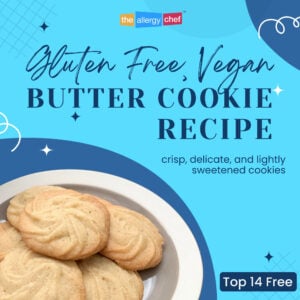
Today I’m going to show you how to transform simple ingredients into amazing vegan Danish butter cookies. This vegan butter cookie recipe is also gluten free, top 9 free, and top 14 free, making them super duper inclusive.
Don’t let that allergy status fool you though. These gluten free Danish butter cookies have gotten rave reviews from bakery customers and taste testers (without food allergies or dietary restrictions).
Be sure to review the ingredient notes, as well as the Q&A section at the bottom of the post (or use the table of contents to jump to questions you have). Make sure you subscribe to my newsletter where I share amazing resources, free-from tips galore, deep dives, and of course, my latest recipes.
Allergy Status
Free From: Wheat/Gluten, Dairy, Egg, Soy, Tree Nuts, Peanut, Fish, Shellfish, Sesame, Top 9 Allergens, Top 14 Allergens, Alliums, Apple, Avocado, Banana, Beans & Lentils, Berries, Buckwheat, Carrot, Celery, Cinnamon, Citrus, Coconut, Cruciferous, Garlic, Latex Cross Reactive Foods (H/M), Legume, Lupin, Mushroom, Mustard, Nightshade, Oat, Onion, Pea & Pea Protein, Potato (Nightshade Variety), Poultry, Red Meat, Rice, Seeds**, Squash & Gourd, Stone Fruits, Strawberry, Sweet Potato & Yam, Tapioca/Cassava/Yuca/Manioc, Tomato, Yeast
Friendly To: EOE, FPIES, Low Histamine, Migraine Diet (Cleveland Clinic & Johns Hopkins), Vegan
Compatible With: Corn Free
Truly Corn Free: Use a safe fat such as Spectrum Organic Shortening, or dairy based butter. This alters the taste and texture a bit, however, you’ll still have awesome cookies.
Low Histamine Reminder: If vanilla extract isn’t tolerated, swap for 3/4 teaspoon of ground vanilla.
**If you have a seed allergy, this article talks about millet. Some seed free people can have millet and some can’t. If you cannot tolerate millet, swap for superfine brown rice flour or superfine sorghum.
Necessary Tools to Make these Vegan Danish Butter Cookies
- Kitchen Scale (this is the one that I love)
- Stand Mixer with Paddle Attachment OR Electric Hand Mixer + Large Bowl
- Baking Tray
- Parchment Paper
- Spatula (this is the one that I really like)
- Cookie Dough Scoop OR Disposable Piping Bag + Large Open Star Tip (Wilton 6B and Wilton 1M are good choices)
Vegan Butter Cookie Recipe Video
If you like videos, check out this short video where you can see these awesome cookies take shape.
Ingredients for This Vegan Butter Cookie Recipe
Part 1 Ingredients
- 250g Dairy Free Butter (see instructions for how soft it should be)
- 70g Organic Powdered Sugar
Part 2 Ingredients
- 100g Sorghum Flour, superfine
- 60g Millet Flour, superfine
- 60g Organic Tiger Nut Flour (tuber, not a tree nut) OR Organic Gluten Free Purity Protocol Oat Flour
- 30g Arrowroot
- 2 TBSP Milk of Choice
- 1 tsp Organic Vanilla Extract
- 1/2 tsp Sea Salt
Vegan Holiday Cookies
Whilst vegan butter cookies can be eaten year round, they also feel like the sort of cookie you have at Christmas. If you’re looking for more delicious vegan holiday cookies, here are some recipes to try.
- 25 Gluten Free + Vegan Christmas Cookies
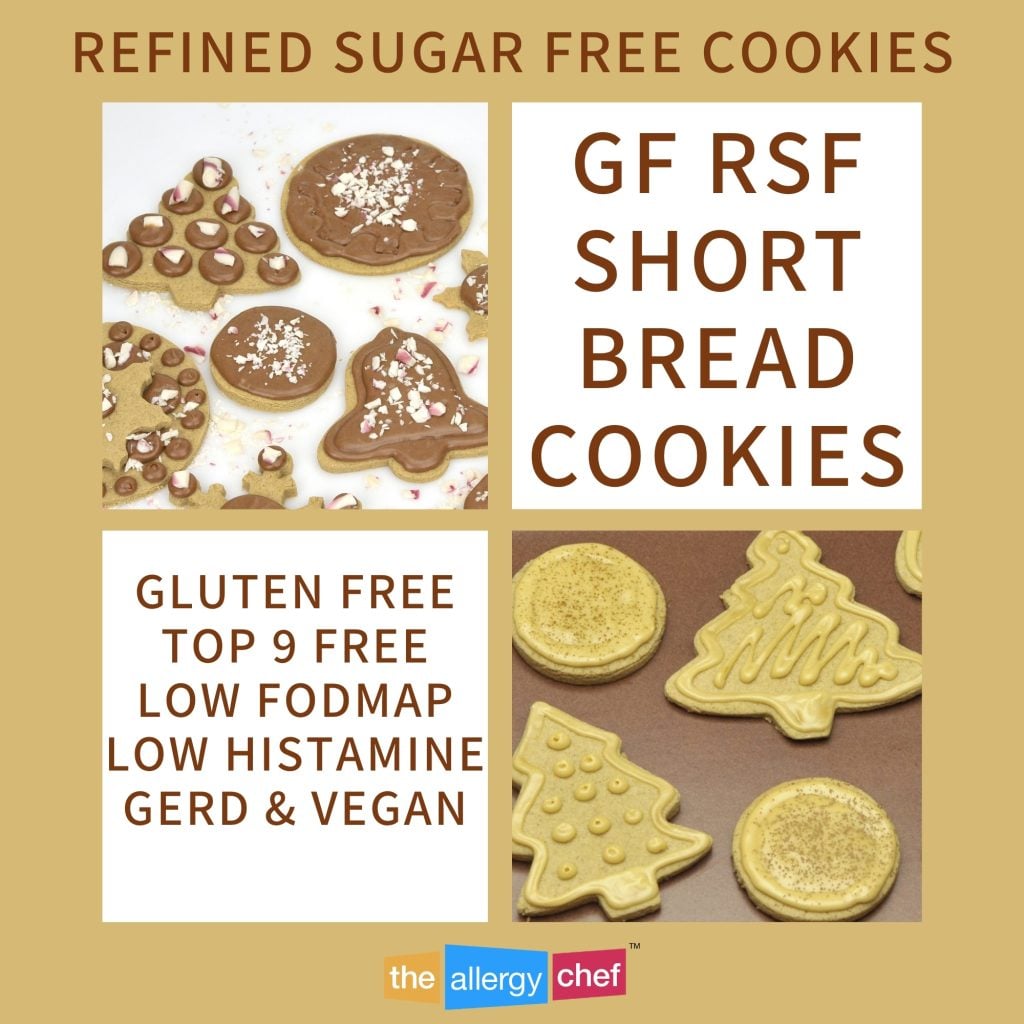
- Gluten Free + Vegan Shortbread Cookies (good for making roll out/cut out cookies, also refined sugar free)
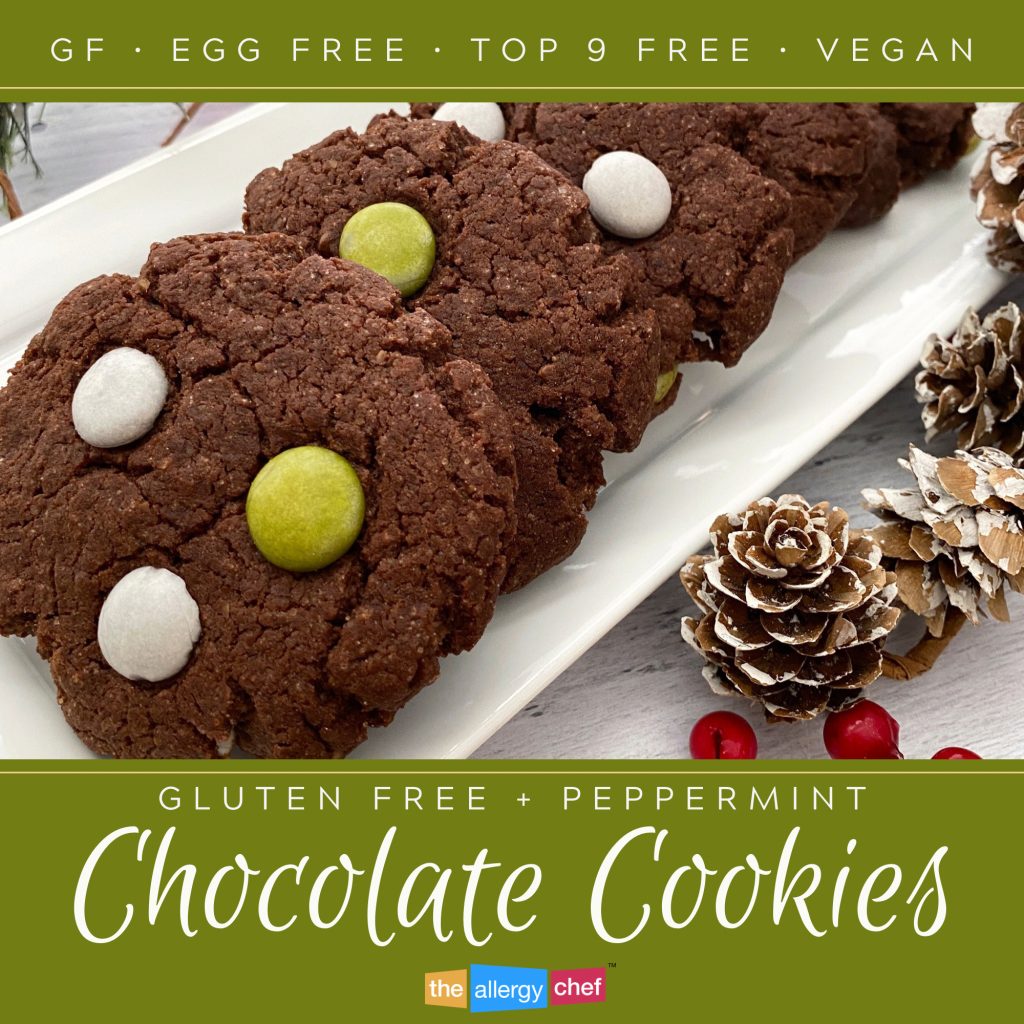
- Gluten Free Chocolate Cookies with Peppermint Candies
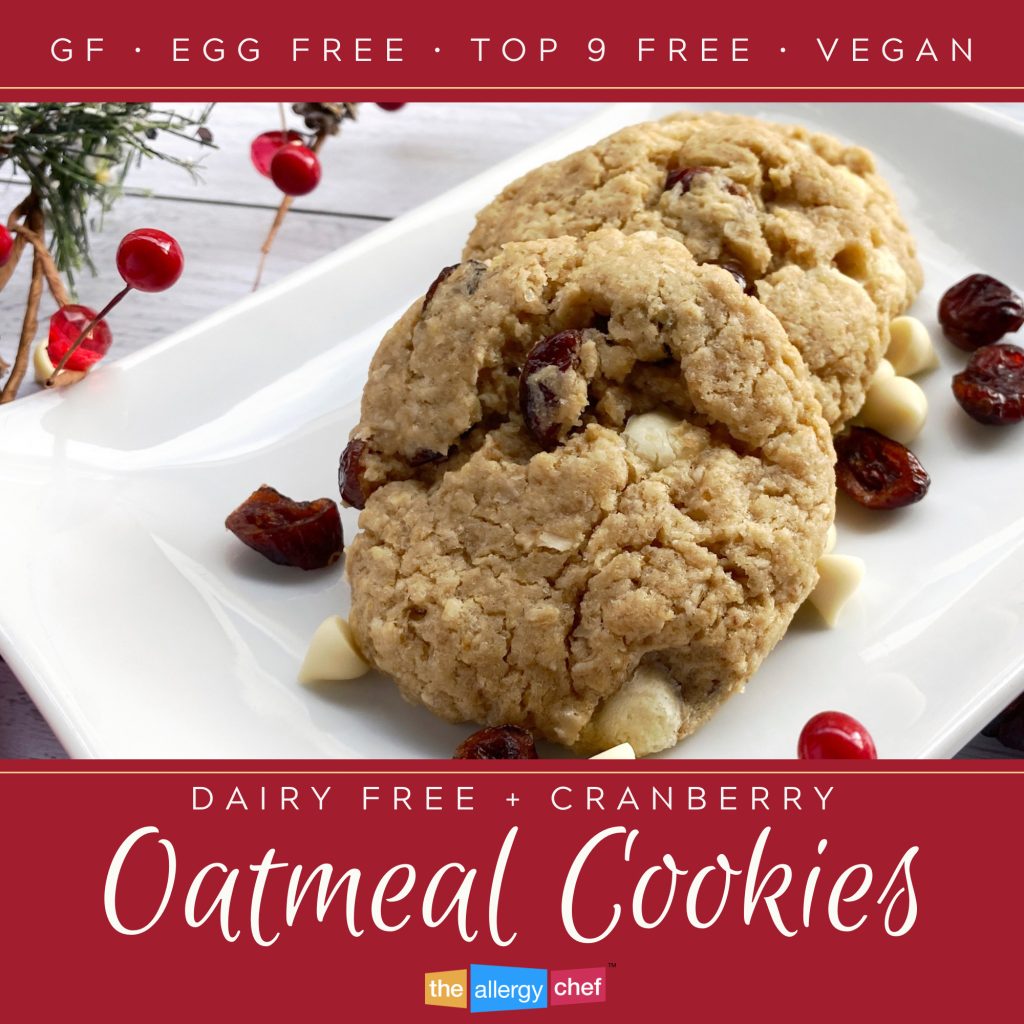
- Dairy Free Oatmeal Cookies with Cranberries and White Chocolate
 |
 |
 |
 |
Important Ingredient Notes & Substitutions
Gluten Free Flour: The tiger nut flour and oat flour are interchangeable. The weights are similar, as is the taste. I use superfine flours as they produce the best gluten free results. If you use a gluten free all purpose flour, use a total of 250g. However, if the flour has additives and/or gums, your results may vary wildly.
If you’re new to gluten free baking and would like to learn how to make your own GF flour blend at home, check out this helpful article on gluten free flour.
Wheat Flour: If you don’t need a gluten-free version, use 250g of your favourite all purpose flour. Be careful to not overwork the dough as we aren’t trying to develop gluten.
Milk of Choice: You can use any milk in this vegan butter cookie recipe including oat milk, soy milk, almond milk, or even a homemade milk. If you’re reading this and you’re not vegan, you can use mammal’s milk as well.
Dairy Free Butter: You can use any brand of dairy free butter including Earth Balance and Miyoko’s. If your vegan butter has a really powerful taste that isn’t like a traditional butter, make half a batch to make sure you really like the taste, as this is a butter forward cookie recipe.
Sorghum Flour: You can swap this with superfine brown rice flour if needed.
Powdered Sugar: Do not swap this for any other sugar or sweetener (maple sugar, brown sugar, coconut sugar, Stevia, applesauce, etc.)

Directions
- Prep Time: 10 Minutes
- Bake Time: 20 – 24 Minutes
- Total Time: 40 Minutes (with cleanup)
- Oven Temperature: 325f/163c
For best results, your dairy free butter should be almost room temperature. It should have some resistance, but not be cold and hard to work with. Completely softened vegan butter won’t work since your cookie dough will lose its shape once it’s piped out of the decorating tip/nozzle.
I use a stand mixer with the paddle attachment to make these beauties. Now, for the simple steps to make your cookies.
Place the empty bowl of your stand mixer on your kitchen scale and tare to zero. Add your butter and sugar, then combine. If you’re using a handheld electric mixer, start on your lowest speed to gently combine the butter and sugar to avoid having a massive mess. If you’re using a stand mixer, pulse at the start, and when the sugar is a little wet, whip on medium speed.
Turn your mixer off and return the bowl to the scale. Tare to zero and add all of the other ingredients. Once they’re in, mix until a cookie dough forms. See, told you it was easy 🙂
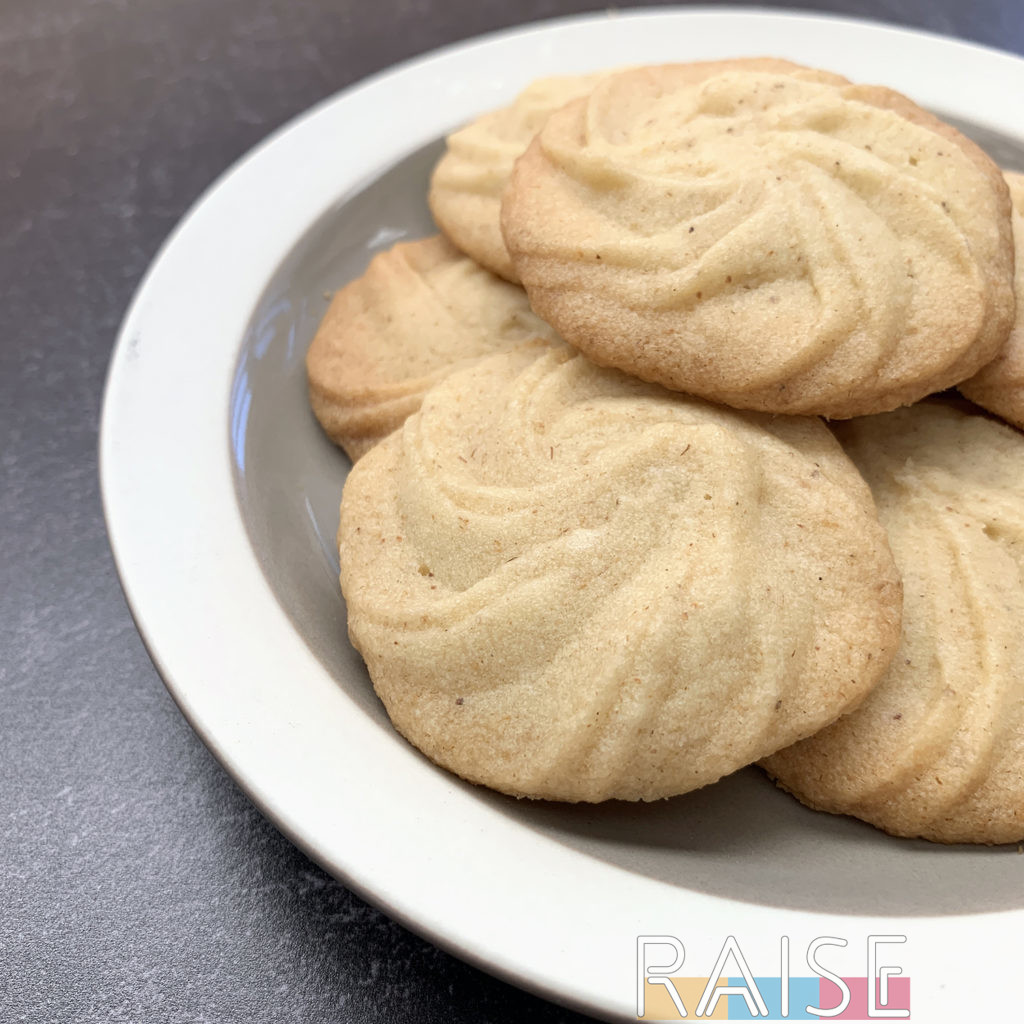
Line a baking tray with parchment paper and preheat your oven to 325f/163c. For cute cookies, place a large star decorating tip into a piping bag. Pipe your cookie dough directly on the lined baking sheet. The cookies don’t hold the same perfectly, which you can see in my photo, but, the piping does create a cute looking cookie.
If you want perfect cookies, you could experiment with piping, then chilling. I will add, whilst you could bake a chilled dough, the taste testers didn’t mind one bit.
Bake cookies at 325f/163c for 20 – 24 minutes. Allow them to cool completely on the baking tray. The end result should be a cookie that’s delicate, yet crispy, has nice golden brown bottoms, and is melt in your mouth amazing.
More Vegan Cookies to Explore
If you need Egg + dairy free options, I’ve got you covered! In fact, these vegan cookie recipes are all gluten free, top 9 free, and more.
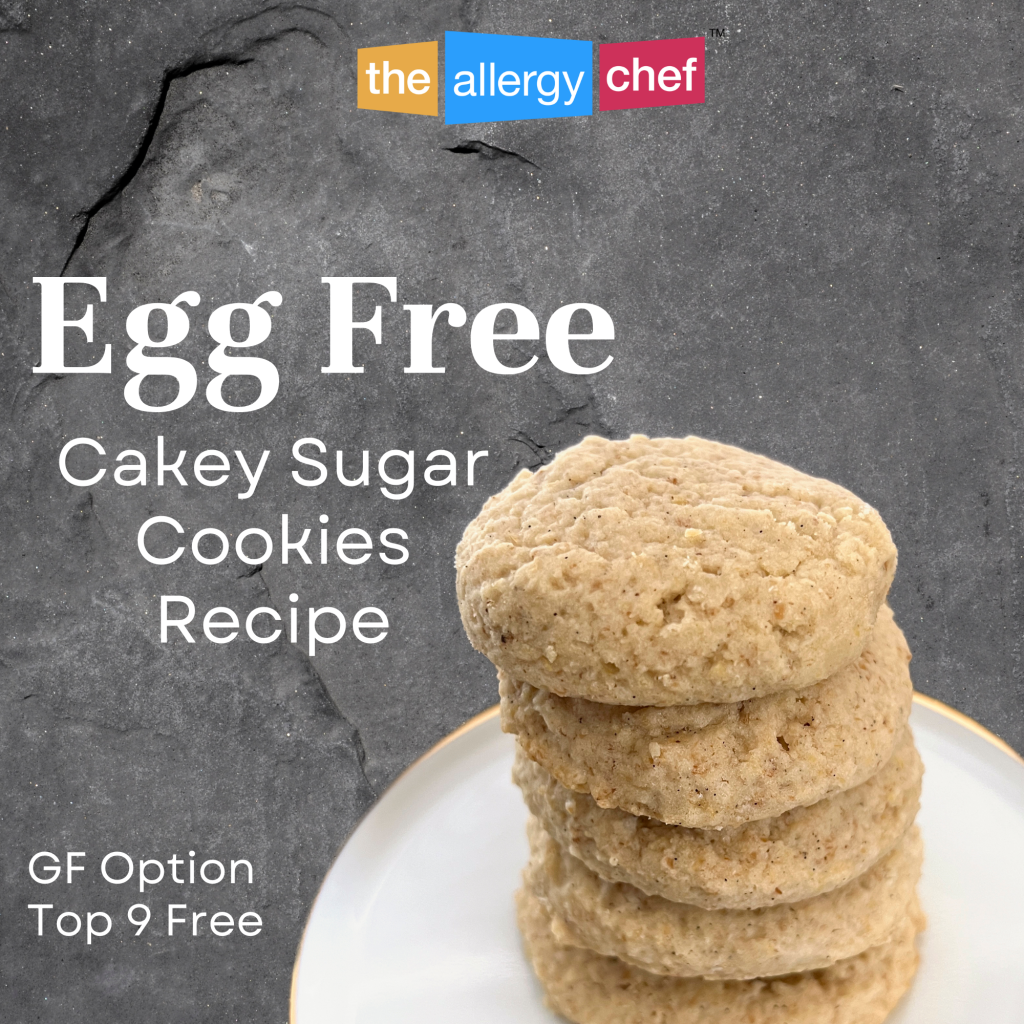
- Cakey Vegan Sugar Cookies Recipe (a really easy dessert to make)
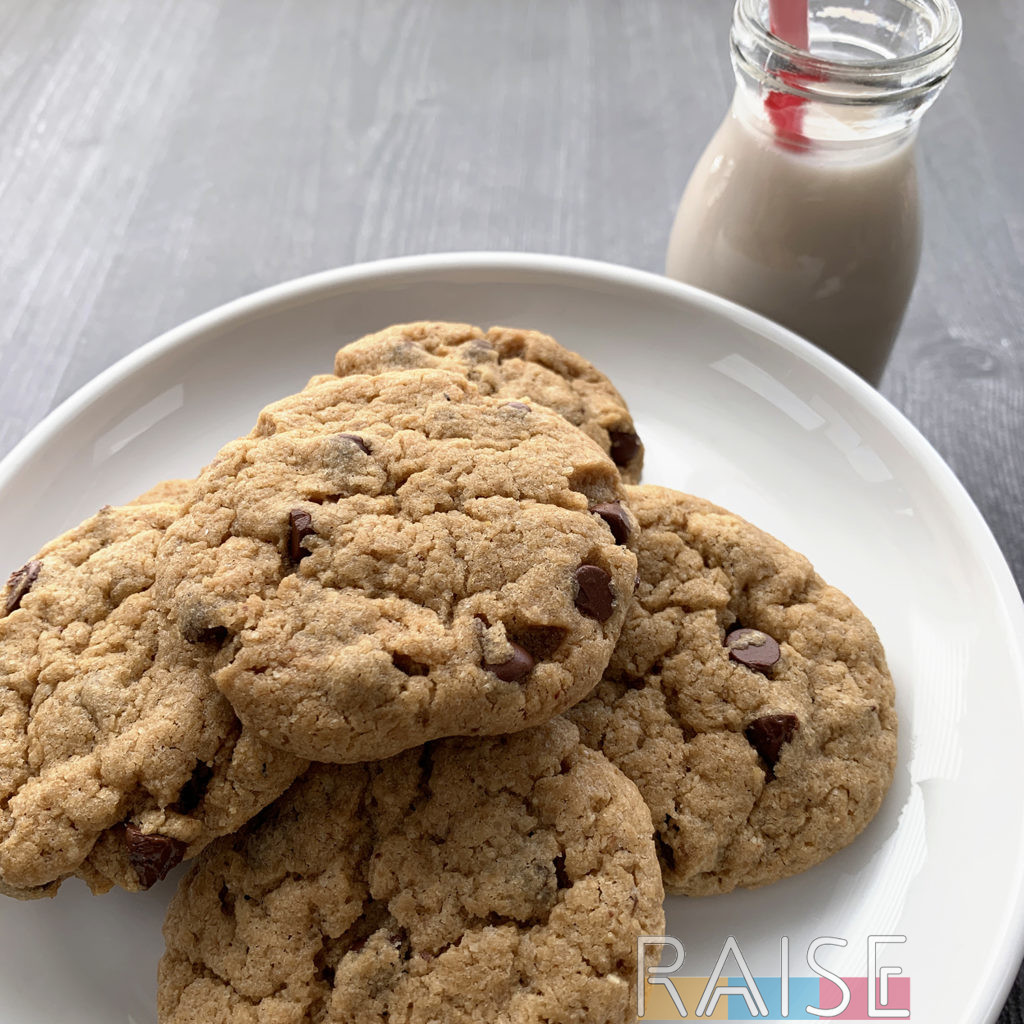
- Gluten Free Chocolate Chip Cookies (top 9 free, one of my kids’ all time favorite cookies)
- Truly Corn Free Crunchy Cookie (this recipe uses oil, not vegan butter)
- Classic Oatmeal Raisin Cookies (I like making mini cookies and adding them to my kids’ lunches as a snack)
 |
 |
 |
 |
Vegan Butter Cookie Storage
After you’ve made these easy vegan butter cookies, it’s time to store them. These vegan butter cookies can be stored on the countertop at room temperature for 4 days, or you can freeze them for many months. I don’t suggest storing these in the fridge.
One of the best things about this recipe is that your cookies are freezer friendly. To freeze your cookies, place them on a single layer on your large baking tray. It’s OK if the sides are touching. If you need a second layer, place a piece of parchment over the first layer of cookies first. Having a sheet of parchment paper between the two layers will prevent the cookies from clumping together when frozen.
Place the entire baking tray into your freezer. Once the cookies are frozen solid, transfer them to an airtight container. Since these cookies are delicate, you’ll want to use a clamshell container or glass container with a lid, and not freezer baggies. If this is your first time purchasing clamshell containers, they’re like cupcake cases, but without the dividers to hold a cupcake in place.
Make sure the container is labeled. These cookies can be frozen for 4 – 6 months before you start to see a decline in the texture. To thaw, leave some cookies out on the counter, at room temperature for 45 – 60 minutes. Once thawed, you’ve got the perfect little treat.

Delicious Serving Ideas
There are quite a few ways you can have fun when serving this vegan butter cookie recipe. There’s the obvious- having your cookies with milk or coffee they have a nice crunch. However, the real fun, if you ask me, is to make a vegan afternoon tea experience. Go all out with cute little sandwiches, scones, and these tasty cookies.
Serve your cookies with jam or a homemade compote. Sine these cookies are naturally low in sweetness, adding a jam won’t feel like you’re hitting Candyland.
Make PB&J cookie sandwiches! You can use seed or nut butters (here’s an article about all the different butter options) paired with a jam or jelly you love to top a cookie. You can put a swirl of your nut/seed butter and a swirl of jam on one cookie for an open faced sandwich, or, add a good amount of both peanut butter and jelly and top with a second cookie. Either way, it’s a fantastic experience.
Jazz up the appearance with melted chocolate and sprinkles. Once your cookies have baked and cooled, dip one side into a bowl of melted chocolate (this is simple as melted vegan chocolate chips). Place it on a piece of parchment paper, and top with sprinkles. As the chocolate sets, the sprinkles will be held in place, and the end result will be very festive (and photo/Instagram ready).

Answering Your Questions About This Vegan Butter Cookie Recipe
Should I cool the cookies on a wire rack?
No, in fact, it’s important that you cool the cookies on the tray completely. In a pinch, you can cool them for at least 10-15 minutes (or longer). The tray cooling method taps into “carryover cooking”. It’s where we take advantage of the residual heat on the baking tray to continue to cook the cookies. In gluten free + vegan + free-from baking, this is a huge part of the process.
A wire rack has no heat, and introduces more air flow, which can rapidly cool your cookies. We don’t want that, so, with this recipe, cool them on the baking tray.
Also, cooling completely on the tray (rather than a cooling rack) gives your cookies more time to develop that lovely crispy edge that I know you’ll love.
Will this recipe work in a cookie press?
Maybe. The dough is pretty soft, and I’m not sure if it would make it through the press without a few extra tablespoons of flour. However, more flour will throw off the final results. If you want to test this, you could take a small amount of dough and try to run it through your press, then do a test bake.
They won’t hold the intricate shape most presses create, so keep that in mind. Look at the pictures again and look at how my circle of piped dough was, compared to the cookies on the plate. That’s how these cookies perform, so keep that in mind if you want to proceed with a cookie press test.
I’ll also add, I definitely don’t suggest trying to use cookie cutters with this recipe. If you want a specific set shape, make this vegan shortbread cookie recipe instead.
Are these cookies like shortbread cookies?
No, not really. They’re maybe a cross between a snap, a sugar cookie, and a shortbread cookie. Shortbread cookies are less delicate than this vegan butter cookie recipe, and they’re also a bit thicker when you bake them.
You can also roll out the dough of shortbread cookies and use a cookie cutter for various shapes, which you won’t be able to do with this recipe.
Check out this article to learn more about shortbread cookies and sugar cookies. Whilst this vegan butter cookie isn’t quite a sugar cookie, the info is still pretty good.
Could I swap the butter for coconut oil?
From a functionality standpoint, yes, you can make that swap since coconut oil is a fat that’s solid at room temperature. From a taste standpoint, I wouldn’t do it. These aren’t “vegan coconut cookies” they’re “vegan butter cookies”.
Coconut oil is going to create a VERY different flavour profile, and if you don’t love the taste of coconut, you might hate your cookies a little bit. Rather than go all in, start with 65% dairy free butter and 35% coconut oil. See if you like that taste, then when you make the cookies again, increase the coconut oil in the ratio.
Can I portion these with a cookie scoop instead of a piping bag?
Yes, you can skip the pretty piping and make cookie dough balls instead. Use a small or medium cookie dough scoop to portion dough, give it a quick roll, and a light press. The cookies will have a good amount of natural melt/spread, so you don’t need to press down much.
If you’d like your cookies to have some kind of look, you could mess about with a fork and kind of press into it, almost like how you press into pie crust with a fork. No promises it looks pretty, but at least you can say you tried.
Is pure vanilla extract the same thing as organic vanilla extract?
No, these are not the same thing. This is the organic vanilla extract that I use and you can see, there are only three ingredients (water, alcohol, vanilla). A lot of “pure vanilla” products contain other ingredients, including sugar. This brand is considered a high quality brand, but their pure vanilla extract contains the additional cane sugar.
Now, this is allowed by the FDA (the use of the word pure, alongside extra ingredients). In most cases, the sugar is used as part of the extraction process, rather than being something that’s added later.
In terms of quality, first place will go to an organic vanilla extract like the one that I use. Second place will go to a pure vanilla extract that’s using minimal ingredients. All other products including things like “vanilla flavor” are going to be low cost options that won’t deliver the same taste or quality experience.
Remember, I owned and operated an award winning free-from bakery for years and people without food allergies said it was the best they had ever eaten. Why? Because I only used super high quality ingredients, and organic where available. People could literally taste the difference. If you have sensitive taste buds and only want the best, use the products that I use, even if your grandma swears by the cheap stuff.
Can I swap the flours listed for almond flour?
In this vegan recipe, no, you cannot swap the flour blend for a standalone flour such as almond flour (or other single flours like coconut flour, cassava flour, etc.). If you have a homemade all purpose flour blend that includes almond flour, you can use that instead.
A single flour such as almond flour won’t provide the same texture that we’re going for. It will also completely alter the taste and performance of these cookies (and not in a good way).
Could I use whole wheat pastry flour in place of your flour blend?
My gut reaction is to tell you no, however, it miiigghhhhtttt work. Rather than test this out on a whole batch, start with half the recipe and use your whole wheat flour to replace the sorghum + millet + tiger nut + arrowroot.
Usually, I’d say you should use an all purpose flour since it generally performs well in every instance. Whole wheat flour can be a little finicky, and I’d hate to see you waste an entire batch if you don’t like it. Hoping for a delicious outcome!
Would this recipe benefit from a flax egg?
The best part about this tasty cookie recipe, in my humble free-from opinion, is its simplicity. There are a few wet ingredients and a handful of dry ingredients, and that’s it. Adding a flax egg isn’t necessary because the few wet ingredients that are there are enough to bind this cookie dough together. Additionally, if you add a flax egg, you’d be throwing off the liquid ratio and you’d have to add more flour to balance it out to still produce the lovely crispy cookie in the end.
Could I swap the butter for almond butter?
I think you’re trying to make vegan almond butter cookies with that swap, or you’ve run out of dairy free butter. Either way, no, you can’t swap the butter for almond butter. The reason is because vegan butter is solid at room temperature where almond butter is not. Now, some brands are more solid than others, but it’s still not at the same level as butter.
Instead, to make vegan almond butter cookies, start with this cookie recipe. Use almond butter as your peanut butter substitute, and I think you’ll be happy with the results. Know that for cookies, you need a solid fat involved so that they firm up properly once cooled (think cookies versus cake).
Can I swap the arrowroot for cornstarch?
Maybe. In theory, yes. In practice, I can’t tell you because I have a severe corn allergy and have never baked with cornstarch. You should be able to substitute arrowroot for corn starch, and even potato starch in a pinch.
Can I substitute vanilla extract for vanilla bean paste?
In theory, yes. However, I don’t personally work with vanilla bean paste. You’d have to look up the ratios online to know how much of the paste to use when compared to the extract. Also, make sure you’re looking at ratios for a light cookie, not something like brownies or chocolate cake, as the amounts will change.
Is non-dairy the same thing as plant-based?
So, this is going to be a bit of an answer, because both non-dairy and plant-based have some history. First, by definition, no, they aren’t the same.
Second, by human use, they are the same, as in, people use the terms interchangeably, even though they really aren’t.
To better understand this, you need more terms: dairy free, vegan, and vegetarian. Now, let’s take a deep dive.
Non-dairy legally means that there can be up to 0.5% milk present. Or at least, it used to have this meaning. Now, it’s a bit in limbo.
Dairy free means that legally, no milk is present, whatsoever.
Plant-based has no legal definition. It can mean 70%+ made from plants, all the way up to 100% made from plants.
Both vegan and vegetarian technically could be called plant-based.
By definition, vegan means zero animal or insect products or by-products. Vegetarian on the other hand allows for ingredients that are animal based if the animal doesn’t die, and no animal flesh, so milk and eggs are on the menu.
Plant-forward is an emerging term that would allow plant-based to mean 100%
See how it’s all kind of a mess? Here’s the bottom line, if you see a package of say margarine or milk and it says “plant-based”, that’s usually going to mean vegan and no milk present. However, never skip reading labels because some margarine products contain milk via the flavouring agent.
Also, never get complacent if you’re managing a food allergy. Always, always, always double check the ingredient list to ensure there aren’t any caseinates present, or anything else that’s milk derived. I’ve personally seen at least one brand of margarine have a contains statement for milk, even though the ingredients all appear to be dairy free (I had to assume it was in the natural flavors).