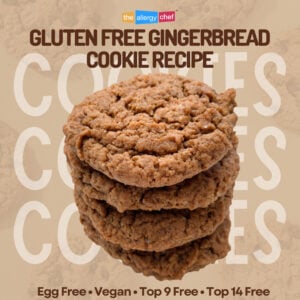
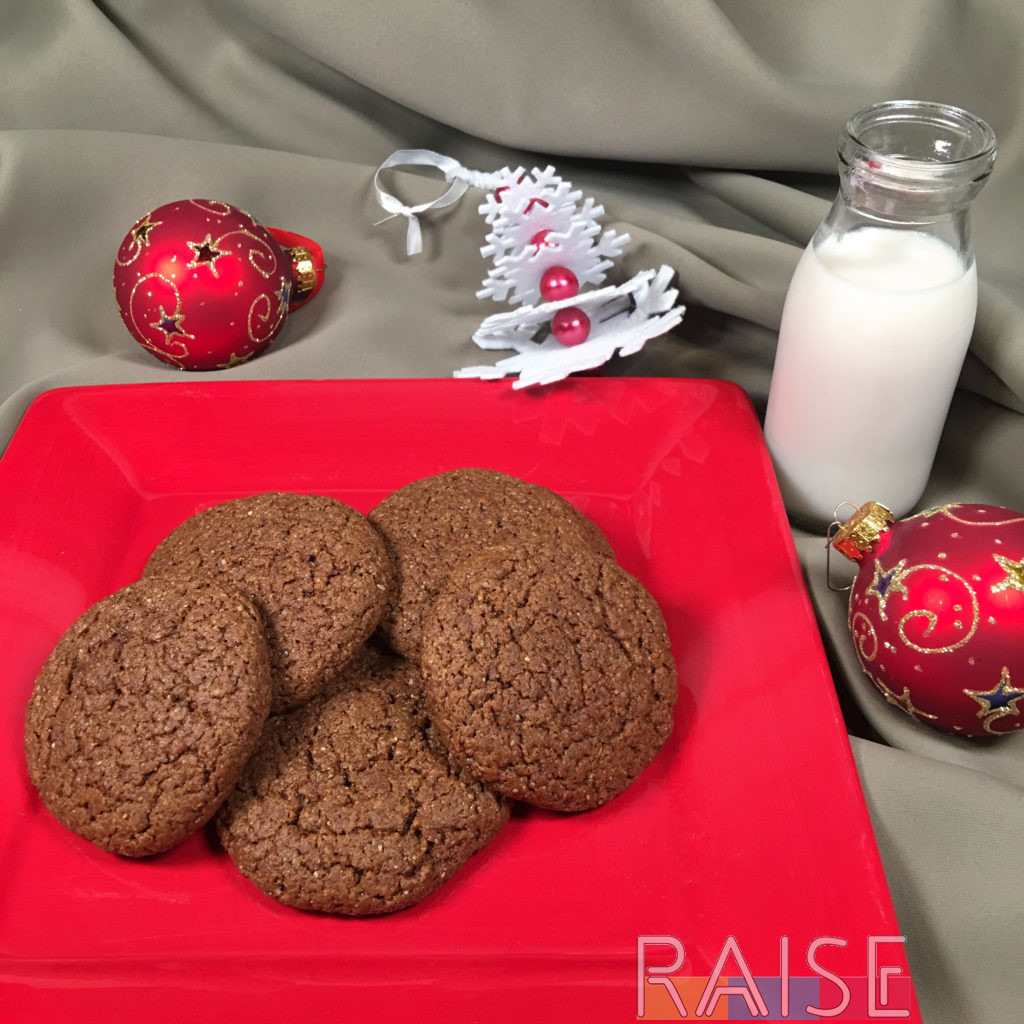
It’s time for us to make an amazing gluten free gingerbread cookie recipe together! I’m so pumped because this is something I make with my kids each holiday season. I also include it in the Christmas cookies box I share with friends and neighbors.
This gingerbread cookie recipe produces rich, chewy gluten-free cookies, rather than a ginger snap style cookie. You can also use this recipe to roll out dough and grab your favourite gingerbread man cookie cutter and go to town making a little village of people.
Know that this is an easy recipe. If you skip the cookie cutters, it takes 10-12 minutes to go from ingredients to oven. One last note before we jump in: this is a vegan, top 9 free and top 14 free recipe making is super duper inclusive. Don’t let the free-from status fool you though, this recipe was a top seller during the winter months at my free-from bakery.
Note: This is not a ginger snap cookie recipe that’s crunchy. This is a gluten free bakery soft baked gingerbread cookie recipe.

Allergy Status
Free From: Wheat/Gluten, Dairy, Egg, Soy, Tree Nut (including Coconut), Peanut, Fish, Shellfish, Sesame, Top 9 Allergens, Top 14 Allergens, Alliums, Avocado, Banana, Beans & Lentils, Berries, Buckwheat, Carrot, Celery, Citrus, Cruciferous, Garlic, Legume, Lupin, Mushroom, Mustard, Nightshades, Oat, Onion, Pea & Pea Protein, Potato (Nightshade Variety), Poultry, Red Meat, Rice, Squash & Gourd, Stone Fruits, Strawberry, Sweet Potato & Yam, Tomato, Yeast
Friendly To: EOE, Vegan
Compatible With: Apple Free, Latex Cross Reactive Foods Free (H/M), FPIES
Apple Free, Latex Cross Reactive Free, FPIES: Use an alternative vinegar such as white or rice.

Gingerbread Cookie Recipe Video
If you’d like to see these gluten free cookies come together, check out this short video.
Tools Needed to Make This Gluten Free Gingerbread Cookie Recipe
These are the tools you’ll need for both types of gluten free gingerbread cookies. I’ve linked you to the products that I personally use and LOVE.
To Make Cookie Dough & Bake
- Kitchen Scale (this is the one that I love)
- Small Bowl
- Stand Mixer with Paddle Attachment OR Electric Hand Mixer + Large Mixing Bowl
- Baking Tray
- Parchment Paper
- Spatula (this is the one that I really like)
- Cookie Dough Scoop
To Make Cut Out Cookies & Decorate
- Rolling Pin
- Cookie Cutters (these are adorable to the max and I love using them every year)
- Piping Bag
- Scissors

Ingredients for This Gluten Free Gingerbread Cookie Recipe
Flax Egg/Gel
- 5 TBSP Golden Flax Meal
- 10 TBSP Water (room temperature)
Part 1 Ingredients
- 225g Dairy Free Butter (8 ounces)
- 250g Organic Dark Brown Sugar
Part 2 Ingredients
- 150g Sorghum Flour, superfine OR Brown Rice Flour, superfine
- 150g Millet Flour, superfine
- 100g Organic Gluten Free Purity Protocol Oat Flour OR Organic Tiger Nut Flour (tuber, not a tree nut)
- 30g Arrowroot (click here to learn more about this awesome ingredient)
- 6 tsp Organic Ground Cinnamon
- 4 tsp Organic Ground Ginger
- 3 tsp Baking Powder
- 1 tsp Organic Ground Nutmeg
- 1/2 tsp Sea Salt
- 6 dashes Organic Ground Cloves
Part 3 Ingredients
- 7 TBSP Organic Unsulphered Molasses
- 3 tsp Organic Apple Cider Vinegar
- 2 tsp Organic Vanilla Extract

Important Ingredient Substitutions & Notes
Golden Flax Meal: Flax meal is not the same thing as flax seeds (same plant, different processing). This is the best brand to use.
Dark Brown Sugar: This is a granulated sweetener, and can only be swapped with other granulated sweeteners. Liquid sweeteners such as honey, maple syrup, and agave won’t work. Additionally, “special sugars” such as Stevia, monk fruit, and erythritol won’t work either.
The best swaps for the dark brown sugar are organic maple sugar, organic coconut sugar, organic date sugar, muscavado sugar, and demerara sugar. These are the best because they’ll have deeper flavour when compared to white cane sugar.
Molasses: To scoop molasses, I use a cookie dough scoop. It’s MUCH easier than trying to use a measuring cup and then trying to scrape it all out. You know what I’m talking about 🙂
Organic: Do you need to use organic ingredients like me? Only if you want the absolute best results that you can taste. If this is your first time venturing into the world of free-from, I’d encourage you to purchase organic from the start. All of my tasters say they can absolutely taste the difference. However, if you already have a cabinet of spices and flours, use what you have.
Gluten Free Christmas Cookies (Recipes & Tips)
If you manage Celiac Disease, food allergies, or any kind of dietary restriction, I sure hope these delicious cookie recipes help you during the holidays. Or year round if you want Christmas cookies in March. You won’t find any judgement here.
Honestly, I just love making cookies gluten free + dairy free + egg free (and more) so there’s a seat at the table for as many people as possible, so get busy baking and sharing with friends and family.
- 25 Gluten-Free Christmas Cookies + Loads of Gluten-Free + Allergy Friendly Baking Tips
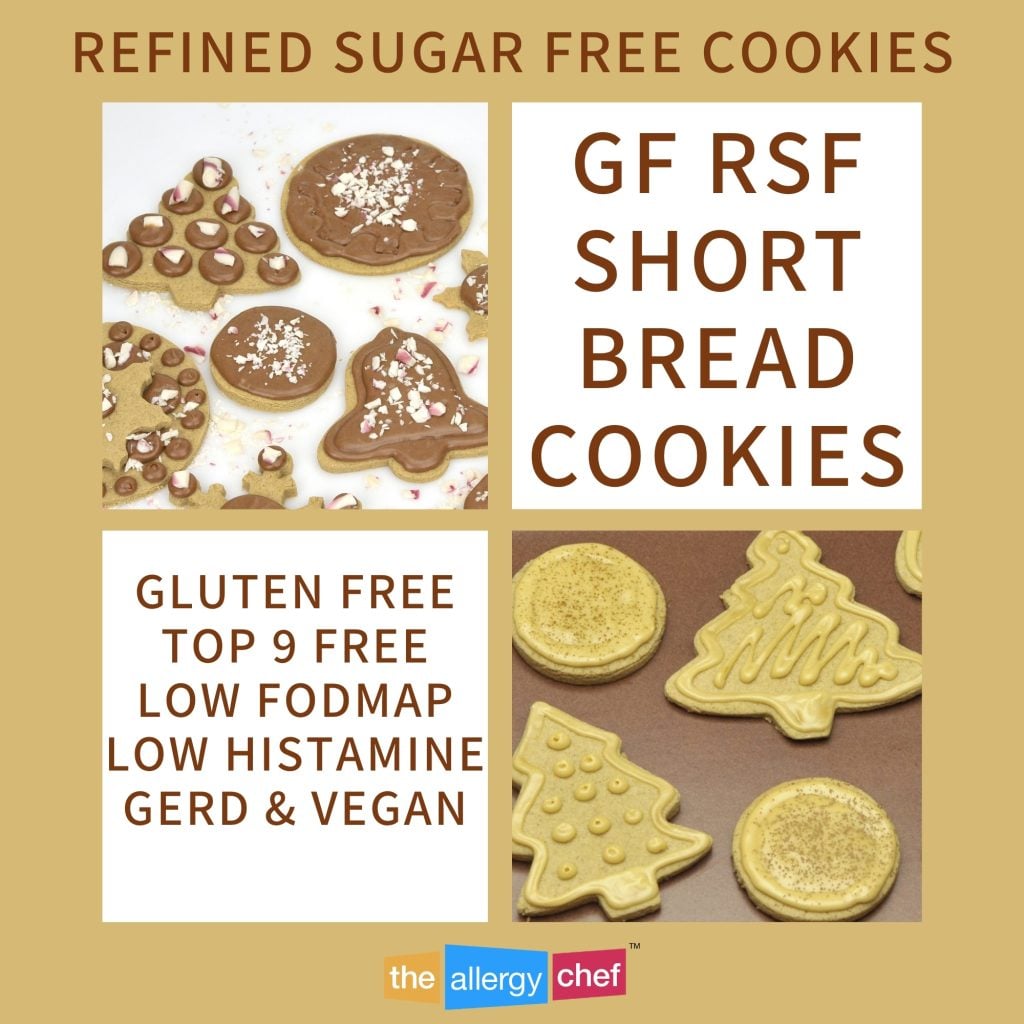
- Gluten-Free + Refined Sugar Free Shortbread Cookies Recipes
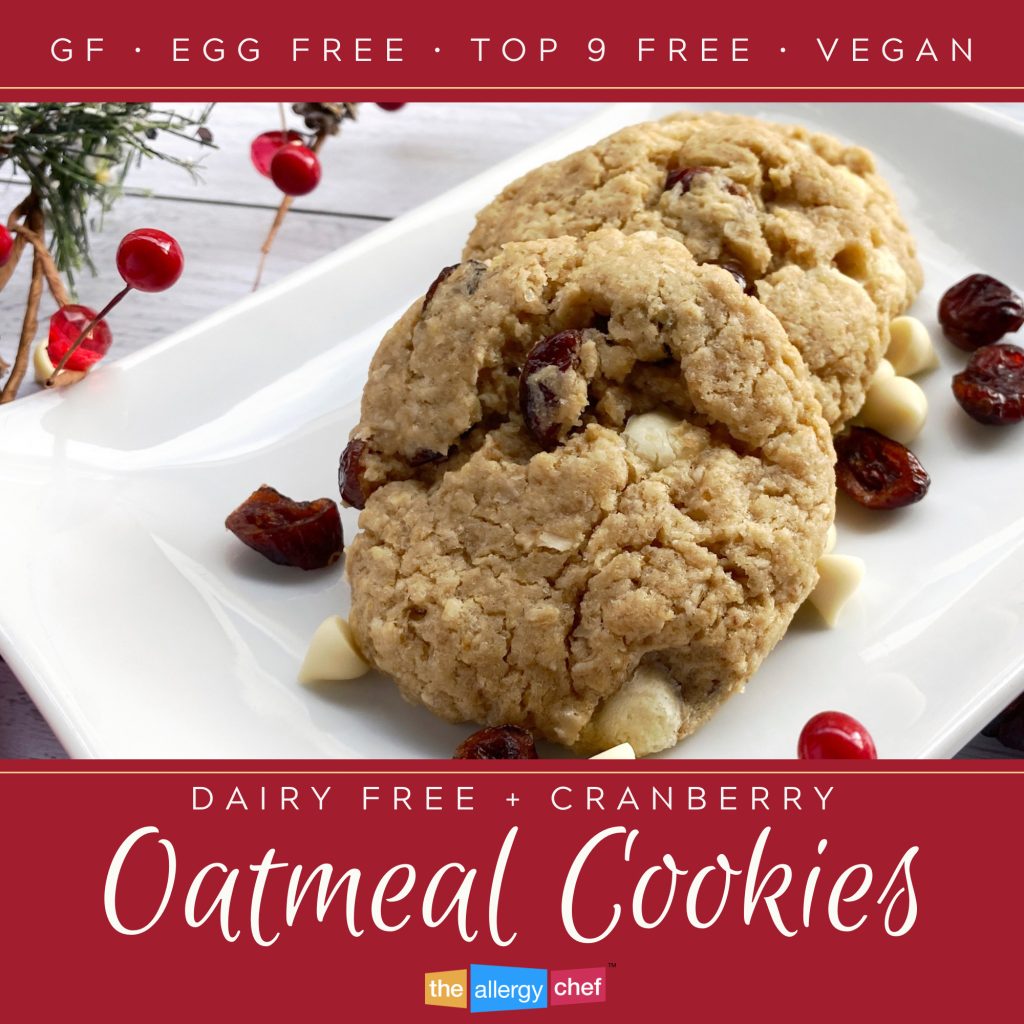
- Gluten-Free + Dairy-Free Cranberry White Chocolate Oatmeal Cookies Recipe
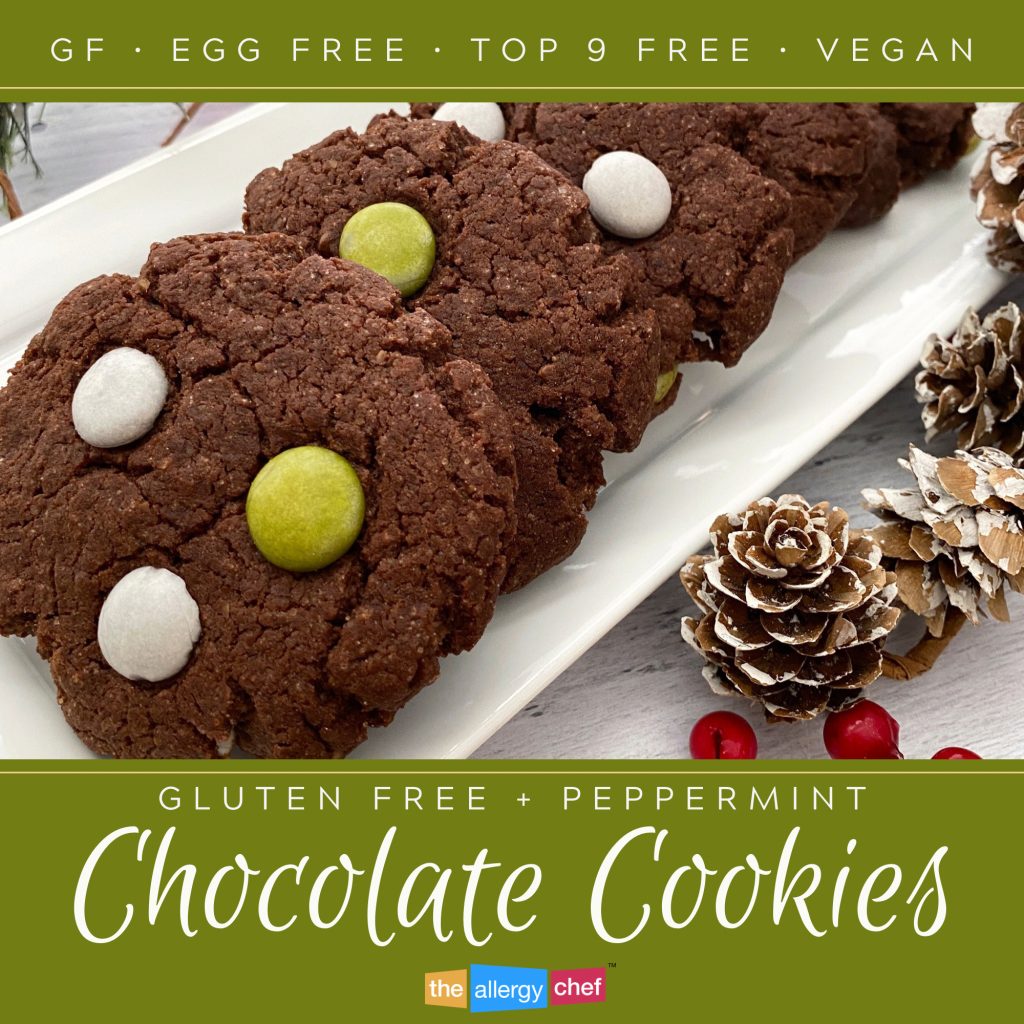
- Gluten-Free Chocolate Cookies Recipe (with top 9 free peppermint candies)
 |
 |
 |
 |
Gluten-Free Flour Mix: What You Need to Know
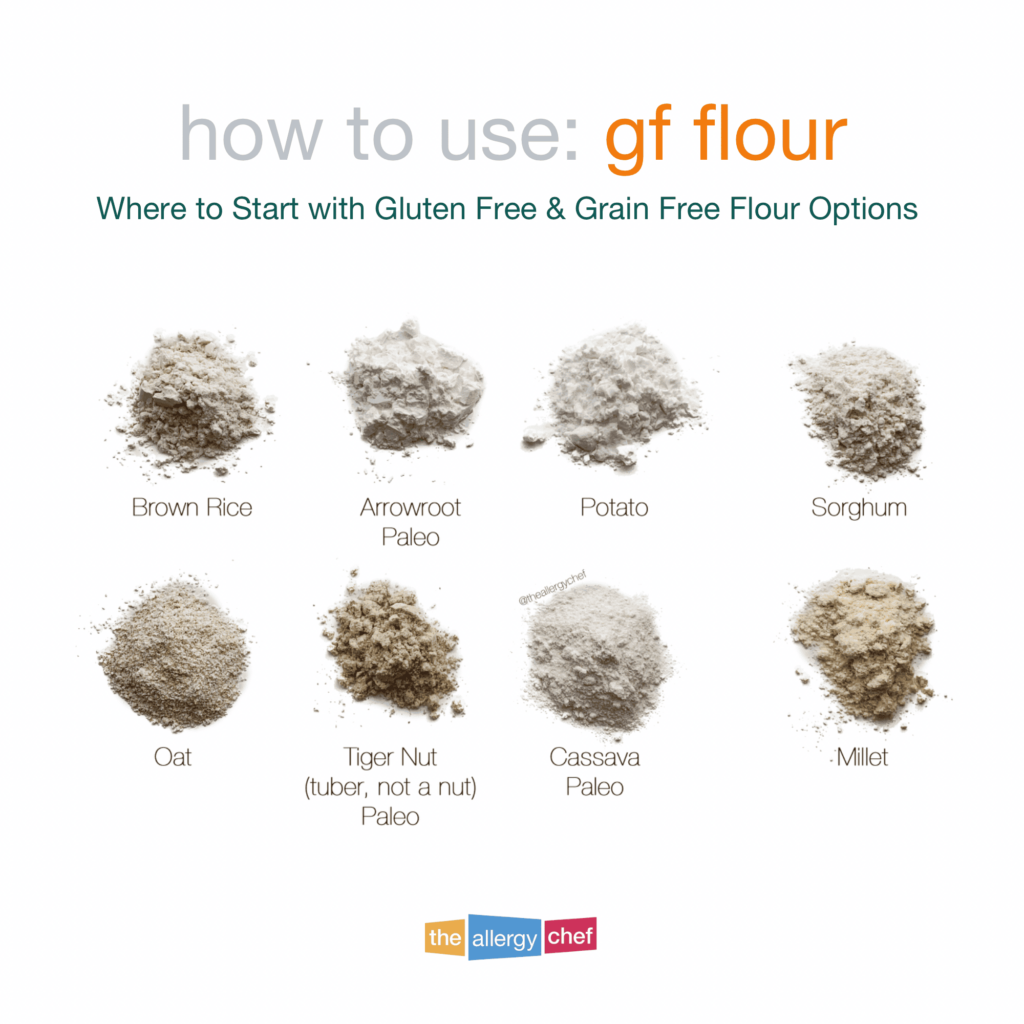
Let’s take a moment to talk about the flours used in this amazing gluten-free recipe. The best gluten-free cookie recipes start with a foundation of gluten-free flours. If the flour mixture is wrong, the cookies (or other baked goods) will be a hot mess. Your flour not only impacts the texture of the cookies, but the taste as well, so it’s important that it be well balanced.
It’s important to know that different types of flour are going to produce different results (fluffy texture vs dense texture, delicate crumb, etc.). On top of that, how you combine your flour choices will absolutely impact the final results in both taste and texture.
These delicious cookies have a successful gluten-free flour blend that compliments the warm spices, but also functions very well since this is also an egg free recipe. Know that when eggs are involved, you have a little more wiggle room on the gluten free flour front, as the eggs can help you out of a bad situation.
When it comes to swapping the gluten free flours I have listed, there’s a little space for you to mess about. The sorghum flour can be replaced with superfine brown rice flour. I’ve shared an oat swap, and if possible, the arrowroot needs to stay where it’s at. This starch is important for your final texture.
Now, if you have an all-purpose flour blend that you’d like to use, you can make that swap. Know that I haven’t tested every gluten free flour mixture on the planet and can’t guarantee your success. I’ve also never worked with 1-1 baking flour type products from Bob’s Red Mill or King Arthur Gluten-Free Measure for Measure. These 1-to-1 baking flour products contain ingredients I’m allergic to (such as xanthan gum which is corn derived).
What I can tell you about these gluten free all purpose flour products is that they aren’t truly all purpose. They’re most purpose, and it’s up to you to know when they’ll succeed. Some manufacturers tell you on the packaging or the website what the product is really good for. I do have it on good authority from a gluten free only recipe developer (she uses eggs) that commercial gluten free flour blends + almond flour = best baking success. I don’t know the exact ratios, so you’ll need to look into it, assuming you can have almonds.
The most important thing to not do: replace the gluten free flours I’ve listed with one singular flour. If you were to take my blend and swap it all for coconut flour, or brown rice flour only, etc., you will absolutely positively ruin the recipe.
Whilst this recipe is clearly for gluten free cookies, if for some reason you don’t need gluten free, you can use a wheat based all-purpose flour (sometimes called white flour or regular flour) in place of the sorghum + millet + oat + arrowroot. Don’t use something like whole wheat flour, as it’s not quite the same as an AP flour. Additionally, don’t use something like self-rising flour since this contains a leavening agent, and the recipe already has plenty.
To learn more about choosing flours for gluten free doughs, read this article where I do a deep dive on all things gluten free flour. You can also check out this article if you need egg free + gluten free baking tips from a free-from baking expert.
Gingerbread Cookie Directions
- Prep Time: 10 Minutes
- Bake Time: 15 Minutes
- Cool on Tray Time: 15 Minutes
- Total Time: Approx. 45 Minutes (with some clean up time added)
- Oven Temperature: 325f/163c
Start by combining your flax and water in a small bowl and set aside. This is a good time to preheat your oven to 325f/163c. I’ll be using a stand mixer with the paddle attachment to make this gluten free gingerbread cookie recipe.
Place your empty stand mixer bowl (or large bowl if you’re using a handheld mixer) on your kitchen scale and tare to zero. Add the Part 1 Ingredients (butter and sugar) to the bowl. Cream (mix) the two together.
Once you’ve mixed the two together, place the bowl back on the scale and tare to zero. Add the Part 2 Ingredients (dry ingredients) to the bowl. Don’t forget to tare between weighted ingredients. Pulse to start the combining (to prevent having a gigantic mix). When the dry ingredients are a little wet, turn the mix on medium-low speed and mix until the ingredients are pretty well combined.
Turn your mixer off and add the Part 3 Ingredients (wet ingredients), along with the flax gel. Mix again until a cookie dough forms. It will be a bit wet, and that’s OK.
Line a baking tray with parchment paper, and use a medium cookie dough scooper to portion out your dough (I roll the portions into balls). Press down your cookie balls just a bit, and bake at 325f/163c for 15 minutes. Allow the cookies to cool on the tray for 15 minutes before transferring.
I suggest having several baking sheets going at one time so there’s always something in your oven.
Once the cookies have cooled, you can dust them with powdered sugar if that’s your jam. For a more festive look, use cookie stencils or barista stencils so the sugar has a cute design.
Glaze Option & Decorating Tip
As you may know, classic royal icing contains eggs. However, you can make a basic powdered sugar glaze with a hint of vanilla and use that instead. In fact, simple glazes can be used for flooding as well.
To make a simple glaze combine powdered sugar with a splash of vanilla extract, and just enough water to combine. I usually start with 100g or organic powdered sugar and 3 mL of vanilla. From there, add water 1 teaspoon at a time. Yes, that small. You only need a little water to bring together a glaze that will pipe nicely.
Once your glaze is a good consistency, transfer it to a piping bag, cut a small hole, and decorate your cookies as you see fit.
If you’d rather use an egg free buttercream recipe (considerably thicker than glaze), use this recipe for vegan vanilla buttercream. Do not try to thin it out to make it a “glaze” or you’ll break it and have a hot mess on your hands.

Gingerbread Cookie Storage
After you’ve made these delicious gluten free gingerbread cookies, it’s time to store them. You can store your cooled cookies on the countertop at room temperature for 4 days (covered), or you can freeze them for many months.
One of the best things about this recipe is that your cookies are freezer friendly. To freeze your cookies, place them on a single layer on your large baking tray. It’s OK if the sides are touching. If you need a second layer, place a piece of parchment paper over the first layer of cookies first. The pieces of parchment paper between the layers will prevent the cookies from freezing together and clumping or being hard to separate.
Place the entire baking tray into your freezer. Once the cookies are frozen solid, transfer them to an airtight container. You can store them in a container with a lid, or in a large freezer baggie. Be sure to label your container.
These cookies can be frozen for 4 – 6 months before you start to see a decline in the texture. To thaw, leave some cookies out on the counter, at room temperature for 45 – 60 minutes. Once thawed, you’ve got the perfect little treat (or little guys if you made gingerbread men).
More Amazing Gluten Free Cookies
These are all fantastic cookie recipes to make during the Christmas season, but also year round. They’re all gluten free, vegan, and very allergy friendly desserts.
- Cakey Sugar Cookies (top 9 free)
- Classic Chewy Oatmeal Cookies (one of my kids’ favorite Christmas cookie, top 9 free)
- Egg Free “Peanut Butter” Cookies (you can use peanut butter, or a peanut butter substitute to make these)
- Vegan Danish Butter Cookies Recipe (top 9 free, top 14 free)
 |
 |
 |
 |
Tips for Using Cookie Cutters
If you love to use cookie cutters, I’ve got great news for you! You can use this gluten free gingerbread cookie recipe to roll dough and make different shapes including Christmas trees, and of course, gingerbread men (and women). Personally, I wouldn’t use a mini cookie cutter, unless you have loads of patience in addition to elbow grease.
You don’t need to chill the dough before you roll out the gingerbread dough with this particular recipe. However, if you’d like to have your cookies hold their shape a little better, chill the baking tray with your cookie cutouts for an hour before baking.
Honestly, transforming this recipe into gingerbread men is a whole lot of fun for the whole family. It’s something my kids have enjoyed doing since they were little. If you plan to decorate your cookie cutouts, for best results, allow them to cool 10000% before decorating.
Another big tip: use an adjustable height rolling pin. When I use cookie cutters to make these vegan gingerbread cookies, I use this rolling pin. Hands down, it’s one of the best inventions of modern times. Why? You get perfectly even dough the entire time. OK, maybe not thee best invention in modern times, but come on. It’s up there, right?
After I’ve made loads of shapes, I make cookie balls with the remaining dough, then dip them in melted chocolate once they’ve cooled. My kids adore gingerbread cookie balls, so I hope you make them as well.
Note: When using cookie cutters, the baking time remains the same.

Fun Ways to Serve Your Gluten Free Gingerbread Cookies (that aren’t gingerbread men) with Instructions
Make Festive Cookie Sandwiches!
Whilst your cookies bake, make up a batch of cream cheese frosting or vanilla buttercream frosting. If you’ll be serving these gluten-free Christmas cookies at a party, use a natural food color to tint your frosting for an extra festive appearance.
Once your cookies have cooled completely, use a disposable decorator bag with a tip of your choice to add a little of the frosting. For a bit of crunch, add toasted or glazed crushed nuts to the top of the frosting. Top with another cookie to form a sandwich.
If you want sprinkles involved, make sure your frosting goes to the very edge of the cookies. Pick up the sandwich then roll through a plate of sprinkles and the sprinkles should stick to your frosting. A plate makes it easy for you to roll without making a huge mess.
Tip: pipe, top, and roll right away. If you allow the cookies to sit whilst you get all of the sandwiches ready, the frosting starts to dry, and form a little crust, and then the sprinkles won’t stick properly.
If too much sweetness is a concern, make mini gluten free gingerbread cookies for this concept. I use this small cookie scoop when I want uniform small cookies.
Play your cards right, and this could be a new Christmas tradition for your family (alongside classic gingerbread men of course). And as always, take cute pictures and share on Instagram, then tag me so I can celebrate with you.
 |
 |
Make Cookie Spoons!
Full disclosure, a cookie spoon has no real purpose other than the novelty effect because you can only use it so many times and then you have to eat it. But! It’s fun.
Here’s an example of a silicone mold you can use to make a homemade cookie spoon. To do something like this, you’ll want to bake the cookies in the spoon mold, and cool completely in said mold. Then, freeze solid. This will make ejecting your homemade spoons MUCH easier.
Once you have the spoons out, you could melt down white chocolate chips and coat some or all of the cookie spoon in it. Allow the chocolate to set completely, then the spoons last a little longer.
No matter what, everyone at your holiday table will be impressed by cookie spoons. They’ll try using it for hot chocolate or something of that nature, then laugh when the cookie breaks and think it’s just a blast.
Also, if you do this, take lots of pictures and videos because one day, those moments will be some of your favorites to remember.
Make Chocolate Covered Edible Cookie Dough Balls
To pull this off, you’ll want to make your cookie dough as an edible cookie dough. Here are the details:
- Measure out the flour into a large mixing bowl using your kitchen scale.
- Transfer all of the flour to a large baking tray covered in parchment paper.
- Spread as evenly as possible.
- Oven roast at 325f/163c for 15 – 20 minutes. You’re looking for a little golden brown toasty look for your flour.
- Remove from the oven and COOL COMPLETELY. Don’t skip this step or everything falls off the wheels.
- Make the cookie recipe and where I call for the flour, use your toasted flour. If you won’t be baking any cookies (not even a few small batches), you can leave the baking powder and apple cider vinegar out of the recipe.
- Once the cookie dough is made, scrape down the sides of the bowl and mix one more time, then you’re ready to roll. Literally.
- Use a cookie dough scoop to get consistent sizes (medium is the best choice, then small).
- Roll each portion into a perfect little ball. Place the balls on a baking sheet lined with parchment paper.
- Once you’re done, pop the whole baking tray into your freezer. Allow the cookie dough balls to freeze about half way.
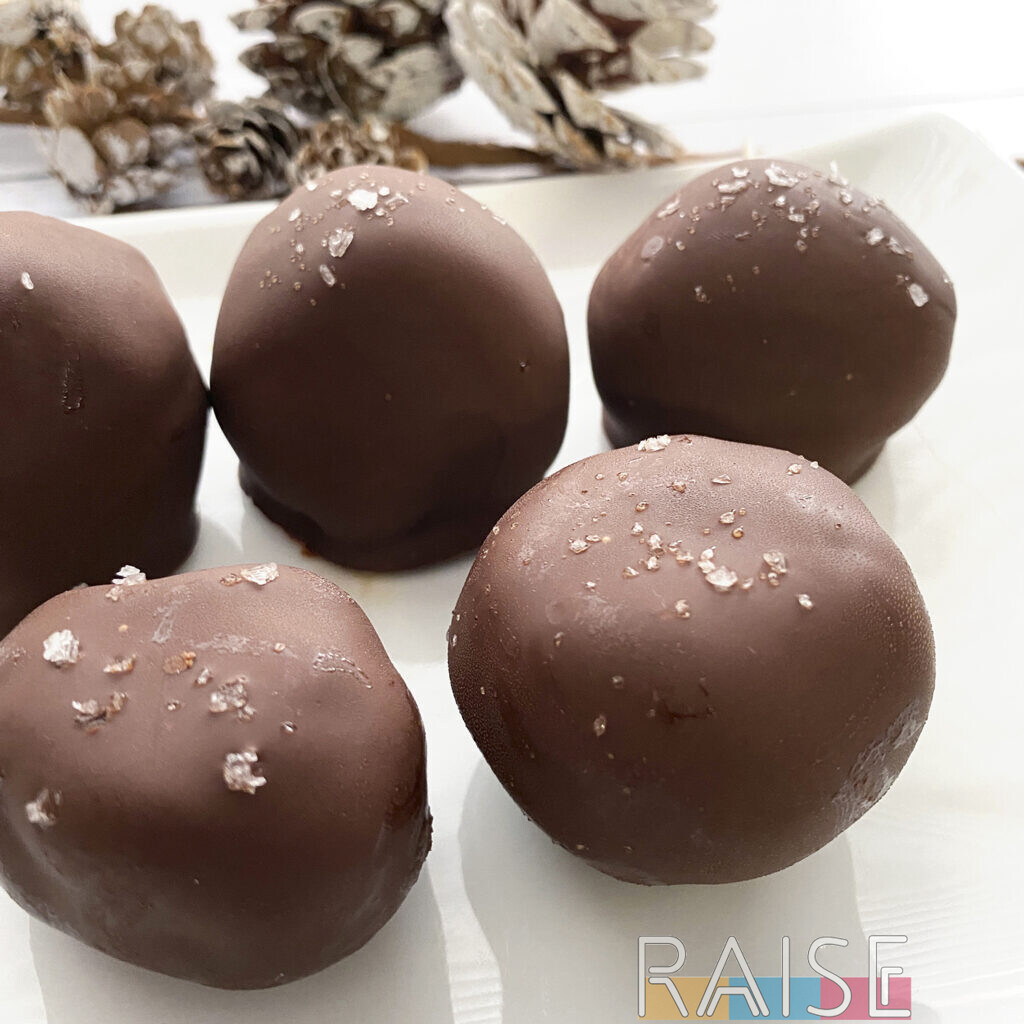
- Melt down chocolate chips you love (white chocolate, dark chocolate, salted caramel, and so on).
- Let the chocolate cool for a few minutes so it’s not scalding hot.
- Place a toothpick in a partially frozen dough ball, then dunk into the melted chocolate. Swirl it around a bit for better coverage.
- Put the coated cookie ball on a tray that’s lined with parchment paper (not plastic wrap).
- Optionally, sprinkle on finishing salt.
- Allow the dough balls to rest so the chocolate can set. You can set it faster in the fridge or freezer.
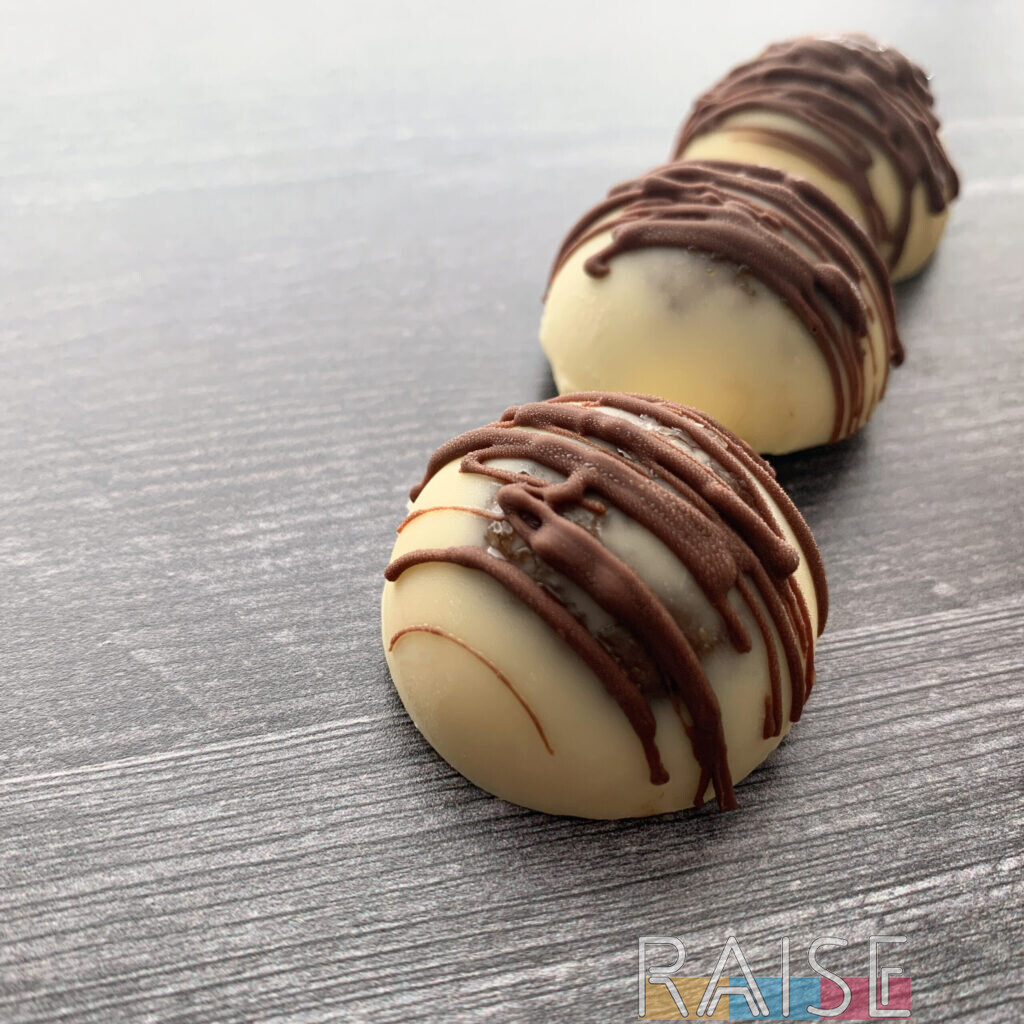
That’s it! I know it seems like a lot of steps, but the comments and reviews I’ve gotten is that it’s beyond worth the extra work to make these. Also, you can do this with flavoured white chocolate. You’d melt down your white chocolate, temper it, and add something like:
- 3/4 teaspoon ground cinnamon
- 1/4 teaspoon ground ginger
- 1/8 teaspoon ground nutmeg (or just a couple of pinches)
- 1/8 teaspoon ground cloves (or less, a pinch is all you really need)
Here’s a picture of what they should look like:
Answering Your Questions About This Gluten Free Gingerbread Cookie Recipe
Could I use light brown sugar instead of dark brown sugar?
When making these GF cookies, you can swap the light brown sugar for dark brown sugar. You’ll have a slight change in taste and you’ll be encroaching on molasses cookies and that’s due to the increased molasses content in dark brown sugar. This isn’t a bad thing, just make you you manage your expectations.
Will this cookie recipe work for a gluten free gingerbread house?
No, I don’t suggest it, because these are soft cookies. Whilst you won’t be able to make gingerbread houses, you can make gingerbread men with cookie cutters, and I’ve outlined that process further up in this post.
For a gluten free gingerbread house, I suggest looking online for a gingerbread snap recipe, or a gingerbread seasoned graham cracker recipe.
Can I swap the arrowroot for corn starch?
As someone with a severe corn allergy, I can only tell you that in theory, yes you can make this swap. However, I’ve never baked with corn starch, so I can only go on what I’ve read and what other professional bakers have told me.
I’ve experimented with ingredients such as tapioca starch and potato starch. Whilst they can be used in place of the arrowroot, you’ll get the best results if you’re able to stick with arrowroot. If you’ve run out, the great news is that these days, a lot of grocery stores carry arrowroot, even conventional stores. Now, if you’re allergic to arrowroot, try the corn starch. If you’re not happy with the results, try tapioca starch with the next batch.
Is this like a traditional gingerbread cookie?
Like other gingerbread cookie recipes, this gluten free recipe features warm spices, and a lovely texture. If you’re looking for a ginger snap, this is not that. Instead, this is a softer cookie with a little crisp at the edges and a chewy center.
I absolutely think these can be part of anyone’s Christmas baking, and that these gluten free, allergy friendly cookies can stand in for classic gingerbread cookies. I may be a little biased, but my kids have been enjoying them year after year, along with my bakery customers as well.
Can I use maple syrup in place of the sugar in this recipe?
Swapping a granulated sweetener for a liquid sweetener, unfortunately, is a great way to quickly waste your expensive ingredients. This gingerbread cookies recipe calls for a granulated sweetener, so if you need to make a swap, it has to be for another granulated sweetener (organic maple sugar, organic coconut sugar, organic date sugar, muscavado sugar, etc.).
Know that this general rule isn’t just for gluten free recipes, but for all baking recipes. Liquid for liquid, and granulated for granulated. Remember and follow that, and you’ll be golden. Like a perfectly baked cookie with golden brown bottoms.
How much flour is this in cups?
Unfortunately, I won’t be able to tell you, and that’s by design. I only use the gram measurement when it comes to baking to ensure that I can give you precise measurements, which means you can make perfect gluten free cookies at home.
One of the most important things to know about gluten free baking is that in some cases, especially starches, 10 – 20 grams can ruin a recipe. For reference, that’s less than one ounce… a few Tablespoons… and when it comes to measuring, leveling, etc., it’s VERY easy to mess up the numbers.
So, I share ingredient measurements in grams for precision and accuracy, and this also makes sure that you don’t waste expensive ingredients. I know not all recipe creators take this approach, but as a professional baker (remember, I owned and operated a free-from bakery), I can tell you from first hand experience, this is the way to bake.
I’ve had so many people thank me after they use the kitchen scale method the first few times because they see it’s actually easier rather than trying to perfect a cup of flour. This is the kitchen scale that I like, and I hope you come it love it as well.
Can I use coconut oil in place of the vegan butter?
From a functionality standpoint, yes, you can make that swap since coconut oil is a fat that’s solid at room temperature. From a taste standpoint, I don’t know that I’d do this when making this gingerbread cookie dough.
Coconut oil is going to create a VERY different flavour profile, and since I have several tasters allergic to coconut, I couldn’t tell you how loud and present the flavour would be. So, if you don’t LOVE the taste of coconut, absolutely don’t do it.
Rather than go all in, consider starting with 65% dairy free butter and 35% coconut oil. See if you like that taste, then when you make the next batch, increase the coconut oil in the ratio.
My biggest concern for you is that coconut flavour may clash with the blackstrap molasses, so be sure to manage your expectations and tread lightly if you end up making this swap.
Could I make this recipe in a food processor?
These gluten-free gingerbread cookies should be made in a stand mixer, or with an electric handheld mixer. The amount of dough that’s created would be too much for your food processor. Additionally, food processors don’t quite whip the same way a stand mixer would.
Now, if I were on a desert island and a food processor was the only tool I were allowed, and magically I had the ingredients for these cookies (it’s a generous island), I’m using the food processor. It’s my only tool, and I’m going to manage my expectations. I’ll also have to cut the recipe in half, or down to 25% to make sure it fits.
If you’re in a pinch, go for it, but know that you won’t have the same results as me. Happy baking! And don’t get trapped on a desert island.
Is this a good cookie to share at a cookie exchange?
Personally, I think so. Not all gluten free cookies would be good to share in my humble opinion, especially if you use a gluten free flour blend that takes some getting used to.
When it comes to gingerbread recipes, this one is very well accepted by those with and without food allergies, so I don’t think anyone involved in your cookie exchange would find it off-putting. The nice thing is, with this recipe, you’ll be able to share a little piece of your free-from world with your friends or family, and I’m sure that will have you walking on cloud 9.
Should I cool these cookies on a wire cooling rack?
No, in fact, it’s important that you cool the cookies on the baking tray for at least 10-15 minutes, or longer. The tray cooling method taps into “carryover cooking”. It’s where we take advantage of the residual heat on the baking tray to continue to cook the cookies. In gluten free + vegan + free-from baking, this is a huge part of the process.
A cooling rack has no heat, and introduces more air flow, which can rapidly cool your cookies. We don’t want that, so, with this recipe, cool them on the baking sheets.
Does this recipe make cutout cookies?
Yes! In additional to being delicious cookies for the holidays, you can also make cute gingerbread men cookies with this recipe, or any other shape you desire. To make cutout cookies, you’ll follow the instructions to make the cookie dough.
Once the dough is ready, place a large piece of parchment paper on a flat work surface (makes cleanup easier). Top with another large piece of parchment paper, then use an adjustable height rolling pin like this one to roll out your cookie dough. This type of rolling pin allows for a consistent thickness with all of your cookies. A consistent thickness will also promote even cooking.
Once you have the shapes cut out with your cookie cutters, transfer them to your cookie sheet or baking tray and bake as normal. Allow the cookies to cool completely before adding frosting and decorations.
Personally, when I do this, I take dough scraps and roll them into neat little balls. I put the balls on a cookie sheet or baking tray lined with parchment paper and freeze solid. Once frozen, I dunk them in melted chocolate, and immediately add a pinch of finishing salt or smoked salt for an extra pop of flavor.
These chocolate covered cookie dough bites are something my kids always look forward to, and they always appreciate the pop of flavor from the salt. If you decide to make these, store the leftovers in the refrigerator (I keep them in a glass airtight container). Happy baking!
Can I use a different egg replacer?
No, you won’t be able to use a different egg replacer and still maintain the proper moisture and structure of this dessert. I develop my egg free desserts with lift, binding, and moisture in mind, and therefore, take a multifaceted approach.
Most commercial egg replacers offer lift OR bind, but not both. And, most don’t take the rich mouthfeel into consideration. So, stick with the recipe as-is, since I’ve accounted for all of this. If for whatever reason you choose to proceed with a commercial egg replacer, know that I can’t guarantee that you’ll have delicious or successful results.
Could I use allspice in place of the cinnamon?
I don’t suggest making the swap for allspice. If this recipe were to call for a teaspoon ground cinnamon, I might have a different opinion. However, at 6 teaspoons, I don’t think you’re going to enjoy having that much allspice in your cookies. You could try doing 5 teaspoons cinnamon and 1 teaspoon allspice to see if that’s a tasty blend.
If you’re all out of cinnamon, or have a cinnamon allergy, you’d want to search online for something like “cinnamon free gingerbread cookie recipe with allspice”. There probably won’t be loads of recipes to choose from, but all you need is one great dessert recipe to make your holidays festive.
Can I swap the baking powder for baking soda?
No, and I’m so glad you asked. Whilst the names sound similar, baking powder and baking soda have two very different purposes in baking. In a nut free nutshell, baking powder creates rise and baking soda creates spread. There’s a lot more to the topic, and you can read ALL about it in this article.
Know that a full teaspoon baking soda can absolutely wreck a recipe (I only call for a half teaspoon baking soda in recipes), so using 3 teaspoons would spell disaster. If you’ve run out of baking powder, this baking powder recipe might be able to help you.
Can I bake these cookies on a Silpat?
Yes, you could bake this gluten free gingerbread cookie recipe on a Silpat baking mat. The bottoms will be a little different, but no less enjoyable.
Could I use less vanilla?
You can use less vanilla, but you’ll loose some of the flavor depth. I wouldn’t use less than one teaspoon vanilla extract to ensure you have the flavor as a background note.
Do I need to let the dough chill before making gingerbread men cookies?
As-is, no, you don’t need to let the dough chill. However, if you make any swaps or substitutions to this gluten free + egg free recipe, that could change. This isn’t something I’ve personally tested.
Anytime I’ve needed to let a dough chill in the fridge, I actually roll the dough fresh, cutout the shapes, place them on a cookie sheet or baking tray, then pop the whole tray into the refrigerator to let the dough chill. I’ve found that free-from cookies are so much harder to roll if you do the cutting out after the dough chills (even if it’s a short chill time).