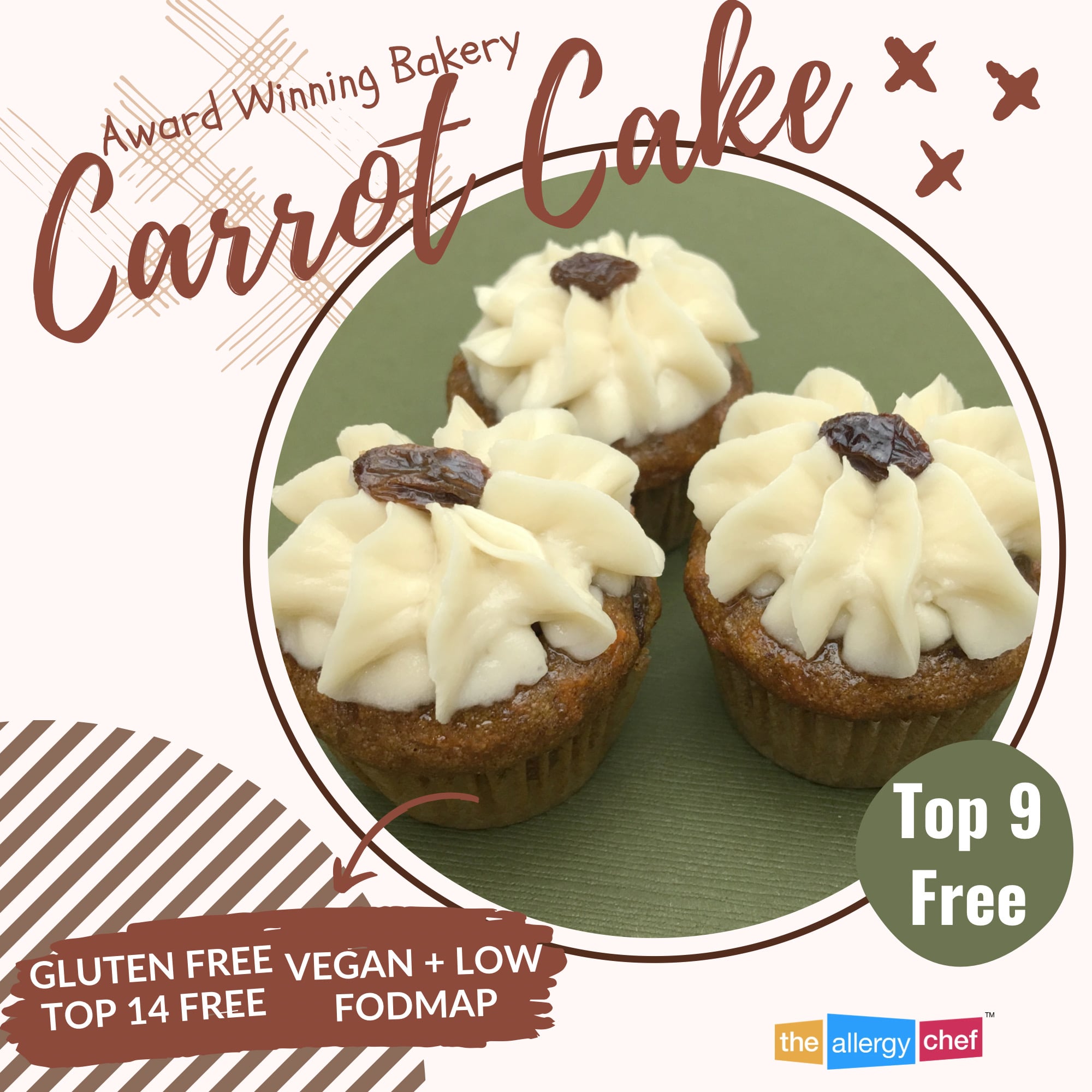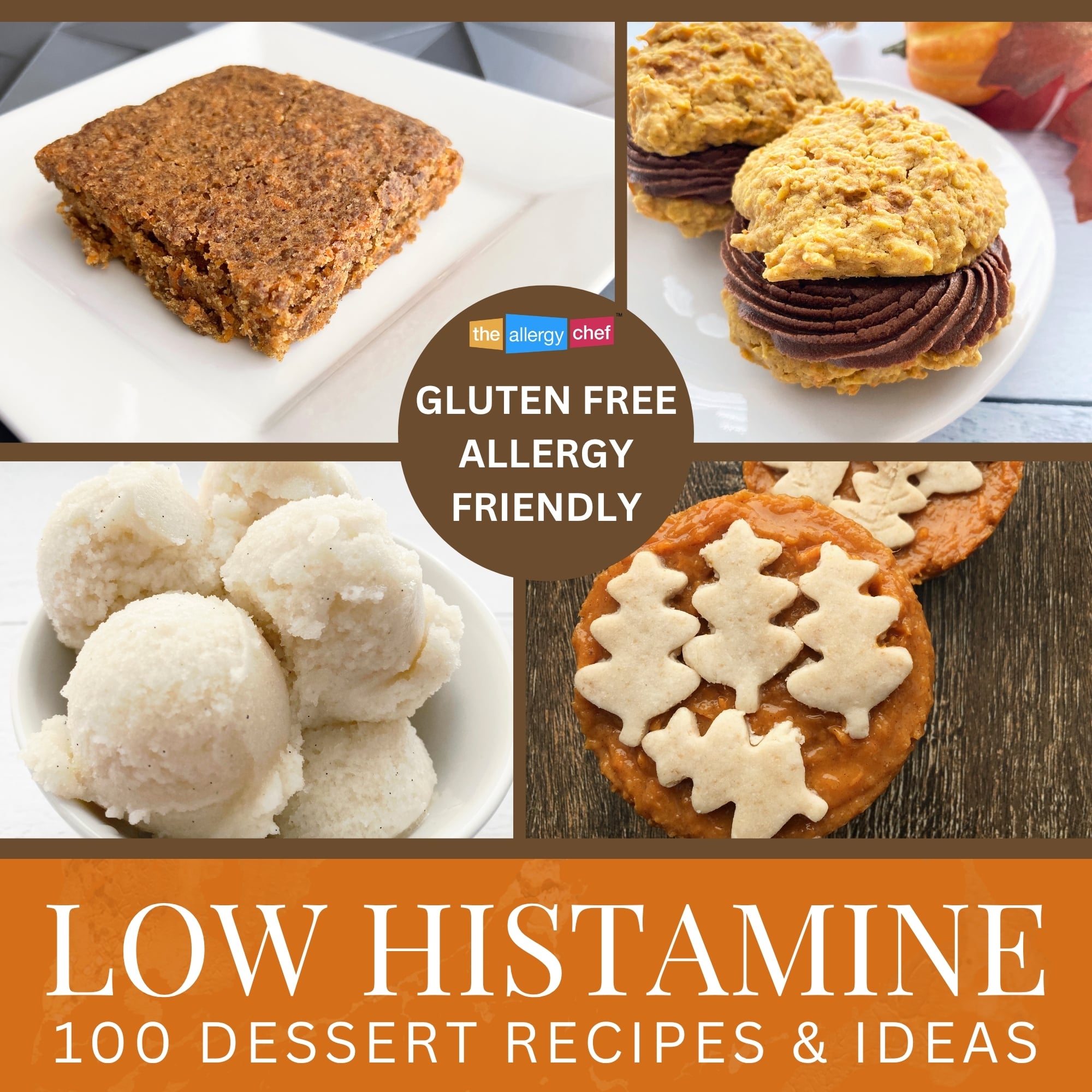

The holiday season is here! Grab your cookie cutters, cookie stamps, and let’s talk all things gluten-free Christmas cookies. WOOOO!!! Yeah, I may be a little too excited about gluten free Christmas cookie recipes, but there’s a real reason behind my joy: the inclusion.
I love when I can make top 9 free cookies with gluten-free flours, bring them to a party, and listen to guests (without food allergies) RAVE about how good they are. So like, not just polite inclusion where someone takes a bite to be nice, but legit inclusion. They want to eat our food.
So, today I’ll be sharing some my absolutely best gluten free Christmas cookie recipes, but also tips on gluten-free baking (specifically cookies).
Gluten Free Christmas Cookie Recipes
I figure, you’re probably here for the gluten-free cookies, so let’s start with the recipes first. Then, if you’re here for the science and the tips and so on, keep reading.
All of these holiday recipes are gluten free, wheat free, egg free, dairy free, vegan, and top 9 free. The inclusion is awesome, and each recipe has ingredients swaps in case you can have eggs.
Also, several of these gluten-free cookie recipes are from my GF + V + Top 9 Free award winning bakery. Seriously, go bake cookies!
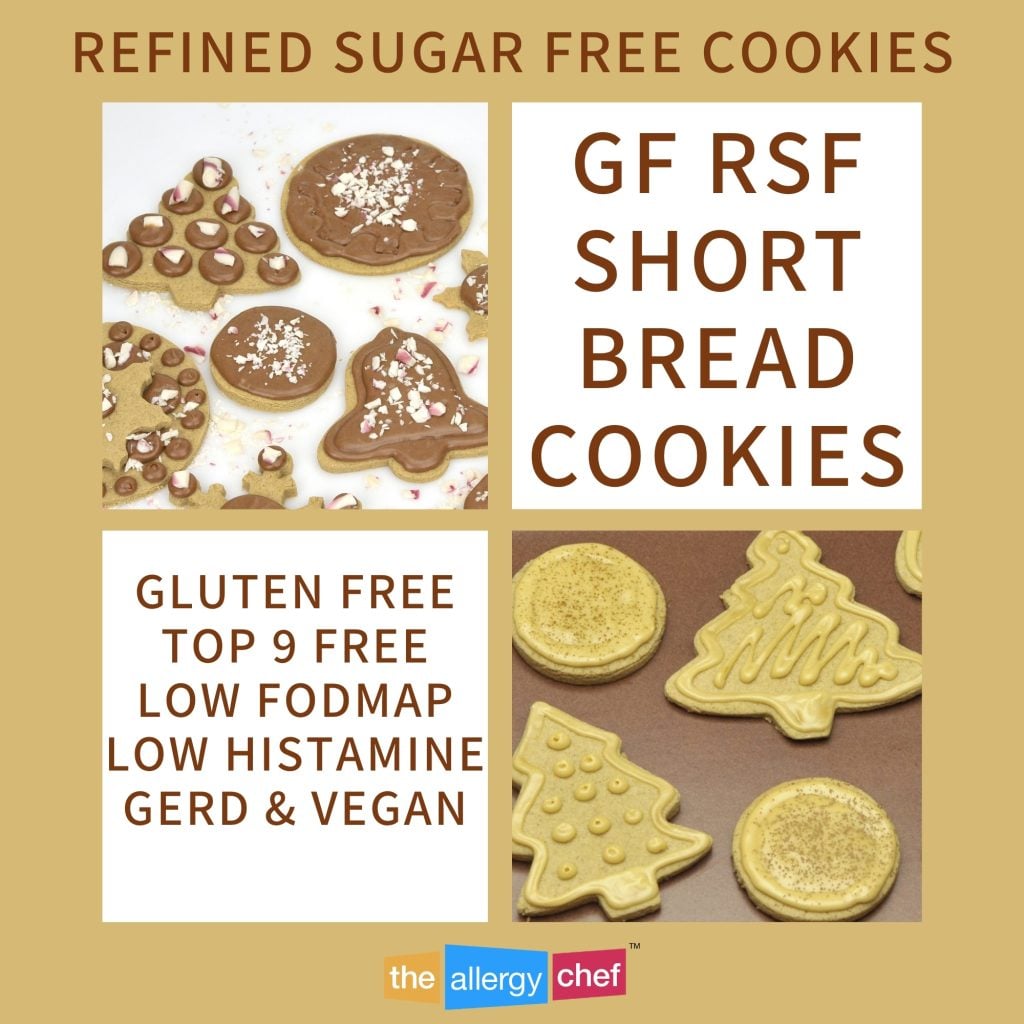
- Gluten-Free Shortbread Cookies (you can use this recipe for classic cut-out cookies)
- Soft Baked Gingerbread Cookies (you can also use this recipe for gingerbread men and cool gingerbread ninjas)
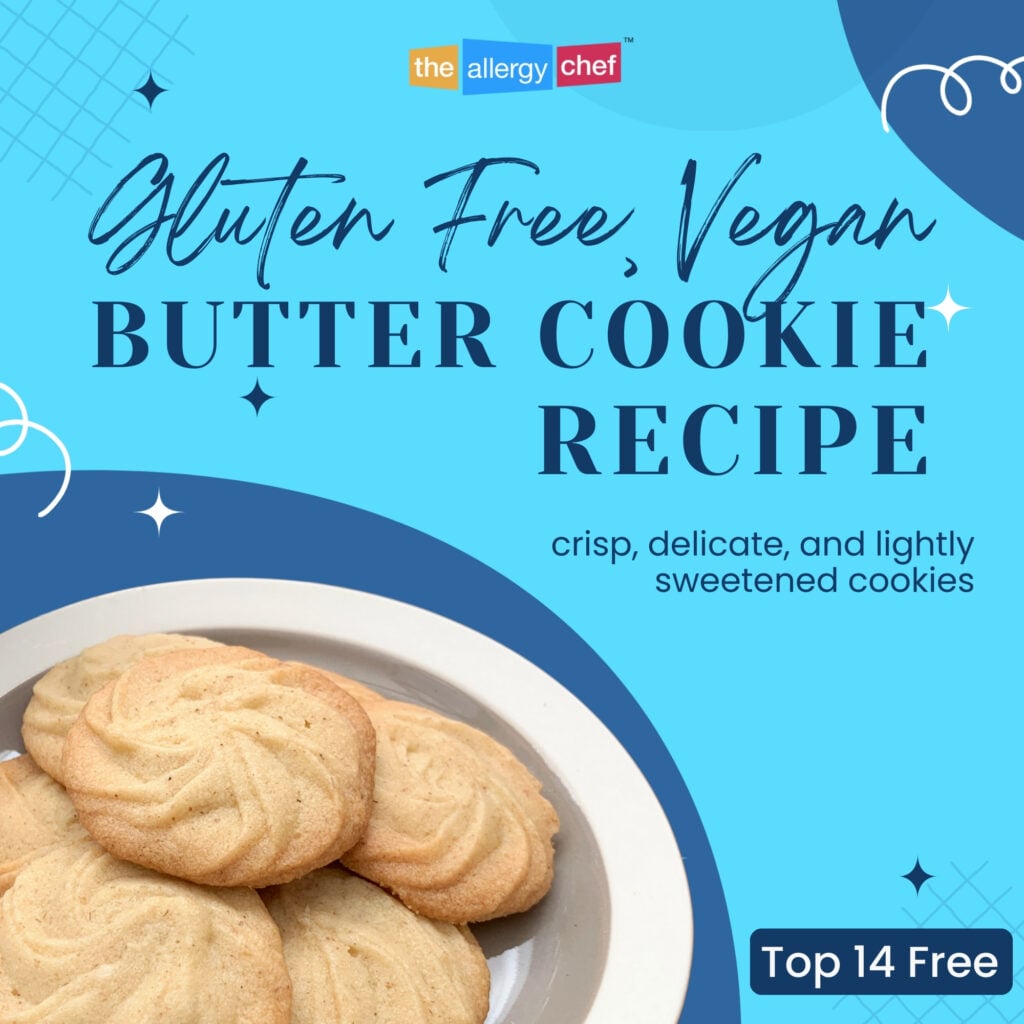
- Gluten Free Vegan Danish Butter Cookies Recipe (a simple recipe that looks pretty when baked)
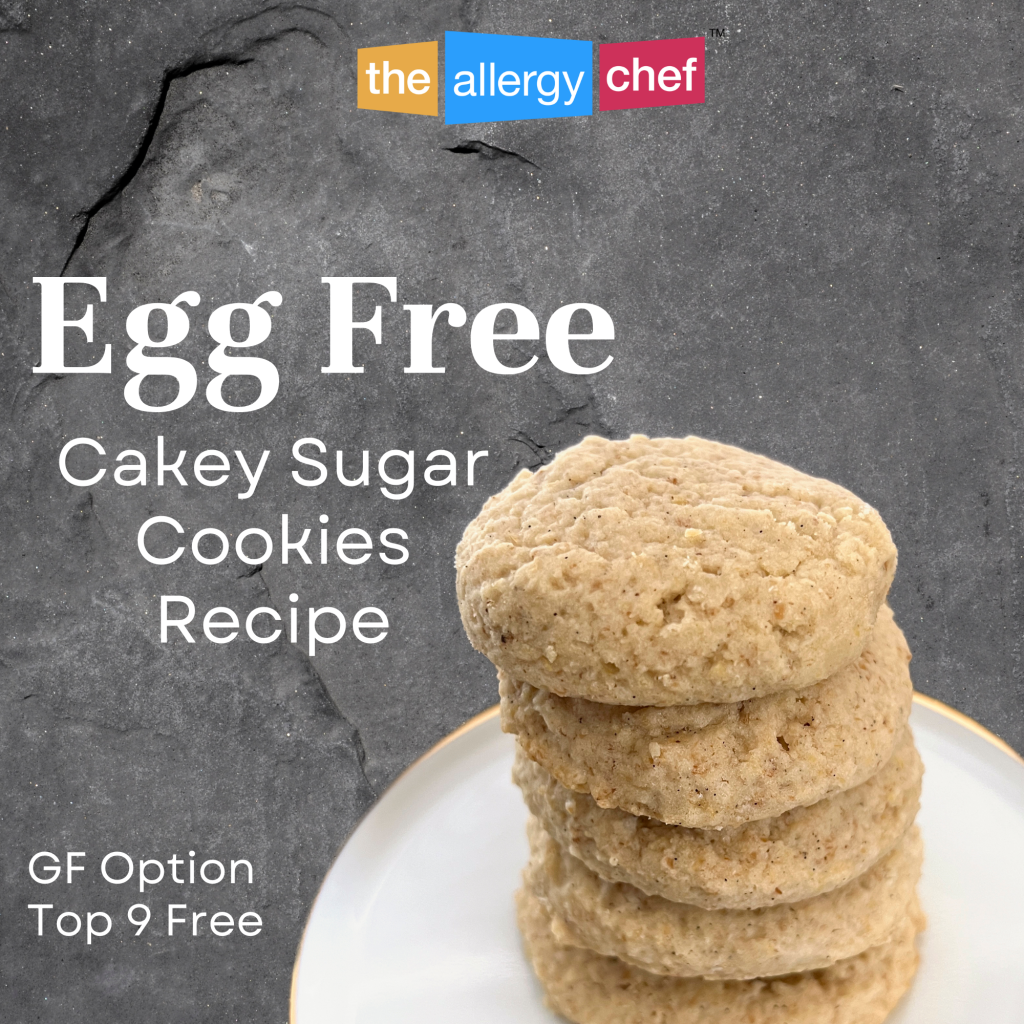
- Gluten Free Sugar Cookies (these are soft and cakey)
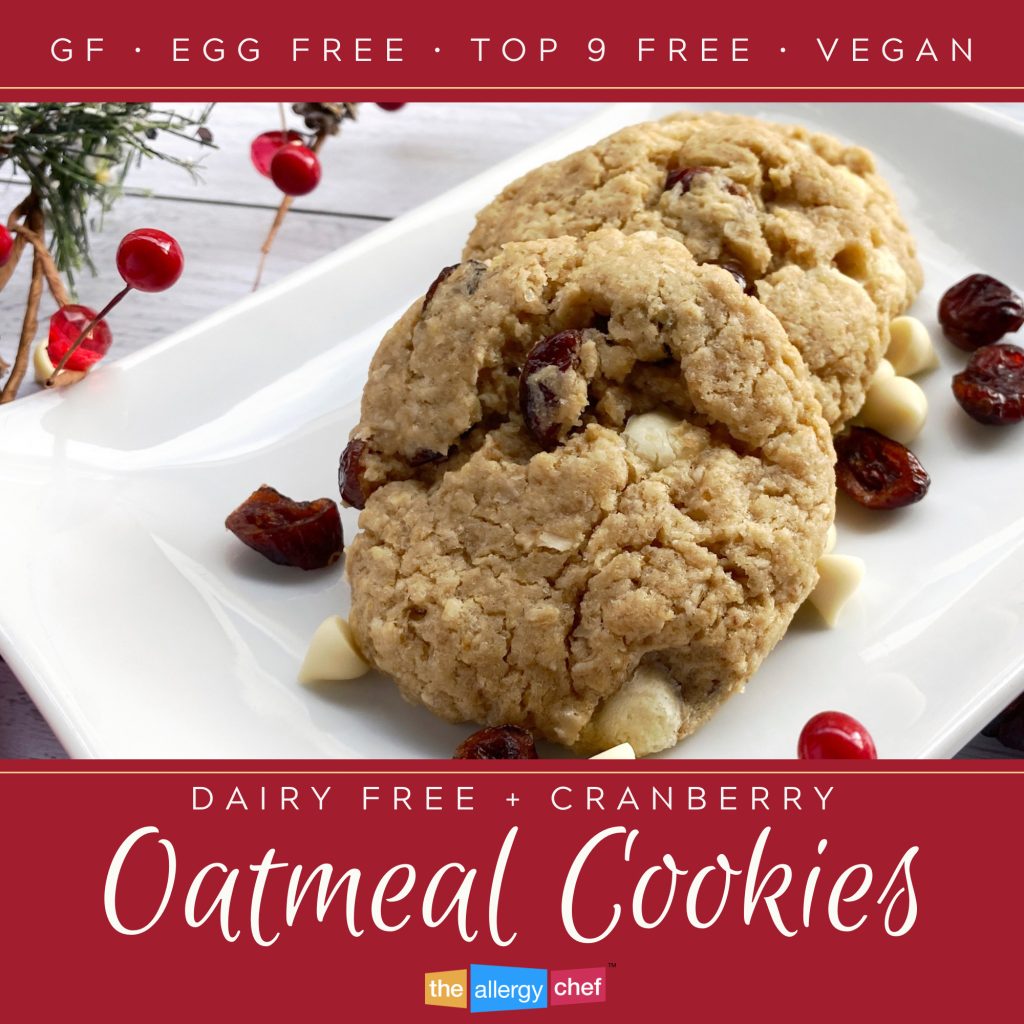
- Dairy Free Oatmeal Cookie Recipe with Cranberries & White Chocolate Chips
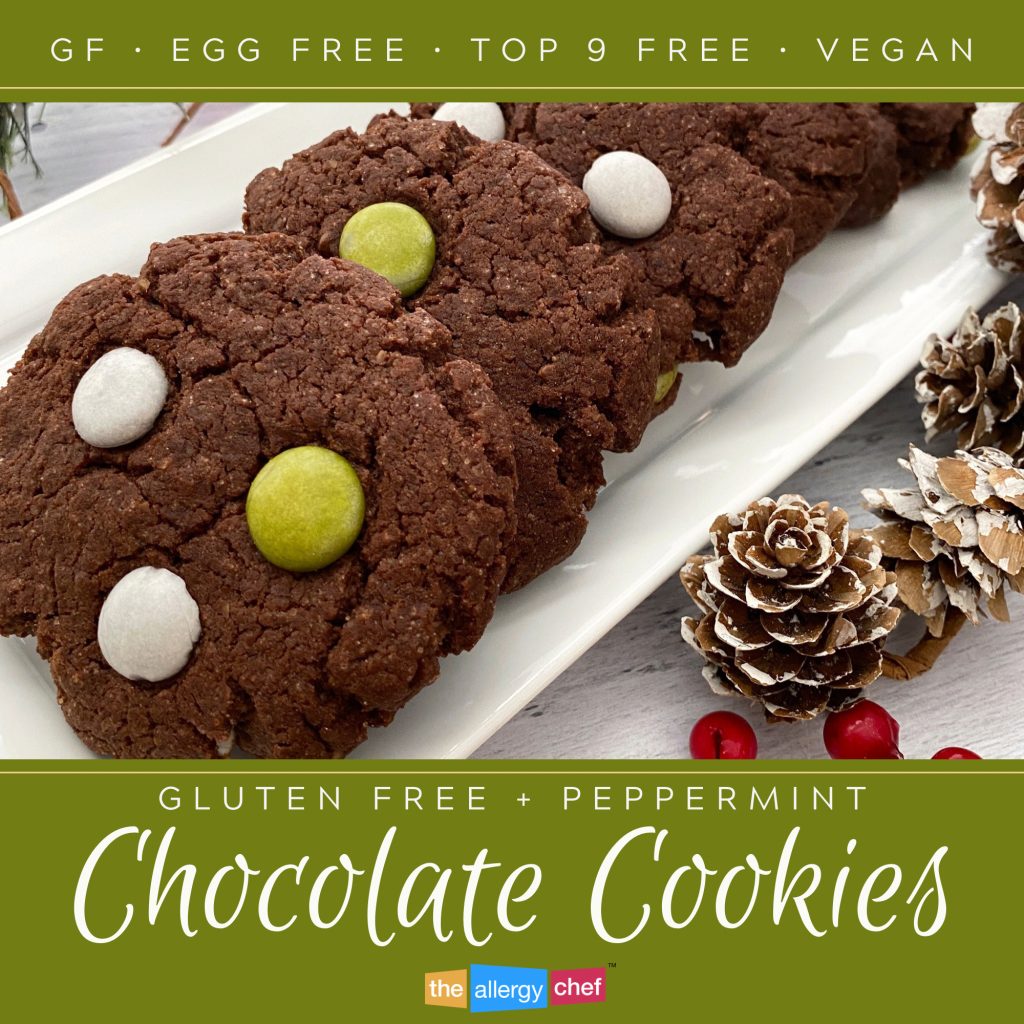
- Gluten Free Chocolate Cookies with Peppermint Candies (this is BOMB)
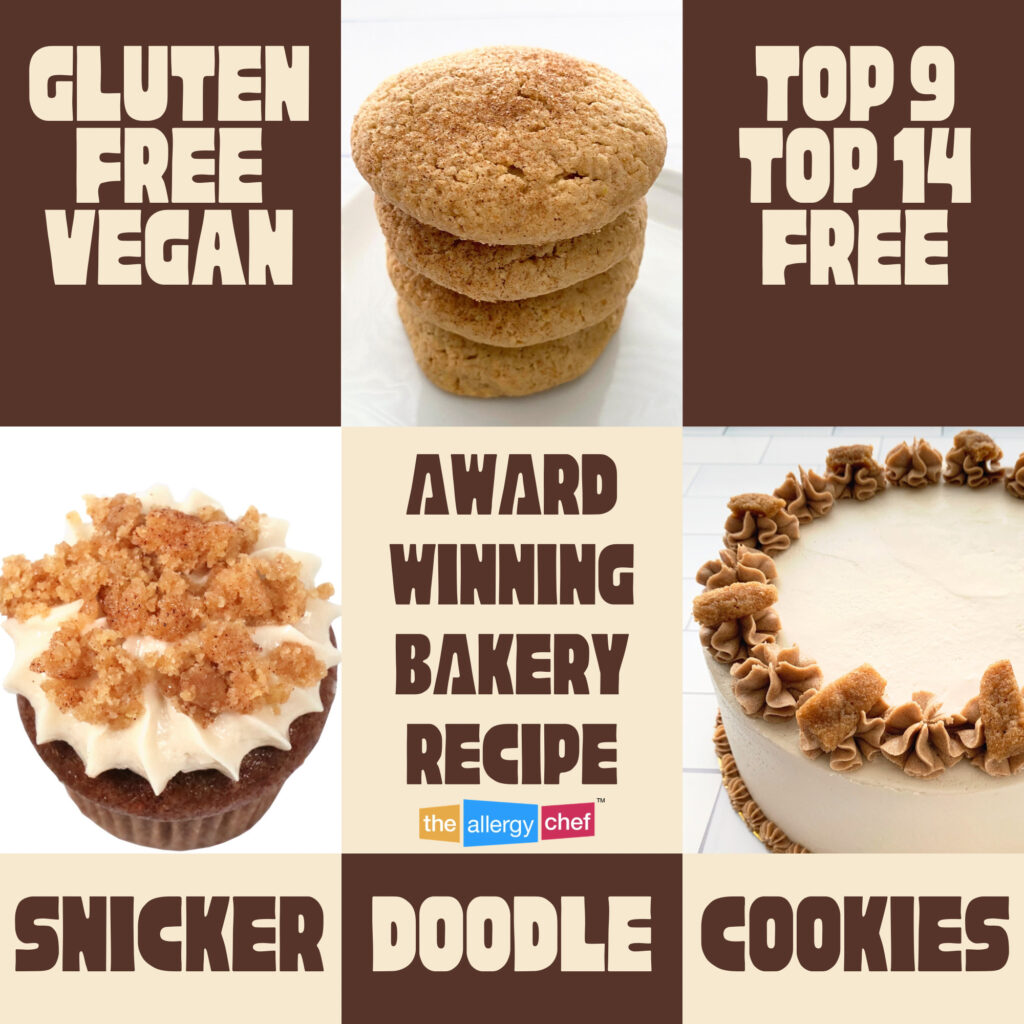
- Gluten Free Vegan Snickerdoodles (from my award winning bakery, definitely make a double batch)
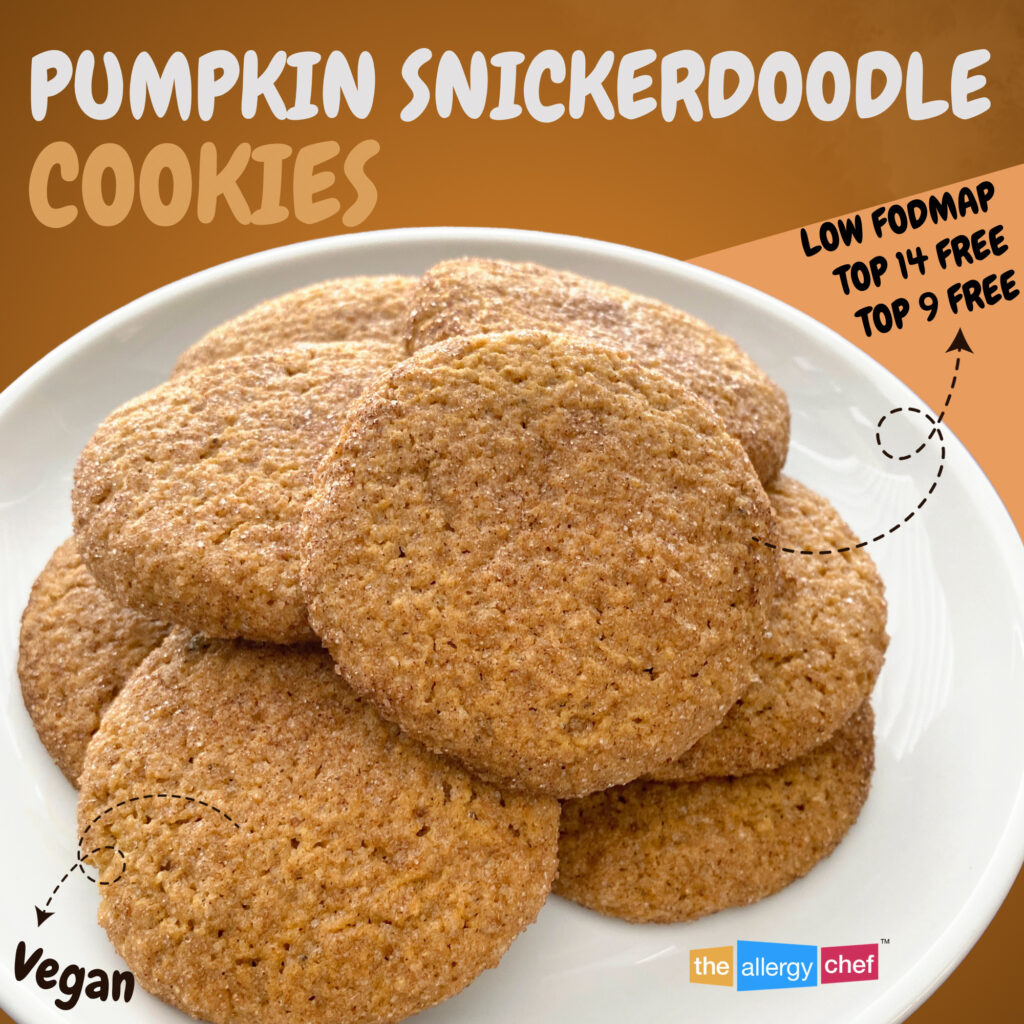
- Top 9 Free GF Pumpkin Snickerdoodle Cookie Recipe
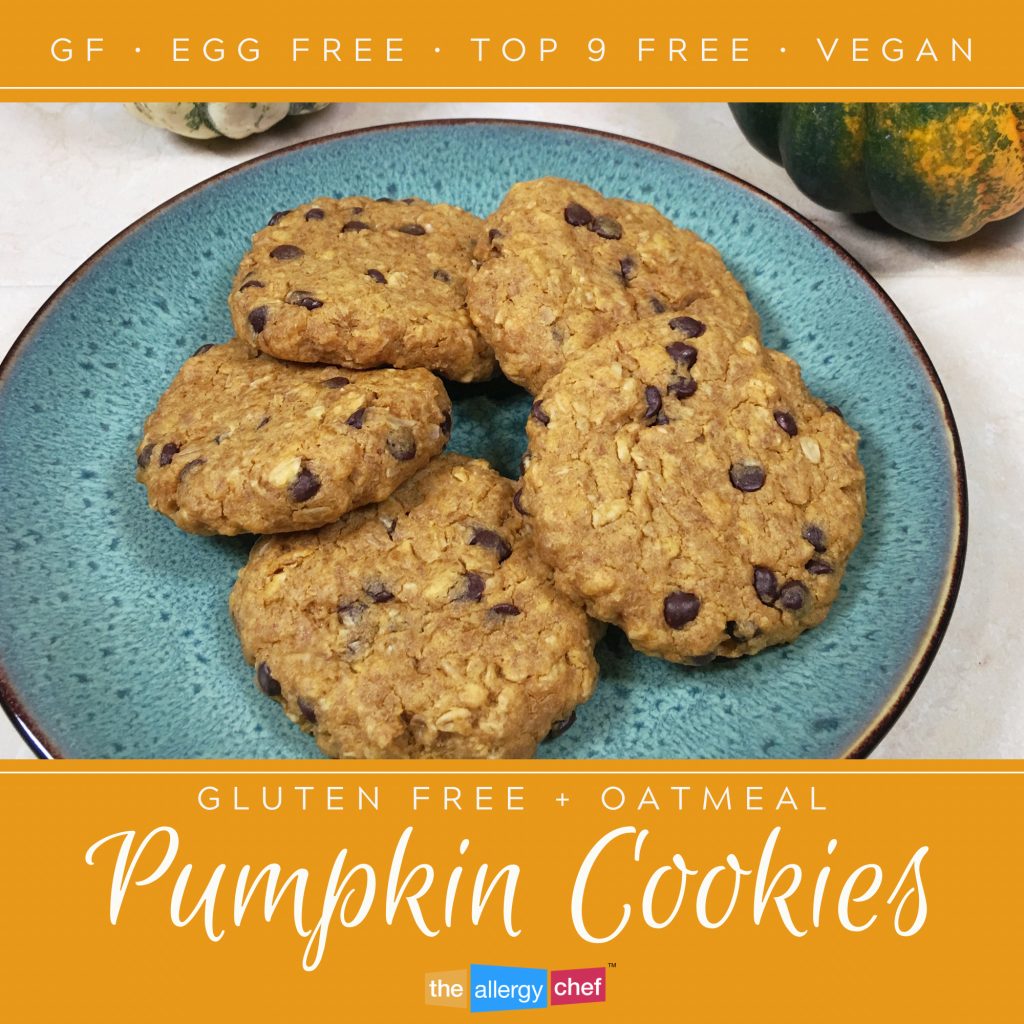
- Gluten Free Pumpkin Chocolate Chip Cookies (such a tasty easy recipe)
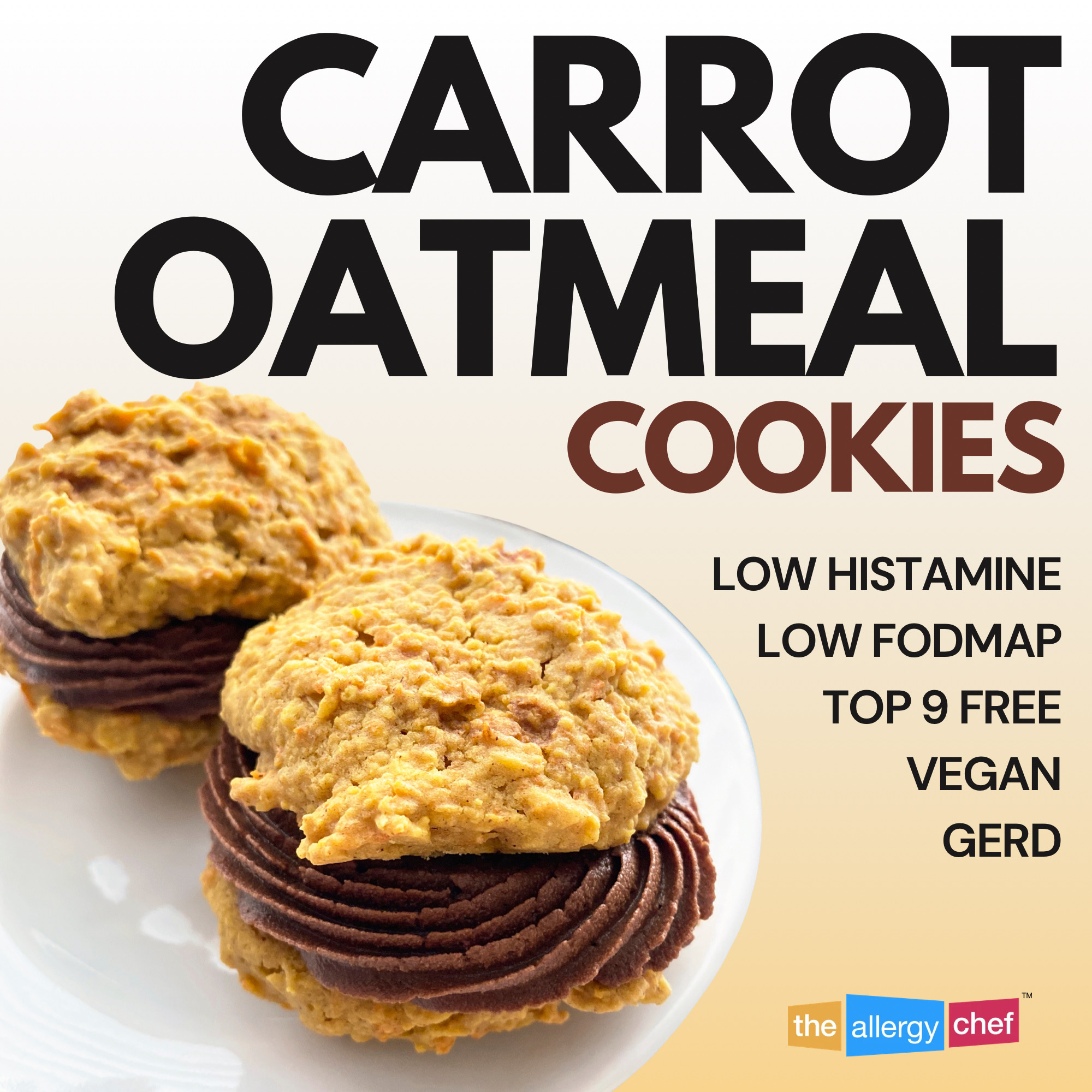
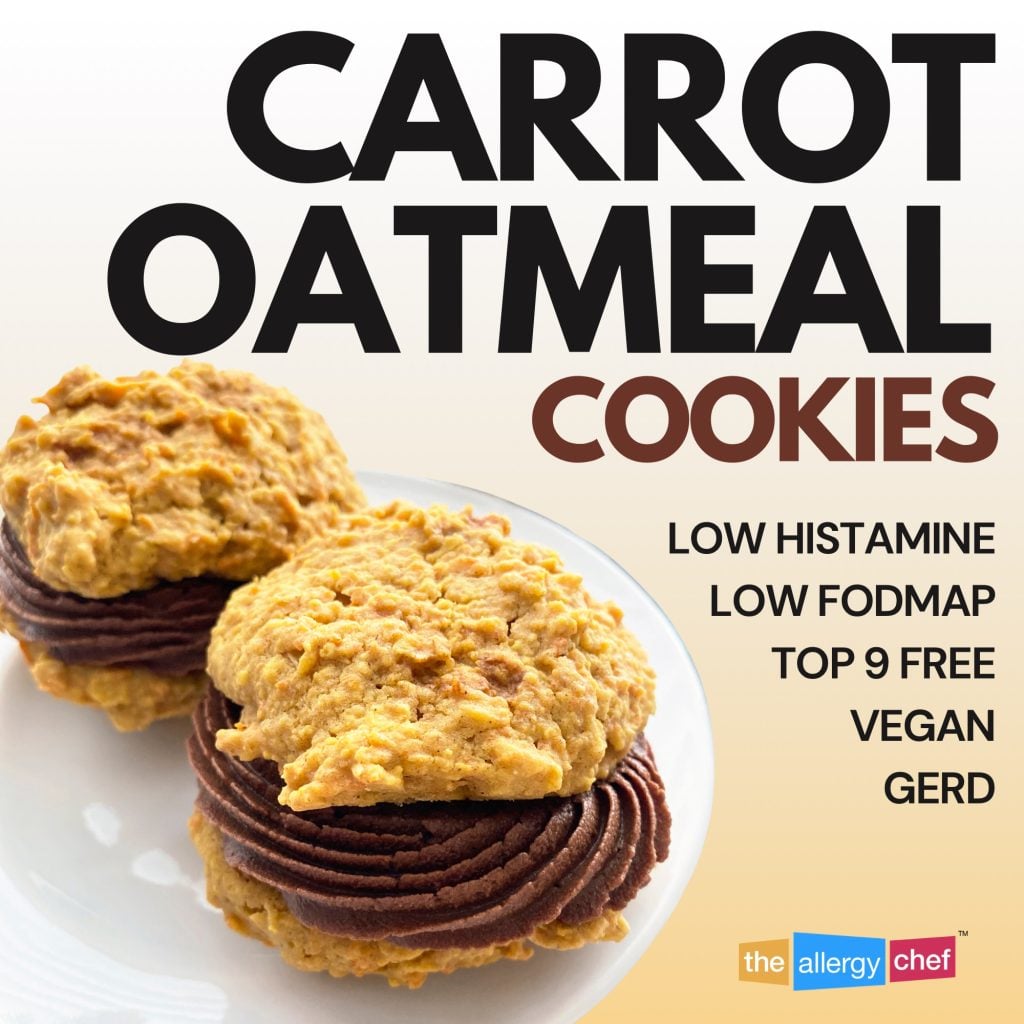
- Gluten-Free Carrot Oatmeal Cookie Recipe (this one is also a low histamine recipe)
- Peanut Butter Cookies (also has a peanut free option)
- Gluten Free Chewy Oatmeal Raisin Cookies (these have the perfect chewy center)
- Gluten Free, Top 14 Free Cardamom Cookies (this was designed for people allergic to classic warm spices like cinnamon)
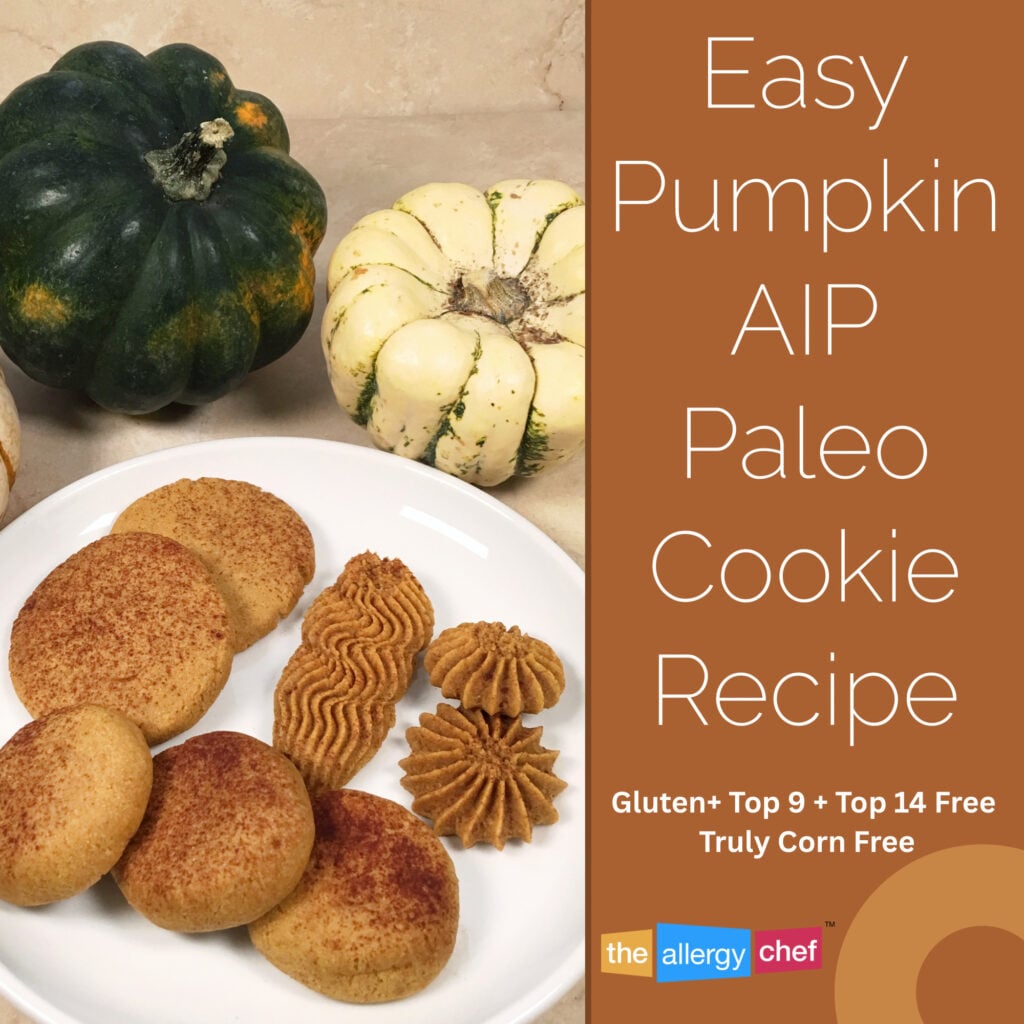
- Grain Free AIP Paleo Pumpkin Cookies
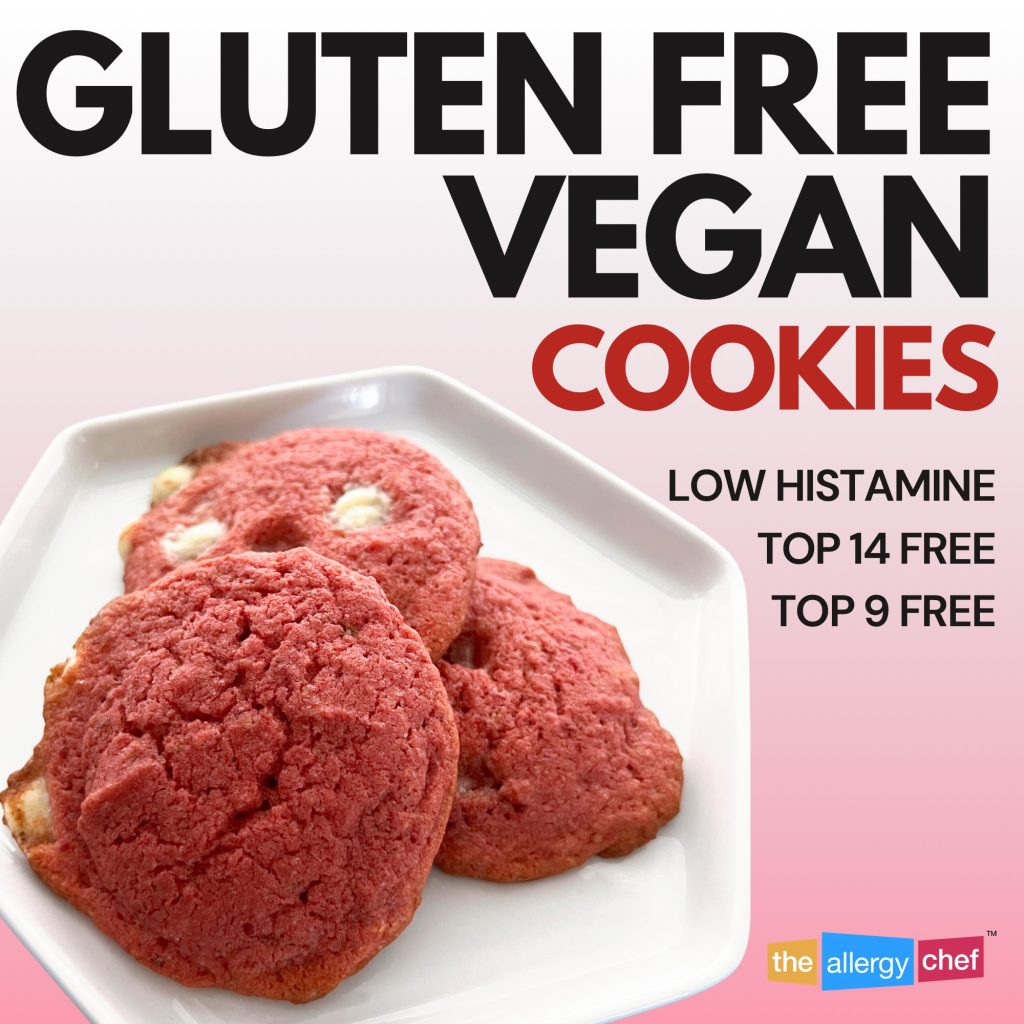
- Beet White Chocolate Chip Cookies (the colour is super festive and the beets aren’t flavor forward)
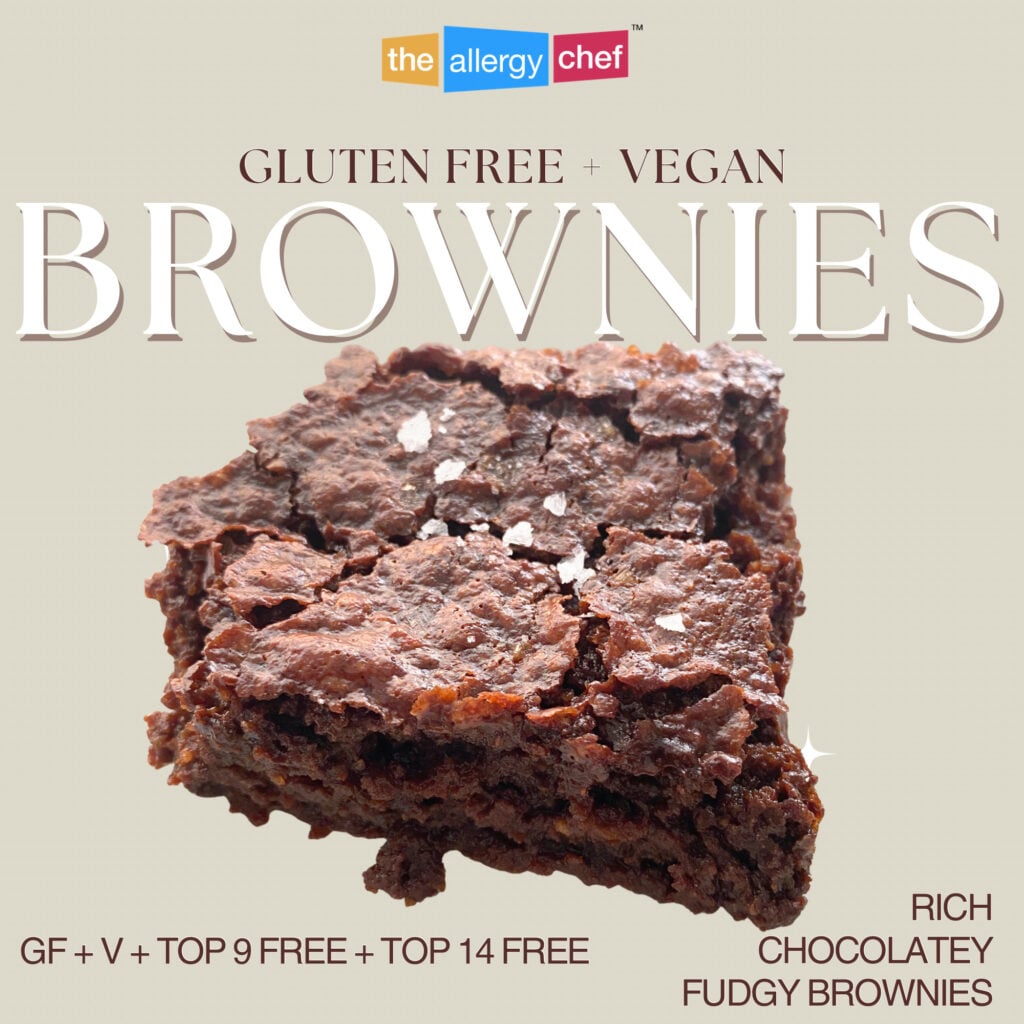
- Gluten Free Egg Free Fudgy Brownies (not cookies, but great for a holiday dessert table, and you can add peppermint frosting or crushed candy canes)
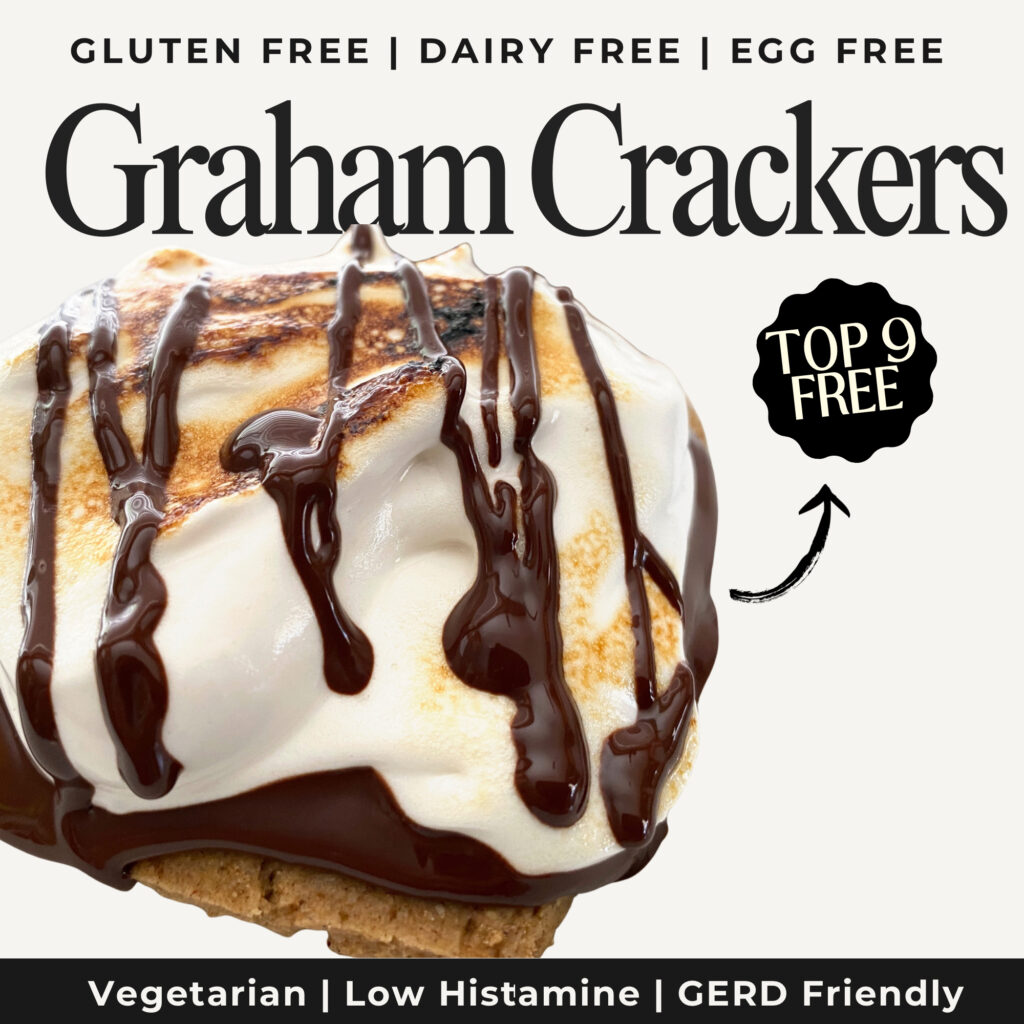
- Gluten Free, Top 9 Free Honey Graham Crackers (for building a gingerbread house)
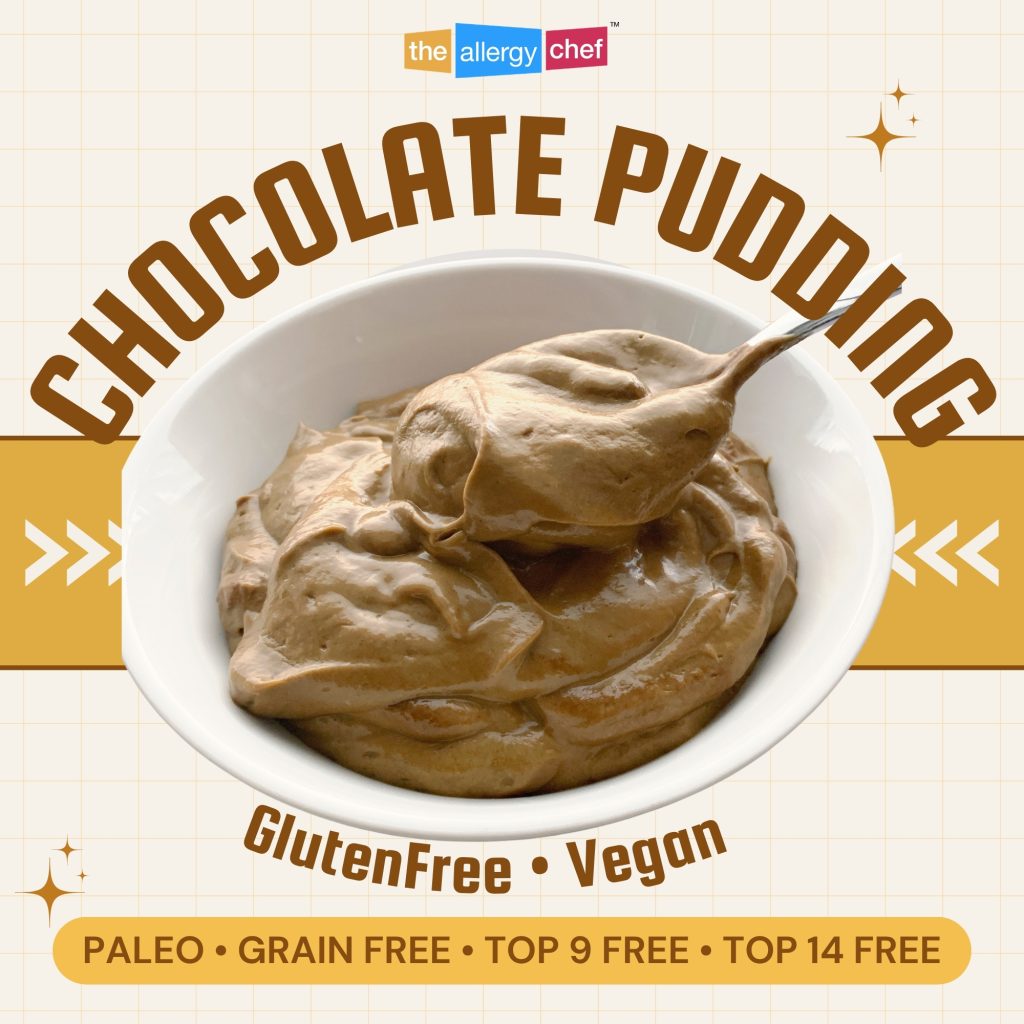
- Gluten Free, Diary Free, Vegan Chocolate Pudding Recipe (for building layered desserts as outlined below)
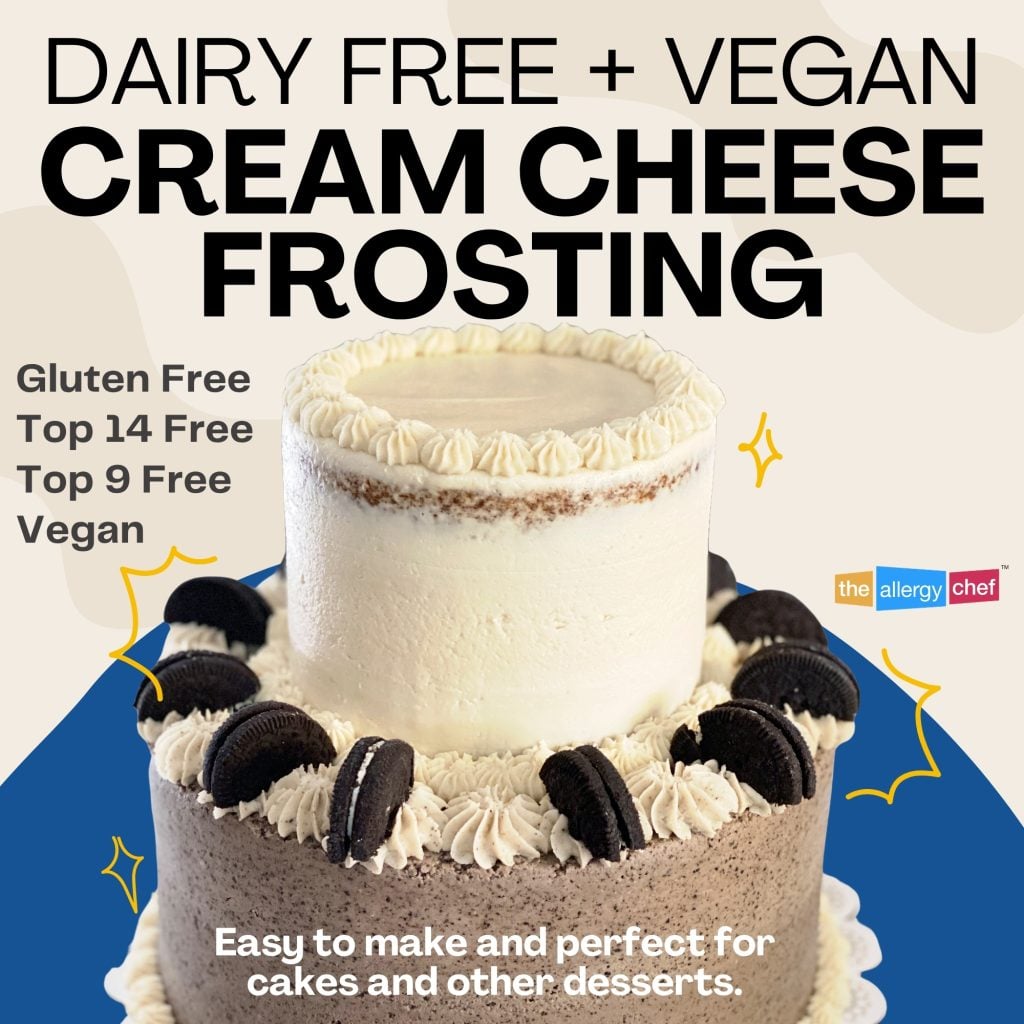
- Dairy Free Vegan Cream Cheese Frosting Recipe (not a cookie, but still helpful for a holiday dessert)
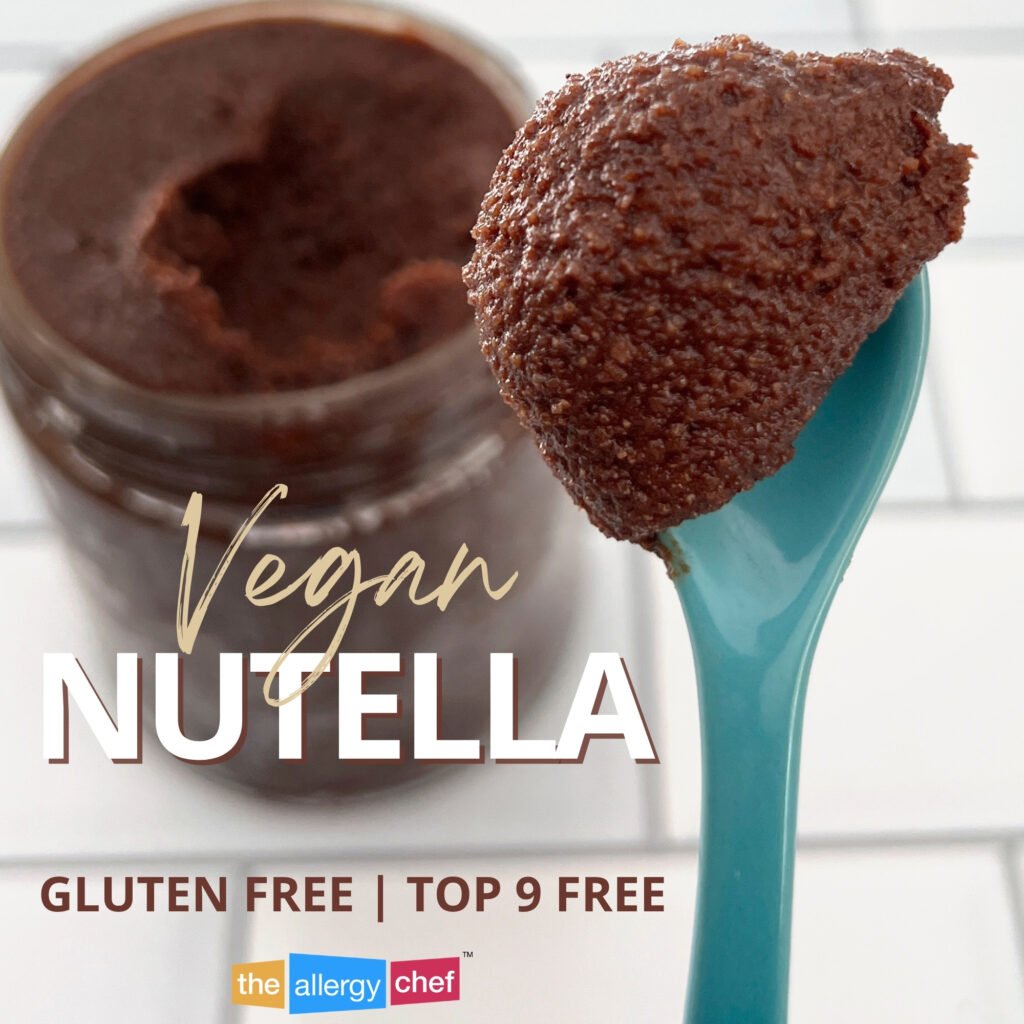
- Vegan Nutella Recipe (another good adjacent item you can use for dunking or decorating)
 |
 |
 |
 |
 |
 |
 |
 |
 |
 |
 |
 |
 |
 |
 |
 |
 |
 |
 |
 |
More Gluten Free Cookie Recipes
If you’d even more delicious cookie recipes, grab a copy of my Gluten Free & Allergy Friendly Cookies and Desserts Cookbook. You can also join RAISE, my membership site. There are currently 55+ gluten free, dairy free, egg free, allergy friendly cookie recipes. If you’re more than gluten free, check out the Advanced Recipe Search where you can use more than 100 filters for dietary needs, and also tick the Cookie Collection box and see which cookies would be safe for you.
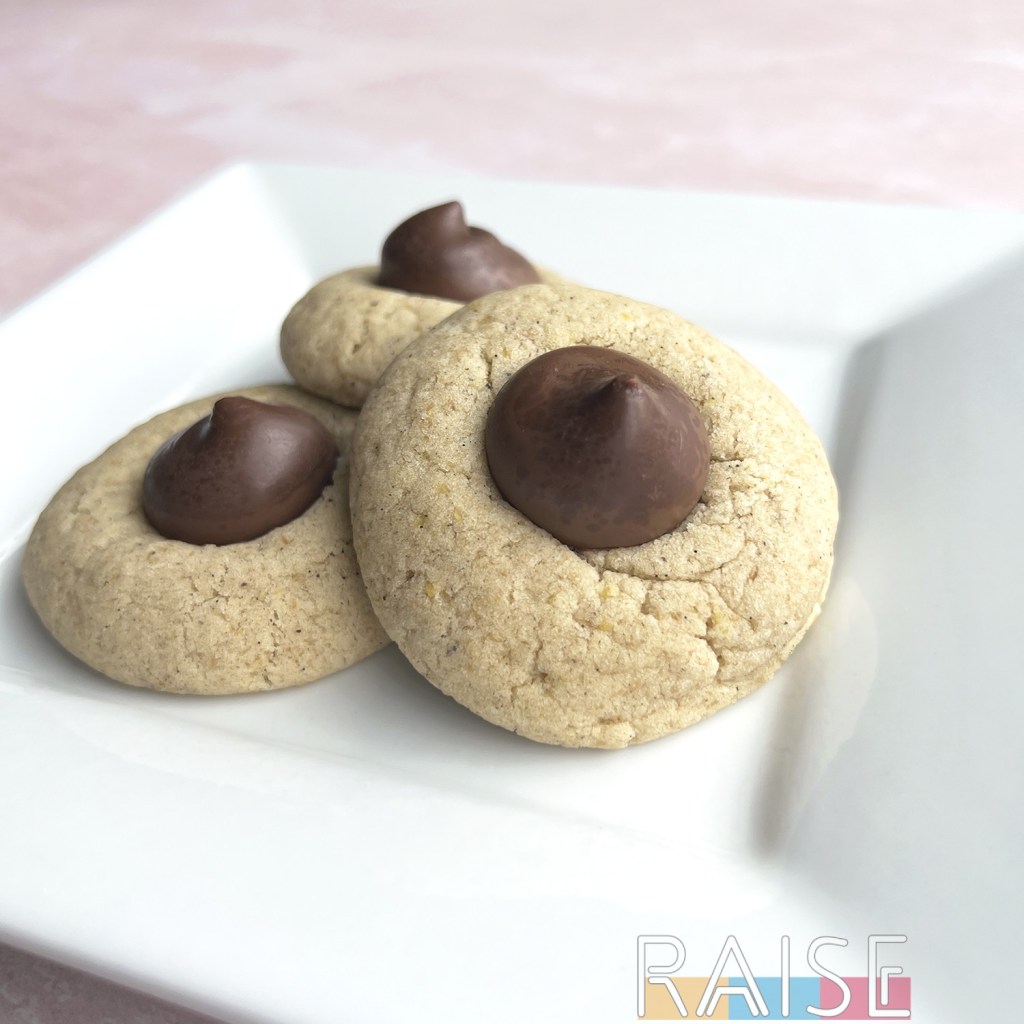
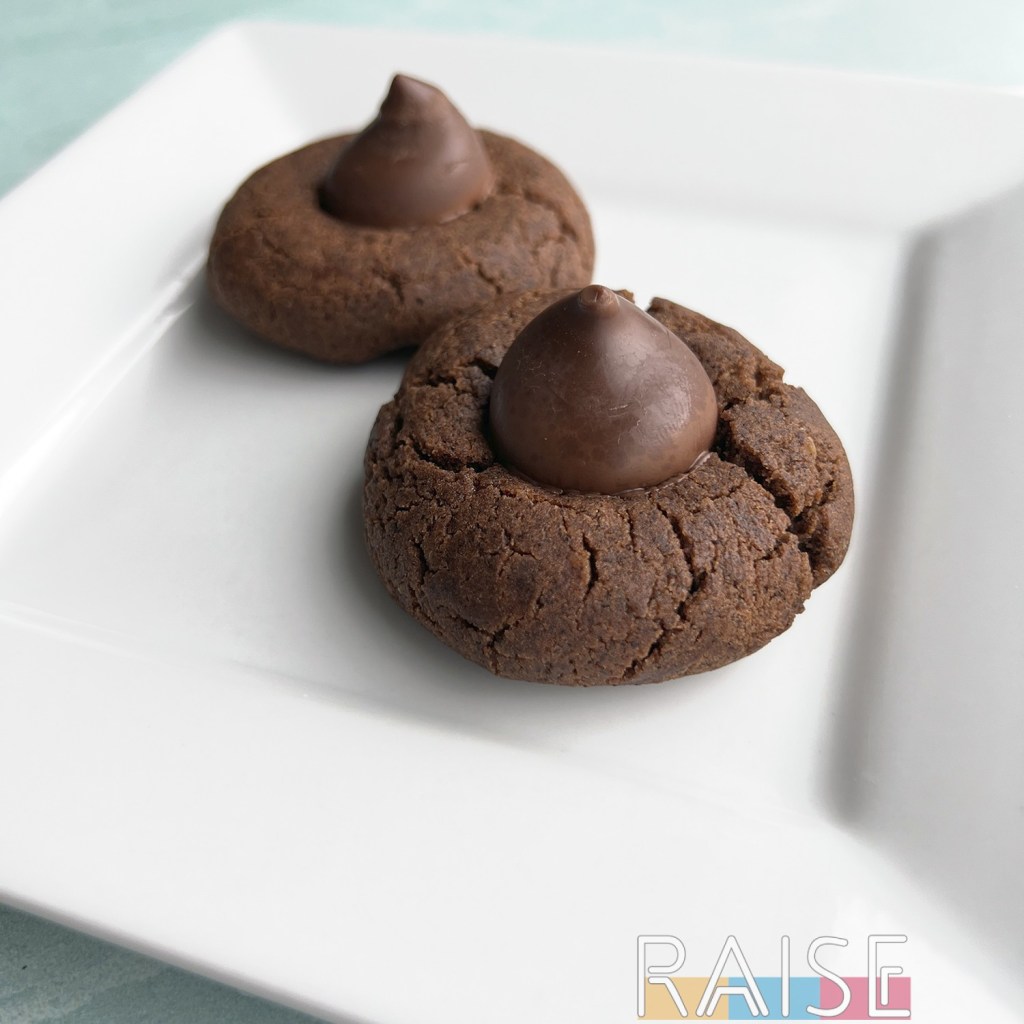
- Chocolate Kiss Cookies (these gluten & dairy-free cookies come in “peanut butter“, vanilla, chocolate, and pandan)
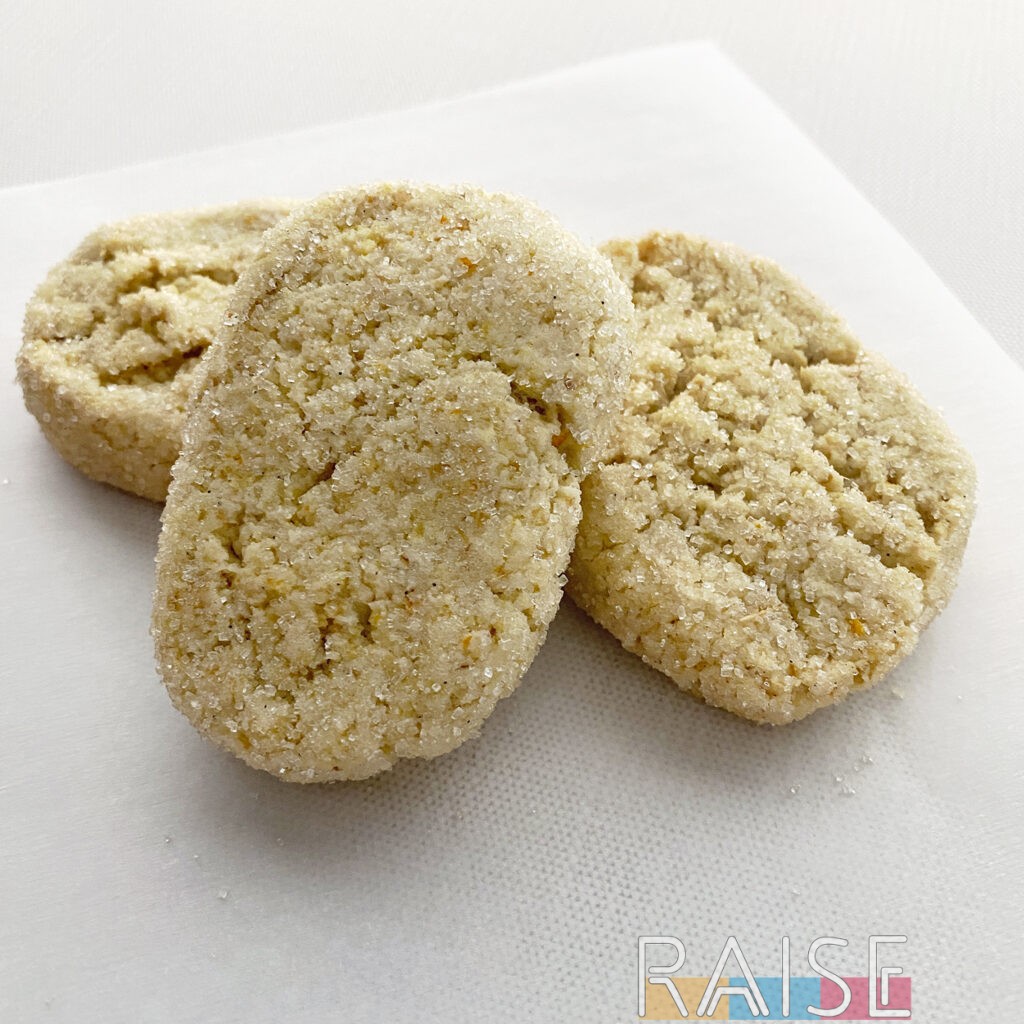
- Orange Diamond Gluten Free Sugar Cookie Recipe
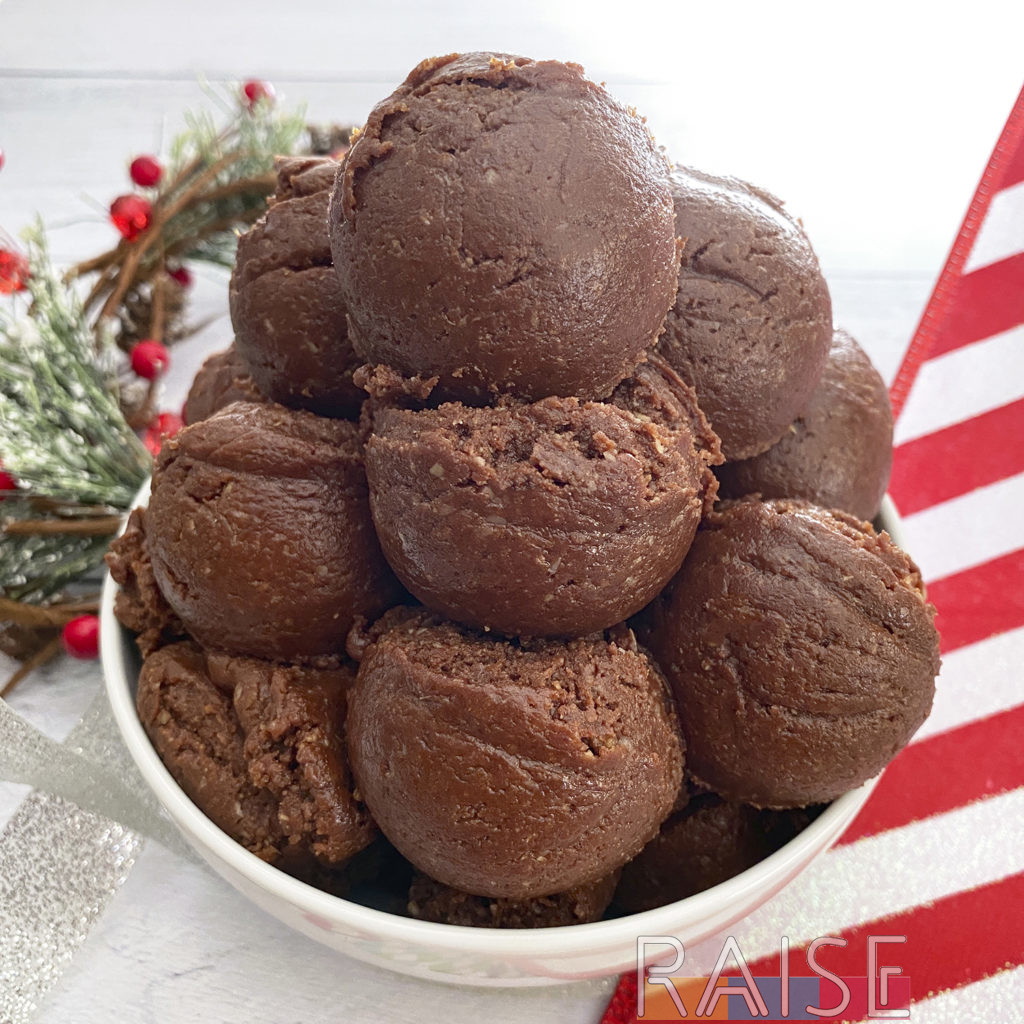
- Refined Sugar Free Edible Chocolate Mint Cookie Dough Recipe (from my bakery)
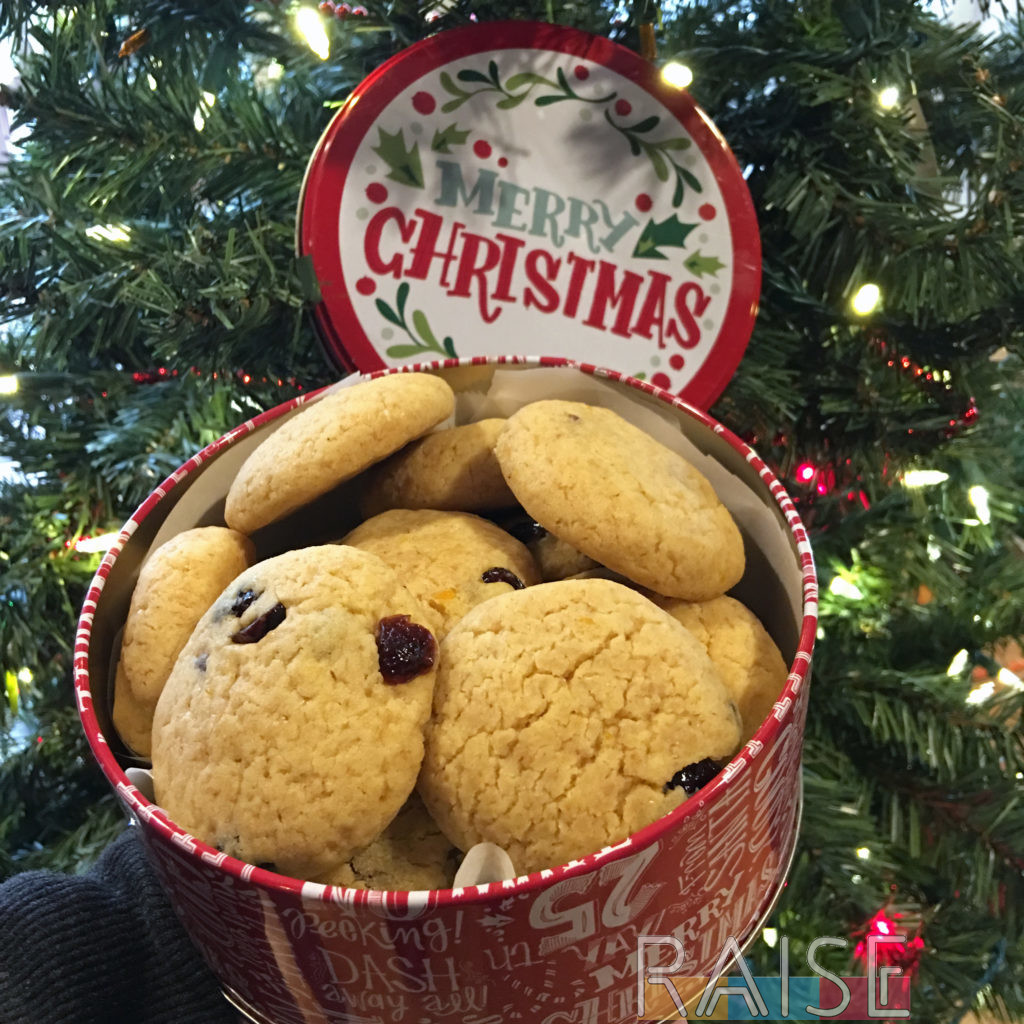
- Cranberry Orange Christmas Cookies (from my bakery)
 |
 |
 |
 |
 |
 |
Gluten-Free Baking Tips for Cookies
OK, before we jump in, if you’d like additional tips from a free-from baking expert that owned an award winning bakery (that’s me BTW), here are some links:
- Gluten Free Baking Tips (also has some egg free stuff)
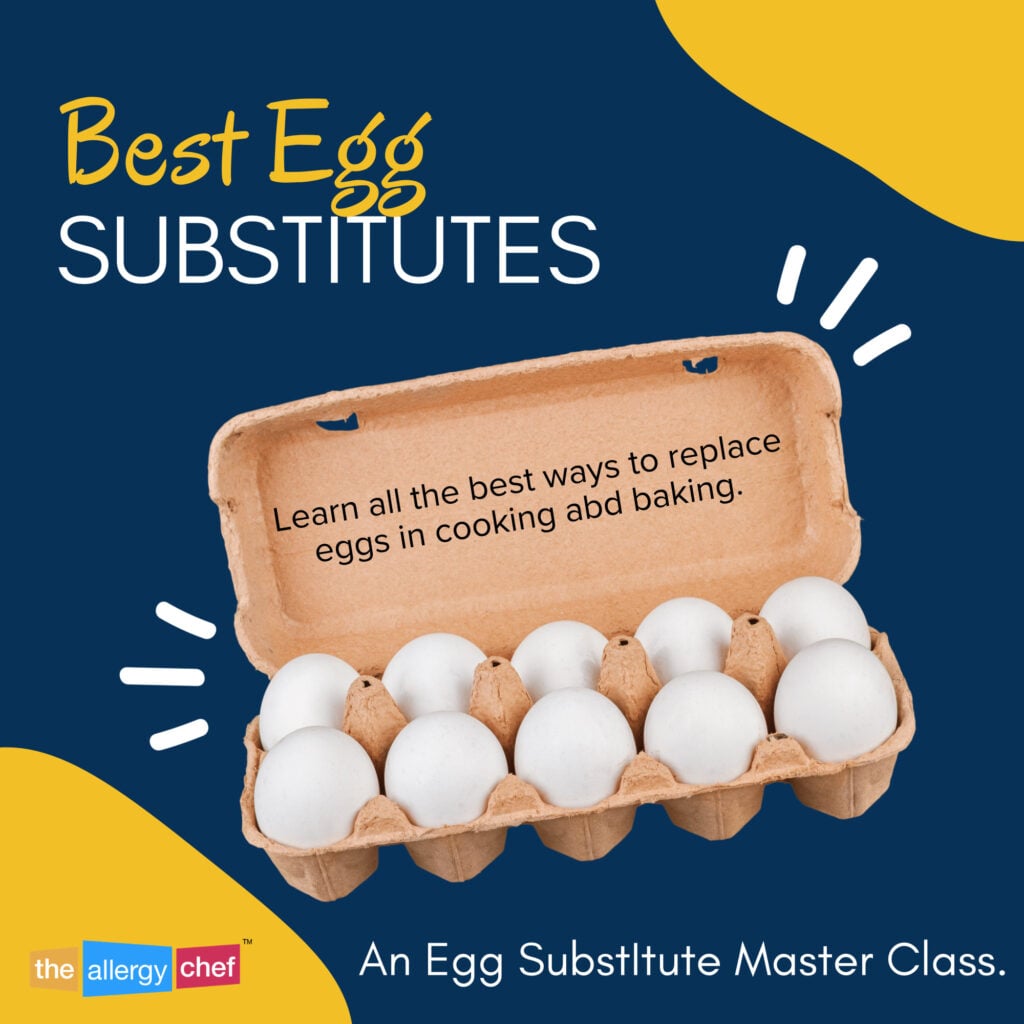
- Egg Free + Gluten Free Baking Tips
- Egg Free Substitutes: A True Masterclass
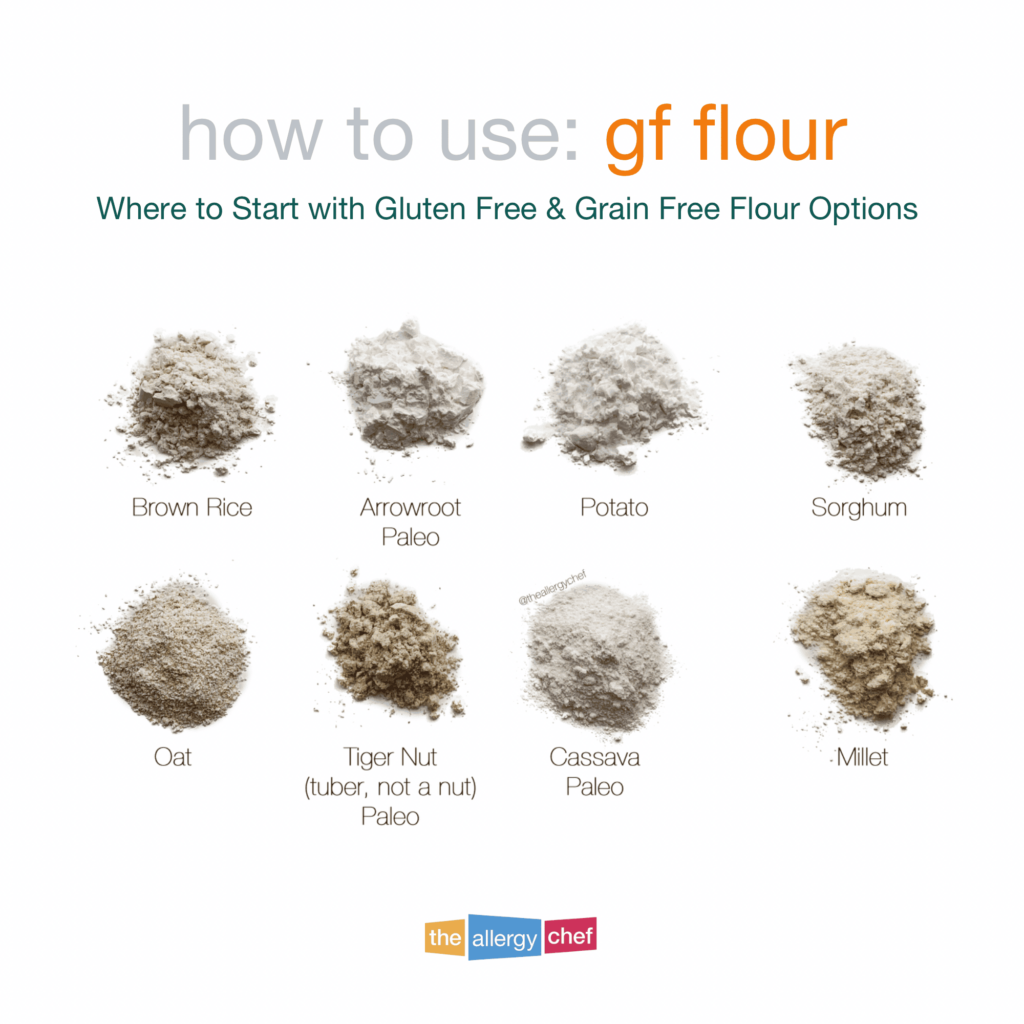
- Gluten Free Flour & Gluten Free Flour Blends – Where to Start
- Best Tips For Awesome Gluten Free Cookies
- Shortbread Cookies vs Sugar Cookies: What’s the Difference?
 |
 |
 |
 |
 |
 |
Do you Need a Stand Mixer
95% of the time, you won’t need a stand mixer to make a gluten free cookie recipe. At the very least, you should have an electric handheld mixer to ensure a smooth and proper cookie dough.
Stand mixers become a must when you’re doing a lot of baking, or managing a mixed allergy household, or if you do a lot of cooking and baking from scratch (especially batch cooking).
Is Xanthan Gum Really Necessary
Yes!! Great news, well, not great, but you get the idea. I personally have a severe, life threatening corn allergy. That means a LOT of ingredients are off the table, including most xanthan gum.
I’ve been able to own and operate an award winning GF + free-from bakery, all without xanthan gum. Now, I did tinker with guar gum at one point, but when I did side by side comparisons (even with a freeze and thaw test), the guar gum didn’t have a meaningful impact.
Here’s why: I don’t call for all purpose flour. Instead, I make a custom gluten free flour blend for all of my recipes. This means there’s balance from the start, and you don’t need dough conditioners and enhancers and additives to boost the results.
So, as long as you have a solid gluten free flour blend, it will turn out beautifully, even without xanthan gum, guar gum, and all their friends.
Note: commercial gluten free all purpose flour almost always has xanthan or some kind of conditioner and I won’t talk your ear off all day about it, but there are reasons.
Does the Butter Really Need to be Room Temperature
In most cases, the butter (dairy free/vegan butter or unsalted butter) really does need to be room temperature. This means it’s soft enough that you can pres into it and change the shape, but still firm enough to hold said shape. If it’s droopy, it’s past room temperature and will be too warm to work with.
The temperature of your butter affects the baking, texture of the cookies, and how easy it is to mix the cookie dough in your mixer.
Cookie Sheet vs Baking Tray (Yup, There’s a Difference)
A cookie sheet (sometimes called a cookie tray) and a baking tray (also called a baking sheet) are similar, but not quite the same. Unfortunately, a lot of homemade cookie recipes online use the terms interchangeably. A baking tray is solid, without holes, and generally has some weight to it, which prevents warping. It’s also usually dishwasher safe.
On the other hand, a cookie sheet is lighter, usually doesn’t have a lip/raised border, and often has small holes all over to promote better airflow. These slight changes allow for most cookie dough balls to bake up to cookie perfection.
In terms of if you’ll see a huge difference between the two, that’s going to depend on the cookie recipe. Some genuinely require improved airflow to perform their best. If you’re following my recipe, know that for the best cookies, you’ll only need a standard baking tray.
Your Oven Can Make or Break You
If your oven temperature is wrong, you won’t get GOOD results. You can have cookies that are underdone and raw in the center, or overbaked and past delightfully crispy and full on burned.
How do you know if the temperature is correct? You get an oven thermometer (this is the one that I have). It’s a special type and can help you understand YOUR oven. Story time.
Many years ago, I got brand new double ovens and was so pissed because the bottom oven wasn’t working properly… or so I thought. So, the top oven was digital with buttons, and the bottom oven was the kind with dial for the temperature.
I always assumed, because it’s digital, it must be right. Welp, I got myself an oven thermometer and guess who had to apologize to the bottom oven? This gal.
Yup, the whole time, the bottom oven was right, and the fancy top oven was flat out wrong. Off by TWENTY FIVE DEGREES. That’s a big deal in baking.
So, I don’t care how new your oven is, or if it’s fancy and digital. Get the oven thermometer and check (and you have to check the front, center, and back).
Specialty Gluten Free Flours
As you go about learning the world of gluten free baking and cookie making, it’s important to know that there are some flours that are special. Generally, they won’t be a heavy lifter, and special rules apply. The rules may be because of the taste of the flour, how it interacts with other flours, how it behaves when eggs are removed, or how it absorbs liquid.
- Almond Flour
- Amaranth Flour
- Arrowroot (starch)
- Buckwheat Flour (seed, not a weird form of wheat)
- Cassava Flour
- Coconut Flour
- Garbanzo Bean Flour (aka chickpeas)
- Hazelnut Flour
- Oat Flour
- Plantain Flour
- Potato Starch
- Sweet Potato Flour
- Sweet Rice Flour
- Tiger Nut Flour (tuber, not a tree nut)
If you’re new to gluten-free baking, you should only use these flours if a good recipe developer calls for it. As you become more experienced, then take some time to learn about these flours and get busy experimenting.
Salt: Your Ticket to Flavor Enhancement
Some gluten free cookies really shine when you add a pinch of salt. It can be sea salt, finishing salt (usually a large flaky salt), or even smoked salt.
To use salt, you’ll want to get your cookies ready to bake, then add the pinch of salt on the cookie dough, just before baking. You can give it a little press to make sure it adheres to the cookie.
Alternatively, you can add a drizzle of chocolate, or a smear of frosting, or dunk in melted chocolate, then add the finishing salt so it has something to stick to.
Chocolate + finishing salt is a FANTASTIC pair. Peanut butter cookies + salt is another great duo. However, peppermint + chocolate + salt is a terrible idea. You have to really read the cookie room on this one before adding salt everywhere.
Should You Always Store Cookies in an Airtight Container
Often times, you’re told to store your gluten free treat in an airtight container. But, is that always the best thing to do?
- Fridge: Yes.
- Freezer: Yes.
- Counter Top: No.
When freezing cookies, we use a freezer-safe container to reduce the chance of freezer burn. Where cookies are concerned, there’s no walking that one back. Once the ice and freezer weirdness get them, they’re goners. Like, they were in shark infested waters and didn’t make it out alive. RIP, as my kids would tell me.
It’s rare that you’ll store your cookies in the refrigerator, but when you do, the air-tight container prevents them from drying out. Your fridge circulates air, and said air will dry out anything that’s not properly covered. You can use plastic wrap, foil, or some kind of proper glass container with a lid.
Now for the countertop conundrum. First, depending on where you live and the ambient temperature, you may not be able to cover your cookies on the counter. Yup, I’ve tested this. Some crunchy cookies especially absorb the moisture in the air and go soft on you. And some soft cookie go from awesome to crumble when you pick them up.
Additionally, in areas where weather isn’t the issue, the actual cookie is. There’s this one cookie recipe that I have and if you put it in an airtight container and leave it on the counter, it’s weird the next day. But, if you leave a little gap, the cookie is fine the next day.
Whilst I can’t tell you how each gluten free cookie will behave in your home, run some tests year round so you know what to expect. When in doubt, freeze your cooled cookies so you don’t run the risk of ruining them.
How to Freeze Gluten Free Cookies
It’s crucial, critical, and imperative that you hear me loud and clear: Frozen Cookies are LIFE. Most gluten free cookie recipes will be freezer friendly. I have a few that aren’t, and it’s noted when they aren’t.
When they are though, you have the ability to batch cook/bake and get ahead and also enjoy Christmas cookies well into March. So, here’s how you freeze gluten free cookies.
- Bake your cookies according to the instructions, and then cool according to the instructions (on the tray, on a cooling rack, etc.).
- Line a baking tray with a large piece of parchment paper.
- Place cookies on in a single layer. It’s OK if the sides are touching.
- Place another piece of parchment paper on top to separate the layers. Add your next single layer of cookies.
- Continue to alternate between pieces of parchment paper and cooled cookies until you run out of cookies.
- Pop the entire tray in your freezer overnight, and the cookies will freeze solid. The pieces of parchment paper prevent the cookies from clumping or freezing together.
- transfer frozen cookies to an airtight container (freezer bag, silicone bag, etc.). Label with flavor and date.
That’s it. Personally, I don’t use plastic wrap or foil, but gallon freezer baggies for my frozen gluten free cookies. For my recipes, 4 – 6 months is the general life in the freezer. It’s not that the cookies go bad/rotten, but that you have a noticeable shift in texture, and I can no longer make a flavor guarantee.
But! If you’re OK with the taste and texture after 6 months, keep your cookies and keep on enjoying them when the mood strikes. But also, don’t give them to a friend and be like, have these awesome cookies. We give friends fresh cookies, or cookies within the first few months of being frozen.
Sourcing Gluten-Free Ingredients (wheat free notes here as well)
Depending on your level of sensitivity, it’s important to source raw materials, especially gluten free flours and gluten free oats either from dedicated gluten free facilities, or from equipment that’s free from wheat.
The flours that I linked to, last I checked aren’t made on shared equipment, something that’s important to me since I have a kid in the 30% group that can’t tolerate shared equipment (and said kid is allergic to wheat, along with other items).
Additionally, gluten free does NOT always mean wheat free. If you have a wheat allergy, always, always, always be on the lookout for Gluten Free Wheat Starch. It’s starting to pick up traction, and you may see it in some gluten free all purpose flour blends. Legally, it’s considered gluten free, so just know, it’s out there.
And did you notice I said legally? The thing is, some people with Celiac Disease still react, and recently, I read this thing about how some people react to as little as 5PPM, but the legal limit is 20PPM, so it explains why some people are OK with some items and other people are like, call the gluten police and the FBI.
Bonus: Put Gluten Free Cookies Under the Christmas Tree
I kid you not, one of my kids loves getting cookies for Christmas. There’s a particular brand that makes a birthday cake cookie with sprinkles, and it’s gotten pretty expensive. So on Black Friday, I stock up (and take advantage of free shipping), and come Christmas, there’s a big box of them under the Christmas tree for him.
Whilst birthday cake flavour isn’t a Christmas cookie, I want to remind you that gifting cookies is awesome, whether they’re homemade or store bought.
How to Quickly Jazz Up a Gluten Free Christmas Cookie Recipe
OK, so you’ve got all these people coming over for Christmas dinner, and you’re a little nervous. You’re like, hmmmm, I really, really want them to love all of my gluten free Christmas cookies, and yet, what if they’re like, wow, these look pedestrian. Actually, if you have people in your life like that, they don’t get an invite next year.
But, back to your cookies. Here are some easy ways, and some elbow grease ways that you can take your gluten free Christmas cookies to the next LEVEL.
Easy Cookie Decorating Ideas
Melted Chocolate. You can melt down dark chocolate chips, milk chocolate chips, white chocolate chips, or even these really cool vegan salted caramel chocolate chips. Load your melted chocolate into a disposable decorator bag and drizzle it all over. In a pinch, you can use the back of a spoon to drizzle, or a butter knife, but, the bag will get you the prettiest results.
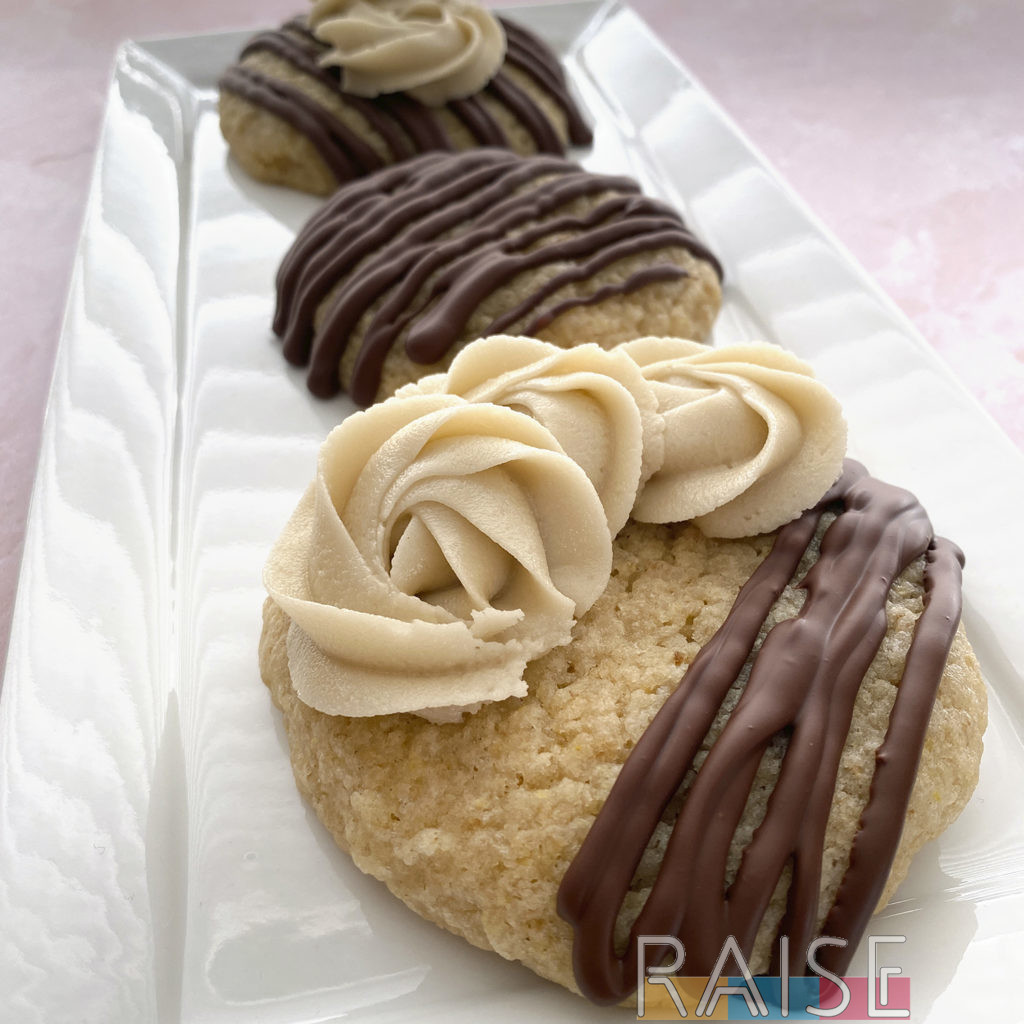
Frosting Rosettes. Below is a picture of a soft baked gluten free rose cookie. It has melted drizzled chocolate AND some frosting roses. You can do something like that, or just use frosting in general to create a cute design.
Dusting. You can dust your Christmas cookies with powdered sugar, cinnamon, cacao, or anything else that will compliment the flavour profile. You can also get something like these stencils so the dusting looks super festive.
Crushed or Shaved Topping. For this, you’ll smear on a little frosting of choice (usually vanilla), then top with crushed nuts, shaved chocolate, etc. Give your topping a little press to make sure it adheres to the frosting. For tree nut free, you can use crushed sunflower seeds.
How to Easily Make Edible Cookie Dough
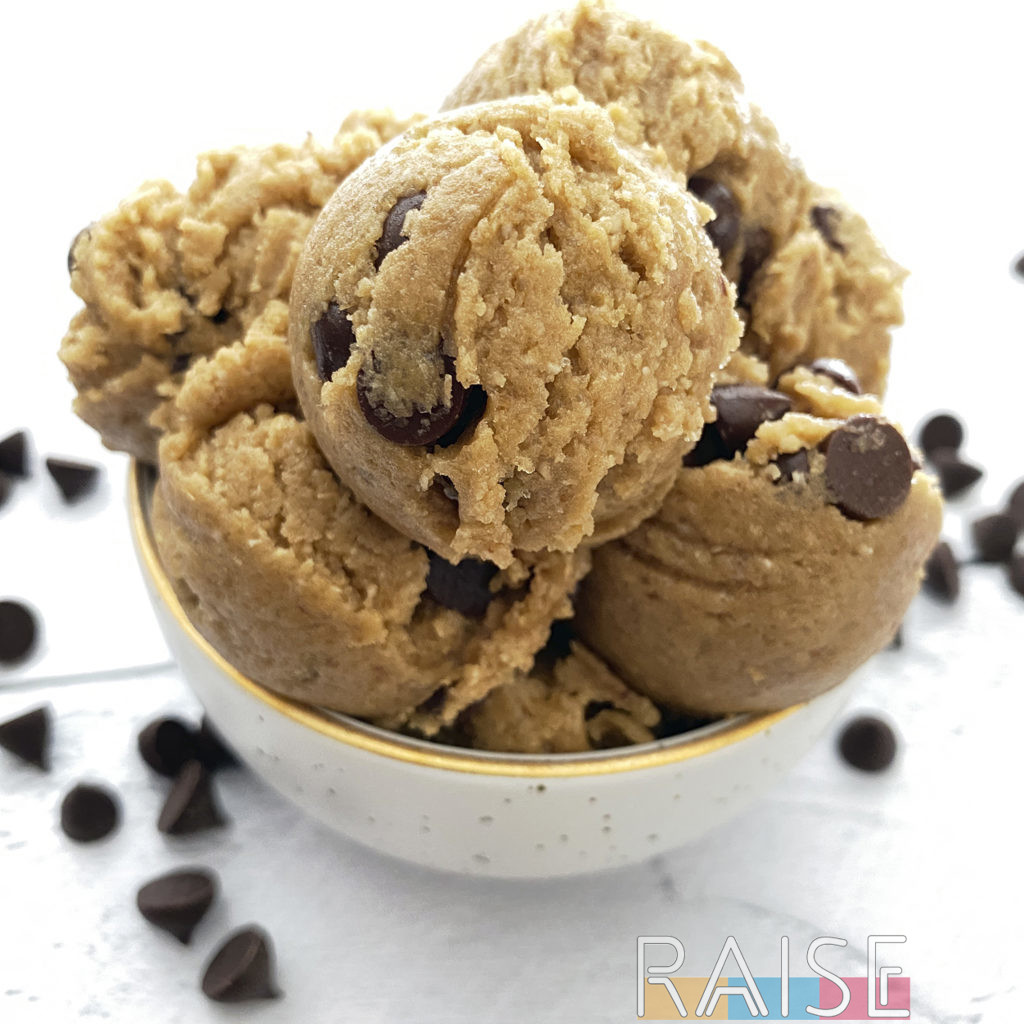
So let’s say you manage Celiac Disease, but your bestie is dairy free and you’re like, man, I miss the days when we could share edible cookie dough on the couch together and watch movies. Friend, those days are NOT over and if I have anything to say about it, there are going to be a LOT of them moving forward with a lot of cookie flavours. All gluten and dairy free.
Now, let’s look at how you can make dairy and gluten free cookie dough that’s properly edible. Most people think that the eggs are the reason that cookie dough isn’t edible, and whilst we shouldn’t eat raw eggs, it’s also the flour. Yup, good old flour shouldn’t be eaten like a bowl of cereal as it turns out.
In the case of my egg free and gluten-free cookie recipes, there’s an easy trick to make them an edible dough: roast/bake the flour. Here’s how it works.
- Measure out the flour. Including ingredients like cacao is optional, and totally not necessary. Just make sure the main flours are included.
- Transfer the flour to a large baking tray covered in a large piece of parchment paper. It’s important to spread the flour evenly so you don’t have a bunch of burned little bits in the corner of the tray.
- Oven roast at 350f/175c for 20 minutes, or until you see some golden brown development.
- Allow the flour to cool completely (don’t get impatient and skip this step).
- Make my gluten free cookie recipe as instructed. When it’s time to add the flour, add your cooled roasted flour.
- When the cookie dough is fully formed and ready, now you have a proper, safe, edible cookie dough.
Whilst you can store your edible dough on the counter, I suggest storing your edible dough in the fridge. It’s OK to leave some out for 30 minutes if you don’t want it to “taste cold”. You can also pre-portion your edible cookie dough and freeze it. This allows you to grab a little container in the future and have a nice tasty treat.
So, now that you have the deets, make a few flavors and invite your bestie over.
Make a Layered Dessert
Sure, you can serve individual cookies, or even make a single layer cookie bar thing. But now, let’s think bigger. Layered. Desserts. A layered dessert can be anything you want it to be. A great cookie example would be millionaire shortbread (shortbread cookie, chocolate layer, caramel sauce layer).
Here are some Christmas cookie layered dessert ideas you can try. Note, I’ve written these in the format of bottom layer + middle layer + top layer + garnish.
- Gluten Free Shortbread Cookies + Dairy Free Chocolate Pudding + Oatmeal Cookie Crumble (bake oatmeal cookies a little longer, then crumble like a granola topping)
- Gluten Free Chocolate Cookies + Vegan Vanilla Buttercream + Crushed Candy Canes
- Gluten Free Carrot Oatmeal Cookies + Vanilla Ice Cream + Carrot Oatmeal Cookies + Maple Butter (it’s like a giant ice cream sandwich)
- Gluten Free Fudgy Brownies + Gluten Free Vegan Pumpkin Snickerdoodle Cookies + Cream Cheese Frosting + Melted Chocolate Drizzle
- Gluten Free Peanut Butter Cookies + Marshmallows (bake on top of the cookie layer to melt/puff/expand) + Melted Chocolate Layer (spread for full coverage)
- Gluten Free Graham Crackers + Fudgy Brownies + Peanut Butter Cookies + Chocolate Drizzle + Finishing Salt or Smoked Salt
- Gluten Free Graham Crackers + Soft Baked Gingerbread Cookies + Vegan Chocolate Pudding
Pop Your Cookies into Festive Holiday Tins
You know how people talk about love languages and for some people giving gifts and receiving gifts is their jam? Well, how cool would it be to gift your friend(s) on a gluten-free diet (or those managing Celiac Disease) a pretty tin of cookies?
I’ve done this before, and it’s always a hit. Here’s what you’ll want to do:
- Go to Michales or somewhere equivalent and purchase cute Christmas and holiday tins. You can probably also get these online.
- Wash by hand VERY, VERY, VERY well, then dry.
- Make your gluten free Christmas cookies. It can be one flavour, or quite a few.
- Place parchment paper into the tin. You want it to go up the sides as well and prevent the cookies from touching the tin. This is what I do because those tins aren’t necessary for food.
- Load the tins, but make sure they’re not so loaded they can’t close.
- Add a note or sticky note with flavours, major allergens that may be present, the date, and storage info (maybe tell them to freeze their cookies).
Alternatively, let’s say you’re nervous about the tins, or have a friend like me that’s allergic to the world. Purchase a glass large bowl that comes with an airtight lid. Get it washed up, and then load it with cookies. Still add the note, then wrap some bows around it to make it look festive. Also tell your friend the bowl is part of the gift and to enjoy it.
The Best Tools & Supplies to Have When Making Gluten Free Christmas Cookie Recipes
As you get ready to make gluten-free holiday cookies, and maybe even take said cookies to a cookie exchange, here are the top tools I recommend having available. Depending on the type of cookies you plan to regularly make, you may not need everything on this list. However, this list will help you put together dang good holiday cookie platters. You know the ones, with like, EVERY kind of gluten free cookie known to man.
If there’s a particular brand or product I love, use, and vouch for, I’ve linked to it for you. Sometimes, I’m still testing stuff out and don’t want to go tell someone to make a bunch of purchases that might suck.
- KITCHEN SCALE (yes I’m yelling because it’s that important)
- Adjustable Height Rolling Pin (this will change your life)
- Baking Trays (also called a baking sheet, measure inside your oven and dishwasher before getting larger trays)
- Cookie Dough Scoops (also called a cookie scoop, get a small, medium, and large)
- Offset Spatula (also called an angled spatula)
- Handheld Electric Mixer (if you’re not ready to invest in a stand mixer)
- Heavy Duty Spatula (get several)
- Mini Sieve (for dusting and decorating, super helpful)
- Mini Spring Form Pans (for layered desserts)
- Mixing Bowls with Lids (if you use a handheld mixer, you might like these)
- Parchment Paper (I get mine at Costco, such a good price)
- Scissors (get a few)
- Silicone Doughnut Pans (for cookie donuts because why not)
- Stand Mixer (mine is a BIG one because I’m always making a double batch and there was a bakery, you can get a smaller one)
Tools You’ll Only Need for Special Projects (or Gluten Free Pastry)
- Blender
- Box Grater
- Disposable Decorator Bags
- Double Boiler (also called a bain marie)
- Food Processor
- Immersion Blender
- Spice Grinder
- Zester
The Best Ingredients to Stock Your Gluten Free & Allergy Friendly Baking Pantry With
OK, here are my top suggestions on how to build a solid gluten free baking pantry. These ingredients are also pretty allergy friendly. It’s up to you if you go organic or not, but from personal experience, all of my top 9 free recipes are made with mostly organic ingredients and my taste testers are ALWAYS telling me they can literally taste the difference.
You’ll notice that my list of staple ingredients revolve around simple ingredients. That’s because honestly, it tastes amazing when you take simple, high quality ingredients, blend them together, and let them shine.
I’ll also add, this isn’t an exhaustive list. Maybe one day I’ll put together some kind of guide, but for now, this is what we’ve got.
Gluten Free Flours
Of all the dry ingredients, your gluten-free flour blend will be the most important. You can use an all purpose flour, however, I can’t personally vouch for any since I’m allergic to them all.
In some cases, it doesn’t make sense to purchase an individual flour since it’s a one-time use situation. In most cases, a one time use flour can be swapped for an all purpose flour, but there are exceptions: nut flours (almond flour, hazelnut flour, etc.), buckwheat flour (seed, not a wheat variation), coconut flour, cassava flour, starches (sweet potato, arrowroot, tapioca), tiger nut flour (tuber, not a tree nut), and several others.
If a recipe calls for that flour, if you replace the GF flours with an all purpose blend, you will disrupt the flavour and possibly the function. So, keep that in mind if you like to go all wild wild west cowboy and see gluten free cookie recipes as suggestions. Like, you can be a cowboy, but don’t leave one of those notes.
You know the ones: I changed this, that, the other thing, oh and left this out. The cookies were horrible. I don’t know that this developer was thinking but I’ll never use this website again…. um. ma’am, you didn’t make the recipe…
My favorite gluten free flours include:
- Arrowroot (also called arrowroot starch, and arrowroot powder)
- Brown Rice Flour, superfine
- Organic Cassava Flour
- Gluten Free Purity Protocol Rolled Oats (oats aren’t considered GF in every country, but they are here in the US)
- Millet Flour (I used to get superfine wholesale, but now I get not superfine in a normal size which is what the link is for)
- Plantain Flour
- Potato Starch
- Purity Protocol Organic Gluten Free Oat Flour (I order this wholesale)
- Sorghum Flour, superfine
- Sweet Rice Flour, superfine
- Tapioca Starch (also called tapioca powder and tapioca flour)
- Organic Tiger Nut Flour
- White Rice Flour, superfine
You’re also going to need baking powder, and baking soda.
Granulated Sweeteners
When it comes to making holiday classic cookies, you’re going to need sugar. Now, my list only includes organic refined sugar and organic unrefined sugar. I don’t use sweeteners that are the “weird ones” as I like to call them, and for good reason. Most are corn derived, no matter what the buzz words on the package say, and I have an anaphylactic allergy to corn, so nope.
These are the granulated sugars I use the most:
- Caster Sugar (this is a superfine sugar)
- Dark Muscovado Sugar (for special baking projects)
- Demerara Sugar (like a light brown sugar)
- Organic Date Sugar
- Organic Dark Brown Sugar
- Organic Coconut Sugar
- Organic Light Brown Sugar
- Organic Maple Sugar
- Organic White Cane Sugar (I get the big bag at Costco, and it’s also vegan)
Note: Cane sugar is processed with bone char, and a lot of sugar on the market isn’t vegan. If you happen to be vegan, you need to purchase “vegan sugar”.
Liquid Sweeteners
There are other liquid sweeteners to choose from, but I don’t personally use them.
- Organic Coconut Nectar
- Organic Date Syrup
- Organic Honey
- Organic Maple Syrup (if you’re dairy free, sunflower free, truly corn free, etc., make sure you use a maple syrup with a safe defoamer, this brand is top 9 free, but not corn free)
Herbs & Spices
OK, what’s so cool about making gluten free cookies at home is that you can play with spices (and colours). Whilst there are more spices and herbs to choose from (basil, thyme, lavender, and many more), I’m keeping this list within the scope of gluten free Christmas cookies.
- Warm Spices: Allspice (berry derived), Cinnamon, Cloves, Ginger, Nutmeg (seed derived)
- Organic Beet Root Powder (for when you want a pop of RED)
- Organic Spinach Powder (for when you want a pop of GREEN)
- Organic Ground Vanilla (not quite an herb or spice but it feels right in this category)
Misc Ingredients
Alright, here are a few more ingredients to stock as you go about making easy gluten free cookies.
- Organic Apple Cider Vinegar (especially if you’re egg free or vegan)
- Organic Black Cacao (key ingredient for oreo, etc.)
- Organic Cacao Powder, for making the best chocolate cookies (this isn’t the same as cocoa powder)
- Organic Candy Canes (perfect for holiday cookie platters)
- Organic Chocolate Chips (this is a pretty good brand that I use here and there, but my tasters prefer other options)
- Organic Dried Cranberries
- Festive Sprinkles (this is a really fun brand that’s allergy friendly)
- Organic Freeze Dried Fruit
- Gluten Free + Allergy Friendly Candy (this is one of the BEST brands, top 9 free, gluten free)
- Golden Flax Meal (when you see a flax egg in vegan and egg free baking, this is the best brand to use)
- Liquid Smoke (for when you want to make bacon chocolate cookies, etc. and this brand is LEGIT, no natural flavors et. al.)
- Organic Maple Butter (this is whipped maple syrup, not maple + cow’s milk butter, great for easy decorating)
- Misc. Extracts: Almond Extract, Bourbon Extract, Rum Extract (this is my preferred brand)
- Natural Food Dye (I use this one, but it’s for frosting, glaze, etc., the colour WILL fade if you bake it)
- Organic Vanilla Extract (this is the brand I use, but only the vanilla extract, none of the other stuff)
Answering Your Questions About Gluten Free Christmas Cookie Recipes
Do your cookie recipes have a dairy-free option?
It’s that time of year again and if you’re dairy free searching for new favorite recipes, I’ve got great news for you. ALL of my cookie recipes are naturally dairy free (one of my kids is allergic to milk). Not only that, but they’re egg free, and usually vegan and top 9 free as well. Many are top 14 free to make sure as many people as possible are included.
But! Don’t let that free-from status scare you off. I owned and operated an award winning free-from bakery, so you’re not getting weird recipes. You’re getting top of the line, A++ gluten free, dairy free, egg free recipes that will leave you feeling so dang happy.
Is icing sugar the same thing as powdered sugar?
This time of year, you’re going to see gluten free cookie recipes call for powdered sugar, icing sugar, and confectioner’s sugar. The good news is, they’re all the same thing. White, fluffy, powdery sugar.
It’s usually made with tapioca starch or corn starch (with my severe corn allergy, it’s tapioca for me). However, in a pinch (not that you asked but I can’t help myself), you can make powdered sugar at home. Blend 230g/1 US Dry Cup of organic cane sugar with 2 Tablespoons starch (arrowroot, corn, potato, tapioca).
Blend on high and you get the equivalent of powdered sugar. Happy baking!
What kind of gluten free cookies can I make that are free from added sugar?
So, added sugar to me means refined sugars (cane sugars) and unrefined sugars (maple, coconut, etc.). If that’s the case, you’ll want to find cookies that are sweetened with:
- Applesauce
- Banana (super ripe ones)
- Date Paste
- Sweet Potato
There’s also sugar alcohols and super alternative sweeteners like allulose. However, these sweeteners don’t behave as expected and you have to follow special cookie recipes that have been designed for each one.
I’d encourage you to search online for things like “applesauce sweetened chewy sugar cookies”. You’ll want to put the name of your sweetener in the search, which will increase your chances of finding said cookies.
You can also search for breakfast cookies and try to adapt them for holiday cookies. Often times, that style of cookie is free from added sugar.
Also look up “raw vegan + cookie name + recipe”. The raw food crowd only uses whole foods as their sweetener. Well, the purists do. Some use maple syrup whilst some point pitch forks at them. Gotta love the internet.
Is Bob’s Red Mill gluten free flour the best all purpose flour?
It depends on who you ask. If we’re talking to someone that regularly eats the Standard American Diet (SAD), and their taste buds are primed for highlight processed foods, yup, Bob’s tastes good. They’re not regularly eating expensive ingredients, and they’re used to dough conditioners, etc.
Now, if we talk to someone that eats organic etc., nope. They’ll lament over Bob’s Red Mill. Remember, just because it’s available at all the grocery stores, doesn’t mean it’s the best all purpose flour.
Now, the King Arthur Measure for Measure flour has a really good reputation in the free-from community. Whilst King Arthur flour isn’t readily available in stores, you can easily order it online.
The other brand that I love telling people about: Better Batter. You’ve probably never heard of them, but they make one of the best gluten free artisanal all purpose flour blends. Check them out, try a bag, and see what you think.
If you’d really like to know how these all purpose gluten free flours hold up against regular flour, purchase a bag of each and make a batch of cookies with each one. Share cookies with your friends who don’t have Celiac Disease or food allergies and ask for honest feedback.