

Today we’re going to take a look at what it means to have a stone fruit allergy. I’ll also touch on the differences between a stone fruit allergy, latex allergy, and oral allergy syndrome. There’s a Venn diagram that connects these conditions, so it’s important to know which camp you’re in.
Stone fruits are often called orchard fruits, however, there’s more than what’s only in an orchard that makes up the collection of fruits called stone fruits. Also, many orchard fruits aren’t actually stone fruits, such as pears and oranges.
This article covers a lot of ground, so be sure to use the table of contents to jump around.
What is a Stone Fruit
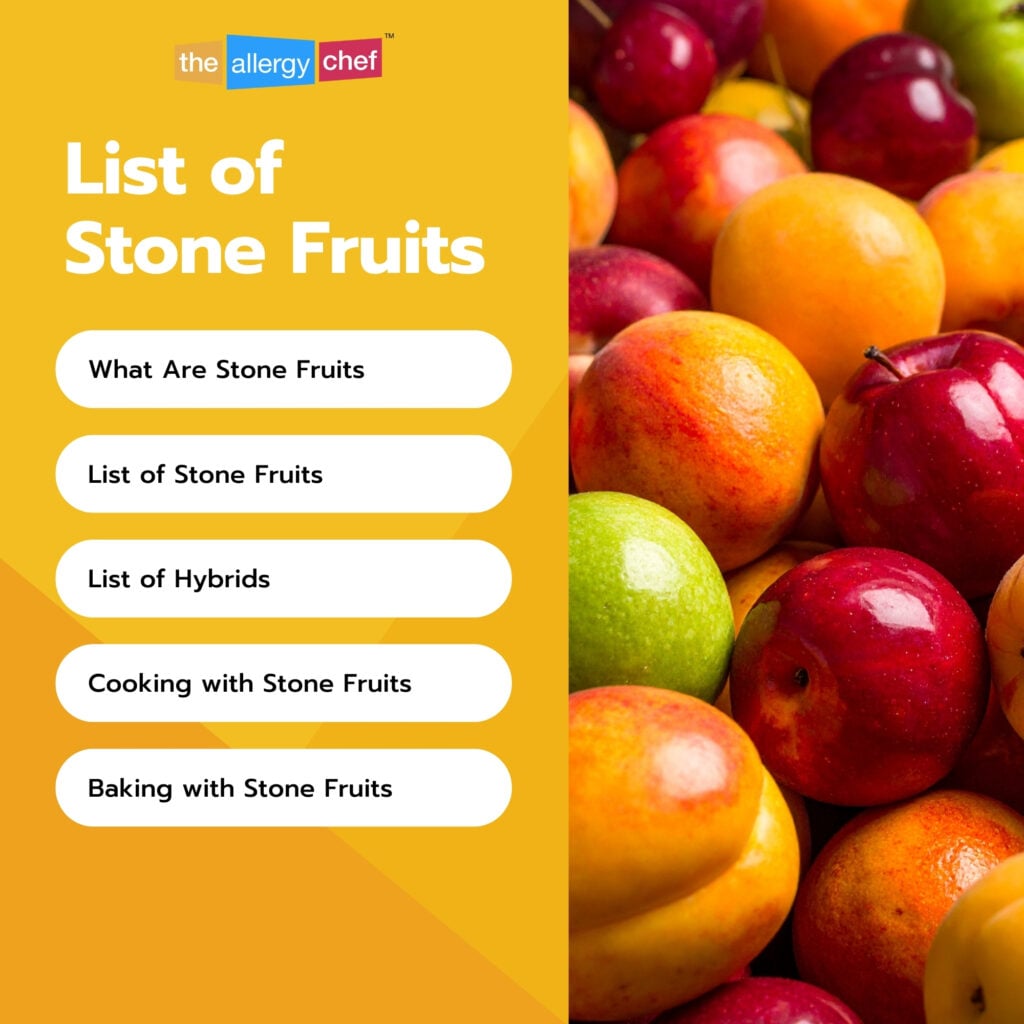
Stone fruits, also called drupes, is a type of fruit that has a large pit (or stone) in the center. A drupe tends to have soft flesh and a thin skin, but there are some exceptions.
Some fruits don’t seem like they would fall into the category of stone fruits like raspberries and blackberries, yet, they’re here. I’ll cover that a bit more later on (it’s fascinating).
Note: No two people are the same, and it’s entirely possible to be allergic to one, some, or all stone fruits.
What is a Food Allergy?
A food allergy is a response by your immune system that’s triggered by a protein that your body sees as a threat (also called an allergen). This is not the same thing as a food intolerance or an autoimmune disease.
If you suspect you have a food allergy, schedule an appointment with your healthcare provider/main doctor and ask them to refer you to an allergist for allergy testing where blood test and/or a skin prick test can be ordered to determine if you have an allergy. Know that skin & blood tests are not 100% accurate, but are still a great diagnostic tool.
Note: In our modern times, some doctors can set up the referral if you email them (rather than make an in-person appointment). If the reaction is skin based, include well-lit photos with your email and this will usually speed things up.
A “true” food allergy is IgE mediated, and the immune system usually elicits a reaction within immediate ingestion to four hours. Outside of that window, it’s often suspected that you have a food intolerance.
However, there are some types of allergenic diseases that are “true” food allergies and the reactions happen outside of the four hour window. Additionally, a person can have a more rare or complex case and suffer from delayed reactions (which can still be “true” food allergies).
Contact & Airborne Reactions
In some patients, they have what’s called contact or airborne allergy as well. This tends to be a bit more common in those allergic to tree nuts and peanuts, and is very rare in those with a stone fruit allergy.
In their case, a reaction can be triggered by touching something they’re allergic to, or by breathing in its particles (like when cooking or baking).
Food allergies can be life threatening and should always be taken seriously. Work with your allergist and healthcare providers to create an action plan that will meet your needs.
Symptoms of a Stone Fruit Allergy
Food allergy reactions can vary among patients, as no two people are the same. Some stone fruit allergy symptoms include:
- Swelling of the Lips
- Swelling of the Tongue
- Swelling of the Throat
- Itchy Mouth and/or Throat
- Tingling of the Mouth, Lips, or Throat
- Shortness of Breath
- Difficulty Breathing or Asthma Symptoms
- Wheezing
- Skin Rashes and/or Severe Redness of the Skin
- Itching
- Hives
- Racing Heart Rate
- Decreased Blood Pressure
- Impending Doom/Dread
- Dizziness
- Fainting/Loss of Consciousness
- Severe Stomach Pain
- GI Distress or Abdominal Pain
- Nausea
- Vomiting (including projectile vomiting)
- Diarrhea
- Blood in Stool
These symptoms are more the more severe symptoms of the allergic reaction spectrum, and can indicate anaphylaxis.
It’s critical that if you see these stone fruit allergy symptoms that you realize you’re experiencing a medical emergency and you need to seek immediate medical help. If you have a known allergy, follow your action plan including the use of an epipen if you have one, or prescribed antihistamines.
Three Critical Points About Allergic Reactions
There are hundreds of symptoms a person can experience, but it’s important to know three things about stone fruit allergy symptoms and allergic reactions in general:
- Not every reaction is anaphylaxis. People can have a “non-traditional” stone fruit allergy reaction to food (or have mild symptoms) and still be allergic to stone fruits.
- Should a person experience anaphylaxis, or you see signs of anaphylaxis, it’s important to seek immediate medical treatment (use your epinephrine auto-injector if you have one). When left untreated, anaphylaxis can lead to anaphylactic shock, which can cause death.
- Previous allergic reactions don’t predict future reactions (or the severity of future reactions), and in some patients, continued exposure to known allergens can cause more severe reactions each time.
Children and Food Allergies
A child may talk about a food allergy differently than adults. Many children will say things like “my mouth is spicy” or “there’s a frog in my throat”. They’re trying to express what the reactions feel like to them with language or experiences that are familiar to them.
Always take note of these types of statements from a child, as they can indicate a serious medical situation. If needed, don’t hesitate to seek medical treatment, and be sure to ask your GP for a referral to an allergy specialist.
You May be Asked to Do an Oral Food Challenge
A food challenge, sometimes called an oral challenge, is when an allergy patient eats a food they’ve tested as allergic to, or for a food where the results were inconclusive, under the supervision of their doctor and/or medical team. The goal of the challenge is to confirm the positive results or to determine if the patient isn’t allergic to specific food allergens.
There are several steps involved with a proper oral food challenge, including raising the patient’s heart rate to make sure a reaction doesn’t happen. If you’ve been tested for a stone fruit allergy, or other food allergy, you may be offered an in-office oral food challenge to ensure the test results are accurate. A lot of people wonder, is this a good idea, or a really bad idea.
Honestly, it depends. Let’s say you had a severe reaction to several stone fruits in the last year, and that’s what prompted you to get tested. Since a reaction is already known, in that case, an oral food challenge is probably a bad idea. On the flip side, let’s say you were diagnosed with a peach allergy after a panel was run alongside other foods.
Perhaps your allergist was concerned about potential reactions to other stone fruits and feels it’s in your best interest to challenge related foods. In that case, an oral food challenge can be very helpful.
How Challenges Can Help
Food challenges are also used to confirm if someone has outgrown an allergy (this is a lot more common in kids). For some kids, they’re diagnosed at an early age with really high numbers on their test results and the food(s) will be avoided for years.
During a checkup, their allergist may note that their numbers have decreased dramatically, and it would be safe to do a food challenge. Many allergy parents are understandably nervous, and some choose to move forward with the challenge whilst others decide they’ll continue to avoid the food(s).
In some cases, an allergic individual may not be offered an oral food challenge by their allergist, even with a reduction in numbers, and that’s because of other contributing factors (including a history of severe allergic reactions).
Know that food challenges are completely voluntary, and you don’t have to do anything you’re uncomfortable doing, nor do you have to subject your children to them. At the end of the day, do what’s best for you and your children.
List of Stone Fruits (in ABC Order)
- Apricot
- Aprium
- Blackberry
- Cherry
- Coconut
- Date
- Green Almonds
- Jujube (also called Chinese Date and Red Date)
- Lychee
- Mango
- Mulberry
- Nectarine
- Olive
- Peach
- Plout
- Plum (a prune is a dried plum)
- Raspberry
Hybrid Stone Fruits
Depending on where you live, you may have access to a wider range of hybrid stone fruits. Many revolve around plums and apricots, and their names indicate the types of fruits used. Here’s a non-exhaustive list of hybrid stone fruits:
- Aprium
- Apriplums
- Nectaplum
- Peacotum
- Plouts
- Plumcots
- Plumpicots
- Pluclots
- Pluots
Stone Fruit Allergy Related Resources
There are several reasons people need to avoid stone fruits, including other fruit allergies and other allergenic diseases. Here are related resources, in case you’re part of one of the categories.
- Alder Pollen Allergy Information
- Birch Pollen Allergy Information
- Grass Pollen Allergy Information
- Mugwort Pollen Allergy Information
- Ragweed Pollen Allergy Information
- Latex Allergy & Cross-Reactive Foods Information
- Oral Allergy Syndrome & Foods to Avoid (now called pollen-food allergy syndrome)
 |
 |
 |
 |
 |
How Stone Fruits are Commonly Used in Food Products & Non-Food Items
Stone fruits are commonly used across a range of products you’ll find in the grocery store. The most popular stone fruits for commercial use include cherry, mango, olive, peach, and raspberry. You’ll find stone fruits in:
- Artisanal Cheese (as a flavoring agent)
- Baby Food
- Baked Goods (usually as a filling, but can be an overall flavour)
- Bath & Body Products (makeup, toothpaste, soap, shampoo, etc.)
- Breakfast Cereal
- Candy (chocolate, gummy candy, etc.)
- Chewing Gum
- Dairy Free Products (coconut is a very popular ingredient)
- Desserts (all types including cake, cookies, hand pies, pastry, and everything else in between)
- Electrolytes
- Energy Bites (also called Protein Balls, Power Bars, etc., they’ll contain dates and sometimes coconut)
- Drinks (soda, kombucha, smoothies, flavoured water, etc.)
- Jams & Jellies (peaches, raspberries, blackberries, and cherries are the most common)
- Health & Wellness Focused Products (dates and coconuts are super duper popular in this category)
- Ice Cream & Frozen Desserts
- Indian Cuisine (coconut is a popular ingredient in a large number of recipes)
- Medication (mostly. used as a flavoring agent, especially in children’s medication)
- Middle Eastern Cuisine (dates and other dried fruits are popular)
- Protein Powder
- Refined Sugar Free Products (dates and coconut are popular unrefined sweeteners)
- Salad Dressings & Vinaigrettes
- Snack Bars
- Snack Foods in General (usually as a flavouring agent, but freeze dried stone fruits and dried stone fruits can be in lots of different snacks)
- Supplements
- Water Drops (products used to add flavor to water)
- Vegan Food Products (sweet and savory galore)
- Yogurt (flavoured yogurts, both dairy and dairy free)
Hidden Sources of Stone Fruits
Stone fruits can be used in a lot of ways you may not have thought of. Here are more products that may contain stone fruits, but I call them hidden because it’s a lot less obvious.
- Added Sugar Free Foods (dates are considered a whole food sweetener and are common in this product category)
- Condiments
- Meat Marinades
- Natural Flavors (this term encompasses thousands of chemicals, including stone fruits and stone fruit derivatives)
- Natural Food Dye (less common in artificial dyes)
How to Grocery Shop with a Stone Fruit Allergy
When it comes to shopping with a stone fruit allergy, know that food labels on products will always be your first line of defense.
You’ll want to grab a product and turn it over to the nutritional panel and usually near that you’ll see a list of ingredients. Read them carefully and look for stone fruits you’re allergic to. When there are are a lot of ingredients, use a finger to trace under the lines, which drags your eyes along, and ensures you don’t accidentally skip over a line.
If you see natural flavors, any type of dye, or other questionable ingredient, take a picture of the product. When you get home, email companies and find out about the products before purchasing them.
The Biggest Tips I Can Give You
When you’re new, stick to basic foods (raw meat, seeds, fresh fruits & vegetables, basic grains like rice, legumes, etc.). The more basic the food, the less likely you’ll run into stone fruits.
Start with chocolate and vanilla flavoured products, as these are less likely to contain stone fruits. This isn’t a hard and fast rule, just a higher chance of success.
Avoid anything “tropical” or “fruity” as these flavors will almost always include at least one stone fruit.
Citrus flavoured products are less likely to contain stone fruits. They can still be there, but lemon and orange flavoured foods are less likely to have a stone fruit connected to it.
Lastly, and perhaps the best advice I can give you: learn to cook and bake at home. Develop a passion for nourishing yourself and find joy in the kitchen. You can create a wide range of safe and delicious foods at home.
Stone Fruits are Not a Major Allergen (Labeling Laws)
In every country that recognizes major allergens, with two exceptions, stone fruits aren’t considered major allergens. They will NOT be called out on the label in bold or in a contains statement (like what you would see for milk, hazelnuts, and other major allergens).
The two exceptions: South Korea recognizes peach as a major allergen and Taiwan recognizes mango as a major allergen.
What this means for you: The only way to find out if stone fruits are involved in the manufacturing of a product (in terms of vague ingredients such as natural flavors) is to contact the company directly. This is best done by email since you’ll be asking about a non-major allergen.
You should also expect them to take a day or two to get back to you, as they’ll have to check with suppliers on each ingredient they use.
When reaching out, be specific. List out all of the stone fruits you can’t consume, rather than saying “stone fruits”, because not everyone knows what the full list entails.
Cross-Contact
Whilst there are no official stats available, I’ve learned through my work with tens of thousands of free-from folks that approximately 30% of people with food allergies self report that they can’t eat food made on shared equipment with what they’re allergic to.
When allergens transfer from one product to another through shared equipment, this is called cross-contact. This is not the same thing as cross-contamination, which is when a food pathogen is transferred.
Most foods made in the United States, and abroad, are made in shared facilities, and often on shared lines. For most people with food allergies, this isn’t an issue. For others, it means the food won’t be safe to eat due to the risk of trace amounts of allergens on the equipment.
It won’t be impossible to get information on shared equipment where stone fruits are concerned, but don’t expect it to be a walk in the park either. A manufacturing plant can process recipes for a range of brands, and this can change regularly.
This means that you can contact a brand, confirm there’s no shared equipment, and that could change in 6 months. This is also why you should reconfirm at least once per year with safe brands once you’ve found them, if you’re in the 30% group. That’s the key here. If you’re not in the 30% group, you’ll be able to read a food label and take it at face value.
To learn more about cross-contact, and prevention, read this article.

Cross Reactivity
When it comes to stone fruits, they fall into several other categories of allergenic diseases. I won’t go into all of them, but the two I want to highlight are oral allergy syndrome, and a latex allergy.
In simple terms, cross reactivity works like this:
- You’re allergic to peaches, cherries, and apples.
- Your immune system knows what those proteins look like.
- You eat something that has proteins that look similar, your immune system is “confused” and you have a reaction.
- The food with similar proteins is something you’re not allergic to, however, because the proteins looked similar enough, your immune system readied the troops.
Oral Allergy Syndrome Connection
Oral Allergy Syndrome (OAS), now called Pollen Food Allergy Syndrome (PFAS) is a condition related to pollen proteins.
With OAS/PFAS, a person with a specific pollen allergy can experience food allergy-like symptoms when consuming foods related to said pollen.
However, what makes OAS so incredibly unique is that most of the allergic reactions are limited to the mouth and throat. Additionally, the reactions generally happen when consuming raw fruits and vegetables.
The allergic reaction varies from person to person, but there are some common reactions with oral allergy syndrome including lip swelling, tongue swelling, itchy mouth, and itchy or sore throat.
When patients with OAS peel the food and/or cook the foods related to the pollen, many self-report that they’re able to eat the food without having an allergic reaction.
This is attributed to the denaturing of the protein. Once cooked, the similar proteins that normally cause the allergic reaction “look different enough” to the immune system and it now knows that the food is fine.
Remember, no two people are the same and in rare cases, patients can experience more severe allergic reactions, especially with continued exposure to trigger foods. Additionally, not everyone with oral allergy syndrome can consume trigger foods, even when they’ve been cooked or peeled.
To learn more about this condition, check out this article on OAS/PFAS, and foods to avoid.
Latex Allergy Connection
Some people with a latex allergy diagnosis must also avoid foods that are known to be cross-reactive with latex. These foods fall under three categories: low cross reactivity, moderate cross reactivity, and high cross reactivity.
Foods such as avocados and kiwis along with chestnuts and banana fall under the high cross reactive category. Examples of moderate cross-reactive foods include celery, carrots, potatoes, melons, and tomatoes.
There are several stone fruits that fall into the low cross reactive category, and those are:
- Apricots
- Cherries
- Coconut
- Mango
- Nectarine
- Peach
Other ingredients in this category include grapes, citrus fruits, zucchini (courgette), and pumpkin.
Not everyone with a latex allergy will need to avoid cross reactive foods. Interestingly, some people learn about their latex allergy because they react to avocado, kiwi, and banana. Some doctors are able to quickly spot the connection, and order the appropriate tests to rule out (or confirm) latex.
If you suspect a latex allergy, be sure to get tested, and keep a detailed food journal. This can help your team determine what, if any, cross reactive foods you’ll need to avoid.
To learn more about latex allergy management, check out this article.
Answering Your Stone Fruit Allergy Questions
If I have a sensitivity to peaches and nectarines, should I avoid all stone fruits?
Not necessarily. The best thing to do when you have reactions to several foods within a particular food group is to work with your medical team, and keep a detailed food journal.
Through testing, elimination, and monitoring, you’ll be able to learn what kind of avoidance (if any) needs to take place.
Is there cross-reactivity between apples and stone fruits?
Where cross-reactions are concerned, apple falls under alder, birch, and mugwort pollens. If you manage oral allergy syndrome, you’d need to be concerned about the fruits that fall under those categories as well. For example, apricot falls under alder, as does cherry.
Plums (and prunes) fall under birch, and there are many other crossovers including melon, raspberry, nectarine, and peaches.
Rather than list out every single cross-reaction potential, I’m going to point you to this article instead which has lots of info on the topic.
On the latex front, apples fall under the moderate cross-reactivity category. Other ingredients on this list include carrot, celery, melon, papaya, potato, and tomato. If you manage a latex allergy and have been advised to avoid cross reactive foods, there’s a connection that way.
You can read more about latex allergy foods in this article.
Are any stone fruits safe for someone on a low histamine diet?
Yes! There are quite a few stone fruits that are suitable for the low histamine diet. They are:
- Apricot
- Blackberry
- Cherry
- Coconut
- Dates
- Nectarines
- Peaches
Other stone fruits won’t be suitable for a low histamine diet, unless otherwise directed by your healthcare provider.
Will stone fruits be easy to spot on food labels?
Usually yes, but not always. Any food that includes colour, or natural flavours may contain stone fruits. Fruit juices are common in natural colouring agents these days, and natural flavours encompass thousands of compounds that can be derived from anything under the sun.
Individuals managing a stone fruit allergy will always need to contact companies before consuming pre-made foods with those types of ingredients to ensure they’re safe to eat.
Are herbs cross reactive with latex?
There are a few herbs that are low cross reactive with latex including oregano, sage, and tobacco (not really an herb, but worth mentioning). Outside of those, there aren’t any more cross overs.
However, on the oral allergy syndrome front, there’s a good amount of crossover. You can read more about that in this article.
Do I need to avoid tree nuts if I’m allergic to stone fruits?
On the surface, no, you don’t need to eliminate tree nuts such as almond, hazelnut, Brazil nuts, pistachios, and so on.
However, if you avoid stone fruits due to oral allergy syndrome or a latex allergy, there are some tree nuts that are also cross reactive that you may need to avoid. Be sure to work with your medical team so they can help you determine which foods are safe for you.
To see the cross reactive tree nuts, refer to this article on oral allergy syndrome, and this article on a latex allergy.
Is it OK to eat foods I’m allergic to if the reactions are mild?
No. Unfortunately, even mild reactions such as a persistent skin rash, chronic inflammation, or allergic rhinitis should be taken seriously.
Foods that cause a mild reaction should be avoided for a few reasons. One, you need relief. It’s important that you support your body and immune system so you can function at 100%. If your body is constantly “under attack”, it can’t do its job well.
Second, in some patients, over time and with continued exposure, mild reactions morph into much more severe reactions, and I don’t wish that upon anyone.
Third, you don’t want to create a domino effect. In some patients, ongoing reactions can lead to a breakdown in other systems/organs, and the whole thing could have been avoided.
When the body sends you a signal to let you know something isn’t working, don’t ignore it. However, you should also work with your medical team to see if there any root causes that can be addressed.
I’ll also add this. If you’re managing a child, especially a young child, that presents with mild reactions, remember, you can’t see everything. You can’t see their severe headaches, brain fog, might not realize that their behaviour issues are food related, and so on. When an allergen is known, it’s best to avoid the food, strictly.