
Today I’m going to show you how to make the absolute best vegan mac if you manage a wide range of food allergies. This nut free vegan mac and cheese is also gluten free, soy free, cheese substitute free, and more.
That’s right. You don’t need dairy free cheese to make this awesome mac, however, I’ll share some cheese notes with you below, and how you can convert this into a basic vegan cheese sauce if you’d like.
Note: After the recipe, I share 8 different ways you can make this vegan mac something entirely different in the Change It Up section. Be sure to check it out if you’re a fan of taking recipes to a whole new level.
Allergy Status
Free From: Wheat/Gluten, Dairy, Egg, Soy, Tree Nuts, Peanut, Fish, Shellfish, Sesame, Top 9 Allergens, Top 14 Allergens, Alliums, Apple, Avocado, Banana, Beans & Lentils, Berries, Buckwheat, Cane/Refined Sugar, Carrot, Celery, Cinnamon, Citrus, Coconut, Cruciferous, Garlic, Latex Cross Reactive Foods (H/M), Legume, Lupin, Mustard, Nightshade, Oat, Onion, Pea & Pea Protein, Potato (Nightshade Variety), Poultry, Red Meat, Rice, Seeds, Squash & Gourd, Stone Fruits, Strawberry, Sweet Potato & Yam, Tapioca/Cassava/Yuca/Manioc, Tomato, Yeast
Friendly To: EOE, FPIES, Fructose Intolerance, GERD, Migraine Diet (Cleveland Clinic & Johns Hopkins), Vegan
Compatible With: Latex Cross Reactive Free (LOW Content)
Latex LOW Content Free: This recipe is free from moderate and high cross reactive ingredients. To remove low cross reactive ingredients, swap the spinach for a green leafy veg you enjoy. Be sure to chop it down as needed to be about the same size as the spinach, or smaller.
Tools to Make This Creamy Vegan Mac
The good thing about this recipe is that you won’t need anything fancy like food processors or high-speed blenders to get the job done. Here’s the basic tool list:
- Knife (this is the knife series I’m currently loving)
- Cutting Board
- Large Cooking Pan OR Large Pot (something like this is ideal)
- Wooden Cooking Spoon
- Kitchen Scale
Ingredients for Nut Free Vegan Mac and Cheese
Part 1 Ingredients
- 450g Organic Mushrooms (16 ounces/1 lb), roughly chopped
- 6 TBSP Butter of Choice (Dairy Free Butter, etc.)
Part 2 Ingredients
- 55 – 60g Organic Fresh Spinach Leaves (2 ounces), optionally chopped small
- 1/2 tsp Sea Salt
Part 3 Ingredients
- 9 TBSP Butter of Choice
- 80g Sorghum Flour, superfine OR Brown Rice Flour, superfine
- 670mL Milk of Choice (24 ounces)
- 1 tsp Sea Salt
You’ll Also Need
- Cooked Pasta of Choice (I use gluten free pasta, but any pasta will work)
Ingredient Notes & Substitutions
Mushrooms: Any variety will work in this plant-based mac. If you can’t have mushrooms, use peeled & diced eggplant (aubergine) in its place. You’ll lose a bit of the umami flavor, but you won’t lose the additional texture. You can add a few drops of liquid smoke (this is the brand that I use) up the flavor content.
Dairy Free Butter: Any vegan butter will work, however, try to use a butter that’s not overtly flavoured and tasting of other ingredients (except for butter of course).
Spinach: You can trade the spinach for baby kale or other greens you enjoy. If you opt for a green with a thick stem such as chard, remove the stem, chiffonade the leaves, then roughly chop into small pieces.
Milk of Choice: Any dairy free milk will work in this recipe, with one exception. Choose a plant-based milk such as oat milk, almond milk, soy milk, seed milk, or even a homemade milk. Coconut milk is the exception. Unless you’re making a curry mac, I’d suggest using a boxed/watery style, and not the full fat style from a can.
Flour: If you need to use a different flour, use an all purpose gluten free flour, wheat based all purpose flour, or a medium weight gluten free flour. Avoid flours with a strong taste such as chickpea flour, timtana flour, buckwheat flour, and so on. Also avoid specialty flours such as pure starches, coconut flour, tree nut flours, and seed flours.

Vegan Cheese Sauce Conversion
I’m sure you noticed that this nut free recipe is fully free from all vegan cheese, and that’s done by design. So many vegan cheeses contain major and less common allergens (coconut, potato, and yeast to name a few), and it’s so important to me that everyone have a safe and delicious option.
However, having said that, if you have a safe cheese, here’s how you can convert this vegan mac into something with a cheesy sauce, and you can tap into options you love to create an epic cheesy taste.
Before you get to the Part 3 Ingredients, you’re going to take a little detour. Put the milk into your blender, along with as much cheese as you’d like. This can be a cashew cheese, coconut based cheese, or anything else in between (including queso).
Blend on high until ultra smooth. When you get to Part 3, this is your milk. Add that and continue on with the recipe. By blending the cheese with the milk, we don’t have to deal with the melting issue most dairy free cheese has. My goodness, the stories I could tell you of cheese not melting, despite the promises on the packaging.
Getting Cheesy Flavor Without Cheese or Vegan Cheese Alternatives & Substitutes
When it comes to making a nut-free vegan mac, the top ingredient that will deliver cheese taste will be nutritional yeast. However, take that with a grain of salt. A lot of people who follow a plant-based diet say it’s not cheesy at all, and to some people, smells very off putting. Know that this comes down to personal preference.
If you happen to need unfortified nutritional yeast, here’s an online option. Unfortified nutritional yeast isn’t usually sold in grocery stores (not even health food stores), so make sure you plan in advance.
Outside of nutritional yeast, you can try leaning into ingredients such as rice koji, seasoned tofu scramble, fermented seaweed, liquid smoke, and other umami driven ingredients. You’ll want to combine them with something creamy, and you get a very interesting taste. You won’t have cheese. At all. What you will have though is something nice, so manage your expectations and don’t tell yourself you’re eating cheese (this sets you up for failure). Instead, tell yourself you’re eating a delicious creamy pasta.

The Best Kind of Pasta for This Vegan Mac
When it comes to choosing the best kind of pasta, there are a few factors to consider:
- Your Personal Preferences & Dietary Restrictions
- Pasta Shape
- Pasta That Has Great Texture (not mushy, etc.)
- Overall Pasta Taste
Ultimately, you want to pick something that your whole family enjoys so you don’t have to cook multiple pots of pasta (especially if you’re using a gluten-free pasta option). Your pasta can be anything from whole wheat pasta to veg based pasta to grain free pasta, and beyond.
These days there are a lot of options outside of whole wheat pasta, such as millet pasta, sorghum pasta, soy pasta, and chickpea pasta. Chickpea is an interesting one because it’s a great way to boost the protein content of your meals, however, not everyone is going to love the taste or texture (it often splits my taste testers).
For my kids who can have wheat, their favorite gluten-free pasta is made by this brand, and said brand does offer gluten-free macaroni noodles (which is what’s in the picture). The wheat eaters have told me that of all the pastas I’ve made them sample, this is the one that tastes and feels closest to wheat based pasta.
I’m able to cook the noodles al dente so there’s a little bite left. This is important because in this particular nut free + vegan recipe, the pasta really is front and center. You don’t want to eat mushy pasta in a creamy sauce… trust me… that’s just sad and uninviting.
In the end, use a pasta you love that can have a little bite and texture. If you know the package instructions are a little finicky (this is the case with a lot of free-from pasta), start with 2 minutes less than what the instructions state, taste, and add more time as needed to get the right consistency.
If this is your first time venturing into gluten free pasta, or you’re wanting to try something new, this article covers just about every gluten-free option, grain free option, and noodle alternative.
Directions & Photos
Start by getting your pasta water on to boil. For better results, you’ll want to salt the pasta water. Once it boils, add the dry pasta to the boiling water.
Whilst the water heats, pop your sliced organic mushrooms on the your cutting board and roughly chop them. Most grocery stores sell pre-sliced mushrooms, and that will make your life easier. However, you can use any mushroom variety for this recipe, and it’s OK to start with whole mushrooms.
Once chopped, heat a large pan on the stove top on medium-high heat. Add your dairy free butter into your pan along with your mushrooms. Cook on medium-high heat for 10 minutes.
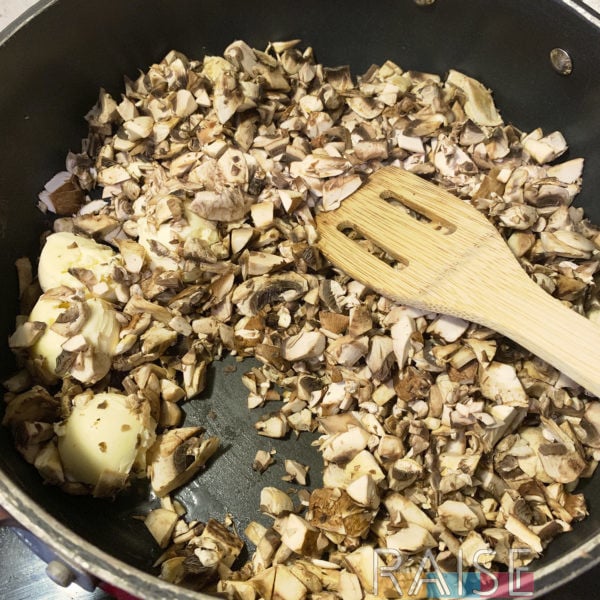
Next, add your spinach and 1/2 teaspoon of sea salt. Continue to cook for 3 minutes, and stir everything together well.

Now, push everything to the sides of the pan to create a hole in the center. Add 9 Tablespoons of dairy free butter and melt it. Once melted, add the sorghum flour and mix the two together. A thick paste-like consistency will form.
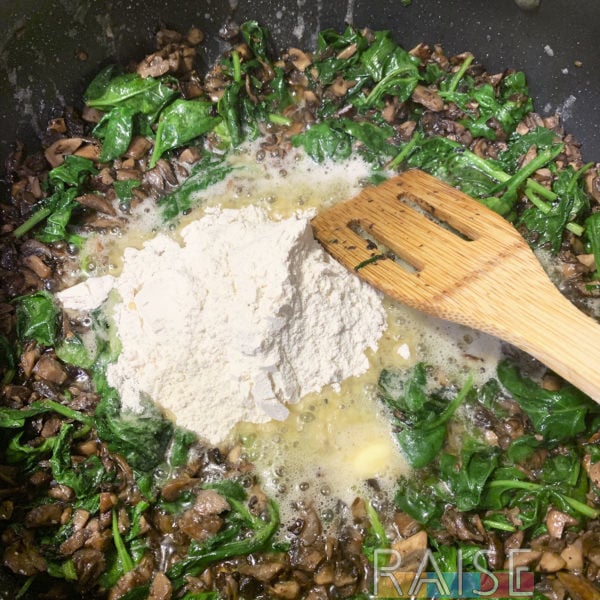
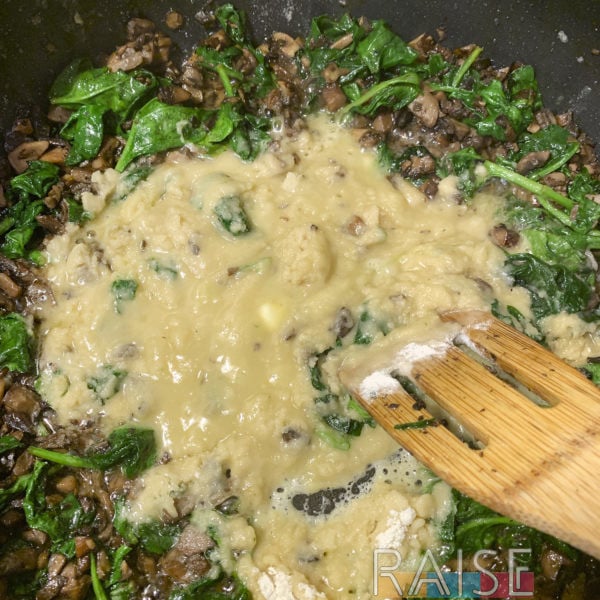
Now add your milk, and last teaspoon of salt. Mix the milk, flour, and butter together as best as you can before mixing it with the mushrooms and spinach. You’ll need to work fast, as the sauce will form rather quickly. Mix everything together very well.
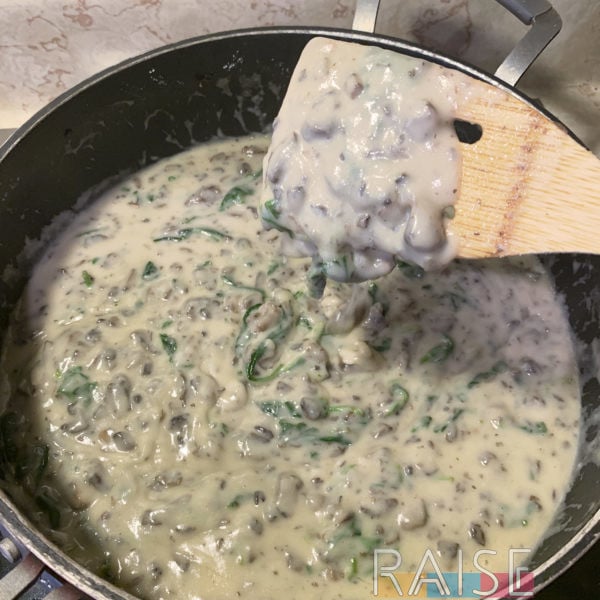
Going from melted butter to fully formed cream sauce takes 3 – 5 minutes to complete. Once done, fold in your drained pasta and you’re ready to serve.
Serving Suggestions
When serving this up as a main, I add veggies on the side. I tend to rotate through things like steamed baby carrots, steamed broccoli, seasoned & oven roasted broccoli, oven roasted green peas, and oven roasted green beans.
You can also serve non-traditional sides like a delicious smoothie (been there, served that, and everyone loved it), sliced fruit, or crispy tofu bites.
How to Store Leftover Vegan Mac and Cheese
You’ll want to store any leftover vegan mac in the refrigerator in an airtight container for up to a week. Do not freeze leftovers. I strongly suggest reheating leftovers before eating them again to bring the sauce back to life and make sure you have the best flavor.
My kids reheat leftovers in a small saucepan on medium heat on the stovetop until it’s nice and hot. It’s ready in less than 10 minutes.
More Tasty Nut Free Vegan Pasta Recipes (soy free, gluten free, and more)
If you need another great vegan pasta dish, check out these delicious recipes. They’re all gluten free, dairy free, nut free, soy free, and very allergy friendly.
- Nut Free Vegan Pesto Recipe
- Black Bean Vegan Pasta Recipe
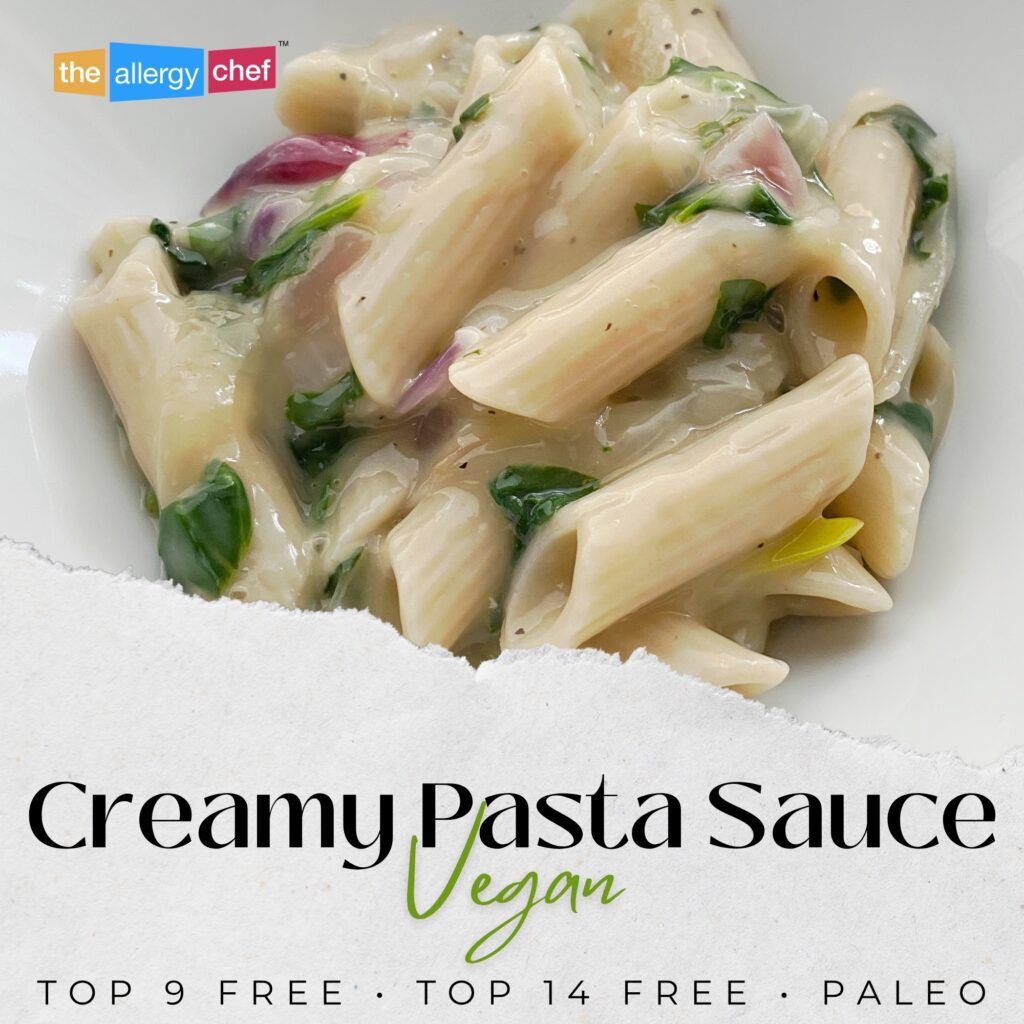
- Basic Creamy Vegan Pasta Recipe
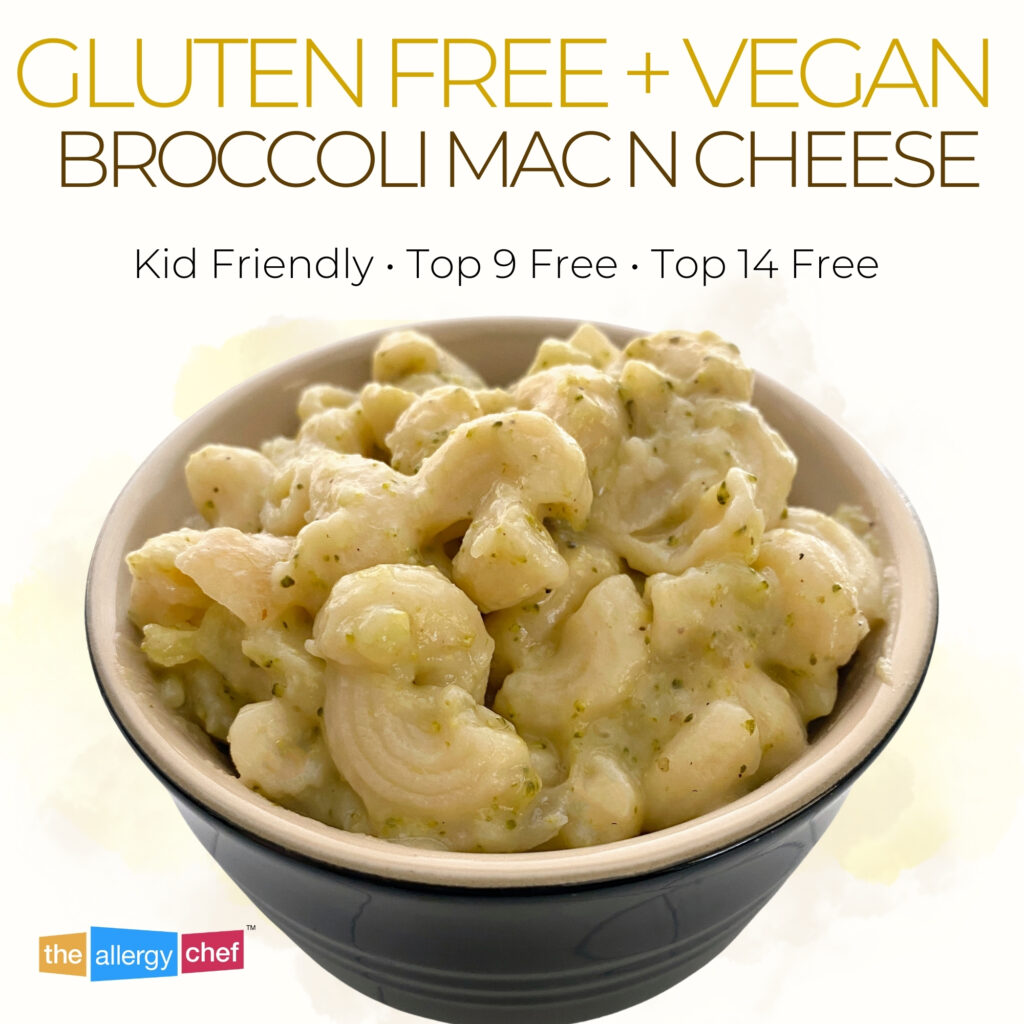
- Vegan Gluten Free Mac and Cheese Recipe with Broccoli
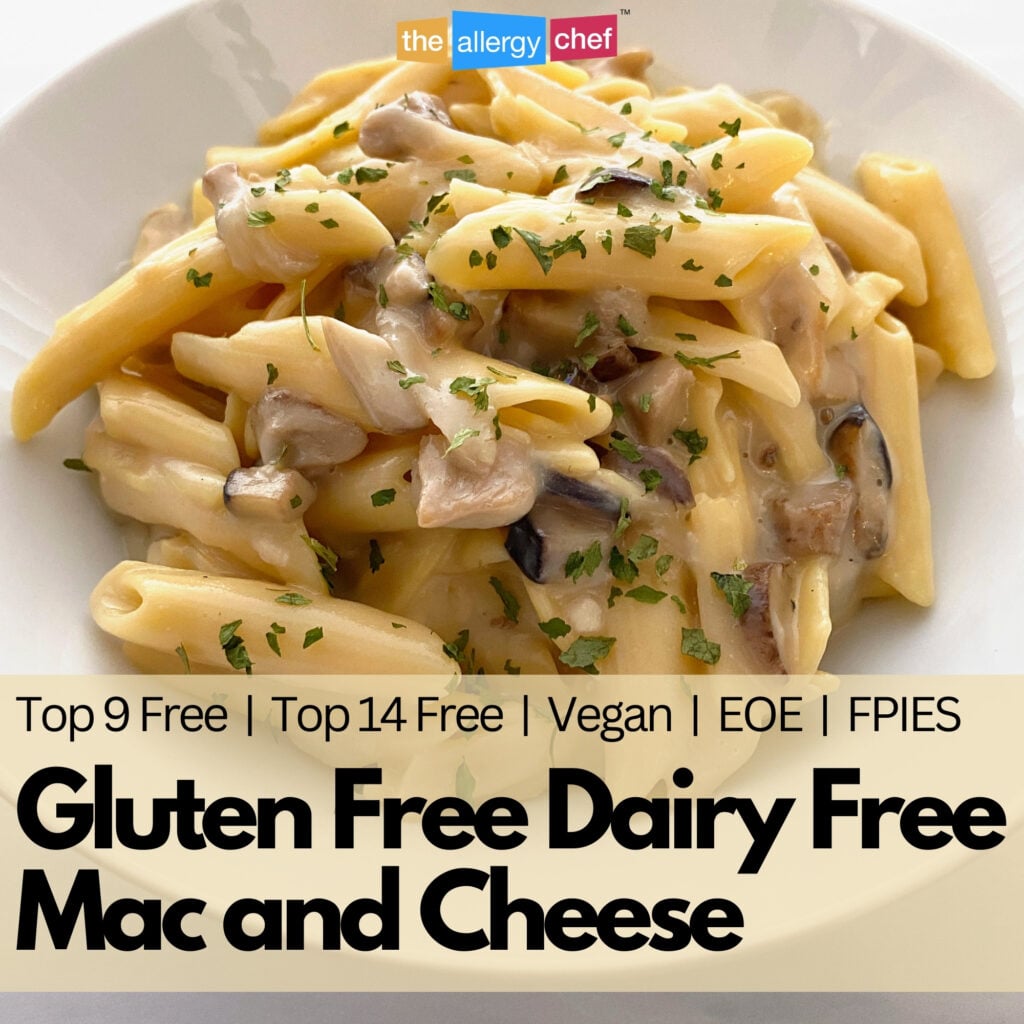
- Gluten Free Dairy Free Mac and Cheese Recipe
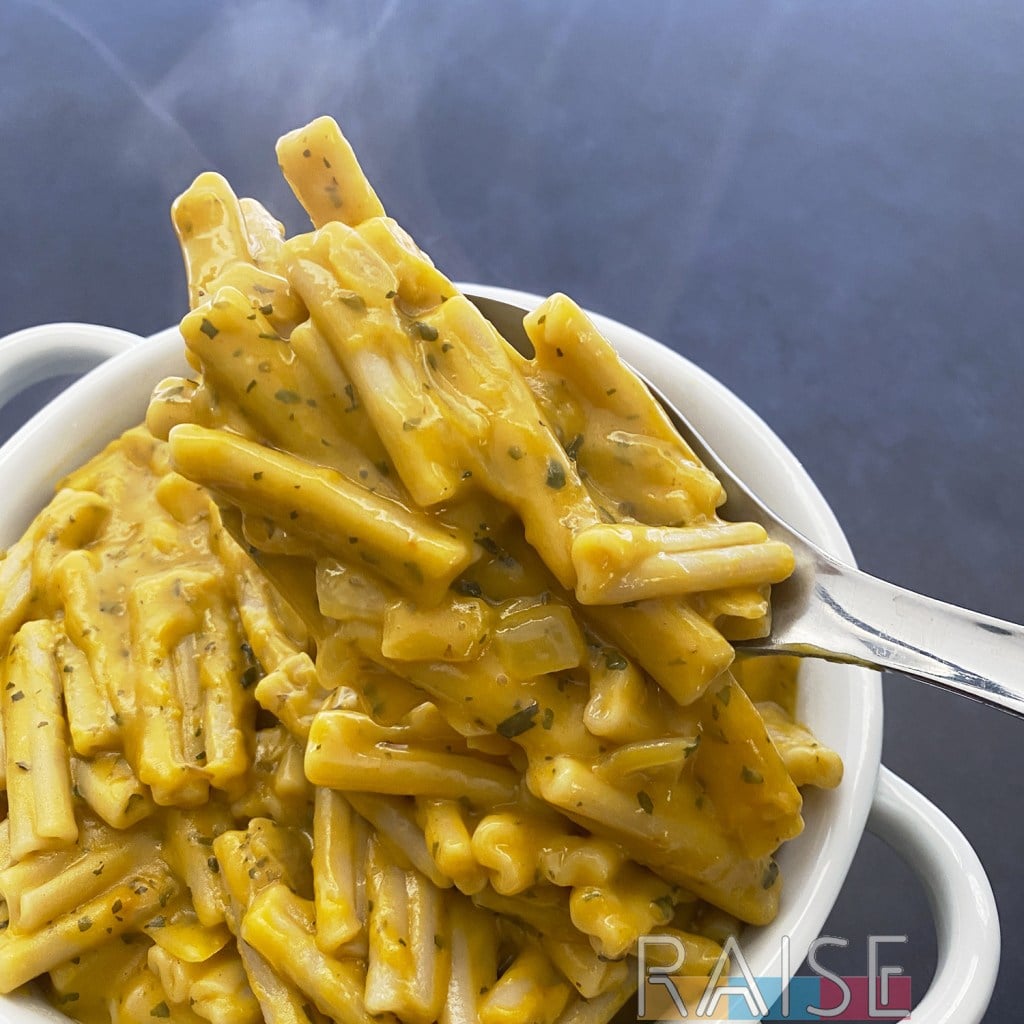
- Vegan Pumpkin Mac
 |
 |
 |
 |
 |
 |
Change it Up
When you start with a recipe like this one, built on simple, humble ingredients, you have so many options when it comes to adding a spin and taking things in a delicious, different direction. The next time you want to make a bowl of this cheese free mac, here are several ways you can change things up.
This is a cheese free mac and cheese, however, an easy way to take your vegan mac to the next level is to use any safe cheese you have access to. A blend of cheeses is even better, as you can draw out more yummy cheese flavor.
Caramelized Onion Mac
You can make a delicious vegan mac by adding caramelized onions. It’s important to know that caramelized onions aren’t the same thing as sweating onions or browning onions. Proper caramelization takes 45 – 60 minutes, and you should start with a tonne of onions because they cook down to about 8 – 12% of the starting weight. However, through that process, you end up with luscious, concentrated flavour that you won’t get any other way.
When I make caramelized onions, I tend to start with at least 4.5KG/10 pounds of sliced onions, and have it cooking in the background whilst I get other things done in the kitchen. I store the leftovers in the fridge, and sometimes freeze them in small amounts for future recipes as well. It only takes 1 – 3 TBSP of caramelized onion to make a HUGE impact on a meal.
If you happen to be able to eat cashews, you could make a blended sauce of cashew, caramelized onion, and a milk of choice. This would give you a thick, creamy body, that’s loaded with flavour. Bonus points for smoked salt in this scenario.
Lemon, Thyme, Black Pepper Vegan Mac
These are classic flavor pairings that you can translate to a mac and cheese situation by using organic lemon juice, organic ground thyme, and organic black pepper to taste.
You’ll want to add some lemon juice near the start of cooking, as well as at the end of cooking to ensure that you have layers of flavour. You can also add a little lemon zest near the end of cooking to really punch in on the lemon.
When you add the Part 2 Ingredients, you’ll also add thyme and black pepper to taste. Don’t go overboard on the thyme. For a recipe of this size, I’d suggest starting with 3/4 tsp.
Sweet Potato Mac (or Butternut Squash Mac)
It’s pretty easy to incorporate sweet potatoes or butternut squash into your mac and cheese. You’ll want to oven roast the sweet potato or squash. You can roast on parchment paper, or directly in oil on the tray. Once the cubes are fork tender (easy to pierce) and there’s some browning, remove them from the oven and transfer to your blender. Blend on high, and add enough plant-based milk to reach your desired consistency (pour the milk in through the hole in the lid).
If you opt for this route, save yourself some time and use frozen sweet potatoes or frozen butternut squash.
Spicy Mac
Making a spicy vegan mac and cheese can look like a LOT of things. All you really need is a base recipe like this one, and the addition of a heat-bringing ingredient. This could be Korean gochujang, wasabi, cayenne pepper, ground chipotle, or even roughly chopped kimchi.
If you go with a ground spice, you’ll want to add it with your Part 2 Ingredients. If you go with a paste, you can add it once the flour and butter have been nicely combined.
Curry Vegan Macaroni
When it comes to making a curry vegan macaroni, the key ingredient will be a fantastic curry powder. You’ll add it after the butter and flour are well combined to ensure the spices have enough time to cook out (and don’t taste raw or feel grainy).
In addition to that, you’ll want to use full fat coconut milk from the can, rather than the standard milk. This will give your curry mac a better body and more authentic taste.
Now, there are hundreds of ways to make a good curry (in terms of spice combinations), so go with your gut. If you use a curry paste, add it after combining the butter and flour. If you’re using a spice powder, add it with the Part 2 Ingredients. Add any other additional ingredients that makes sense (lemongrass, Thai basil, Thai chilies, etc.), and think of the pasta base as a vessel for curry flavor.
Italian Mac
If you’re a savory fan, you absolutely have to give this a try. Add onion powder, garlic powder, dried marjoram, and ground thyme with the Part 2 Ingredients. Whilst that cooks, pop open a 420g/15 ounce can of white beans (cannellini beans or navy beans would be my top picks), drain, and add that to the pot as well.
The end results are almost like a white bean soup, but pasta, and uber creamy. Note: this is the brand of beans that I enjoy working with.
Vegan Tofu Wellington Mac
OK, dream with me. Beef Wellington, but vegan, and not in puff pastry, but as a pasta instead. This is pushing the boundaries of beef wellington for sure, but this could be a really fun weeknight dinner if you enjoy classic British flavours.
When you add the Part 2 Ingredients, add dijon mustard. Don’t be too skimpy, as you want a creamy sauce with mustard vibes, not a barely-there mustard whisper.
For the beef component, in a separate pan, cook up seasoned pulled jackfruit or seasoned tofu (or soy free tofu). Get it crispy and golden brown, then fold it into the pasta at the end of cooking.
If you need a soy-free option for tofu, Big Mountain Foods (fava bean based) and Pumfu (pumpkin seed based) make two of the coolest products I’ve ever seen.
Vegan Cheddar Casserole
If you’re a fan of a classic mac and cheese made in a casserole dish and smothered with breadcrumbs, this is the idea you’ll want to run with. Cook up the recipe as is, then transfer it to a glass baking dish at the end of cooking.
Top with breadcrumbs, panko, or even something like chopped sunflower seeds for eve more texture. You can also fold in smoked paprika for a pop of color and a little extra flavor or something like ground turmeric + ginger.
Once you have the cheese free mac in the casserole dish, top with your crunchy element. Bake in your oven to allow the breadcrumbs to brown, or use your broiler. If you opt for the broiler, watch that bad boy like a hawk.
If you’re gluten free, top 9 free, this is the gluten-free panko that I use and have had loads of success with.
Delicious Vegan Side Dish Recipes (Nut Free & More)
If you’re looking for a good side for your vegan mac, here are a few delicious nut free options. All soy free, gluten free, top 9 free, and more.
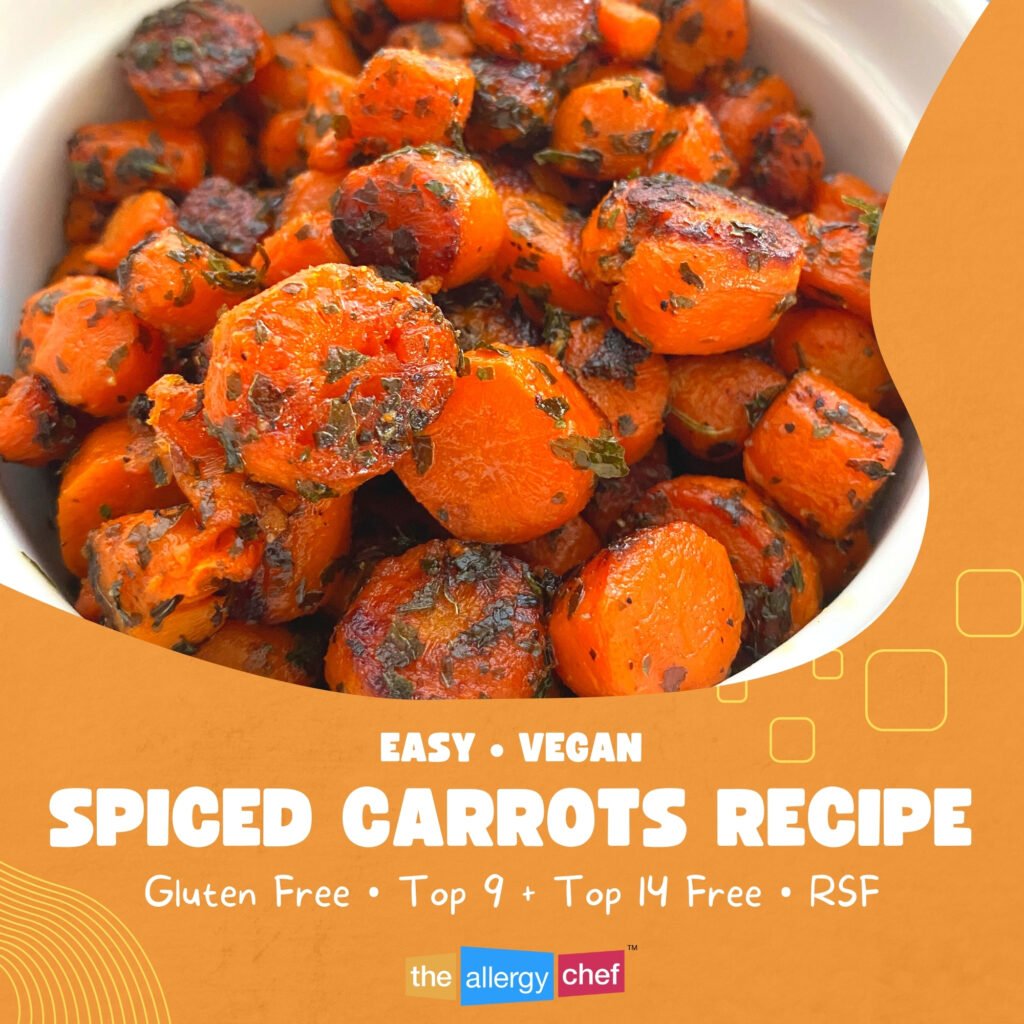
- Spiced Vegan Carrots Recipe
- Vegan Cheesy Green Beans Recipe
- Easy Sautéed Vegetables
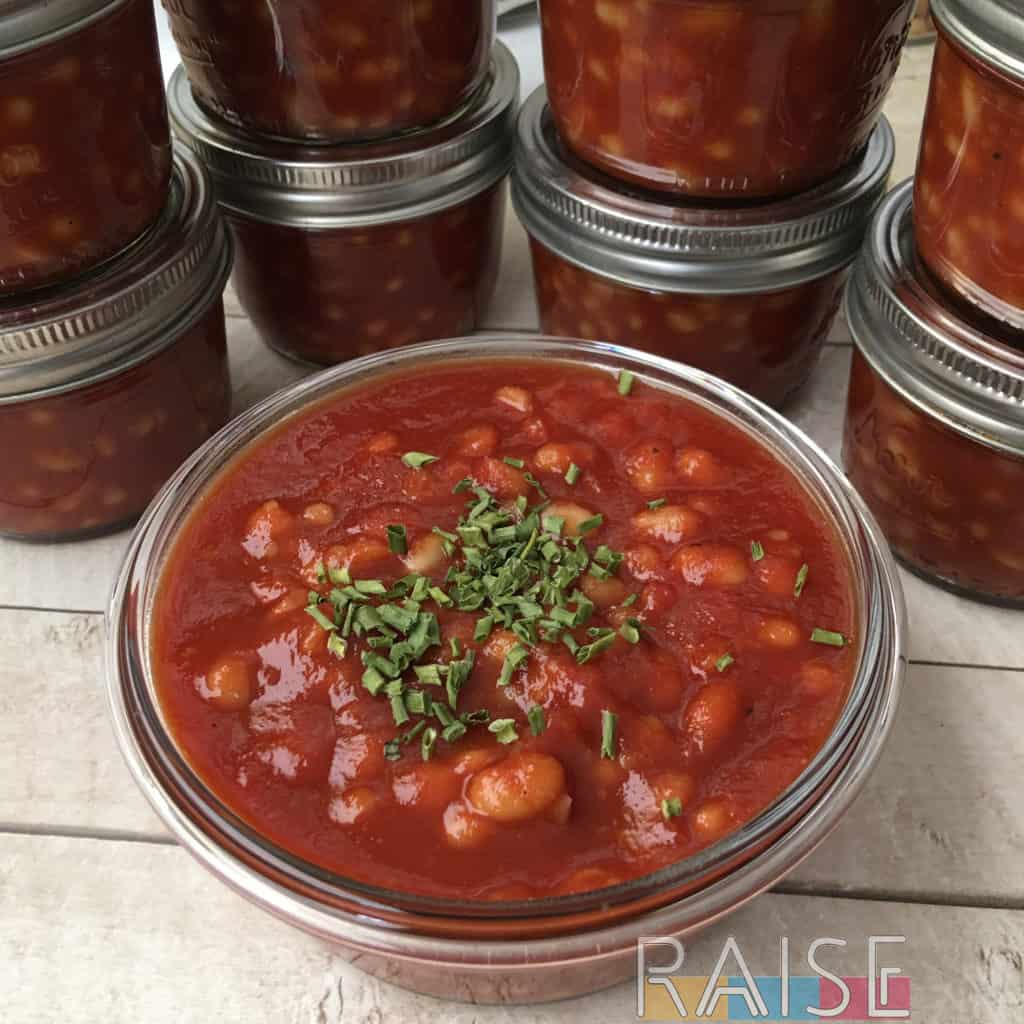
- Simple Baked Beans
 |
 |
 |
 |
Answering Your Questions About This Nut Free Vegan Mac and Cheese
Can I use coconut oil in place of the butter in this recipe?
When making this stovetop mac… maybe. I don’t personally do much with coconut oil since I have tasters that are allergic to coconut. What you’ll need to know is this: how present will the taste of coconut be, will it clash with the ingredients, and will you like the taste?
Ultimately, I can’t answer any of these questions for you. My suggestion is this: if the taste of coconut will be present, don’t use it. You’d be better off with a more neutral oil. Also, don’t use it if your whole family/household doesn’t like the taste of coconut oil. It will just spoil the recipe for them.
Could I use arrowroot powder in place of the flour?
I’m so glad you asked, because no, you absolutely cannot use arrowroot powder (also called arrowroot starch and arrowroot flour) in place of the flour in this recipe. As a light starch, arrowroot behaves differently, and doesn’t have the required structure to form a proper roux. Whilst it can thicken, for the best results, you use it as a slurry (milk/water + starch).
You can use a wheat flour, AP gluten free flour, cassava flour, and other medium and heavyweight flours for this recipe. Avoid nut flours, coconut flour, and starches.
How can I make this a high protein meal?
I have to say, these humble ingredients aren’t bursting at the seams from protein content. The easiest way to up the protein is to add protein to this recipe, rather than swapping ingredients and so on.
Personally, I would make up a batch of your fave vegan protein (assuming you came for the vegan), and season it in a style that will compliment the recipe. Spicy seasonings and Italian seasonings are both excellent choices.
Cook up a batch of the vegan mac, then serve the additional protein on top or on the side. Enjoy the meal!
Will this recipe taste good with buckwheat or lentil pastas?
That’s going to be a hard maybe. Both buckwheat and lentil pastas have pretty strong flavor profiles, so it might work. These flavors might be a great addition to what’s in the sauce, or it may throw off the sauce because it’s not as neutral as a brown rice pasta would be.
If you can have other types of pseudograins and grain alternatives, I’d be inclined to suggest millet pasta since that’s going to be more in line with the flavor profile of the recipe. Ultimately though, it’s going to come down to this: use what’s safe for YOU. From there, just manage your expectations. Also, be sure to cook your pasta very well so you have a higher chance of enjoying the recipe.
How does this compare to traditional mac and cheese?
This vegan version of mac and cheese absolutely, does NOT compare to traditional mac and cheese, and is not the real deal. Instead, it’s a real deal memory recipe with rich flavor and fantastic texture. I wouldn’t serve this up at the holidays or to friends and family who can have milk etc., unless you know they’re generally receptive to these types of recipes.
I never want to mislead people about what a delicious recipe like this will be when it’s ready to serve. What this nut-free recipe is all about is creating an option for people who can’t have mammal based cheese, any vegan cheese, and still want creamy goodness. It’s all about the mouthfeel and overall flavours.
I hope that makes sense. If you’re looking for a more traditional vegan recipe, and you have a safe source of dairy free cheese, use this mac and cheese recipe instead.
Is non-dairy milk the same thing as dairy free milk?
Non-dairy (also written as nondairy) used to imply that there could be a very small amount of cow’s milk dairy in a product. Dairy free on the other hand means zero dairy. Period.
Whilst the regulation has changed over the years, the US FDA generally has the viewpoint that “non dairy” could contain up to 0.5% of dairy milk derivatives such as caseinate. Dairy free always meant zero milk or milk derivatives.
At the time of publishing in 2025, what I can tell you is this: many brands are using the terms as if they’re interchangeable. This can be confusing to a lot of people because you’re not sure what they’re referring to.
When in doubt, anyone with a milk allergy should always contact a company to better understand their ingredients and manufacturing process.
Can I use olive oil in place of the dairy free butter?
When it comes to. making this comfort food recipe, you can try, but I can’t guarantee that it will work. Part of the success of this recipe is the flavour and body that the dairy free butter brings to the table.
However, under most cooking scenarios, butter and oil can be exchanged, 1:1. Since this isn’t something I’ve personally tested, I would suggest making a half batch, and if it works, make the full batch next time, to prevent potential ingredient waste if things don’t pan out. No pun intended, but now I’m laughing. I hope you are as well.
Is this a good recipe for a cold lunch?
This recipe is an awesome hot dinner, and a lackluster cold lunch. Unless you have access to a toaster oven or microwave at work or school, I suggest taking something else for lunch. If you want pasta for lunch, this black bean pasta recipe is a better option. You can also look up vegan pasta salad recipes, and those will usually eat pretty well when cold.
I’m cashew-free and almond-free. Is there a good dairy free cheese I can purchase?
There are quite a few cheeses to select whilst being cashew-free and almond-free. I will warn you, the cashew and almond cheeses are generally the options that are best received by those who can have milk. If you’re new to dairy-free living, I’d suggest holding off before trying nut free cheese.
On the other hand, if you’ve been managing the dairy-free life for a while, you can have a range of cheese that include ingredients such as oats, potato starch, and more.
My top recommendations for you are Follow Your Heart, Field Roast, Never Better, Primal Kitchen Queso, Violife, and Wayfare. You can read ALL about these brands and their offerings in this section of my Ultimate Guide to Dairy Free Substitutes and Alternatives.
Can I omit the one teaspoon salt?
If you’re following a low sodium diet, I would encourage you to eliminate no more than a half teaspoon salt, rather than the full teaspoon salt. However, having said that, you should make this recipe in a way that meets all of your individual needs. If you can’t have the salt, leave it out, but really, really, really manage your expectations.
Salt can do a lot of things for a recipe, including bring flavour, but also draw out flavour and enhance flavour. If you need to omit salt, make sure you add something else such as peppers, herbs, etc. to distract from the lack of salt. The last thing I want you to do is eat this meal and think “this tastes bland”.