
Today I’m going to show you how to make amazing creamy vegan pasta recipes at home. This article focuses more on the techniques and teaching you how to work through the process, which will allow you to take these concepts and run wild. Think of it as me teaching you how to fish, except, they’re vegan fish….
Use the table of contents to jump around, as you may already know some of this information. And with that, let’s dive in to making creamy vegan and dairy free sauces.
After the info, below you’ll find gluten free pasta brands, along with lots of custom pasta sauce recipes to try.
Great Ingredients to Keep on Hand
Making sauces at home will start with simple ingredients. However, as you expand on your skills, you’ll wan to start stocking a wider variety of ingredients to pull from. Here’s a non-exhaustive list of what you’re most likely to see when searching for creamy vegan pasta recipes online.
Pantry Ingredients
Whilst your pantry should be well stocked with a wide range of delicious ingredients, these are the ones you’ll want to keep on hand for pasta making. If you manage several food allergies or other dietary restrictions, use what you can and skip the rest.
- Nutritional Yeast
- Raw Cashews
- Acids (lemon juice, lime juice, balsamic vinegar, mirin)
- Aromatic Seasonings (onion powder, garlic powder, onion granules, onion granules, fennel, etc.)
- Italian Seasonings (rosemary, thyme, marjoram, basil, oregano, etc.)
- Spicy Seasonings (cayenne pepper, red pepper flakes, chipotle powder, etc.)
- Pepper Spices (black pepper, white pepper, ancho chili, etc.)
- Tomato Products (tomato sauce, crushed tomatoes, tomato paste, etc.)
- Salt (sea salt, pink salt, smoked salt, finishing salt, etc.)
- Peanut Sauce, Soy Sauce, Teriyaki Sauce (for creative creamy Asian pastas)
- Vegetable Broth
- Cooking Red Wine
- Cooking White Wine (make sure it’s truly gluten free if you manage Celiac Disease or a wheat allergy as some cheap white wines are processed with wheat)
Cooking wine note: a cooking wine shouldn’t be bottom of the barrel cheap, or super pricey. Instead, it should be a wine that you would enjoy drinking, no matter the price point.
Fridge Ingredients
These fridge ingredients are the ones you’re most likely to need when making creamy vegan pasta recipes.
- Dairy Free Milk of Choice (coconut milk, almond milk, oat milk, soy milk, rice milk, etc.)
- Vegan Butter & Oils (olive oil, avocado oil, etc.)
- Vegan Cream Cheese
- Fresh Herbs (fresh basil, fresh parsley, etc.)
- Vegetables (green/orange/yellow/red bell pepper, carrots, celery
Aromatic Ingredients
Some of these ingredients will be stored in the fridge whilst others won’t, hence they have their own little category.
- Shallots
- Onions (red onion, white onion, yellow onion, sweet onions, specialty onions)
- Leeks
- Green Onion
- Sweet Garleek (this is an organic cross between garlic and leeks, look up the brand Row 7 to see where it’s sold in your area)
- Ramps (hands down one of THEE most amazing aromatics, only available seasonally, so enjoy them whilst you can)
- Ramp Salt (a way some foragers preserve ramps and it’s epic. here’s an example, but shop around)
Kitchen Tools
Great recipes start with great tools, and with that in mind, these are the tools you’re most likely going to need when making awesome creamy vegan pasta recipes at home.
- KitchenScale (I love this one so much that I have three of them so I can have several projects going at the same time)
- Zester (this is a good one, use for lemons and other citrus, adds a pop of flavour to your meal)
- Handheld Juicer (this is a good one, great if you’re exploring new recipes that are Mediterranean, Mexican, or South American)
- Garlic Press (this is the one that I have and absolutely love, fresh garlic is much more potent than powders or jarred garlic)
- Colander (any kind will do, Costco has nice ones at a great price, this is the one that I have to save space, and I have this one as well for my kids who can eat wheat)
- Large Pot (I love this brand and have a range of sizes, serious quality)
- Large Skillet (this is the brand that I’ve been using and the pans are amazing)
- Food Processor (I have one similar to this, you’ll need one depending on the types of sauces and toppings you want to make)
What Makes a Fantastic Pasta
When it comes to cooked pasta, most professionals are going to tell you that an al dente pasta made in well salted pasta water is the perfect way to serve this well loved ingredient.
I’m a professional and I’m here to tell you this: how YOU like your pasta is what will make it fantastic. Some people have tried al dente pasta and insist that a softer, almost mushy pasta is the better way to go. To each his own.
If you’re serving a pasta dish that’s heavily coated in a rich thick sauce with lots of textures, you may not even notice the texture of your cooked pasta. On the other hand, a pasta dish that’s only lightly coated in sauce will demand that the pasta has been perfectly cooked.
To start, you’ll want to bring a large pot of water to a rolling boil on high heat. Salt your pasta cooking water, then add the dry pasta. Set a timer based on the instructions on the box, then immediately stir your pasta to prevent it from sticking together.
The best thing you can do is take out a piece of pasta, 1 minute before the timer goes off and test for doneness. I did this almost every single time when making my kids pasta, to the point where one of them is now known as the Pasta King (due to my severe food allergies, he had to do the tasting because I couldn’t). That kid just knows when it’s ready, and how much time to add based on the initial test. Having this skill will help you quite a bit as you aim to make fantastic pasta.

Now for the Sauce
Most people can agree that what really makes a pasta fantastic is the sauce. It can be red, white, pink, green, thick, thin, creamy, or something else all together. However, first and foremost, it needs to taste great.
Salt, Fat, Heat, Acid, Umami, and Sweetener (optional) or Spices. These basic components are the backbone of a delicious recipe. In the case of a great creamy vegan pasta sauce, here’s how you can make these components work in your favor:
Salt
Salt the pasta water, but make sure the sauce has salt as well. Smoked salt will add another layer of depth.
Fat
Vegan/dairy free butter or some kind of oil should be part of your sauce. In fact, this is what will add the creamy, rich mouthfeel.
Heat
Get some aromatics, heat a pan, and cook them. Heat transforms ingredients, draws out flavour, creates caramelization, and more. Additionally, some spices should be bloomed (cooked in a dry pan on medium heat) before they’re used. This makes them taste less “raw” when eaten, but also unlocks a deeper flavour profile.
Acid
No matter what kind of sauce you’re making (creamy tomato sauce, white sauce, etc., acid, even a little, can enhance flavour and add to the tasting experience. Acid can also prevent you from experiencing “fatigue” from eating several bites of something so rich.
Umami
This deep, rich, earthy, savory taste profile is somewhat optional, but usually, you won’t regret making sure it’s present. The easiest way to incorporate umami is with small diced mushrooms, or mushroom powder. You can also tap into ingredients such as soy sauce to help create a sense of umami.
Sweetener
Depending on the type of sauce you’re making, a sweetener can be helpful. If you’re making a heavy tomato sauce or a creamy BBQ sauce, a little bit can go a long way. A sweetener can also help cut the bitterness you sometimes find in tomato products. Chopped dates, organic maple sugar, organic maple syrup, and blended butternut squash are some of the sweeteners I love to use in pasta sauces.
Spices
Spices are also optional depending on the type of sauce you’re making. A super duper basic cream sauce won’t need spices necessarily, but, you may have started with aromatics in your pan. As you go about following new recipes, get brave and try things you may have never thought of. Curry pasta, peanut sauce pasta, pesto pasta, and even eggplant pasta can all introduce you to new spices and ingredient combinations that will wow your tastebuds.
Gluten-Free Pasta Options
When a recipe calls for a pasta of choice, it really does mean a pasta of choice, so if you’re gluten free or wheat free, you’re in luck. These days, there are LOADS of gluten-free pasta (many organic) options to choose from. Here’s a non-exhaustive list to get you started.
Critical Note: Most brands don’t disclose up front if their pasta is made on shared equipment with wheat. Get in touch before sampling if this is an issue. Also, where brands use oat or oat fiber, make sure it’s from gluten free oats.
Nationwide Shipping: These days, many brands ship from their website nationwide, so be sure to check. You may also find more products to choose from.
- Amish Wedding Foods (rice + egg yolk pasta)
- Ancient Harvest (quinoa pasta, lentil pasta, corn blended pasta)
- Andean (white rice + quinoa blend, several flavour options)
- Banza (chickpea pasta, brown rice pasta)
- Barilla (corn and rice blend)
- Big Green (buckwheat pasta, millet pasta [this one is deemed pretty good by those who can have wheat], sweet potato blend, ramen, lots of shapes to choose from, single ingredient pastas)
- BioNaturae Gluten Free Pasta (usually a blend of ingredients)
- Dr. Gundry MD (sorghum single ingredient pasta)
- Explore Cuisine (black bean pasta, edamame pasta, red lentil pasta, chickpea pasta, brown rice pasta)
- Garofalo (from Italy, corn + rice + potato + quinoa blend)
- Giadzy (from Italy, corn + rice blend)
- Heaven & Earth (brown rice pasta, grain free cassava pasta, hearts of palm pasta)
- Jovial Foods Brown Rice Pasta (my kids who can have wheat swear this is the best GF pasta and is the closest to wheat pasta)
- Kaizen (lupin bean + fava bean + tapioca blend)
- Le Veneziane (corn and stabilizers)
- Living Now (quinoa + rice + amaranth blend)
- Lotus Foods (Ramen Noodles [these cook up in 3-4 minutes], Asian style noodles [pad thai, pho, etc.])
- Miracle Noodle (egg white noodles, shirataki noodles)
- Rummo (from Italy, brown rice + corn + potato blend)
- Sanniti Italian Gluten Free
- Taste Republic (wide range of options, including filled pastas)
- The Only Bean (variety of bean only pastas)
- Tinkyada Brown Rice Pasta (great if you have a corn allergy)
- Veggie Craft (pea and lentil base with additional vegetables blended in, several options)
- VeggiePasta (red lentil pasta, yellow pea pasta)
Grain Free Pasta & Noodle Alternatives
- Bean Pasta (black bean, soy bean, etc.)
- Buckwheat Soba (buckwheat is a seed, not a form of wheat)
- Cappello’s (almond + egg + tapioca base)
- Glass Noodles (sweet potato noodles)
- Hearts of Palm Pasta
- Jovial Cassava Pasta
- Konjac Shirataki Noodles (Livivia has an interesting line,
- Lentil Pasta
- Spaghetti Squash Noodles (fresh or from dried)
- Zucchini Noodles
Tip: If you decide to make pasta at home, experiment with unique flavours such as adding ground mushroom powder or even authentic truffle oil to your pasta dough.
Amazing Vegan Pasta Recipes
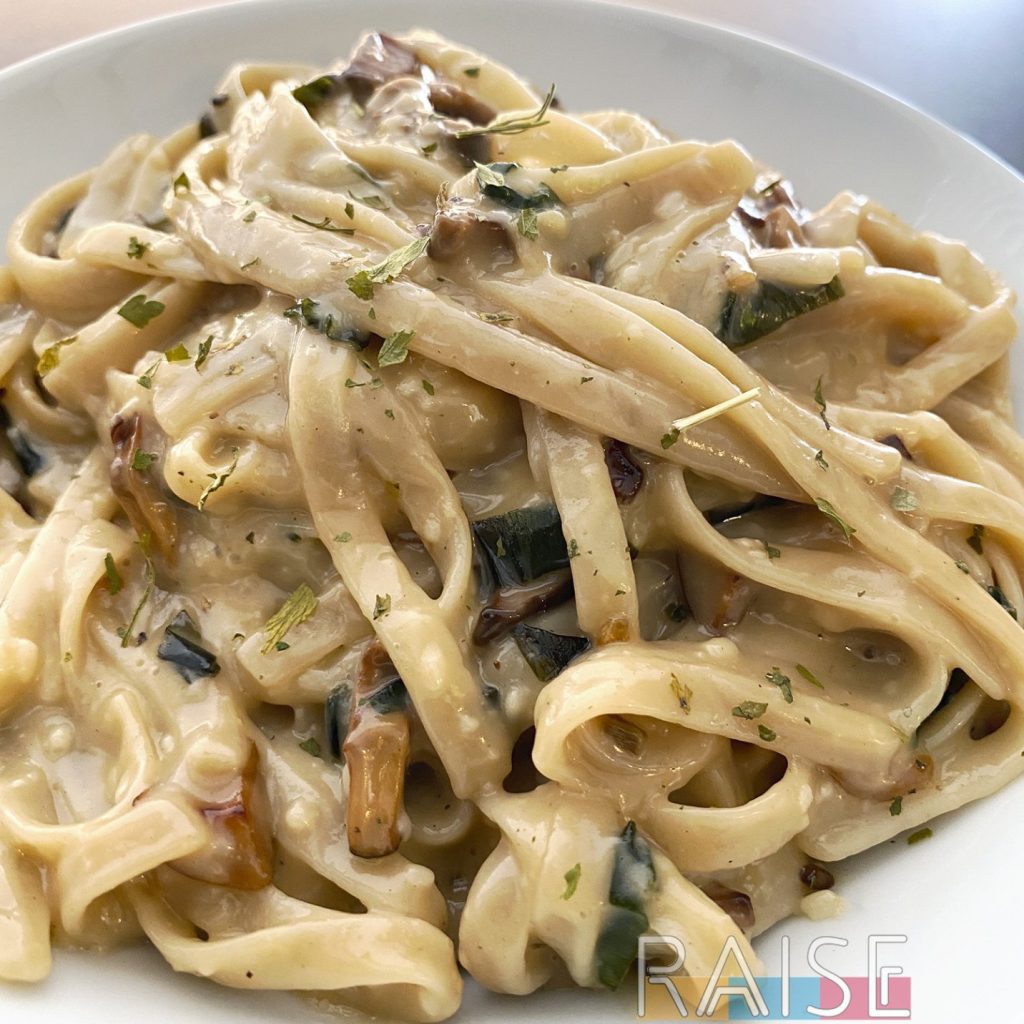
- Gourmet Creamy Vegan Fettuccine Recipe (GF, top 9 free, top 14 free)
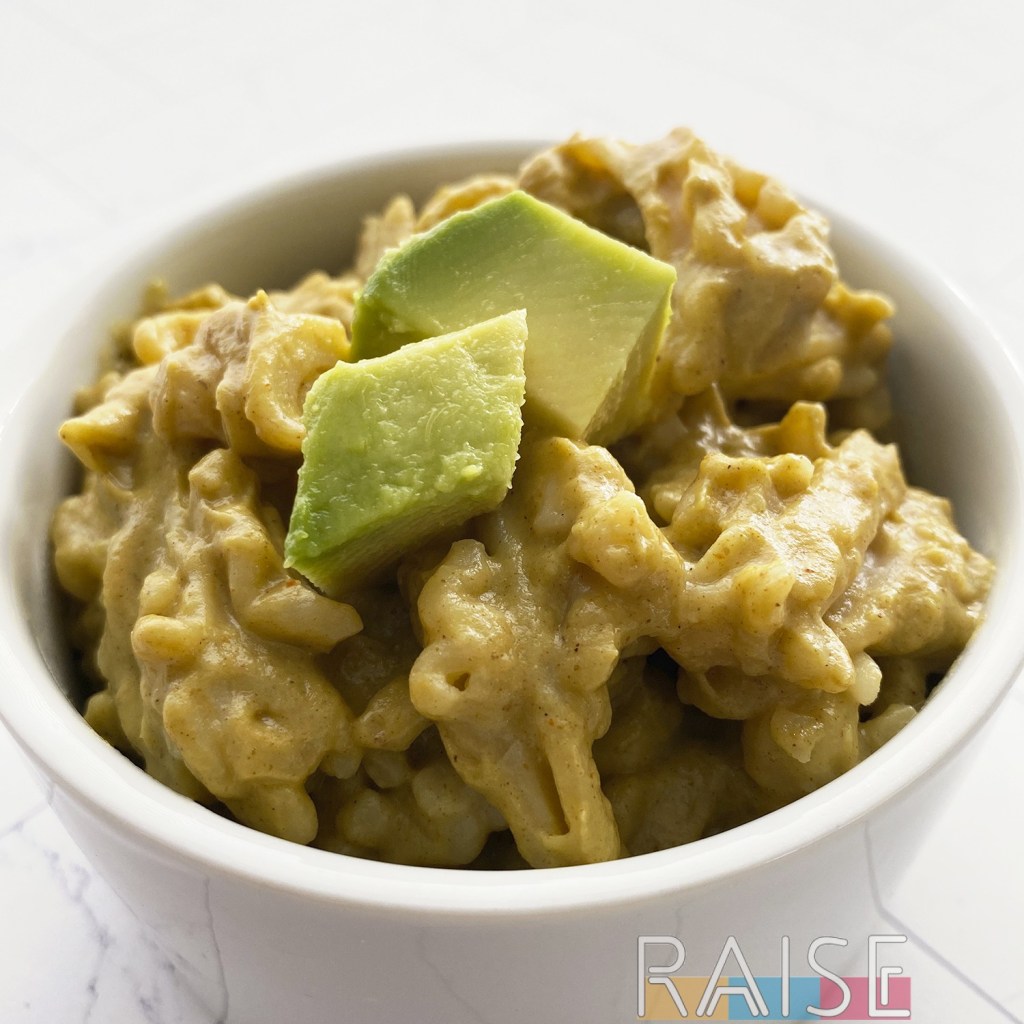
- Creamy Avocado Pasta (a great recipe if you need something easy, but packed with flavour)
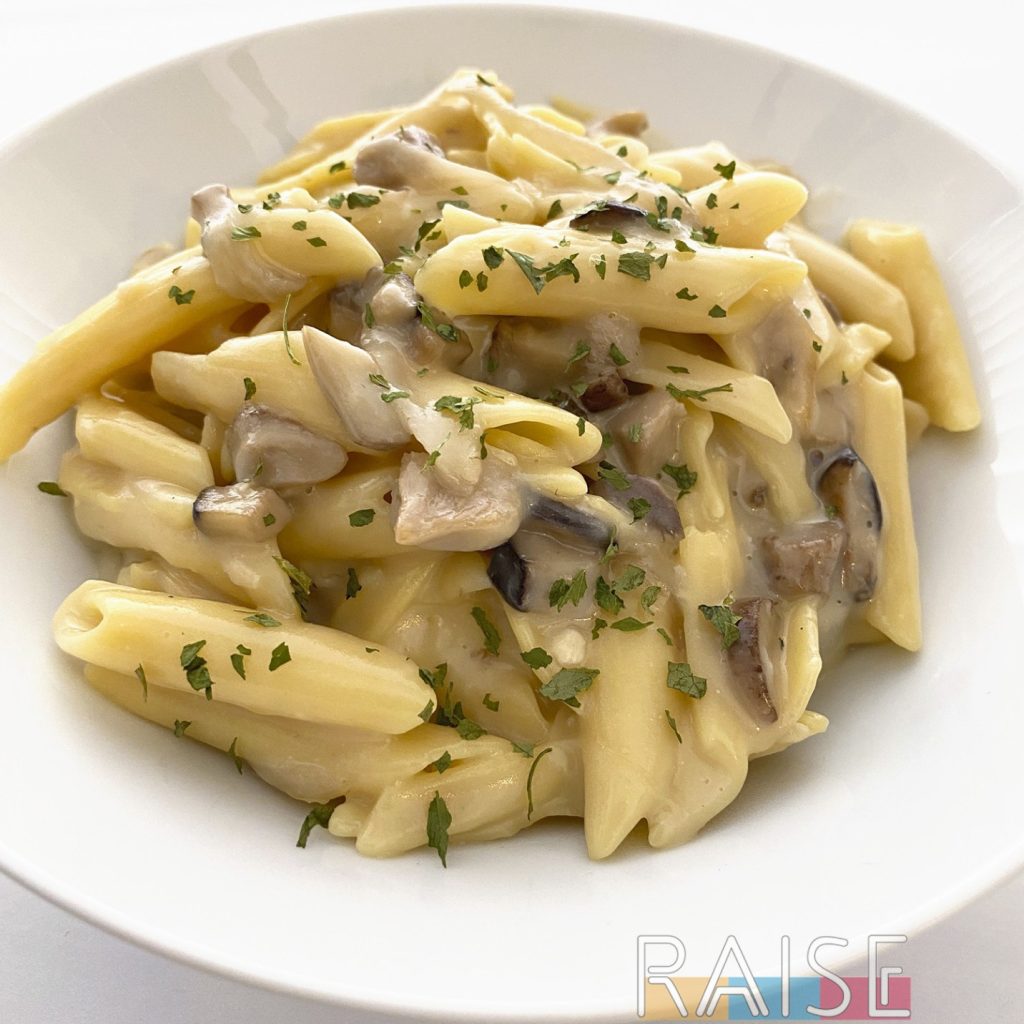
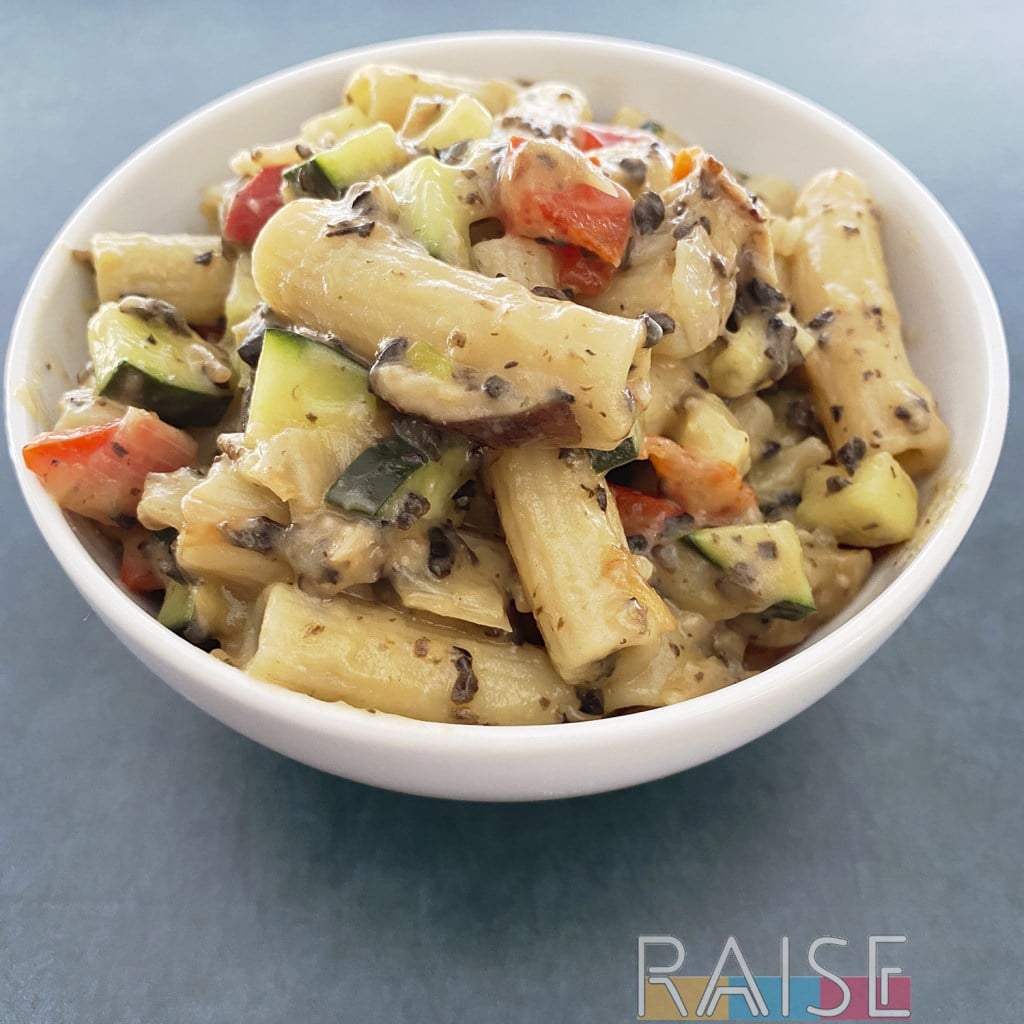
- Creamy Vegan Mushroom Mac-n-Cheese Recipe (GF, top 9 free, top 14 free)
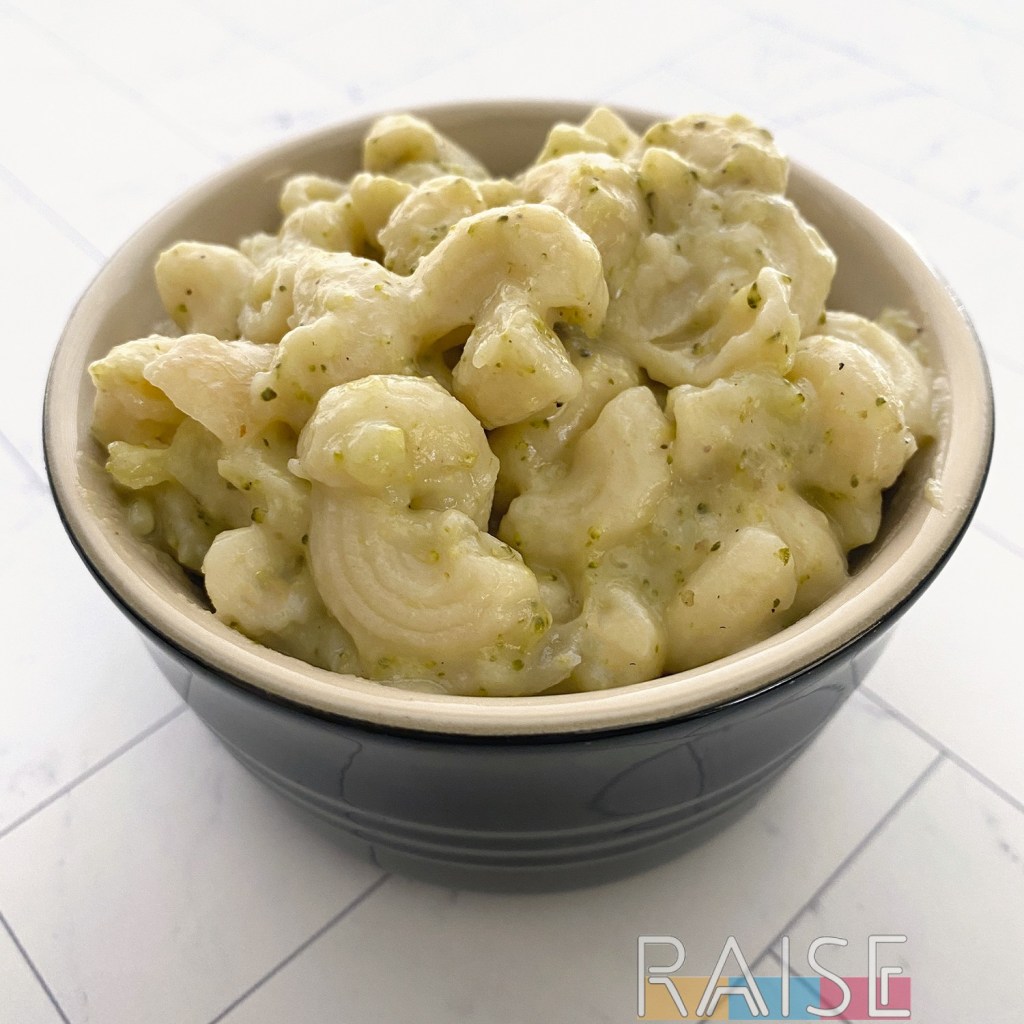
- Gluten & Dairy Free Broccoli Mac n Cheese (such a delicious creamy sauce)
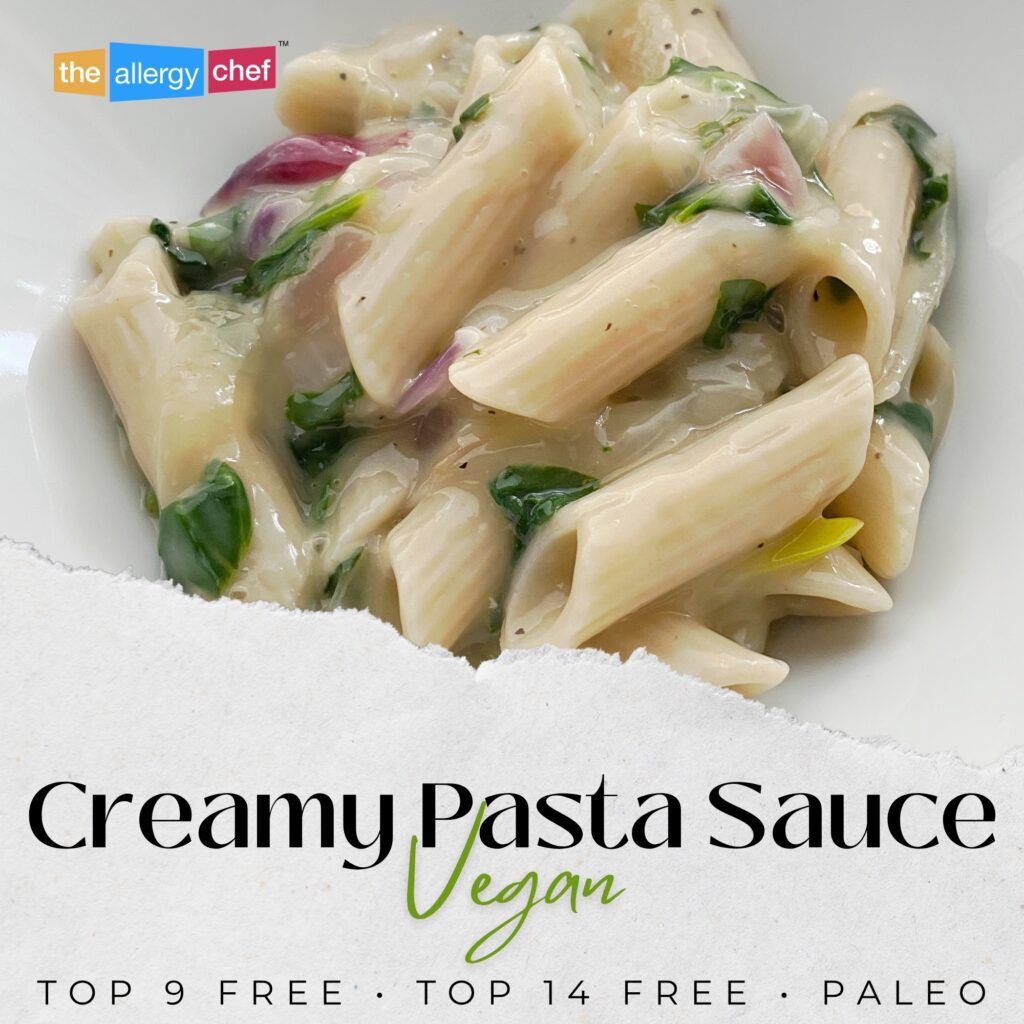
- Easy Creamy Vegan Pasta Sauce Recipe (this is a super basic recipe that teaches you the foundational process)
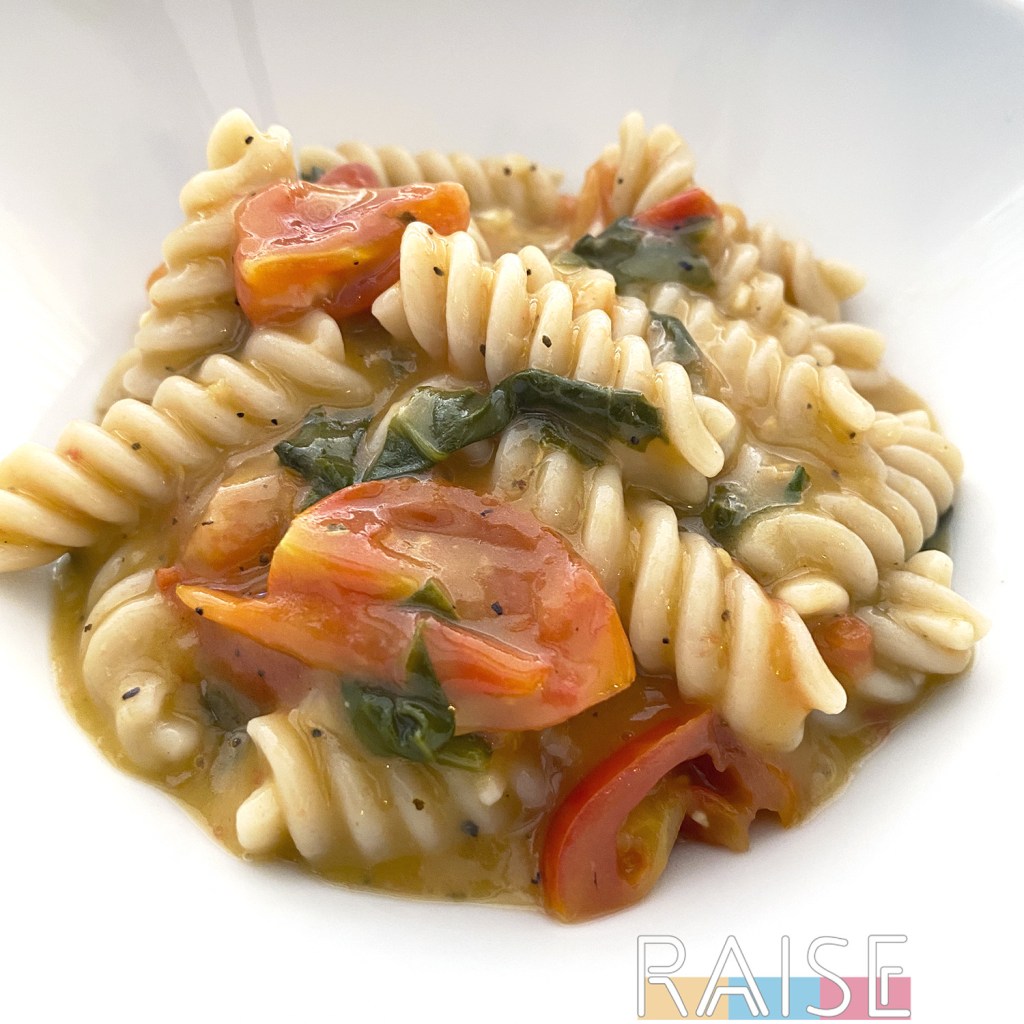
- Creamy Tomato Sauce Pasta Recipe (GF, top 9 free, top 14 free)
 |
 |
 |
 |
 |
 |
Delicious Vegan Creamy Pasta Sauce Options & Recipes and Methods
it is entirely possible to transform simple ingredients into amazing creamy vegan pasta sauces. Not only that, but a basic white sauce can be transformed into so much more (including a creamy vegan vodka sauce or Asian inspired Thai peanut sauce).
You can also use the basic white sauce as a jumping off point and add a range of vegetables, aromatics, and spices to turn it into something new the next time you make it. With that in mind, let’s take a look at how you can make a wide range of pasta sauces at home.
Note: the following are all approximations. You can adjust these numbers as you see fit.
Thai Curry Coconut Cream Sauce
Ingredients
- 420mL/15 ounces Full Fat Coconut Milk (from a can)
- 225mL/8 ounces Milk of Choice
- 1.5 tsp Sea Salt
- 2 tsp Organic Thai Basil
- 1 – 2 tsp Lemongrass
- 1/4 tsp Organic Black Pepper
- 1 TBSP Organic Curry Powder
Method
Heat a sauce pot on medium heat and add a can of full fat coconut milk. Use a whisk to stir well so the milk and fat are fully incorporated. Add the rest of the ingredients and mix well. Continue to heat for 10 minutes to allow the flavours to come together. Taste and adjust as desired. If you’re not used to eating curry powder, start with 2 teaspoons.
When the sauce is ready, if you’d like it to be thicker, use an arrowroot slurry to increase the viscosity.
Parmesan Cashew Sauce
Ingredients
- 670mL 24 ounces Dairy Free Milk of Choice
- 85g/3 ounces Organic Raw Cashews
- 112g/4 ounces Dairy Free/Vegan Parmesan
- 2.5 tsp Organic Marjoram
- 1/2 tsp Smoked Salt
- 1.5 tsp Organic Dried Basil
Method
Place your empty blender container on your kitchen scale and tare to zero. Add the ingredinets and tare between weighted ingredients. Blend on high until a SUPER SMOOTH sauce forms.
Transfer the sauce to a sauce pot and heat on medium heat until it’s nice and hot, then serve with your cooked pasta.
Spicy Miso Caramel Sauce
Ingredients
- 3 TBSP Dairy Free Butter
- 3 TBSP Flour of Choice
- 4 TBSP Organic Miso Paste
- 8 TBSP Organic Date Syrup OR Organic Maple Syrup
- 1/2 tsp Smoked Salt
- 1/2 – 1 tsp Organic Cayenne Pepper OR Organic Chipotle Powder
- 700mL/25 ounces Dairy Free Milk of Choice
Method
Heat a large pan on medium heat. Add the butter and flour to the pan. As the butter melts, mix it into the flour. Cook this mixture together for 1 minute. Add the miso paste, salt, pepper, and date syrup. Whisk everything together very well and continue to cook for 2 – 3 minutes.
Add the milk and whisk. Allow the sauce to bubble, then reduce the heat to medium-low and continue to cook for 10 minutes. Stir as needed to prevent burning/sticking. Taste and adjust as needed. When the time is up, serve over your cooked pasta.
Creamy Tomato Sauce
- 3 TBSP Dairy Free Butter
- 3 TBSP Flour of Choice
- 195g/7 ounces Organic Tomato Paste
- 670mL/24 ounces Milk of Choice
- 1.2 – 2 tsp Smoked Salt
- 3 tsp Organic Dried Basil
- 4 tsp Organic Dried Marjoram
Method
Heat a large pan on medium heat. Add the butter and flour to the pan. As the butter melts, mix it into the flour. Cook this mixture together for 1 minute. Add the tomato paste. Whisk together very well and continue to cook for 1 minute.
Add the milk, salt, herbs, and whisk. Allow the sauce to bubble, then reduce the heat to medium-low and continue to cook for 10 minutes. Stir as needed to prevent burning/sticking. Taste and adjust as needed. When the time is up, serve over your cooked pasta.
Vegan Alfredo Sauce
- 112g/4 ounces Dairy Free Butter
- 2 – 4 cloves Fresh Garlic (you can use more, should be finely minced or pressed & chopped)
- 670mL/24 ounces Milk of Choice
- 112g/4 ounces Dairy Free/Vegan Parmesan, shredded
- 112g/4 ounces Dairy Free/Vegan Gouda, shredded
- 1/2 tsp Organic Black Pepper
- Smoked Salt to Taste
- 60mL/2 ounces Milk of Choice
- 2 TBSP Arrowroot
Method
In a pan or pot large enough to hold all of the ingredients, heat your butter on medium heat. Allow it to fully melt, then add the garlic. Increase the heat to medium-high and cook for 5 minutes.
Add the milk and shredded cheeses and stir well. Whilst that cooks, combine the 60mL of milk and 2 TBSP arrowroot together in a measuring cup. Mix well with a fork until all of the arrowroot is dissolved. This is your slurry. Set it aside.
Once the cheese is fully melted and the sauce has come to a bubble, sample it and adjust the salt and pepper as needed. Parmesan and gouda are both salty cheeses, so have a delicate hand with your salt.
When you have the seasonings just right, turn the heat off. Pour your slurry into the sauce and whisk like mad. You’ll feel resistance develop and the sauce will thicken. Stir for a minute, then you’re ready to serve.
More Creamy Vegan Pasta Recipes to Enjoy
- Gluten & Dairy Free Creamy Mushroom & Peas Pasta (top 9 free)
- Dairy Free, Vegan Creamy Butternut Parmesan Pasta Sauce Recipe (top 9 free, top 14 free)
- Mayo Free, Creamy Vegan Pasta Salad Recipe (GF, top 9 free, top 14 free)
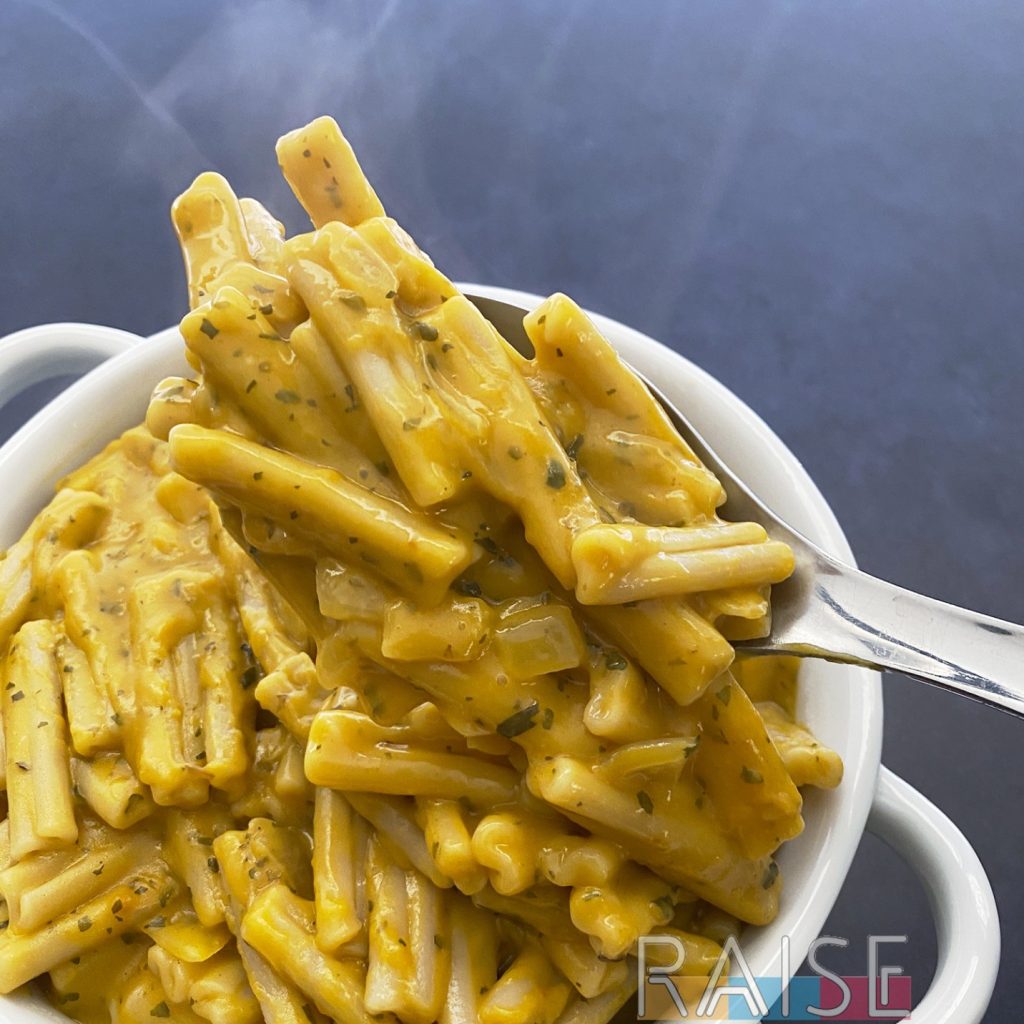
- Creamy Vegan Pumpkin Mac (top 9 free, top 14 free)
 |
 |
 |
 |
Pasta Bakes & Dutch Oven Pastas
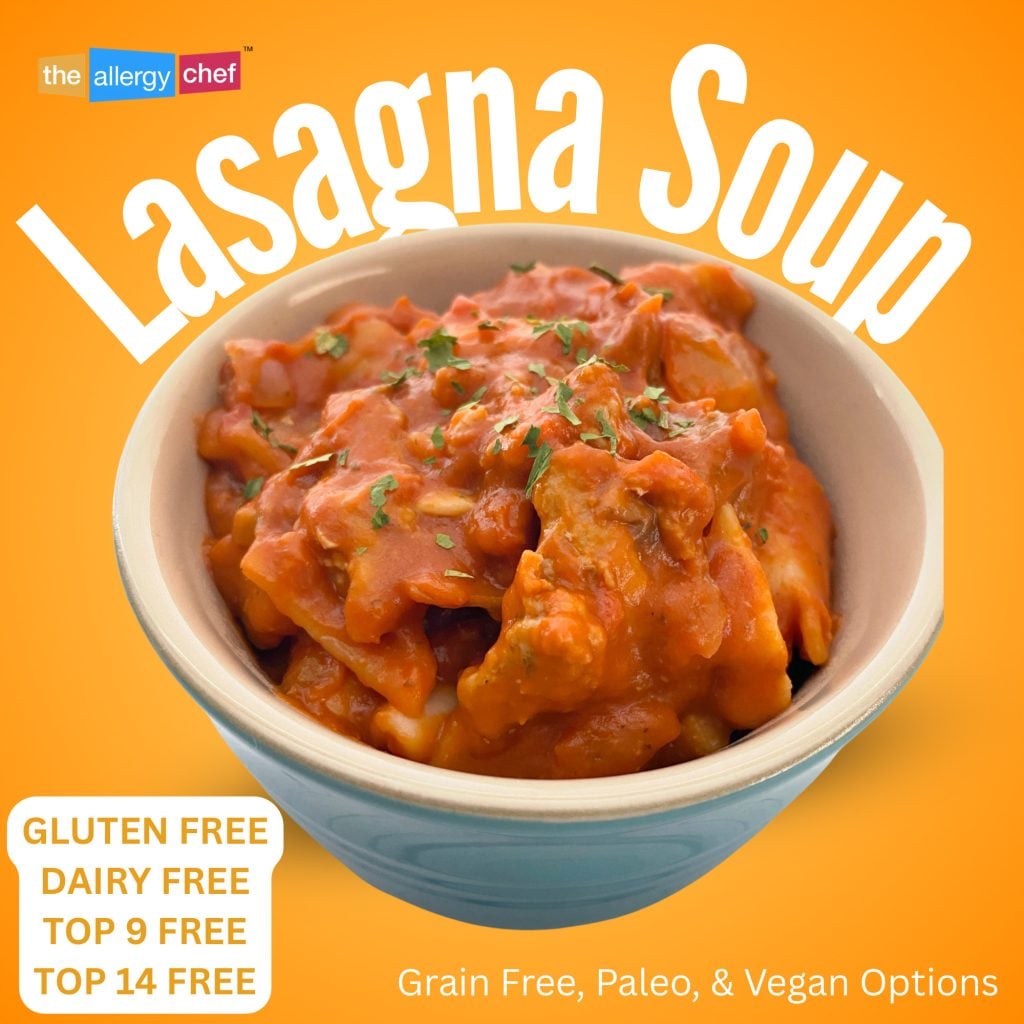
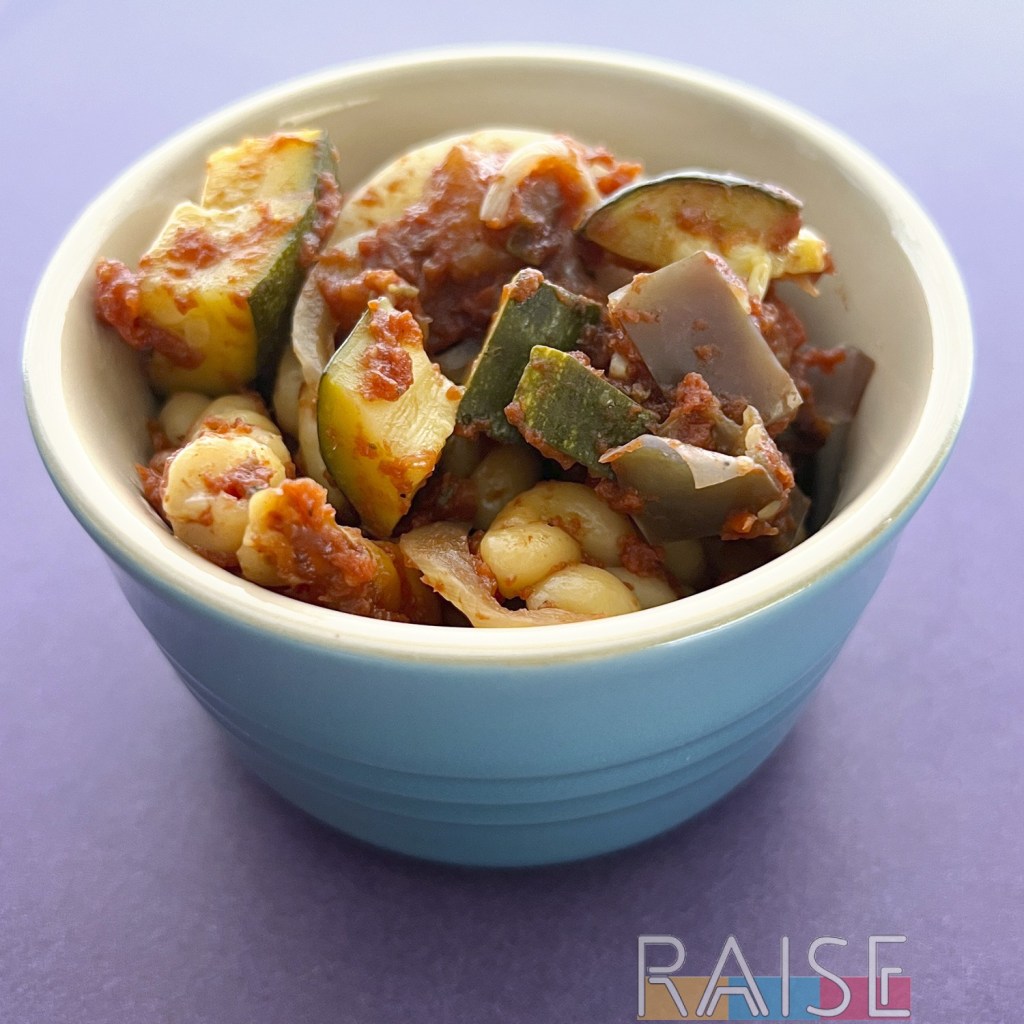
If you’re looking for easy vegan one-pot pasta options, look for recipes that are for “baked pasta” or use a Dutch Oven as the cooking tool. When a developer uses a Dutch Oven, they usually have you cook the aromatics first (onions, celery, etc.), then add some kind of protein, seasonings, then add the remaining ingredients (pasta, milk, etc.). You mix it up and put the lid on and leave your Dutch oven at a strong simmer.
During that time, the pasta absorbs the liquid, and when it’s al dente, or to your liking, you’re ready to roll, and clean up is minimal. Similarly, baked pasta has minimal cleanup. With baked pasta, you mix all of the ingredients together in a glass baking dish, cover with foil, and pop it in the oven. When the pasta is cooked (usually 30-40 minutes), you’re good to go.
These styles of recipes are fantastic if you’re busy and need something more hands off. Though, like a good pair of jeans, you can also jazz them up for a date night.
 |
 |
Pasta Tips & Pasta Meal Prep Tips
Mass Prep Lemon Zest & Lemon Juice
As someone with a severe corn allergy, I have to source safe lemons once a year from a specialized farm. I usually purchase 50 – 60 pounds of lemons. In one weekend, I zest the ALL, and juice them all. Don’t worry, I have a proper juicer, or there’s no way I could pull that off.
When it’s time to zest, I line a large baking tray with parchment paper, then zest all over. Once there’s a nice layer, I add another piece of parchment paper, then zest more. You don’t want the zest so thick that it clumps.
Once everything is zested, I freeze the entire tray. The next day, I transfer the zest into freezer baggies and label. Now I have a one year (or longer) supply of lemon zest, always ready to go. Oh man…. this makes my life SO much easier.
The juice can also be frozen in amounts that make sense to you. I usually freeze ice cubes of lemon juice, and 6 ounce portions as well.
Prep Produce Once a Week
Most people get groceries once a week, myself included. I usually shop on Saturday, then prep on Sunday. On prep day, I prep up the fresh veggies I plan to cook with (dice onions, slice onions, dice red peppers, chiffonade greens, etc.).
When it’s time to cook, for every meal, I just grab the bag of diced onion or chopped mushrooms, etc., and every single meal comes together MUCH faster. Do you save time in the long run? I’d like to think so. If nothing else, you save on dishes because you’re doing all of the knife work on one day and using your cutting board(s) once a week.
Tap Into Unflavoured Protein Powder
If you need a protein boost in your life, unflavoured protein powder, and even collagen peptides can be added to sauces. You don’t want to go overboard and throw off the sauce flavour, but when used in the right amounts, it’s the best of both worlds.
This can also be especially helpful if you have a child that struggles to eat enough protein daily, but loves all things pasta.
For Kids That Struggle to Gain Weight, Tap Into Healthy Fats
If you have a child that struggles to consume enough healthy fats, you can add a tablespoon of olive oil to their serving of pasta, give it a little mix, and serve. Most kids won’t pick up on the slight flavour shift. Make sure you’re using a high quality oil if this is something you end up doing.
Fun fact, if you make homemade vegan ice cream, use a proper countertop ice cream machine with a compressor, and include oil in your recipe. The end result is an ice cream that is BOOOMMMMBBBBB. Like, scream from the rooftop, uber creamy bomb. There’s a good reason Cado taps into avocado oil, and has been deemed one of THEE TOP dairy free ice cream brands.
Answering Your Questions About Creamy Vegan Pasta Recipes
Which plant-based milk is the best for making a creamy pasta sauce?
For the best results, you’ll want to use a simple, unsweetened plant-based milk when making a creamy pasta sauce. When you look at the ingredient list, you want to see the least amount of items there.
Malk is a fantastic brand that makes quality plant-based milk that’s free from gums and all of the other “stuff” you normally find in dairy free milk. Alternatively, you can make dairy free milk at home (something I often do), and you can avoid all of the “stuff” that way.
Whilst the sweeteners and added ingredients aren’t the forward taste of the milk, in savory applications, it can have a negative impact, especially if you’re feeding someone with sensitive taste buds. Your savory foods will lowkey register as sweet to them, and some find this unpleasant whilst others don’t mind.
What can I use in place of heavy cream in a pasta recipe?
Heavy cream is essentially milk, but with a much higher fat content (at least 30%). You’ll do a little equation like this:
- Recipe calls for 112mL/4 ounces of heavy cream.
- 112 x .30 = 33.6
- 112 – 34 = 78
- Use 78mL milk + 34g dairy free butter
That will get you very close to the consistency of heavy cream. Once you’ve done this the first time, you’ll get the hang of doing these kinds of equations on the fly, but also knowing what you enjoy. You may prefer 60mL milk + 60g dairy free butter for a much richer experience.
Remember, the only thing that really matters is that YOU love the food you’re cooking.
What’s the best way to include fresh tomatoes in a creamy vegan pasta?
Depending on the fresh tomatoes, I’d say wither a creamy tomato sauce, or small dicing tomatoes and tossing them in *right* at the end of cooking. You know what sounds like a really good idea to me right now? Something that’s a play on cacio e pepe. Usually the pasta is tossed in a cream sauce and you add black pepper, cheese, and bacon.
In this case, you would add a delicious cream sauce, a little vegan Parmesan, black pepper, small diced fresh tomatoes, and caramelized onions. Toss that together and we’re looking at a *chef’s kiss* moment.
Alternatively, you could marinate diced fresh tomatoes in a delicious balsamic vinegar, and add a scoop on top of your pasta before serving it.
Is it possible to make a vegan cheese sauce without dairy free cheese?
Yes and no. Yes in texture, sort of in taste, and ultimately, you need to manage your expectations. Interestingly, I have this wonderful recipe for a cheese free vegan mac. It’s made with a rich vegan + dairy free cream sauce and evokes feelings of cheesiness, without dairy free cheese.
A lot of vegans insist that nutritional yeast is the secret ingredient to adding a cheesy taste profile to foods. However, I know a lot of vegans and non-vegans that would loudly disagree, hence the sort of.
Without dairy free cheese, you’ll want to pull in seasonings that remind you of a cheesy flavour. Perhaps a little liquid smoke, a few pinches of mushroom powder, or some organic white pepper can help you in your cheese free cheesy quest.
At the end of the day, if you can nail the creamy factor, and your seasonings are on point, I think you’ll be happy, even if it’s not exactly what you were going for.
What are good side dishes to serve with a creamy pasta?
Since the main ingredients of a creamy pasta can read as heavy and rich, I like to serve sides that are going to feel lighter, or have a flavour profile that can cut thru the richness. Oven roasted veggies such as green beans or haricot verts are a great option as they have great flavour, but aren’t too heavy. A small salad featuring crisp, fresh romaine along with cherry tomatoes and a light dressing is another fantastic choice.
In the case of the salad, the bright acidity from the fresh tomatoes can go a long way, as can the romaine. This article has more side dishes you can browse thru for ideas. Just remember to err on the side of light and fresh.