
Today we’re going to take a look at almond butter vs peanut butter so you know which of these healthy fats is the better choice for you. Before we jump in, let’s clear the air:
Peanuts are NOT tree nuts. Peanuts are a legume, like kidney beans, soy, and chickpeas. If you have a tree nut allergy you’re not “automatically” allergic to peanuts as well.
Helpful Resources for Peanut & Tree Nut Allergies
- Peanut Butter Substitutes in Cooking and Baking
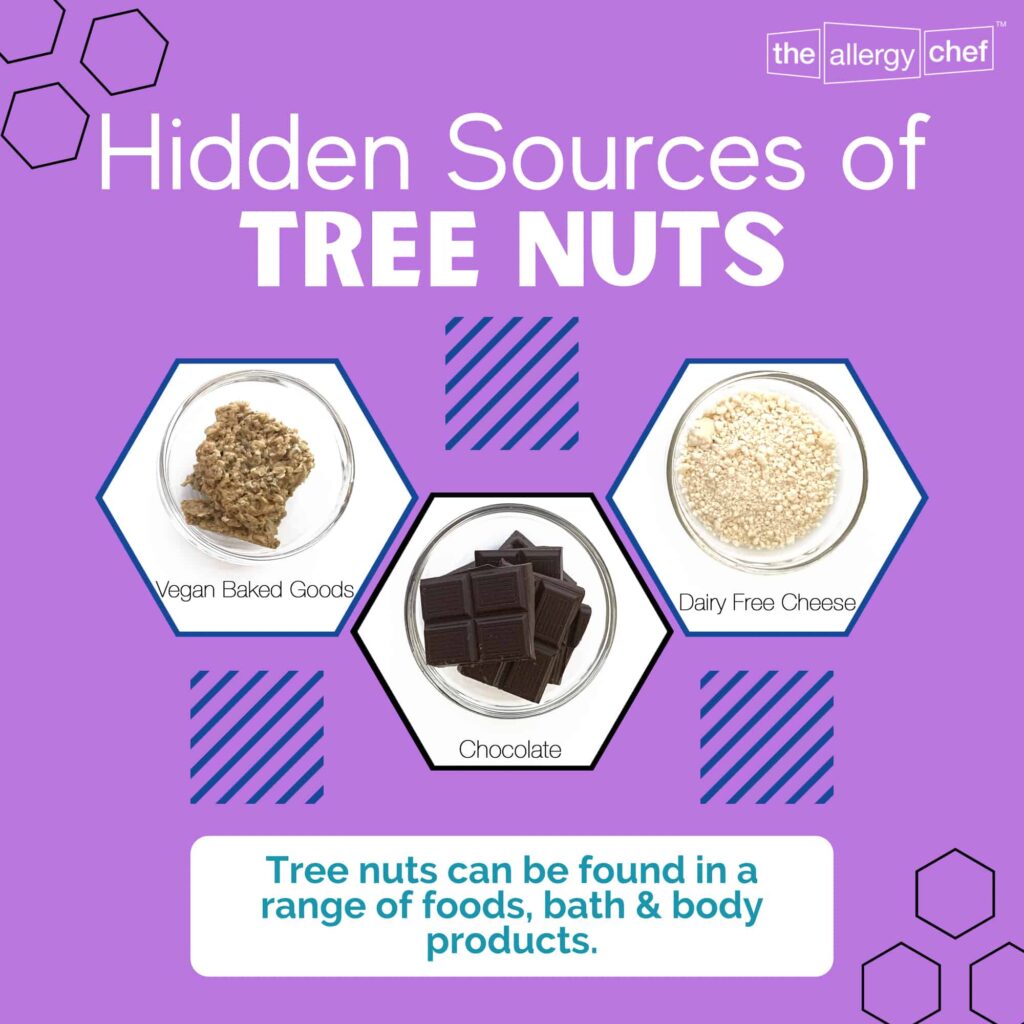
- Hidden Sources of Tree Nuts
- Cashew Substitutes in Cooking and Baking
- Cross-Contact and How to Prevent It
 |
 |
 |
 |
Peanut Butter Quick Facts
Whilst these aren’t all the facts about peanut butter, they definitely grab your attention. You can always do more research if peanut butter interests you.
- A legume based butter (peanuts are legumes, like beans, not tree nuts as the name would suggest)
- 15 grams of fat per serving
- Contains oleic acid, a type of monounsaturated fat that can help manage blood sugar levels.
- Good source of Vitamin E, Vitamin B 3&6, and magnesium.
- The price of peanut butter is considerably less when compared to almond butter, especially if you’re purchasing high quality, organic products.
Almond Butter Quick Facts
- Almonds are a type of nut, and almond butter is made from ground almonds.
- One of the most popular choices where nut butters are concerned, and available at most grocery stores, unlike some specialty nut butters.
- Considerably more expensive than peanut butter.
- Benefits of almond butter include antioxidant content, and mineral content.
- Has more Vitamin E content than most other nut butters (it has about 25% of your daily need in one serving).
- A good source of amino acids and healthy fats.
Aflatoxin: Something to Cause Concern?
You may have read that peanuts have high levels of aflatoxin, a type of fungi that grows in soil. The thing is, aflatoxins are naturally occurring, and you’ll find them in a huge range of plant products including corn, wheat, coffee, cassava, rice, treen nuts, sunflower seeds, and the list goes on.
Here’s what that really means: most healthy people, when eating these types of foods in moderation and within a well balanced diet, do absolutely fine with them. We’re living in a time where clickbait and scary headlines are all the rage because the grab your attention. However, then you just end up scared over something that may not be a huge issue for you.
On the other hand, if you have a compromised immune system, need a special diet such as a low histamine diet, or have another type of underlying medical condition, that’s when you really want to pay attention to things like aflatoxin levels in your food. Your medical team should be able to help you understand which foods would be safe for you to consume, and in what amounts (because thresholds absolutely matter).
So, the next time you read about something scary in food, take pause. Do more research, and if you can, talk to farmers (especially farmers in the organic farming and regenerative farming spaces). They can help you understand how food is grown, why these things happen, and how significant they are. Then, follow up with your medical team if needed.
Getting the Most From Your Peanut Butter and Almond Butter
Both peanut butter and almond butter contain compounds that aide in brain health, bone health, and can even help get a handle on blood pressure and blood sugar (when used appropriately in conjunction with other diet and lifestyle changes).
However, the market has been flooded with cheap ingredients including vegetable oils, added sugar, preservatives, and so on. If you’re wanting to eat peanut butter or almond butter because of the health benefits, read the labels.
Your spread should have minimal ingredients such as “peanuts, salt” or “almonds, salt”. Those are the only two ingredients that are truly needed. Know that if you see oil in the jar, but those are the only ingredients, the oil is from natural separation. You’ll have to stir well before enjoying your creamy loot.

Comparing the Nutritional Value of Peanut Butter and Almond Butter
To make this a fair fight, I’ll be using the nutritional value information for organic, no added sugar butters. Additionally, the two brands I’m using for comparison are both salt free butters. I think the best way to compare them is get as close to apples to apples as possible.
Each brand has a 2-Tablespoon Serving (32g) as the listed serving size, which is great because that makes our comparison of the nutritional content even easier. For this info AB = almond butter and PB = peanut butter.
Note: if you were to purchase an organic sprouted almond butter like this one, you’ll have different health benefits and the nutritional values are slightly different. There will also be fewer calories, and added salt content since they use an ancient sea salt in the mix.
Head to Head Nutritional Values:
- Calories: AB = 190 | PB = 180
- Total Fat: AB = 16g | PB = 14g
- Saturated Fat: AB = 1g | PB = 2.5g
- Trans Fat: AB = 0 | PB = 0
- Cholesterol: AB = 0 | PB = 0
- Sodium: AB = 0 | PB = 0
- Total Carbohydrates: AB = 7g | PB = 10g
- Dietary Fiber: AB = 4g | PB = 1g
- Total Sugars: AB = 1g | PB = 2g
- Protein: AB = 7g | PB = 6g
- Vitamin D: AB = 0mcg | PB = 0
- Calcium: AB = 86mg | PB = 12mg
- Iron: AB = 1mg | PB = 2mg
- Potassium: AB = 235mg | PB = 211mg
At a quick glance, we can see that almond butter beats peanut butter in several areas including grams of fiber and just a tad more grams of protein. Whilst there are a few more calories in almond butter, overall, it’s technically the better choice.
However, don’t let these numbers be the only deciding factor. You also need to think about taste, application, and personal preference. Plus, assuming you’re not allergic to either, you can always purchase both and rotate thru them.
Is There a Clear Winner?
Honestly, I wouldn’t pull out the confetti and crown almond butter the clear winner. These two spreads have similar amounts of calories, and outside of a few key markers, there aren’t a lot of notable differences between them.
Personally, I think both almond butter and peanut butter are good choices to reach for if you’re aiming for a healthy diet.
 |
 |
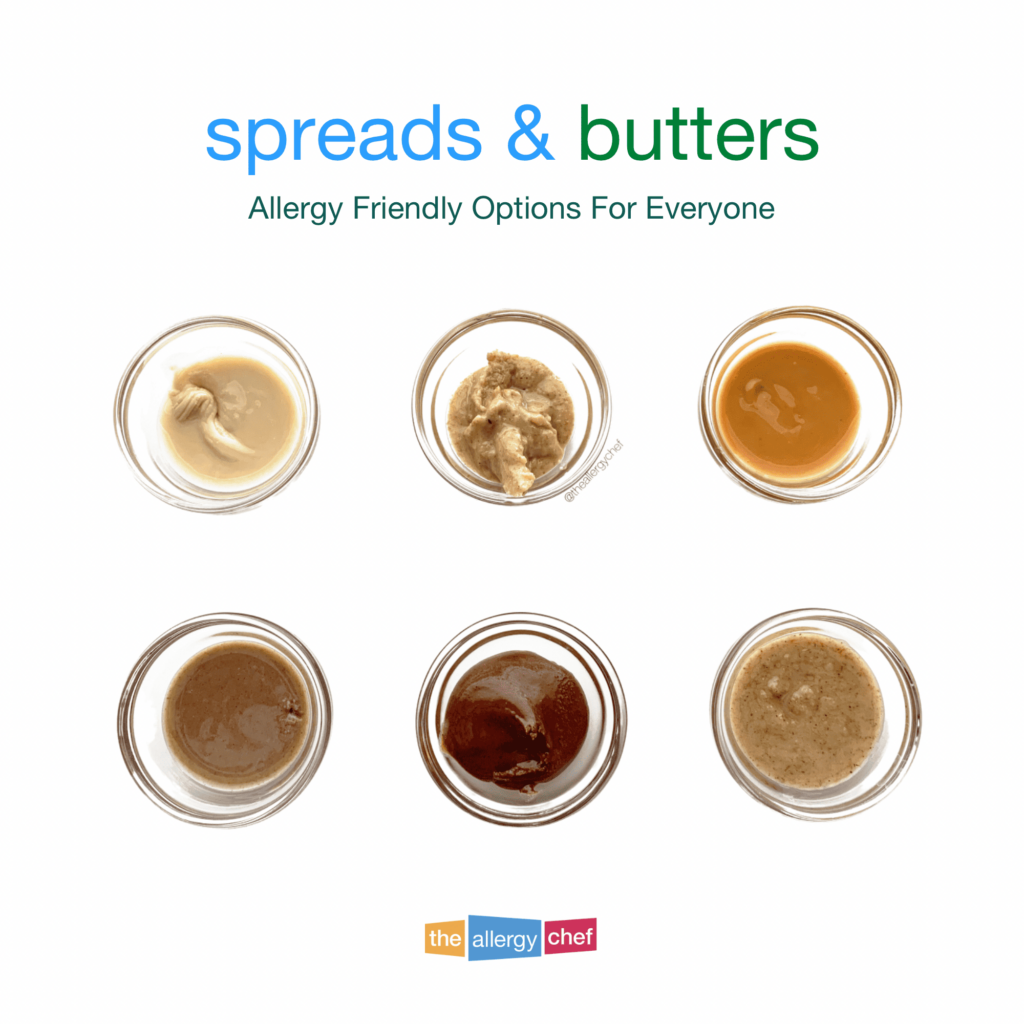
Tree Nut and/or Peanut Allergies: Spread and Butter Options
If you’re managing peanut and/or tree nut allergies and want to know which spreads are the best, I’ve got you covered. The good news is that several brands have stepped up to create several good options since there has been so much peanut allergy awareness. Here’s a breakdown of the different types of nut butter, seed butter, and alternative butters:
Seed Butters
- Sunflower Seed Butter (SunButter is a popular brand name in this space, but other brands make butters from sunflower seeds as well)
- Tahini (made from sesame seeds)
- Pumpkin Seed Butter
- Watermelon Seed Butter
- Blended Seed Butter (Beyond the Equator is a good brand that sells butters made from a variety of seeds)
Tree Nut Butters
- Almond Butter
- Brazil Nut Butter
- Cashew Butter
- Hazelnut Butter (also called filberts)
- Macadamia Nut Butter
- Pecan Butter
- Pilli Nut Butter (a fairly new nut butter on the market these days)
- Pine Nut Butter (technically not a tree nut, but designated as a tree nut for labeling)
- Pistachio Butter
- Walnut Butter
Legume Butters
- Chickpea Butter (also called garbanzo bean, Pulse Power Snacks has a good option)
- Peanut Butter
- Soy Butter (sometimes called soy nut butter)
Misc. + Tuber/Vegetable Butter
- Granola Butter (can be made from a range of ingredients, but oats is the most popular method)
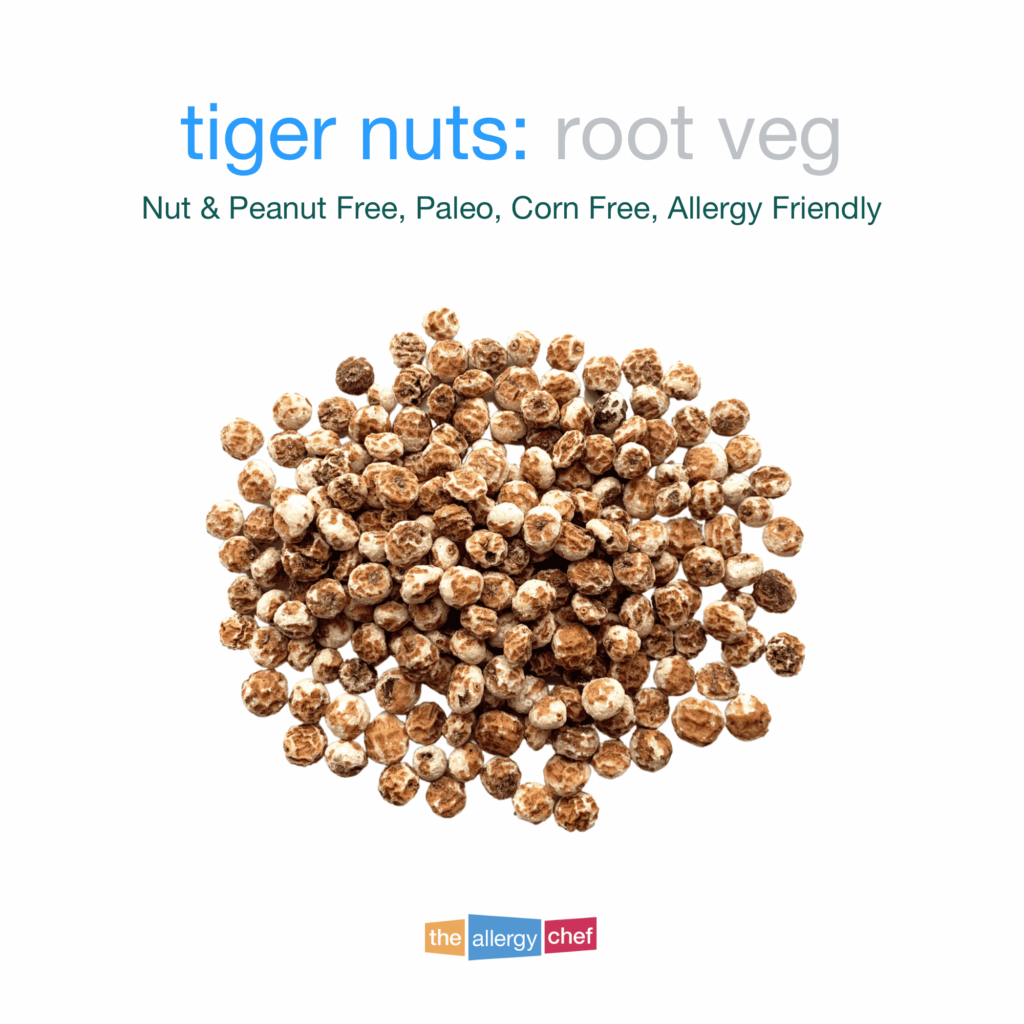
- Tiger Nut Butter (tubers, not tree nuts)
 |
 |
Dedicated Facilities
If you manage peanut or tree nut allergies, I have great news for you! There are some companies that make peanut butter in a peanut only facility and some making almond butter in almond only facilities.
Last I checked, Crazy Richard’s is a brand making peanut butter in a peanut only facility. Spread the Love is a food processor in a unique situation. They have two facilities, a peanut only building and an almond only building. Whilst they produce both products, they’re made in separate locations, which is fantastic for those that need it.
Philosopher Foods makes a sprouted almond butter in a tree nut only facility where there are no peanuts. And since we’re on the topic, if you need nut free dates, check out Sam Cobb Farms. Dates are one of those products that always seem to be processed with tree nuts.
Remember, always do your due diligence. If a brand changes something, they don’t need to write me a letter with an update. This info is only as good as the last time I checked.

Answering Your Almond Butter vs Peanut Butter Questions
Does almond butter taste like cashew butter?
Not even a little bit. Whilst they’re both tree nut butters, and both have a creamy texture, their tastes are super different. The best way I can describe it: mushrooms versus apples.
Almonds have a deep, rich, nutty, earthy flavour profile. If I were to think about spreads and butters from an umami standpoint, I’d say soy butter and almond butter are on the umami side of the line.
Cashew butter on the other hand is lighter and brighter in flavour. It’s a lot less distinct and can be used in pretty much any scenario. There’s no hint of umami, and if anything, there’s a hint of sweetness.
See what I mean by mushrooms and apples? Now, whilst they don’t taste the same, you can use them the same way, for the most part. If you have a chocolate smoothie calling for cashew butter, you could use almond butter in its place (1:1 ratio) and you probably wouldn’t notice the difference. However, if you were making a raw vegan strawberry cheesecake that called for cashew butter, you would absolutely taste the difference, and you might not like it.
Is almond butter a good source of protein?
Whether or not something is a good, or even a great source of protein will come down to your individual needs, and how your body responds to food. You’ll want to start by calculating your daily protein needs, which honestly, is the most important factor.
The equation that institutions and government agencies use is: 0.8 grams of protein per kilogram of body weight. You can do a quick web search for “XX pounds in KG” with XX being your weight and most search engines will make the conversion for you. Let’s look at an example.
If you’re 135 pounds, that’s 61.2KG. Now we do this: 0.8 x 61.2 = 48.96. That’s your daily need, and we can round that up to 50 for ease. You’d need 50 grams of protein daily, and a single serving of almond butter will represent 14% of your daily protein needs.
However, protein isn’t exactly a black and white issue. Your gender, underlying medical conditions, and age are factors that can’t be ignored. These factors may lead to you needing a higher amount of protein daily, so it’s important to get tested and work with your medical team to form the best plan.
The source of your protein will also come into play. Some people simply don’t do well with protein that’s from plant-based foods and need to consume animal products as their main source of protein.
I know this isn’t the simple yes or no you were probably expecting, however, nothing in personal health ever is, and you’ll find that I’m always going to take the “no two people are the same” stance and encourage you to seek the answer from an individualized standpoint.
What’s the best substitute for peanut butter when baking peanut butter cookies?
Ohu, I could talk about this one all day. In terms of volume and function, and nut, seed, tuber, or legume butter will be a 1:1 swap, so keep that in mind. It’s important because some nut butters are great in small amounts (like a tablespoon of nut butter) but once you need a cup of it (225g), things just go south.
Whilst pistachio butter and hazelnut butter aren’t the most popular nut butters, they both would be a great option if you ask me, but I’m saying that from a creative culinary standpoint.
If you want a more traditional/classic taste, you’re going to want to use soy butter, as it will get you the closest to regular peanut butter. Almond butter is another great option, followed by tiger nut butter (tuber, not a tree nut).
Between almond butter and peanut butter, which is the healthier option for a smoothie?
Honestly, I wouldn’t say one is a better option over the other since they’re pretty similar where nutrition is concerned. If I had to make a selection based on protein content alone, then almond butter would be the winner, but only by a small amount.
And that’s really the point. Even though almond butter has better stats here and there, it’s only by a small margin, making both butters a healthy choice for your smoothie.
I think the better question is: which will taste better to me in a smoothie? The best option will be determined by not only your taste buds, but the other ingredients in your drink. Peanut butter can clash with some ingredients whilst almond butter tends to play well with just about all types of smoothies. Generally speaking, stone fruits and tropical fruits are going to taste better with almond butter, so let that be your guide.
What’s a good alternative to peanut butter in homemade peanut butter cups?
If you’re asking from the angle of healthiest nut butter, you could use any of them and be A-OK. However, if we’re talking about flavour, then sit, and let’s chat.
Believe it or not, soy butter is going to be the best choice in terms of a 1:1 horizontal shift if that makes sense. The reason why is because they’re both legumes and soy butter has a deeper, richer flavour, similar to peanut butter. However, most grocery stores in the United States don’t carry it. Some health food stores and standard grocery stores carry WOWButter (soy), but you’d need to use a store locator, or order online. I know. Waiting for something to be shipped to make PB cups in this day and age feels almost criminal.
Interestingly, chickpea butter, also from a legume, won’t deliver the same delicious experience, so I’d skip that one. After soy, the next top choice may also surprise you: Tiger Nut Butter. It’s not a type of nut, despite the name. It’s a tuber root vegetable and totally tastes like a cross between peanut butter and almond butter with a hint of hazelnut butter. In a peanut butter cup situation, with your eyes closed, you’d totally be in PB territory with this one.
From there, almond butter is an excellent choice in a peanut butter cup situation. It’s going to be the least punchy in terms of flavour where tree nut butters are concerned. Other nut butters such as hazelnut, macadamia, Brazil, and so on each have a pretty distinct flavour or sharpness of some sort. Almond butter is the chill grownup who can handle a situation, you know?
After almond butter, it’s all a toss up really, and you may find that a mixed butter may be the best option. There are some brands that sell mixed seed butters and when you combine several seed flavours, they tend to work better together.
No matter which way you go, know that you’ll use the same amount of your swap as the amount of peanut butter that was called for since they’re all 1:1 exchanges for volume based on performance.
Will eating peanut butter and almond butter help with weight loss?
Both peanut butter and almond butter aren’t considered low calorie foods and therefore, the obvious answer would be no. However, it would be wrong to quickly jump to that conclusion.
Both peanut butter and almond butter contain essential nutrients and healthful fats. When eaten with other low calorie foods (like carrots, celery, etc.) you can create a lasting fullness. That lasting fullness may be able to contribute to weight loss if one were eating intuitively, stopped when they were content, and then didn’t snack etc., but had another meaningful meal later in the day.
In addition to that, with good food combining, all spreads and butters can make positive contributions to your overall health, and that has to be part of the conversation. Rather than look at weight loss alone, I’d encourage you to work with your medical team and look at overall goals such as protein intake, heavy lifting, and so on.
You’ll want to determine what type of diet and lifestyle changes will improve your cardiovascular health and help build strong bones, as these are two critical factors in being able to support yourself well into old age. In the long run, that has to be the goal: building a healthy body that can support you well into your 70s and beyond, using methods that are sustainable.
Is natural almond butter the same thing as organic almond butter?
No, they won’t be the same. In some cases, the ingredients in natural almond butter will be the same as organic almond butter. However, the difference is that in organic almond butter, the almonds (and other ingredients) are organically grown. You’d want to look into what those guidelines include in your country, as it varies from one country to the next.
Had you asked me 15 years ago if organic was the way to go, I would have shouted yes from the rooftops. Now, it’s a quiet yes and here’s why: the system has slowly been curuption to allow for more loopholes and there’s a lot of money on the table.
These days, rather than look at only the word organic, I look into the brand as well. You may find that some brands producing a natural butter product use organic growing methods, but can’t afford to pay for the labeling and certification (I see this a LOT at farmer’s markets). If you’re wondering if natural almond butter will have the same benefits as an organic version, they’ll be very close, so I wouldn’t worry much about that element.
I also tend to look at the source of the almonds (or main ingredients), if they’re sprouted, and so on. I realize this isn’t a black and white answer, but what in food is black and white anymore? Ultimately, eat foo that makes you feel good (physically and on principle), and that fits into your budget.
Is the fat content of peanut butter and almond butter bad for me?
No, the fat content of both peanut butter and almond butter would be considered healthy fats. If you were to purchase a product with added hydrogenated oils, then that would be considered bad fat.
The natural fat content of peanuts and almonds are considered healthy monounsaturated fats. This type of fat is known to help lower LDL cholesterol (sometimes called bad cholesterol). Additionally, you’ll find that almond butter contains omega fatty acids which can help lower the risk of chronic diseases.
However, we can’t look at this in a vacuum. If you don’t exercise, eat loads of highly processed foods and ultra processed foods, a few tablespoons of peanut butter or almond butter aren’t going to suddenly lower your risk of cardiovascular disease and grace you with loads of health benefits.
Any food that’s eaten for health benefits needs to be done so under the guise of a larger plan. You’ll want to work with a fantastic medical team that can assess your health goals, and guide you on what types of foods and movements will help you get there. They’ll also want to assess environmental factors because if you’re living in a home slathered in toxic mold, your efforts will be thwarted.
Ultimately, whether something is good or bad for you needs to be looked at thru the lens of individualized health.