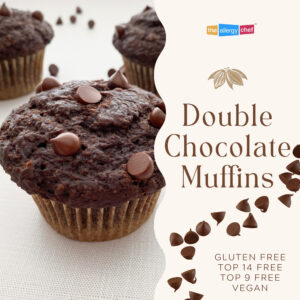
Today I’ll be showing you how to make a delicious vegan muffin recipe. The best part about this vegan recipe is that it’s also gluten free. Another great thing: it’s top 9 free and top 14 free. Don’t let that allergy status fool you though. Whilst these vegan muffins are incredibly inclusive, they don’t lack in falvour and have an outstanding texture. Plus, they’re freezer friendly so you can batch cook and get ahead.
Know that you’ll find a great Q&A section at the bottom of this post (or use the table of contents to jump around) which may answer some of your questions. The ingredient notes are also very helpful if you need info on swaps and substitutions. Now, let’s get to baking!
Allergy Status
Free From: Wheat/Gluten, Dairy, Egg, Soy, Tree Nut (including Coconut), Peanut, Fish, Shellfish, Sesame, Top 9 Allergens, Top 14 Allergens, Alliums, Apple, Avocado, Banana, Beans & Lentils, Berries, Buckwheat, Cane/Refined Sugar, Carrot, Celery, Cinnamon, Citrus, Corn, Cruciferous, Garlic, Legume, Lupin, Mushroom, Mustard, Oat, Onion, Pea & Pea Protein, Poultry, Red Meat, Rice, Squash & Gourd, Strawberry, Sweet Potato & Yam, Tapioca/ Cassava/Yuca/Manioc, Tomato, Yeast
Friendly To: EOE, Vegan
Compatible With: Stone Fruit Free
Stone Fruit Free: Use an alternative oil instead of the olive oil.
Tools You’ll Need to Make This Vegan Muffin Recipe
- Large Mixing Bowl + Whisk OR Mixing Bowl + Electric Mixer OR Stand Mixer with Wire Attachment
- Kitchen Scale (this is the one that I use)
- Muffin Tin (standard size or mini muffins)
- Spatula (I have several of this spatula)
Vegan Muffin Recipe Ingredients
Binding Agent
- 3 TBSP Chia Seed Meal
- 9 TBSP Water (room temperature)
Part 1 Ingredients (Dry Ingredients)
- 180g Organic Maple Sugar
- 90g Sorghum Flour, superfine
- 55g Organic Cacao Powder
- 50g Potato Starch
- 40g Organic Gluten Free Purity Protocol Oat Flour OR Organic Tiger Nut Flour (tuber, not a tree nut)
- 30g Arrowroot
- 4 tsp Baking Powder
- 1 tsp Sea Salt
- 1/2 tsp Baking Soda
Part 2 Ingredients (Wet Ingredients)
- 200mL Milk of Choice (6 ounces)
- 50mL Organic Extra Virgin Olive Oil (2 ounces)
- 2 tsp Organic Vanilla Extract
- 85mL Hot Water (3 ounces)
- Chocolate Chips of Choice
Awesome Gluten Free, Vegan Breakfast Recipes
Here are more tasty breakfast recipes to start your day. They’re all gluten free, vegan, top 9 free and more. Perfect for kids and adults.
- Carrot Cake Waffles Recipe
- Dairy Free Pancakes Recipe
- Gluten, Dairy, Egg Free French Toast Recipe
- Easy Vegan Baked Oat Bars Recipe
 |
 |
 |
 |
Important Ingredient Notes
Milk of Choice: You can use any dairy free milk including oat milk, soy milk, almond milk, homemade milk, etc. The only milk to avoid will be full fat coconut milk from a can. If you’re new to dairy free living, here’s a list of brands that make dairy free milk.
Chia Seed Meal: This is not the same thing as chia seeds, and you need to use “meal” specifically. If you use chia seeds, this recipe won’t turn out properly. This is the chia seed meal that I use.
Maple Sugar: This is a granulated, unrefined sweetener. It can be swapped for coconut sugar or date sugar. Whilst you could use a different organic sugar such as white cane sugar or light brown sugar, these will read as much more sweet since they’re refined sweeteners. That doesn’t mean you can’t use them, but be sure to manage your expectations. You cannot swap this for a liquid sweetener such as maple syrup, agave, or applesauce (or other fruit puree).
Cacao Powder: This is the brand that I use.

Gluten-Free Flour Mix: What You Need to Know
Let’s take a moment to talk about the flours used in this amazing gluten-free recipe. The best gluten-free muffin recipes start with a foundation of gluten-free flours. If the flour mixture is wrong, the muffins (or other baked goods) will be a hot mess. This is how you get dense muffins, rather than tender muffins.
It’s important to know that different types of flour are going to produce different results (fluffy texture vs dense texture, delicate crumb, etc.). On top of that, how you combine your flour choices will absolutely impact the final results in both taste and texture.
These delicious muffins have a successful gluten-free flour blend that compliments the cacao powder, but also functions very well since this is also an egg free recipe. Know that when eggs are involved, you have a little more wiggle room on the gluten free flour front, as the eggs can help you out of a bad situation.
When it comes to swapping the gluten free flours I have listed, there’s a little space for you to mess about. The sorghum flour can be replaced with superfine brown rice flour. You might be able to swap the potato starch for tapioca, but if you do, you’ll have a slight texture shift. I’ve shared an oat swap, and if possible, the arrowroot needs to stay where it’s at. This starch is important for your final texture.
Now, if you have an all purpose flour blend that you’d like to use, you can make that swap. Know that I haven’t tested every gluten free flour mixture on the planet and can’t guarantee your success. I’ve also never worked with 1-1 baking flour type products from Bob’s Red Mill or King Arthur’s Measure for Measure. These 1-to-1 baking flour products contain ingredients I’m allergic to (such as xanthan gum which is corn derived).
What I can tell you about these gluten free all purpose flour products is that they aren’t truly all purpose. They’re most purpose, and it’s up to you to know when they’ll succeed. Some manufacturers tell you on the packaging or the website what the product is really good for. I do have it on good authority from a gluten free only recipe developer (she uses eggs) that commercial gluten free flour blends + almond flour = best baking success. I don’t know the exact ratios, so you’ll need to look into it, assuming you can have almonds.
The most important thing to not do: replace the gluten free flours I’ve listed with one singular flour. If you were to take my blend and swap it all for coconut flour, or brown rice flour only, etc., you will absolutely positively ruin the recipe.
Whilst this recipe is clearly for gluten free muffins, if for some reason you don’t need gluten free, you can use a wheat based all purpose flour (sometimes called white flour or regular flour) in place of the sorghum + potato + oat + arrowroot. Don’t use something like whole wheat flour, as it’s not quite the same as an AP flour. Additionally, don’t use something like self-rising flour since this contains a leavening agent, and the recipe already has plenty.
To learn more about choosing flours for gluten free batters, read this article where I do a deep dive on all things gluten free flour.
Instructions for This Vegan Muffin Recipe
To make these delicious bakery-style muffins, start by combining your chia meal and water together in a small bowl, and set aside. This is a good time to preheat your oven to 325f/163c, and to get your hot water/kettle going.
Next, place your empty large bowl or stand mixer bowl on your kitchen scale and tare to zero. Add each of the Part 2 Ingredients (dry ingredients) to the bowl and tare between weighted ingredients. Once they’re all in, lightly mix to combine. For this recipe, I use a stand mixer with the wire attachment.
Place an empty measuring cup on your scale and tare to zero. Add the milk, then the vanilla. With your mixer on the low setting, pour in your milk and vanilla combo. As it mixes, place the measuring cup back on the scale, tare, and add the oil. When the milk is mostly incorporated, add the oil and continue to mix.
When the oil has been incorporated, turn your mixer off and add the chia gel. Mix again until it’s combined. Finally, add the hot water, then mix on high speed for 30 seconds.
Line a muffin pan (I use this brand), and scoop in a bit of batter into each liner (I used a medium cookie dough scoop which is approx. 1.5 TBSP). Sprinkle in a few chocolate chips, then cover with more muffin batter to properly fill the muffin pan. Place a few chocolate chips on top of each muffin as well.
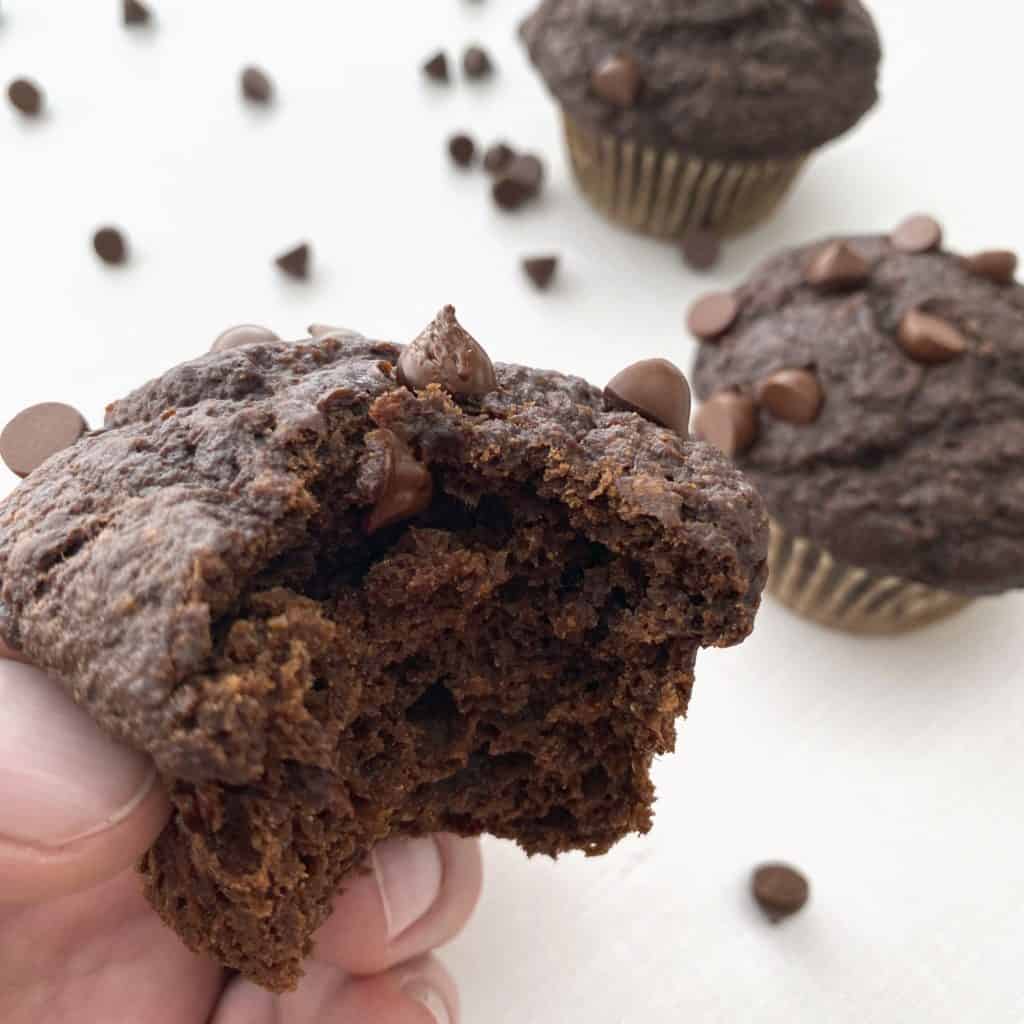
Bake at 325f/160c for 20 – 26 minutes. A toothpick should come out mostly clean when your muffins are ready. Whilst my muffins baked for 24 minutes, each oven will vary a bit. Allow the muffins to cool IN the muffin tray for 10 minutes, then remove them from the pan. You can continue to cool, or serve warm. Your final results should be a rich chocolate muffin with a moist texture and lovely crumb.
Vegan Muffin Recipe Storage Notes
You can store leftover muffins at room temp for 4 days OR in the freezer for 4 months.
For counter top storage, I use a clamshell bakery style container. It’s not a perfect air-tight seal… I notice that a perfect airtight seal messes with the moisture and texture a small amount (and it’s exacerbated in some climates and elevations). However, your muffins should not sit completely uncovered.
You can also store your muffins in the fridge, in an airtight container. If you opt for refrigerator storage, and don’t love the taste of cold muffins or cake, take your muffins out of the refrigerator at least 30 minutes before eating so they can reach room temperature first.
To freeze, place cooled muffins on a large baking tray. Put the entire tray in your freezer. Once the muffins have frozen solid, transfer them to an airtight container or freezer baggie. Don’t forget to label with the date and flavor.
To thaw frozen muffins, place your muffins on the countertop for about 90 minutes, or until completely thawed. I don’t recommend reheating from frozen, as this can alter the texture a bit. A friend of mine has done this and says it’s not a big deal, but you know me. I’m all about free-from perfection.
You can also freeze prepared muffin batter, and thaw the batter, then have fresh baked delicious muffins whenever you’re in the mood. I use these deli containers to freeze batters. My free-from batters can be frozen for years (yup, I’ve tested it), and you still get awesome fresh bakes.
Freezing a batter can be helpful if you don’t have a lot of space to freeze complete bakes. It’s also helpful if you still want to get ahead, but don’t like eating leftovers from your freezer.
In my experience, storing leftovers frozen is the best method since you don’t have to remember to eat them by a certain date. Plus, you can batch cook and get ahead.
More Delicious Vegan Muffin Recipes
If you’re looking for more muffins your whole family will enjoy, here are a few options to get you started. You can also pick up a copy of my Gluten Free, Top 9 Free Muffins Cookbook. These are bakery quality, award winning recipes that you’ll continue to return to. Plus, they’re freezer friendly so you can batch cook and get ahead.
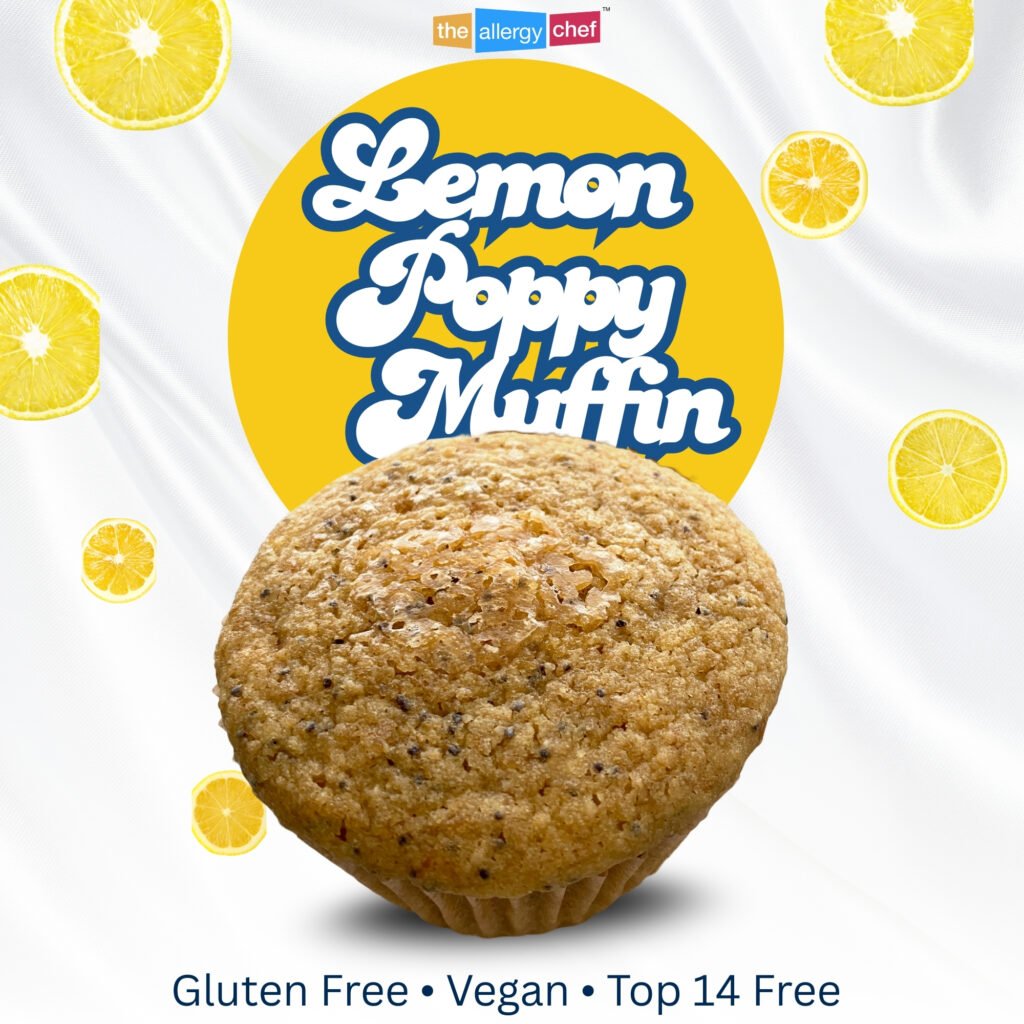
- Lemon Muffins (such delicious gluten-free muffins)
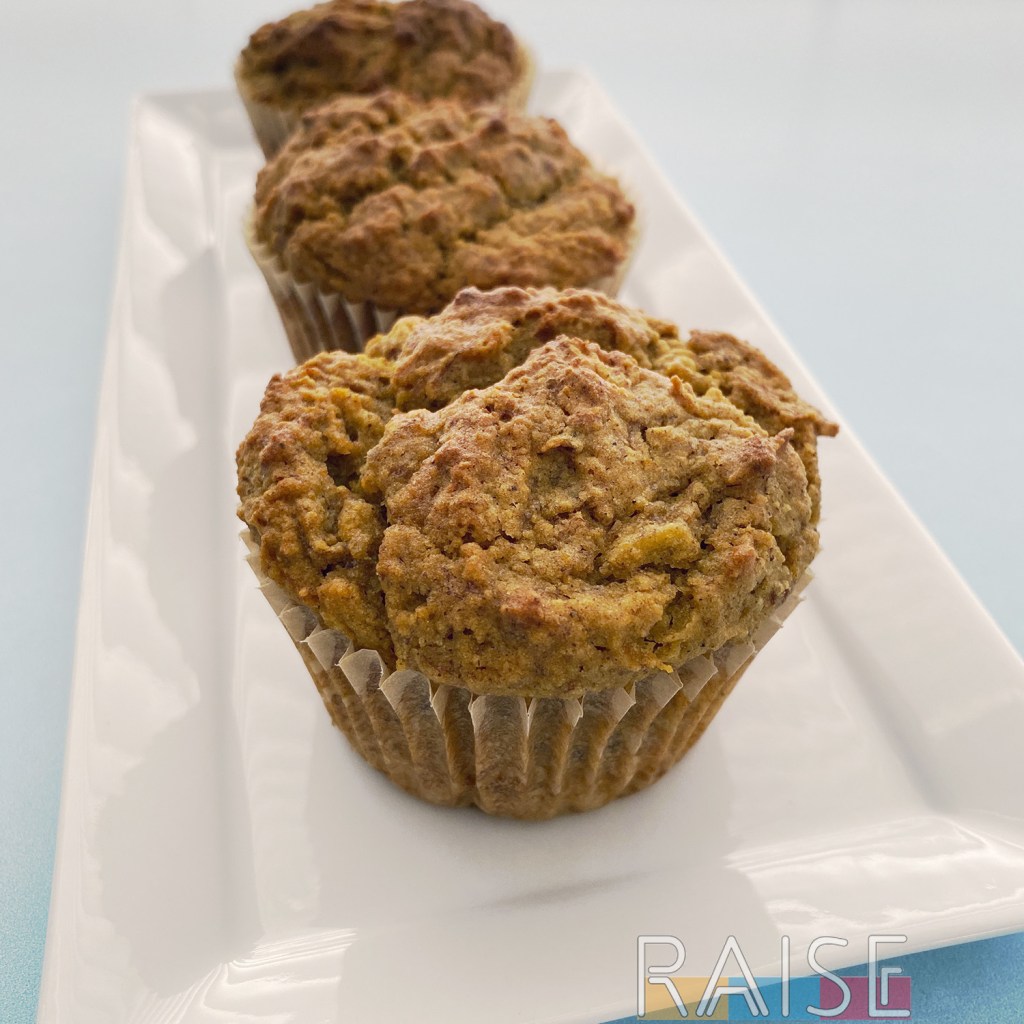
- Vegan Banana Muffins with Shredded Carrots (a good muffin for toddlers and kids)
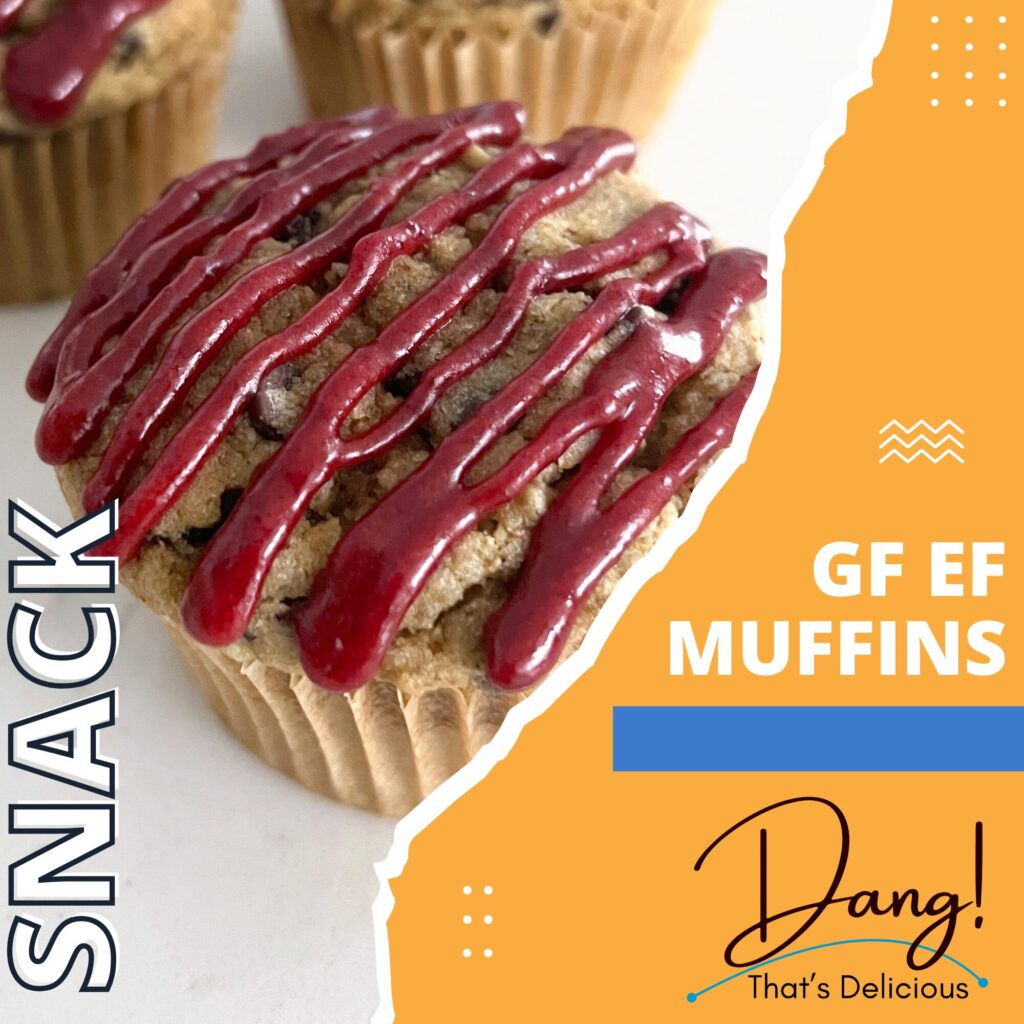
- Vegan Blueberry Muffins with Pumpkin
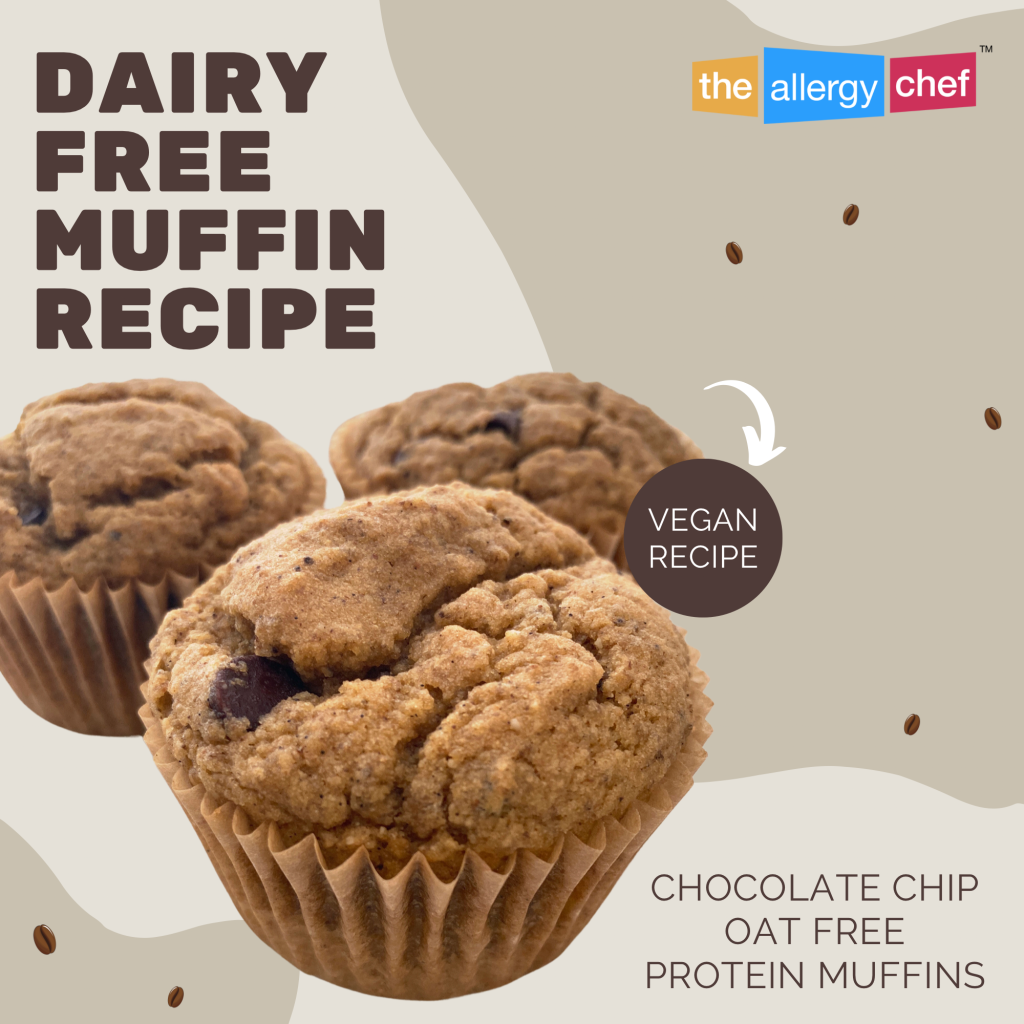
- Oat Free Protein Muffin Recipe
 |
 |
 |
 |
Serving Ideas
There are so many tasty ways you can jazz up this delicious vegan muffin recipe. I mean, yeah, you can eat it standalone, but come on. Let’s have a little fun, yeah?? Here are a few ideas to get you started:
Drizzle a nut butter on top or a nut butter caramel (nut butter + maple syrup mixed really well); you can use any seed/nut spread.
Make a dark chocolate drizzle to really boost the chocolate experience. You can also top with crushed nuts or seeds to lend more texture to the muffins.
You could make a delicious yogurt parfait with sliced ripe bananas and other fresh fruits such as fresh blueberries, and fresh strawberries. Cut the muffin into small chunks, and use it as a layer rather than granola (or in addition to a granola layer). Talk about the perfect snack!
If you’re a fan of sweet and spicy, make a spicy cashew dip. You’ll blend cashews, a few soft dates, and a very generous pinch (or three) of cayenne pepper. Use a spoon to eat your muffin, which makes “dipping” a lot easier.
Make Delicious Muffin Dessert Bowls!
You can take this idea and use it for this muffin recipe, or any muffin recipe really. You could also use a combo of muffins like these chocolate muffins + cinnamon muffins or something of that nature.
To make your dessert bowls, start with a layer of something creamy that you enjoy. It could be dairy-free whipped cream, dairy-free ice cream, or dairy-free yogurt. Break chunks of your muffin on to the creamy layer. Optionally, you can sprinkle on a few white or black chia seeds for a little added fiber, or hemp seeds for added protein.
Now, add toppings. You can use anything from chopped fruits (fresh, frozen, or dried), to a caramel sauce, to chocolate sauce, and everything in between. The idea is to add your favorites, and to create a treat that you’ll love.
You can also use toppings such as spiced cream cheese. Hear me out… Combine vegan cream cheese with warm spices (cinnamon, etc.) or heat spices (chipotle, etc.) along with a little maple syrup or maple sugar. Give that a really good mix, then add a dollop on top of your muffin bowls. You end up with a rich, creamy mouthfeel with spices to lift the bowl to the next level.
If you need info on sourcing substitutions when following a dairy free or vegan diet, check out my Ultimate Guide to Dairy Free Substitutes.
Answering Your Vegan Muffin Recipe Questions
Could I use a flax egg instead of the chia seed meal?
Technically, yes, however, you’re going to alter the texture of the muffin. I once took one of my bakery muffin recipes and did a test on different binding agents (flax, chia, sunflower, pumpkin), and the results were FASCINATING. I posted it all here for RAISE Members.
A flax egg will produce a softer, cake-like result and chia meal produces a more authentic muffin texture, which is really cool. However, knowing that, you can make the swap and still have a successful bake, it just won’t be the muffin that I’ve shared.
I don’t use a standard flax egg ratio, as I find the binging property to be lackluster. For best results, for this recipe, use 8 TBSP golden flax meal + 8 TBSP room temperature water. Mix that together really well in a small bowl and use it in place of the chia gel. This is the best brand of flax meal to use.
Is spelt flour gluten free?
Great question! No, spelt flour is a form of ancient wheat, and is not a gluten free flout. If you’d like to see a list of gluten free flours, grains, and pseudograins, read this article on gluten free flour.
Can I use melted butter in place of the olive oil?
No, you won’t be able to use melted butter in this recipe. There’s a big difference between fats that are solid at room temperature (butter, tallow, etc.) and oils that are liquid room temperature (vegetable oil, grapeseed oil, olive oil, etc.).
Whilst it may seem like the melted fat will function properly when making your muffin batter, once it’s time to bake, you’ll see the issue. Solid fats don’t bake up the same (think about cookies versus cakes). Additionally, when the baked goods cool, there’s a hardening that takes place because the solid fat firms up again (think about the hardness of a crispy cookie versus the softness of a cake).
So, with that in mind, it’s important that you use a liquid oil in this vegan muffin recipe. If you’re not able to use olive oil, you’ll want to reach for a neutral oil. Personally, I use tiger nut oil (tuber, not a tree nut) rather than something like canola oil. You’ll want to avoid high flavoured oils such as sesame oil, sacha inchi oil, etc.
How many cups of flour are used in this recipe?
Unfortunately, I won’t be able to tell you, and that’s by design. I only use the gram measurement when it comes to baking to ensure that I can give you precise measurements. One of the most important things to know about gluten free baking is that in some cases, especially starches, 10 – 20 grams can ruin a recipe. For reference, that’s less than one ounce… a few Tablespoons… and when it comes to measuring, leveling, etc., it’s VERY easy to mess up the numbers.
So, I share ingredient measurements in grams for precision and accuracy, and this also makes sure that you don’t waste expensive ingredients. I know not all recipe creators take this approach, but as a professional baker (remember, I owned and operated a free-from bakery), I can tell you from first hand experience, this is the way to bake.
I’ve had so many people thank me after they use the kitchen scale method the first few times because they see it’s actually easier rather than trying to perfect a cup of flour. This is the kitchen scale that I like, and I hope you come it love it as well.
Are these healthy vegan muffins?
Healthy is an unregulated term, and it’s always going to come down to your personal definition of healthy. In my personal opinion, when compared to store bought and commercial options, these are absolutely healthy vegan muffins.
However, when compared to something I would make when thinking about the word healthy, there’s worm for improvement. For example, we could boost the nutritional profile with a few Tablespoons of organic mushroom powder, which would be well masked by the cacao. We could eliminate the chocolate chips to reduce the overall sugar content. There’s space for a little beet powder or spinach powder since the cacao can mask it. We could shave down some of the organic maple sugar.
I think you see the point I’m making. There’s always going to be room for improvement if you ask the right person. Ultimately, you decide if these are healthy vegan muffins that can be eaten for breakfast, or if they’re a little more desserty and should be saved for later in the day.
Could I use melted coconut oil in place of the olive oil?
No, you can’t use melted coconut oil in place of the olive oil. That’s because coconut oil is solid at room temperature, and it will throw off the texture of the muffin once it’s cooled. It will also throw off any leftovers you have (especially if you plan to freeze them). To ensure you have success, you need to use an oil that’s liquid at room temperature such as olive oil or tiger nut oil (tuber, not a tree nut).
Is non-dairy milk the same thing as dairy free milk?
If you manage a milk/dairy allergy, it’s important to know that generally, no, they don’t mean the same thing. Nondairy (also written as non-dairy) used to imply that there could be a very small amount of cow’s milk dairy in a product. Dairy free on the other hand means zero dairy. Period.
Whilst the regulation has changed over the years, the US FDA generally has the viewpoint that “non dairy” could contain up to 0.5% of dairy milk derivatives such as caseinate. Dairy free always meant zero milk or milk derivatives.
Anytime you’re at a grocery store and want to purchase plant-based milk but you see the term non-dairy rather than dairy free, contact the brand for clarification. You can also start on their website, as some brands have a robust FAQ.
If you don’t like the answer, or are uncomfortable, do not purchase the milk. If you mange a lactose intolerance, there’s a good chance you’ll be able to have the product, but it’s still a good idea to get in touch with the brand before purchasing.
Can I bake this vegan muffin recipe at a higher temperature to save time?
No, please don’t try to save time that way (though, I can appreciate when someone is using their time wisely). When you bump up the temperature, you run the risk of having the outside cook and set whilst the inside is still raw or under one in the middle. Keep the temperature as-is, and don’t skip the step where you cool in the muffin pan for 10 minutes, as this carryover cooking finishes the process for you.
Could I use vegan buttermilk in place of the milk?
No, you shouldn’t use homemade vegan buttermilk in this recipe. You’ll most likely use lemon juice or apple cider vinegar in your homemade buttermilk, and this recipe doesn’t need the additional acid to be successful.
Could I use a cup of sugar in place of the maple sugar?
Whilst a cup of sugar is close in weight (200g vs 180g), no, you should not use a cup of sugar. Instead, use your kitchen scale to measure out 180g of sugar. Cane sugars are going to read as much sweetener than the maple sugar, so adding more sugar on top of adding more sweetness will make these sickly sweet. If for some reason you can’t have maple sugar, both coconut sugar and date sugar are very suitable unrefined substitutes.
Can I use less cacao powder?
Using less cacao powder will deliver a milder flavor in the chocolate department, however, it will also throw off the texture of the recipe. Cacao is a special “non-flour gluten free flour”. In other words, it makes up the dry ingredients and in part, lends itself to the flour blend. If you were to reduce that amount, you’re also impacting how all of the flours work together and what the final results of your vegan muffin recipe will be.
Should I cool my muffins on a cooling rack?
No, in fact, it’s important that you leave the muffins in the baking tray for 10 minutes. The tray cooling method taps into “carryover cooking”. It’s where we take advantage of the residual heat in the muffin tin to continue to bake the muffins. In gluten free + vegan + free-from baking, this is a huge part of the baking process.
A wire rack has no heat, and introduces more air flow, which can rapidly cool your muffins. We don’t want that, so, with this recipe, keep them in the tray for 10 minutes, then eject.
Once you’ve pulled them out, if you have a cooling rack tower that saves space and you want to rest the muffins on it, of course you can. You can leave them there until they’ve completely cooled, then store them with your desired method (I always go for the freezer, but to each his own).
Could I bake this recipe in a casserole dish instead of individual muffin cups?
Yes! Personally, I’ve baked this vegan muffin recipe in a loaf pan and added toppings, but a casserole dish can be used as well. One of the biggest tips I can give you is to watch the bake time. Oh, and use parchment paper for an easy release.
Depending on the height of your batter once it’s in the casserole dish, your bake time could go up, or down. Check on your muffins after 20 minutes with a toothpick test, and that can help you determine how much longer they’ll need to bake. Have fun!
What other toppings can I add to these muffins?
There are so many delicious toppings you could add to these dairy-free muffins. Chopped dried fruits (cherries, dates, raisins, goji berries, etc.) could all be great options. You could trade some of the chocolate chips on top for peanut butter chips if you don’t have a peanut allergy. Alternatively, you could use some white chocolate chips which also provides a really neat colour contrast.
Sprinkles are another topping which can be super easy. These days, brands such as Supernatural Foods make all sorts of festive toppings that could be a good choice.
Is this a good recipe to add shredded zucchini to?
This is a great recipe for shredded veggies including carrots and zucchini (courgette). The biggest tip I can give you is this: squeeze ALL the excess liquid out of your veggies before folding them into the muffin batter.
If you have excess liquid in the shredded zucchini, you’ll potentially ruin these muffins, and they’ll no longer be the sort of thing that you want to share with your friends. Also, if you plan to share these, remember, not everyone loves the texture of shredded vegetables.
You may want to shred your zucchini, squeeze out the excess liquid, then roughly chop the pieces so they’re little small bits rather than long shreds. Also, don’t start with a tonne of shredded zucchini. I wouldn’t use more than 80 – 100 grams in this recipe (about 3 to 4 ounces).
I follow a low sodium diet. Can I omit the sea salt in this muffin recipe?
Yes, you can omit the teaspoon salt that’s called for, however, know that the flavour profile will change. Muffins, cupcakes, and baked desserts often call for a teaspoon salt (or something similar) to help draw out natural flavors.
Since this is a muffin recipe that’s loaded with chocolate, you’re a lot less likely to miss the salt. However, a tip for your future baking, if you need to omit salt from a vanilla muffin, vanilla cupcake, vanilla cake, or anything else that’s lightly flavored, consider mix-ins, or really good toppings.
For example, adding cranberries or raisins to a vanilla cupcake recipe can really help boost the flavors so your cake doesn’t read as bland, and you can do that without increasing the sodium content.
Are oats gluten free?
Ahhh, the old oats and gluten question. The answer will change, depending on where you live. Rather than talk your ear off here, please refer to this article on all things oats. I cover the proteins, different types of oats, and the different regulations regarding oats and gluten free.
Why won’t my muffins rise?
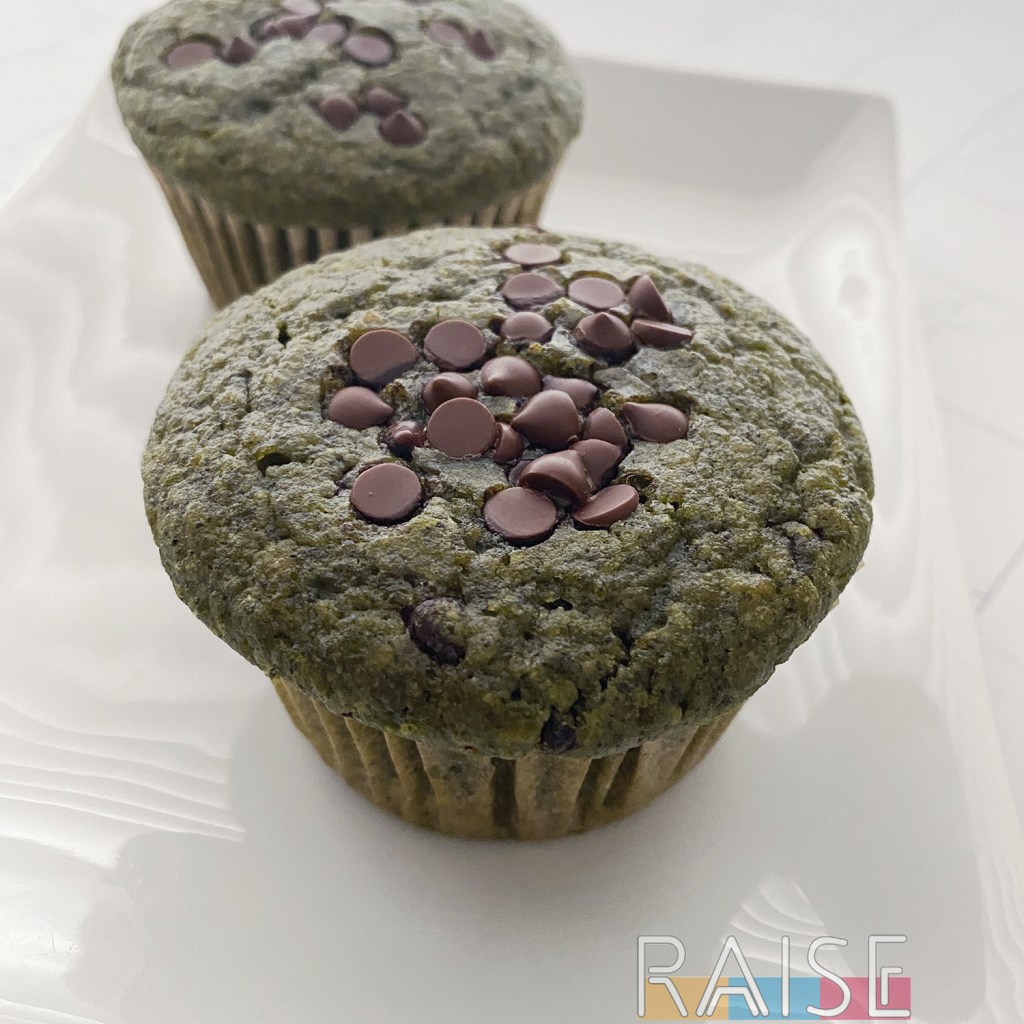
There are so many reasons an egg and dairy-free + gluten free muffin won’t rise, so let’s take a look at some basic troubleshooting. First, look at the image in the directions section where you can see my muffins right out of the oven. You’ll notice these aren’t super tall muffin tops, so if that’s what you’re expecting, you may have all the rise you’re going to get. Here are more tips/guidelines for you to take into consideration:
- Don’t open the oven whilst your muffins are baking. This messes with the temperature and can prevent rise.
- Know your elevation. Not all free-from baking recipes work at higher elevation. My recipes do rise at elevation, but not as high in lower locations.
- If you’ve made ANY ingredient substitutions (including something like all-purpose flour), manage your expectations. Every swap will impact the recipe, and that can include rise.
- Use a kitchen scale. If you didn’t use your scale to weigh everything out, you may be impacting the rise without meaning to.
- Make sure you aren’t using expired baking powder, as this can negatively impact the rise.
- Purchase an oven thermometer and confirm that you’re working at the correct temperature. An oven thermometer is a specific type of thermometer, and you need to make sure you’ve confirmed the temp but have also mapped your oven.
- Use hot water. This recipe calls for HOT water, and sometimes, people take recipes as suggestions rather than specific directions. Free-from baking is a serious science, so make sure you’re following all of the steps.