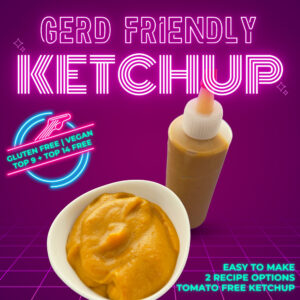
Today I’m excited to share with you a recipe for tomato free ketchup. This GERD friendly ketchup recipe has a great flavour and texture, and is fantastic for dipping. Additionally, this GERD ketchup recipe is top 9 + top 14 free, making it super duper inclusive.
Below you’ll find two versions of the recipe. Option 1 is available if you can tolerate very small amounts of vinegar and onion. Option 2 is available if you need 100% vinegar and onion free.
Remember, no two people are the same. Some people who follow a GERD diet only need to greatly reduce trigger foods whilst others must avoid them completely.
Allergy Status
Free From: Wheat/Gluten, Dairy, Egg, Soy, Tree Nut (including Coconut), Peanut, Fish, Shellfish, Sesame, Top 9 Allergens, Top 14 Allergens, Alliums (option 2), Apple (option 2), Avocado, Banana, Beans & Lentils, Buckwheat, Cane/Refined Sugar, Carrot, Celery, Cinnamon, Citrus, Corn, Cruciferous, Garlic, Legume, Lupin, Mushroom, Mustard, Oat, Onion (option 2), Pea & Pea Protein, Potato (Nightshade Variety), Poultry, Red Meat, Rice, Seeds, Stone Fruits*, Strawberry, Sweet Potato & Yam, Tapioca/Cassava/Yuca/Manioc, Tomato, Yeast
Friendly To: Diabetic, EOE, GERD, Paleo, Vegan
Compatible With: GAPs, SCD
GAPs & SCD: Swap the maple for a liquid sweetener of your choosing.
*Stone Fruit: If you use option 2, use the sumac, not the amchur.

Tomato Free GERD Ketchup Ingredients (Option 1)
Part 1 Ingredients (Oven)
- Oil of Choice for Cooking
- 900g Organic Butternut Squash, frozen if possible (32 ounces/2 pounds) This is the frozen squash that I use
- Sea Salt to Taste
Part 2 Ingredients (Blender)
- 15mL Organic Apple Cider Vinegar
- 1.5 tsp Organic Onion Granules
- 2 tsp Organic Ground Ancho Chili (not a spicy/heat bringing pepper)
- 1/4 tsp Organic Allspice
- 120mL Organic Maple Syrup
Option 1 Recipe Notes
The amount of vinegar and onion used in this recipe are incredibly small, especially when divided over a large amount of uses. For many people who follow the GERD diet, this amount is low enough to not trigger them.
For reference, 15mL is about half an ounce.
Ancho chili is a pepper that’s not spicy. You can swap this for sweet paprika if needed.

Tomato Free GERD Ketchup Ingredients (Option 2)
Part 1 Ingredients (Oven)
- 60 – 85mL Oil of Choice for Cooking (2 – 3 ounces)
- 900g Organic Butternut Squash, frozen if possible (32 ounces/2 pounds) This is the frozen squash that I use
- 1 – 1.5 tsp Asafoetida Powder (AKA Hing, here’s an option to purchase)
- 1 tsp Organic Amchur Powder OR Organic Ground Sumac
- Sea Salt to Taste
*Amchur can also be spelled amchoor and aamchur.
Part 2 Ingredients (Blender)
- 2 tsp Organic Ground Ancho Chili (not a spicy/heat bringing pepper)
- 1/4 tsp Organic Allspice
- 120mL Organic Maple Syrup
Option 2: Why This Works
This version of the recipe leans into asafoetida (also called hing), an Indian spice that has a taste of onion when cooked. DO NOT use this spice in its raw format, and know that it has a SMELL. However, after it’s been cooked, the smell is transformed into something a lot more pleasant, and you’ll have an allium-like flavor, without the alliums.
You can get this spice online, in specialty global markets, or at a local Indian market. You won’t be able to purchase this at most standard grocery stores.
Amchur, another Indian spice, is made from dried green mango. It provides a fruity tart sensation, and can help replace some of the tang that’s lost from the removal of the vinegar. Sumac can also bring an acidic sensation. These two spices taste very different, and you can try one or the other.
If you remove these spices, you’ll have a lovely butternut squash sauce, not a ketchup leaning dip.
GERD Friendly Ketchup Directions For Option 1 (with pictures)
Start by preheating your oven to 400f/205c. Place a cooking oil of choice on a large baking tray, then place the butternut squash on the tray. Sprinkle some salt over your squash, then roast in the oven.

Your cook time is going to vary if you’re starting fresh or frozen, and the level of doneness you’d like. If you’re starting with fresh, start with 15 minutes on your timer. From frozen, start with 20 minutes on your timer.
Your squash is ready when it’s developed a nice brown caramelization and is fork tender (easy to pierce with a fork). When the squash is ready, take it out of the oven. I like to tilt my tray at an angle so all the oil drains away from the squash.
Allow the squash to cool completely before moving on.
Place your squash into your blender. Avoid adding as much oil as possible. Now, place your blender on your kitchen scale and tare to zero. Add all of the Part 2 Ingredients to the blender (tare between weighted ingredients).

Blend on high until super smooth. Taste for seasoning and alter if you’d like (such as salt). That’s it!! Your ketchup is done and ready to be enjoyed.

Option 2 GERD Friendly Ketchup Directions
Preheat your oven to 400f/205c. Place a mixing bowl on your kitchen scale and tare to zero. Add the oil, then the asafoetida, and amchur (or sumac). Mix well, then add the squash and salt. Mix again very well.
Transfer the squash and oil to a baking tray and roast in the oven. Your cook time is going to vary if you’re starting fresh or frozen, and the level of doneness you’d like. If you’re starting with fresh, start with 15 minutes on your timer. From frozen, start with 20 minutes on your timer.
Your squash is ready when it’s developed a nice brown caramelization and is fork tender (easy to pierce with a fork). When the squash is ready, take it out of the oven. I like to tilt my tray at an angle so all the oil drains away from the squash.
Allow the squash to cool completely before moving on.
Place your squash into your blender. Avoid adding as much oil as possible. Now, place your blender on your kitchen scale and tare to zero. Add all of the Part 2 Ingredients to the blender (tare between weighted ingredients).
Blend on high until super smooth. Taste for seasoning and alter if you’d like (such as salt). That’s it!! Your ketchup is done and ready to be enjoyed.
GERD Friendly Ketchup Storage & Usage
You can use this tomato free ketchup wherever ketchup is normally used. My kids use this for dipping, but I also make them a meatloaf and use this as the topping instead of a traditional ketchup glaze. It works great!
With some flavour tweaks and a milk of choice, you could also use this as a very interesting pasta sauce. Similar to this Butternut Squash Parmesan Pasta Sauce.
You can store this recipe in the fridge for a week. Since there’s no acid content to extend the shelf life (like what you see in pickled vegetables and regular condiments), you’ll need to be mindful of how much you put in the fridge versus the freezer.
This GERD ketchup recipe is freezer friendly but when thawing, you have to reblend if you’re going to use it as a ketchup (it tends to break some when frozen and thawed). If you want to use it as a pasta sauce, just use it as is (with the tweaks and milk).
You might want to invest in a legit squeeze ketchup bottle, which shouldn’t cost you more than $10 (example bottle). This would allow you to shake like mad before each use since there will be some separation. A proper bottle also adds to the overall experience.
In the photos you can see that I had to transfer ketchup to a piping bag to get it into the squeeze bottle I have. A wide opening squeeze bottle will save you some time.
You can reduce the batch size and make less if you’re only one person. You have the metric numbers so you can easily do the math. Cutting this recipe in half is the easiest way to go.
More Delicious GERD Friendly Recipes
You can view more GERD recipes here, or visit the Advanced Recipe Search on RAISE to see a lot more options, including more than 100 filters to mix and match for your individual needs.
 |
 |
 |
 |
What is GERD
You may be aware of heartburn, but GERD (gastroesophageal reflux disease) is more than regular heartburn. It’s when a person experiences ongoing heartburn (some describe this as a burning sensation in their chest) several times a week, has a tendency to become more severe over time, and can occur at night (waking the person up).
GERD can also be called chronic acid reflux, but first we need to know, what is “reflux”? Reflux is defined as the flow of fluid through a vessel or valve in the body, in a direction opposite to normal. So when we put the two together acid + reflux, we get “the flow of acid in the wrong direction”. In the case of GERD and acid reflux, it’s moving back up towards the mouth rather than down towards the intestines.
Common GERD Symptoms can Include:
- Upper Abdominal Pain
- Chest Pain
- Burning Sensation in Your Chest
- Difficulty Swallowing
- Lump in the Throat
- Sour Liquid Backwash
- Nausea
Whilst these are the most common acid reflux symptoms, remember, no two people are the same. You may experience some, none, or all of them. Additionally, you may have symptoms that aren’t on this list. A great way to track not only symptoms but any progress made from diet and lifestyle changes is to keep a detailed food journal (sometimes called a food diary). This will also help you have a better understanding of your unique trigger foods, and also if you have a threshold on the amount of food eaten to cause a flare in symptoms.
How Fatty Foods Trigger GERD Symptoms
I personally think that when you have a better understanding of how the mechanisms in the body work, it makes it easier to not only understand our medical conditions, but also be invested in improving our overall health. So, let’s take a look at fatty foods.
When you eat fatty foods and they enter the stomach pouch, this triggers the release of a hormone called cholecystokinin (also called CCK). This in turn can cause the lower esophageal sphincter (also called LES) to relax. The chronic relaxing or malfunctioning of the lower esophageal sphincter is what allows for the reflux to happen, which then causes your symptoms.
Another way to think about this: your LES is like the door to your house. If it’s locked up tight, nothing gets in. When it’s left wide open, wind, debris, and who knows what else can enter. However, just like a door to your home, it can be left ajar (open a tiny bit), or wide open. How open the door is indicates how much stuff can enter your home. The same is true of your LES. In some patients, there’s only slight disfunction whilst others are experiencing chronic, full on disfunction.
Common Foods to Avoid when Following a GERD Diet
As you read over this list, you’ll notice that the common thread for most of the items are acidic foods and fatty foods. In a nut free nutshell, these are the most common triggers for people managing acid reflux disease and GERD.
- Alcohol
- Bacon
- Butter (in high amounts)
- Caffeine
- Carbonated Beverages (soda, energy drinks, etc.)
- Cayenne
- Chili Powder
- Chocolate
- Citrus (including grapefruits, oranges, lemons, limes, lemon juice, lime juice, orange juice, etc.)
- Cream Cheese
- Cream Based Soups (made with dairy cream, not a creamy soup made with a thickening agent)
- Cured Meats with a High Fat Content
- Dairy & Egg Based Puddings (think: pudding made with fatty ingredients such egg yolk)
- Egg Based Mayonnaise (small amounts of egg free may may be tolerated, but it’s not completely fat free)
- Fatty Foods in General
- Fatty Red Meat
- Fried Foods
- Full Fat Dairy Products (cream, sour cream, etc.)
- Garlic
- Greasy Foods
- High Fat Foods (butter, cheese, ice cream, etc)
- Ice Cream
- Onions (green onion, white onion, yellow onion, red onion, purple onion, scallions, shallots)
- Peppercorn (black pepper, white pepper, green pepper, pink peppercorns)
- Peppermint
- Pineapple
- Salad Dressing (most will contain ingredients you can’t have, but you can make delicious salad dressing at home)
- Spearmint
- Spicy Foods (including spices such as cayenne pepper and condiments such as hot sauce)
- Tomatoes (including tomato sauce, tomato paste, etc.)
- Vinegar
- Whole Milk
GERD Is a Hyper Individualized Condition
It’s important to know that no two people are the same. Some individuals that manage reflux issues are able to tolerate some acidity in their diet whilst others can’t.
It’s important that you keep a detailed food journal, as this can help your medical team determine the patterns present in your case, and the best path forward for treatment.
For example, some patients make all of the diet and lifestyle changes prescribed, but they my still require some form of medication to get relief from their condition.
The best things to do when managing any reflux disease is to work with your medical team, keep a detailed journal, research and be an advocate for yourself, and make all necessary changes to remove any discomfort or pain.
The goal should be getting to neutral so your digestive system can perform at its best.
Answering Your Questions About GERD Friendly Ketchup
Are there any other options for tomato free ketchup?
Yes! Outside of this GERD friendly ketchup recipe, you can also look for recipes and products called Nomato sauce. Nomato = no tomato. There are brands like this one that specialize in sauces that are all tomato free (including a BBQ sauce). Some brands include small amounts of vinegar whilst others don’t.
You can experiment with carrot and ginger based ketchups, as well as sweet potato. Also, another search term to use online is “low-acid ketchup recipe”. You should be able to find some good tomato free options in the results.
Will this ketchup recipe taste good with grilled chicken tenders?
I’m told by my taste testers that this tomato free ketchup recipe tastes great with chicken, pork, turkey, and beef (those are the proteins they’ve had this with). They say that wherever you’d normally use ketchup, you can happily use this in its place.
What type of French fries would I be able to eat with this ketchup?
Since fried foods are off the menu for most individuals with GERD, I’d suggest oven baked fries or air fryer fries. The upside to using an air fryer is that you don’t need any fat at all. Oven baked fries will still require a small amount of oil on your baking tray to get the potatoes crispy.
This is the air fryer that I have, and I’ve been loving it.
Can I make this recipe with less maple syrup?
Yes, you can use a little less syrup if you’d like to decrease the sweetness in your homemade ketchup. I suggest starting with half the amount of maple syrup, blending, and tasting. If you like the taste, you may need to add a little water to the blender to get the texture right.
Alternatively, if half isn’t sweet enough, add a bit more until you’re happy.