

Today we’re going to take a look at all things chicken allergy. It’s important to know that a chicken allergy is on the more rare side of allergenic diseases.
You may be here because of EOE (Eosinophilic Esophagitis) or FPIES (Food Protein Induced Enterocolitis), two conditions that require the removal of chicken from your diet.
If you haven’t received a diagnosis from your allergist for a true/primary chicken allergy, keep a detailed food journal, but make an appointment for allergy testing as well.
What is a Food Allergy?
A food allergy is a response by your IgE antibodies (produced by your immune system) that’s triggered by a protein that your body sees as a threat. In the case of a pork allergy, a person has an allergic reaction when pork meat or anything pork derived is consumed. This is not the same thing as a food intolerance or an autoimmune disease.
If you suspect you have a food allergy, ask your healthcare provider or doctor to refer you to an allergist where a blood test and/or skin prick test can be ordered to determine if you have an allergy. Know that tests are not 100% accurate, but are still a good diagnostic tool.
A “true” food allergy allergic reaction is IgE mediated, and the immune system usually elicits a reaction within immediate ingestion to four hours. Outside of that time frame, it’s usually suspected that you have a food intolerance.
However, there are some types of allergenic diseases that are “true” food allergies and the reactions happen outside of the four hour window (FPIES is a great example of this). Additionally, a person can have a more rare or complex case and suffer from a delayed allergic reaction (which can still be caused by “true” food allergies).
Food allergies can be life threatening and should always be taken seriously. Work with your allergist and healthcare providers to create an action plan that will meet your needs. if you’re experiencing symptoms of a meat allergy and are having a medical emergency, it’s important to use your epinephrine auto-injector (the most common types are an Epi-Pen and AvuiQ) if you have one and seek immediate medical treatment and followup.
Symptoms of a Chicken Allergy
Food allergy reactions can vary among patients, as no two people are the same. Some allergy symptoms of a chicken allergy include:
- Swelling of the Lips
- Swelling of the Tongue
- Swelling of the Throat
- Itchy Mouth and/or Throat
- Shortness of Breath
- Difficulty Breathing or Asthma Symptoms
- Wheezing
- Excessive Runny Nose
- ENT Issues
- Skin Rashes
- Eczema Symptoms (a type of skin inflammation)
- Angioedema (a specific area of swelling that’s severe, can cause eyes to swell shut)
- Itching
- Hives
- Racing Heart Rate
- Decreased Blood Pressure or Low Blood Pressure (usually a sudden drop)
- Impending Doom/Dread
- Dizziness
- Fainting/Loss of Consciousness
- Severe Stomach Pain
- GI Distress
- Nausea
- Vomiting (including projectile vomiting)
- Diarrhea
- Blood in Stool
These chicken allergy symptoms are more on the severe side of the allergic reaction spectrum, and can indicate anaphylaxis (a rare allergic reaction). These signs should not be taken lightly and it’s critical that if you see these chicken allergy symptoms that you seek immediate medical help. If you have a known allergy, follow your action plan, including the use of antihistamines or an epipen.
Important Notes
There are hundreds of symptoms a person can experience, but it’s important to know three things about chicken allergy symptoms and reactions:
- Not every reaction is anaphylaxis (severe reactions). People can have a “non-traditional” chicken allergy reaction to food and still be allergic to chicken.
- Should a person experience anaphylaxis, it’s important to seek immediate medical treatment (use your epinephrine injector if you have one). When left untreated, anaphylaxis can lead to anaphylactic shock, which can cause death.
- Previous allergic reactions don’t predict future reactions (or the severity), and in some patients, continued exposure to known allergens can cause more severe reactions each time.
A child may talk about a food allergy differently than adults. Many children will say things like “my mouth is spicy” or “there’s a frog in my throat”. They’re trying to express what the reactions feel like to them with language or experiences that are familiar to them. Always take note of these types of statements from a child, as they can indicate a serious medical situation. If needed, don’t hesitate to seek medical treatment.
Chicken Allergy & Egg Allergy
If you’ve just been diagnosed with an allergy to chicken, you may be wondering if you’re also allergic to eggs. Generally speaking, no, you aren’t automatically allergic to eggs as well.
The opposite is also true. If you’re newly diagnosed with an egg allergy, you’re not automatically also allergic to chicken.
Bird-Egg Syndrome
In some cases, there is a reaction to eggs because of the sensitization to chicken serum albumin (this protein can be found in both the meat and egg yolk).
It’s not uncommon for these patients to experience a contact allergic reaction when touching raw chicken, and less severe reactions upon ingestion due to the denaturing of the proteins from heat.
Additionally, in some cases of an egg allergy (especially in children), they have a secondary reaction to chicken due to the proteins that can be present in both chicken meat and egg yolk.
Cross-Reactivity to Be Aware Of
Cross-reactivity happens when you’re allergic to A but the proteins in B are similar enough that you also react to B, even if your allergy blood test or skin test shows a negative result to B.
In the case of a chicken allergy, cross-reactivity is known to happen with turkey, fish, and shrimp. However, the mechanisms that dive the cross-reactivity don’t seem to appear in duck or goose.
This whole field of study is incredibly fascinating, and you can read a lot more about it here.
Poultry Meat Allergy
When you’re newly diagnosed with a chicken allergy, it’s important to know that you don’t necessarily have a poultry meat allergy. Also know that some people refer to a chicken allergy as a “poultry meat allergy” when by definition, chicken is only one type of poultry.
In some individuals, they are allergic to all poultry, including chicken, turkey, quail, pigeon, duck, goose, and so on. This kind of allergy diagnosis wouldn’t be because of cross-reactivity, since this isn’t an issue with all of the species (combined). Instead, it would be a person who manages a lot of food allergies.
Like nuts and seeds, you can be allergic to one, some, or all types of poultry. Your health care team can help you understand your unique case, including symptoms, treatment, and cross-reactivity risk.
More Meat Allergy Resources & Articles
- Beef Allergy Information & Hidden Sources of Beef
- Pork Allergy Information & Hidden Sources of Pork
- Alpha-Gal Information & AGS Management
- Meat Swaps & Substitutions
 |
 |
 |
 |
Different Names for Chicken & Chicken Parts
These are the different parts of chicken that are used in cooking all over the globe.
- Whole Chicken
- Chicken Breast
- Chicken Drumstick
- Chicken Feet
- Chicken Leg Quarter
- Chicken Tenderloin aka Chicken Tenders
- Chicken Thigh
- Chicken Wing
- Giblets (liver, heart, gizzard, and neck)
- Schmaltz (rendered fat)
- Chicken Carcass
- Chicken Skin
Hidden Sources of Chicken
Whilst you won’t find chicken meat in a lot of food products, you will find chicken broth or chicken stock in a whole host of recipes and packaged goods.
Your first line of defense will be reading ingredient labels carefully, and looking for any term that indicates it could be from chicken. Whilst eggs are a major/top allergen and must be called out, chicken is not considered a major allergen.
- Beans (some restaurants may prepare beans in chicken broth)
- Broth and Stock
- Bouillon
- Chicken Collagen (less commonly used in foods when compared to beef collagen)
- Chili (more common in white chili than a tomato based chili)
- Chowder
- Coq au Vin (popular French dish, translates to chicken and wine)
- Curry (this can be made up of a huge range of ingredients)
- Dumplings
- Gravy
- Keto & Paleo Dishes (in creamy recipes broth can be used as a milk replacement)
- Low Calorie Foods (broth is often used to cut milk in creamy low calorie foods)
- Mashed Potatoes (most recipes call for dairy, but some use chicken broth especially in dairy free recipes)
- Matzo Ball Soup
- Non-Chicken Meat Dishes (chicken broth or stock can be an ingredient)
- Pasta Sauces
- Pot Stickers
- Protein Powder
- Quinoa Salad (broth can be used to cook the quinoa)
- Rice, Pasta, Couscous, Wild Rice, and Other Cooked Grains (chicken broth can be used as the cooking liquid instead of water)
- Risotto (a creamy cooked starchy rice dish)
- Roux Based Foods (gumbo, etc.)
- Soup & Stew (cabbage, egg drop, leek, minestrone, onion, potato, rice, sausage, squash, taco, vegetable, wonton, etc.)
- Stuffing (wheat based and gluten free)
- Tuna Casserole (and other casseroles)
- Vegetable Puree (not always present, but sometimes an ingredient)
One of the best tips I can give you when ordering out is this:
when in doubt, ask to see a vegan menu (not vegetarian). A vegan menu will eliminate all animal flesh and animal by-products. That doesn’t mean vegan foods are more healthy (the stories I could tell you), but it doesn’t mean it’s naturally chicken free.
Cuisine Note
Chicken is pretty popular across a range of cuisines, especially Greek, Traditional Jewish Foods, French Foods, Southeast Asian, Chinese, and American Fast Casual. A steakhouse or Brazilian steak house are more likely to have a lot of options on the menu to choose from that aren’t chicken. You can also explore vegan eateries.

Chicken Substitutions
When managing any kind of dietary restriction, it’s always nice to know the different ways you can substitute for the food(s) you can’t have. In the case of a chicken allergy, there are quite a few options:
- Monkfish
- Light Pork, Such as Chop
- Rabbit
- Swordfish
- Lean Turkey
Traditional red meat can replace chicken in terms of function, but will be nowhere near the taste of chicken. Like. At all.
Best Chicken Substitute for Chicken Pot Pie
Chicken pot pie usually calls for shredded chicken. For a light flavour, use shredded pork chop (pressure cook to make shredding easy). You can also use shredded rabbit. The pressure cook time on rabbit saddle strips is short (start with. 8 minutes).
Best Chicken Substitute in Soups
The chicken substitute that you pick will be based on the actual soup. Here are some general rules to follow.
- If a soup calls for ground chicken, use lean ground turkey.
- When a soup recipe calls for pieces of chicken thigh, use pieces of pork chop or pork shoulder.
- If a soup calls for chicken breast, use swordfish or pork chop.
Ground Chicken Substitutes
The best ground chicken substitutes, in order, are:
- Lean Ground Turkey
- Ground Rabbit Saddle
- Dark Ground Turkey
- Ground Swordfish (only for short cook times)
- Best Chicken Substitute for Fried Chicken
Best Chicken Broth Substitute
For function, you can replace chicken broth with any other broth or stock. Stocks tend to have a deeper depth of flavor. In terms of ratios, they’re all a 1:1 substitute for function.
The issue you’ll have to tackle is taste. Chicken broth has a light non-meaty taste coupled with umami and saltiness. There are also hints of aromatics. Other broths and stocks can deliver on the flavour, but they may over-deliver on flavour.
When in doubt, use vegan vegetable broth, as it will have a lighter flavour. If you want some meatiness, use a beef both or beef stock.
Delicious Chicken Free Recipes
These meals are all chicken free, and poultry free. They’re also gluten free, dairy free, egg, free, and very allergy friendly.
- Wheat & Egg Free Meatballs Recipe
- Vegan Bean Chili Recipe
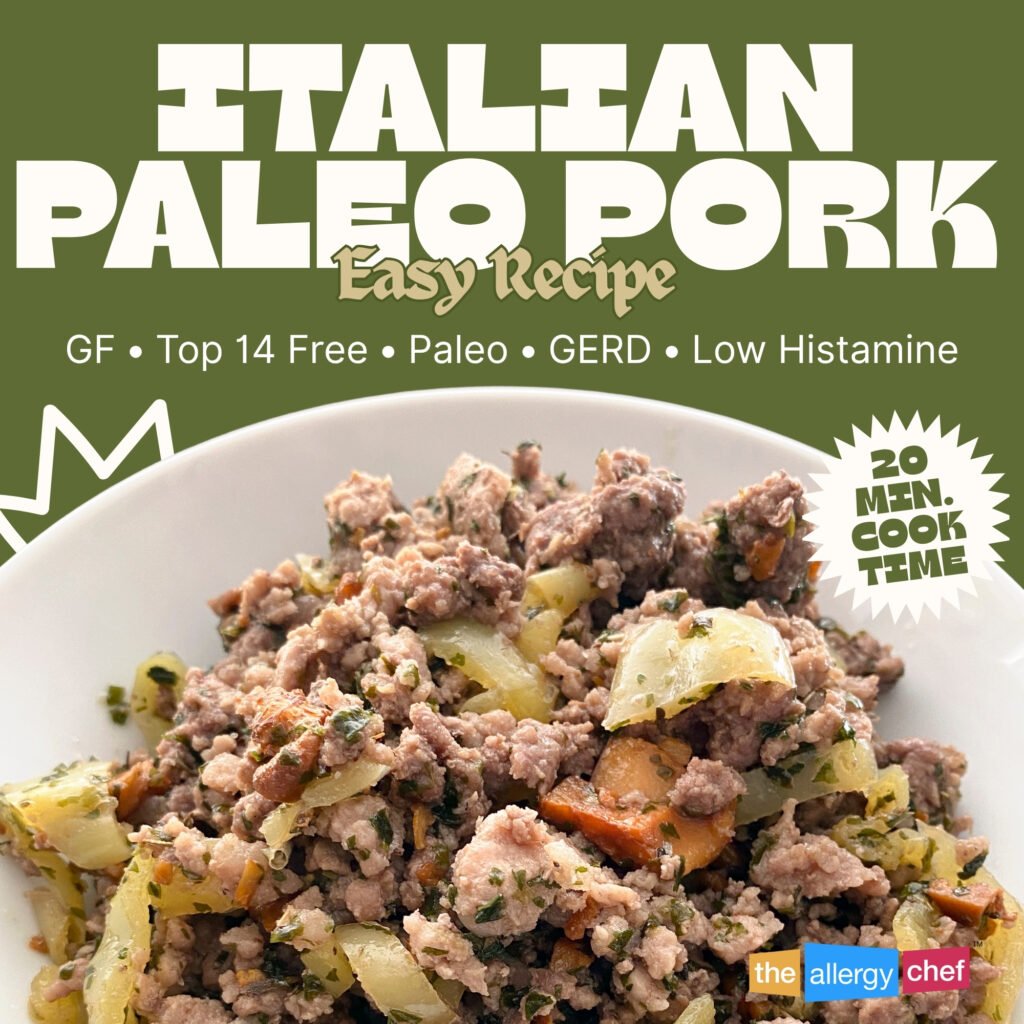
- Paleo Italian Pork Recipe
- Spicy Kimchi Beef Recipe
- Easy Ground Beef Curry Recipe
- Lamb Ragu Recipe
If you manage a chicken allergy, along with other food allergies, check out the Advanced Recipe Search on my RAISE website. There are over 700 recipes for members, and the ARS is a filtering tool with over 125 options. You can mix and match foods to eliminate, different diet types, and so on.
 |
 |
 |
 |
 |
 |
Answering Your Chicken Allergy Questions
What kind of meat can I eat if I have pork and chicken allergies?
With those allergies, you’ll still be able to eat some poultry and red meat including beef, bison, lamb, duck, and turkey meat. In most cases, you’ll also be able to eat fish and shellfish (see the section on cross-reactivity earlier in this article).
This list of red meats is a great starting point.
Is it possible to be allergic to all poultry?
Yes, it’s possible to be allergic to all poultry, including chicken, duck, turkey, quail, goose, pigeon, and other game birds.
A chicken allergy diagnosis doesn’t automatically mean you’re allergic to all poultry. Talk with your health care team about cross reactive concerns if you have them, as well as any additional allergy testing you’d like to have done.
Is oral allergy syndrome related to a chicken allergy?
No, these are two different allergenic diseases. Oral Allergy Syndrome, now called Pollen Food Allergy Syndrome is related to specific fruits and vegetables. You can read more about it in this section of my ragweed allergy article.
However, OAS is sometimes referenced in conjunction to a chicken allergy because of how symptoms present. Some doctors may say you have “oral allergy syndrome symptoms” to indicate that the reaction is essentially in the mouth, lips, and throat only.
Will I be able to consume enough protein if I have a chicken allergy?
Yes. Even though you’re managing a chicken allergy, there are still other foods that you can rely on to provide you with enough daily protein. You can eat other types of poultry (duck, quail, etc.), red meats (beef, pork, rabbit, lamb, bison, etc.), fish (salmon, tilapia, sea bass, etc.), shellfish (lobster, clam, mussels, etc.), beans (and other legumes), nuts, and seeds.
Each of these major groups contains foods that are rich in protein and other nutrients. If this is a large concern for you, make an appointment with an RD that has experience in helping people with food allergies meet their nutritional goals.
Note: If you fall into the group of people with cross-reactivity to some fish and shrimp, you’ll still have a good amount of proteins to choose from.
Is there a cure or treatment options for food allergies?
There aren’t any medications to cure a chicken allergy. There is no known cure for IgE mediated food allergies, however, there are treatment options such as oral immunotherapy (OIT). Ask your allergist if it’s a good fit for you, and what treatment would look like in your specific case.
OIT is all about training the immune system. Before you’re even considered, a good amount of testing is done. Your allergist will also look at prior test results, risk factors, history of reactions, and so on.
I’ll warn you in advance: not every patient qualifies for OIT (age, reaction history, etc.), nor is it successful in all patients. On top of that, not every allergist offers it in their practice/office.
Is it true that food allergy symptoms can get worse over time?
Yes, in some patients, this is the Gospel truth. For others, they have the same reaction with the same severity, every single time.
For example, some individuals can go from mild urticaria with each exposure to an allergen, to full body rashes and hives all at once when exposed again to the same allergen.
In some cases, the amount of allergen your exposed to changes the severity of the reaction as well.
Remember, no two people are the same. That’s part of what makes food allergies difficult to study. It’s why patients with any kind of allergic condition are given the same advice: don’t eat what you’re allergic to.
The avoidance of all known allergens is the best way to ensure your safety.