
If you’re fresh out of red onions and are looking for a red onion substitute, you’re in the right place. Today we’ll take a look at how you can substitute for red onion in countless dishes. I’ll be sharing excellent choices from the allium family, as well as ingredients outside of the allium family if you’re in a creative mood.
If you’re managing an onion allergy, I’ll encourage you to read this article instead, which takes an onion free approach to cooking.
What is a Red Onion
Red onions, sometimes called purple onions are an aromatic root vegetable that’s a member of the allium family. Red onions have a papery skin, and a maroon-purple color. The flesh is white and purple (sometimes leaning more towards red).
If you ever have a chance to work with Cipolla Rossa di Tropea (red onion from Tropea, Italy), don’t sleep on the opportunity. It has a strong, sweet flavour and it’s juicier than other red onions. It’s also used to make jam! Just be sure you’re getting an authentic onion, as this has a protected geographical indication.
What Does Red Onion Taste Like?
Red onions have a sweet flavor when compared to their white and yellow counterparts. They’re also a little juicier, which makes them a fantastic choice for raw applications.
When eaten raw, their crunchy texture can help elevate a dish, and their naturally sweet taste ensures your food doesn’t taste unbalanced (assuming you’ve used an appropriate amount of onion). Red onions are pretty versatile and can be used for grilling, roasting, stovetop cooking, and more.
Replacing Red Onion in Raw Dishes
The best substitute for red raw onions will be raw shallots. In some recipes, fresh chopped chive could also be a good option (especially when paired with shallots).
Raw shallots will add a crunchy texture and a lovely mild flavour, so you don’t need to worry about it overpowering your dish. You can use raw shallots on burgers, potato salad, as a garnish, in salsa, and anywhere else you’d normally use red onion.
Raw Onion Tip
If you like the idea of using raw onions, but want less punchy onion flavour, do these two things:
- Slice the onions thinly
- Soak in cold water (sliced) overnight
You can soak them in cold water for as short as 30 minutes, but you’ll have better results the longer you soak them. If it’s your first time doing this, sample your soaked onions every 30 minutes and take notes so you know what timing you LOVE.
Best Red Onion Substitutes for Stovetop Cooking
In stovetop cooking, truthfully, any onion can take the place of red onions. However, it’s all about nuance. Further down in this article, I’ve listed out the different types of onions that you can choose from (in terms of flavor and texture, etc).
Since white onions and yellow onions can sometimes be a smaller size when compared to purple onions, you may need to purchase 2 onions to get the amount that you need by weight and volume (you’ll have some leftovers).
In addition to other onions, a large leek will do a good job at bringing in onion flavor, and pairs well with other ingredients, especially potatoes and other root vegetables. Know that this plant is a bit of a dirt trap, so you need to wash your leeks very well before cutting into them. If they’re still on the dirty side after cutting, you can put them in a small colander and run under water to clean them up.
If your recipe will be cooking for a very long time, I wouldn’t suggest shallots, as these tend to shine the best when they have a shorter cooking time. Asafoetida is another excellent substitution for onions in stovetop cooking, and further down in this article, I’ll give you a whole writeup on this miracle spice.
Asafoetida: A Versatile Alternative to Onions, and Not an Allium
Also called hing, asafoetida is a lot more common in Indian cooking than in any other global cuisine. I’m told that the smell of this spice isn’t pleasant when you first open the jar. However, once you get to cooking, it takes on a lovely aroma and your final dish will absolutely taste of onion.
Asafoetida can mimic a mild onion flavor, so don’t expect it to scream “I am onion, hear me roar”. However, you also don’t want to be stingy. A pinch of asafoetida powder won’t do much in a batch of stew or chili where its milder flavor can be easily drowned out.
If a recipe calls for 2 teaspoons of onion powder, you’ll want to start with 1/4 – 1/2 teaspoon asafoetida powder. It’s important to add it at the start of cooking, not near the end of cooking. Asafoetida needs time to cook so the onion flavour develops, and for the unpleasant aroma to cook off.
When used properly, some people say this absolutely tastes like authentic onion flavour. You’ll also have the added benefit of not having onions wage an assault on your eyes.
For a more complex flavor profile, you can add a tiny pinch of wasabi, or a bit of ginger to bring some zing into the recipe, along with something like fennel seeds or mushroom powder.
WARNING: Always check labels well. Some asafoetida products aren’t pure and contain fillers. You want the real, pure, undiluted powder.
Not the Best Red Onion Substitutes
Depending on the application, these ingredients aren’t the best substitute for red onions:
- Ramps (these are only a good alternative in a few scenarios)
- Red Bell Pepper (or any type of bell pepper)
- Green Part of Scallions (the white part would be pretty good though in a lot of scenarios)
How Much Red Onion Substitute to Use
No matter what size onion your stovetop recipe calls for (small onion, medium onion, large onion), you’ll use a 1:1 ratio for replacement IF you’re using another type of onion. This can be sweet onion, yellow onion, white onion, and so on. They’re all a 1:1 replacement for volume and function.
However, there are different flavors at play, so keep that in mind. 450g of red onion isn’t going to taste like 450g of sweet onion. You’ll still have some onion flavour, and some sweetness, but the nuanced notes will read differently. This isn’t a bad thing, it’s just something to be aware of.
In raw applications, you’re going to need to go by taste. Start with half the amount your recipe calls for, mix, taste, and adjust as needed.
If asafoetida is your go-to, use 1/2 teaspoon for each 225mL/8 ounces/1 US cup of the recipe. So in a sauce that calls for 890g of strained tomatoes (34 ounces/4 cups) along with 450mL (16 ounces/2 cups) of milk, your total asafoetida use is 3 teaspoons.
Remember, it must be added at the start of cooking. You can even cook it over low heat in an empty pan to bloom the spice first, then add the rest of your ingredients.
You can use asafoetida in all types of meals including pasta, pizza, potatoes, rice dishes, soups, stews, and everything else in between. For recipes where you can’t go off of cups, look at the overall mass. For a small pasta recipe, use 1/4 teaspoon. I’d say the same thing for a small batch of pizza sauce.
Leeks
When using leeks as the swap, only use the white bulb and light green portion. The dark green tops can be used for broth. You can use one large leek to replace a medium or large onion in your recipe. I don’t suggest using leeks for raw applications, unless it’s a very small amount, and cut very small.
Shallots
When using shallots as an onion substitute, you’ll want to use a 2:1 ratio on smaller scales, and at least 1.6:1 at larger scales. If your recipe calls for 100g (3.5 ounces) of onion, you’d use 200g of shallot. You could use as low as 180g, but if you want to push the flavour, use the 200g.
When scaling up, you don’t want to use a 2:1 ratio as this can increase cost, but also throw off the texture of your dish. You’ll have to assess what the best choice is, or use a combination of fresh shallot and homemade shallot powder to boost the flavour.
Make Spices at Home
You can also make several homemade asafoetida blends at home, cook them over low heat in an oil, then store in your fridge for future use. When you pre-cook it this way, you have the flexibility of using it for a raw application, or low cook time application, like burgers, or folding into your potato salad. Some good asafoetida combos are:
- Asafoetida + Garlic Powder (1:1 ratio)
- 1/4 tsp Asafoetida + 1/8 tsp Fenugreek Powder
- 1/4 tsp Asafoetida + 1/8 tsp Ground Mustard Powder
You can also purchase dried leeks and/or dried shallots and run them through a spice grinder. Use this in place of onion powder and onion granules in your recipes.
Types of Onions & Best Uses
Both home cooks and culinary professionals should know all about each type of onion in my humble opinion, as this knowledge will give you a lot more to work with as you create delicious meals. There’s a whole variety of onions to choose from, so let’s take a look at these delicious root vegetables.
Cipollini Onions
Best For: Roasting, Braising
Commonly Used For: Stews, Specialty Soups, Oven Roasted Veg, Grilling
Cipollini onions are flat and wide (squished looking) Italian onion. It’s about half to one third the size of a yellow or white onion. It’s less pungent than standard onions and it’s fantastic for roasting whole. If you have someone that wants to eat onion, but finds the taste too strong, cipollini onions are a great alternative.
Pearl Onions
Best For: Oven Roasting, Braising
Commonly Used For: Side Dishes, Serving Whole, Oven Roasted Vegetable Medleys
Pearl onions can be purchased fresh or frozen, and have a sweet and subtle flavour. They’re fantastic for roasting, but can also be used for typical stovetop recipes, so long as you have a the right cooking time as they’re usually used whole.
Red Onion
Best For: Eating Raw
Commonly Used For: Guacamole, Pickled Onions, Salads, Sandwiches
This is a great onion for raw applications, however, plays well with other ingredients when cooked. It’s fabulous for pairing with foods such as lemon and balsamic vinegar.
Red onions can have a spicy, pepper-like quality, so you don’t want to use them in huge amounts. You’ll find the sweetest red onions from March through September.
Spring Onions (Green Onions)
Best For: Stir-Fry, Garnish
Commonly Used For: Asian Cuisine, Adding Flavor to Recipes at the End of Cooking
Spring onion is also called scallions or green onions, and both the green tops and white bulb are edible. It’s common to slice them and use alongside spicy foods, Asian foods, and as a garnish. When eaten raw, usually only the green tops of the scallion is used.
Sweet Onion
Best For: Frying
Commonly Used For: Gratin, Onion Rings, Roasted Vegetables, Salad, Garnish
Sweet onions don’t pack a pungent flavor because they contain less sulfur compounds than other onions, which makes them taste sweeter in comparison. In addition to being great for frying, you can also use sweet onion for grilling.
Their reduced sulfur compounds and sweeter flavor also makes them a pretty good choice for some raw applications. If you’ve ever heard of Vidalia Onion, Walla Walla Onion, or Maui Onion, these are all sweet onion varieties.
White Onions
Best For: Crunch and Sharp Flavour
Used For: Salsa, Chutney, Stir-Fry
White onions are crunchy, tangy, and great some raw applications, as well as pretty much all cooked applications. These are commonly used in potato salad and macaroni salad. One interesting feature is that they have a punchy forward flavour, but without a lingering aftertaste. Like yellow onions, these are also good for caramelizing.
Yellow Onions
Best For: All around cooking
Used For: Braised Meats, Roasted Mea, Sauces, Soups, Stews
If a recipe calls for “onion”, this is usually what it’s referring to. This is also a fantastic onion for caramelizing.
Leeks (not onions, but close)
Best For: Braising, Poaching, Puréed, Steamed, Soups
Used For: Soups, General Cooking & Roasting, Grilling
Leeks are a great all around vegetable that can be used in a variety of cooking scenarios. They have a subtle sweetness, mild onion flavour, and add depth + umami to your recipes.
Leeks are especially popular in French cuisine, but can easily be used in other global recipes.
Ramps (not onions, but close)
Best For: Stovetop Cooking, Stir-Fry
Used For: Specialty Recipes
Ramps, also called wild garlic, wild leek, and ramson is a wild harvested plant native to North America (more common in north eastern states). The leaves and bulbs are both edible. Ramp leaves have a garlicky taste whilst the bulbs are a bit more oniony. Ramps are INCREDIBLY aromatic, but should only be lightly cooked to retain their incredible smell and flavour.
Shallot (not an onion, but close)
Best For: Stovetop Cooking, Recipes with Mild Flavour
Used For: Vinaigrettes & Salad Dressings, Egg Casseroles, Garnish
Shallots are very aromatic, and don’t require a long cooking time. They’re very popular in French cuisine, and in large amounts are a decent stand in for onions. An onion free kitchen should absolutely have shallots on hand at all times (for ease, you can purchase them dehydrated or freeze dried).
Onion & Allium Free Recipes
If you’re wanting to explore onion free cooking, here are a few recipes to get you started. All of my recipes are gluten free, dairy free, egg free, and very allergy friendly. If you manage multiple allergies, be sure to check out the Advanced Recipe Search on RAISE where you can use more than 125 filters (allergens, food groups, etc.).
- Allium Free Potato Salad Recipe
- Vegan, Cheese Free Creamy Mac Recipe
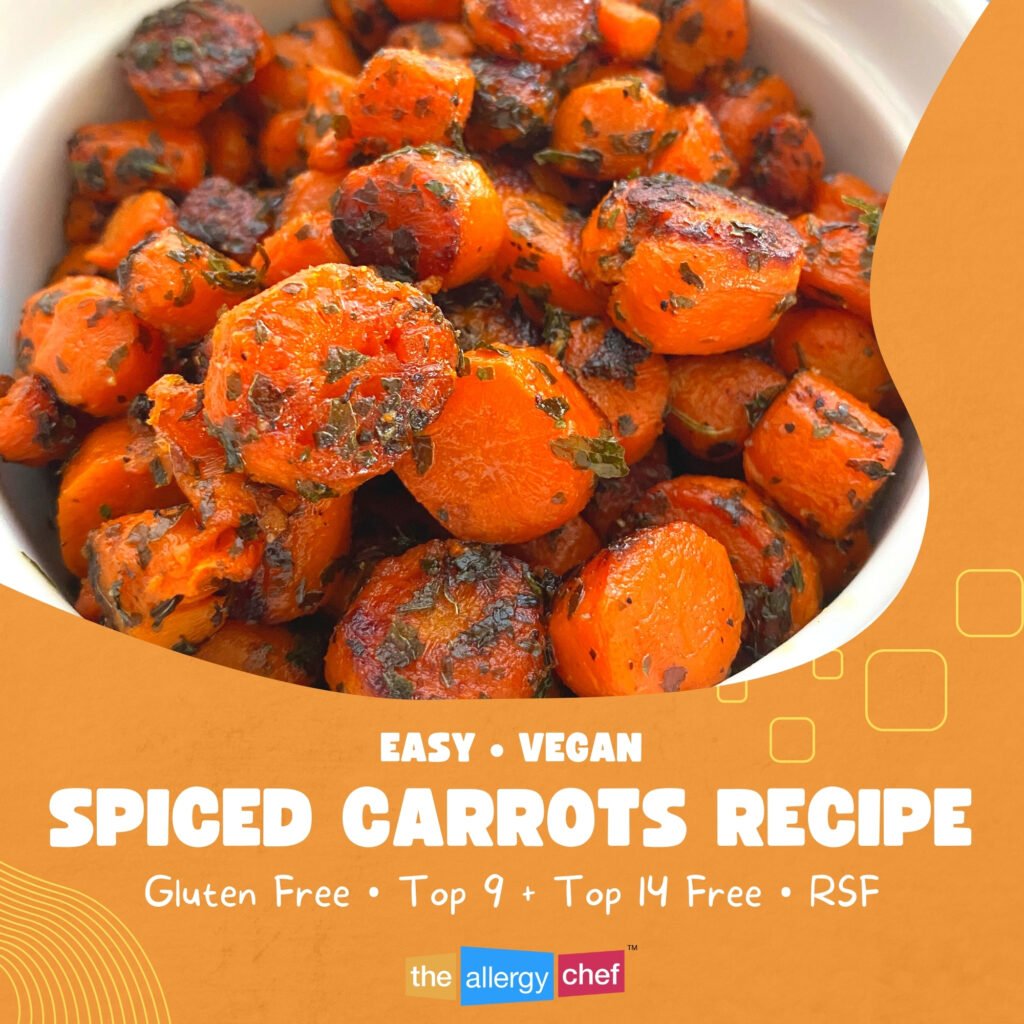
- Spiced Carrots Recipe (delicious side dish)
- Kale & Date Chicken Recipe
 |
 |
 |
 |
Answering Your Red Onion Substitute Questions
What’s the best substitute for red onion if I have an onion allergy?
The good news is that you have a lot of replacement options if you have an onion allergy. First, you have other members of the allium family: leeks, shallots, and ramps. These products can be sliced, diced, and used in the same way you’d use onion. The flavors will be similar, but you will notice a difference (not in a bad way because different doesn’t always mean bad).
Now, if you need to avoid all members of the allium family, your top choice is going to be asafoetida for flavor, and you can use another ingredient such as salsify as a texture enhancer for the meal. This is more important if your onions are sliced, or at the forefront of your dish (like as a topping on a cheese pizza).
I’m going to point you towards this article on all things onion allergy and substitutions for more details.
Can I replace onion powder with garlic powder in a recipe?
First, it’s going to depend on the recipe. Let’s say you have a recipe for mashed potatoes that calls for 1/2 teaspoon of onion powder. In that case, 1/2 teaspoon of garlic powder will be fine. Maybe pushing the limits of garlic consumption for some, but it’s not going to be terrible.
Now, let’s say you have a BBQ chicken and rice recipe that calls for a tablespoon onion powder. That much garlic powder will ruin the entire dish. In that case, you might be able to get away with two diced garlic cloves folded in, as that will deliver a robust flavor without being overwhelming.
One of the things about garlic that’s important to know is this: the format matters a lot. There’s garlic powder, granulated garlic, fresh pressed garlic, garlic paste, and a few other garlic products. Each one will deliver a different amount of garlic power, but also a certain amount of sharpness as well.
To top that off, if you’re working with a delicate pasta dish that isn’t smothered in tomatoes, that kind of flavor will be LOUD. This means that you have to be judicious with the type, and how much garlic you use, even if you happen to love garlic.
In the case of a tablespoon of onion powder, a better choice will be 3/4 teaspoon granulated garlic + leaning into other ingredients such as shallots, leeks, or even chives. Essentially, you’ll want to balance out the load if the recipe calls for a large amount.
If you’ve run out of onion, I’d use an appropriate amount of garlic and call it a day. If you’re allergic to onion, I’d encourage you to look into dried leeks and dried shallots, and get yourself a spice grinder. You can purchase these products and make your own seasoning powders at home for future use.
Are fennel bulbs a good substitute for red onions?
Fennel is a delicious bulbous vegetable that will make a great addition to your favorite recipes, but won’t bring a tonne of oniony flavor to the table. Not only that, but depending on how much onion is called for in the recipe, fennel may be a terrible option. In large amounts, its natural licorice flavour can take over, so make sure you LOVE fennel.
Another way to go about this is a combination approach. You can use asafoetida at the start of cooking alongside some sliced (or diced) fennel so you have the texture and flavour.
What’s the best red onion substitute for potato salad?
For potato salad, the best option will be shallots + chives. This combo approach will make for a very delicious bite, both raw and cooked. The chives will add a hint of garlic to your potato salad, so keep that in mind.
There are other ways to replace the red onion, depending on what the recipe calls for, and if we’re working with an allergy, or you’ve simply run out. Here are a few more ways you can bring onion flavor to your bowl of potato salad:
- Onion Powder or Onion Granules
- Diced Leeks
- Dried Shallots
Also keep in mind, you can completely skip the onion and go in a different direction. This onion free potato salad recipe of mine is a great example of flavour, but without the alliums.
Can I use onion flakes in place of red onion in a recipe?
Onion flakes are a great alternative, but only in some applications. If the recipe calls for raw onion, your best bet is actually shallots. If we’re talking about some kind of sauce, onion flakes are absolutely fine to use.
In the case of something where you want spicy red onions, I’d use other types of onion instead (white and yellow being the top picks), and add your spices as well. Sometimes, the flakes are going to deliver the right amount of flavor to carry the dish (like folded into a meatball or sloppy joe). Other times, sure, it’s nice, but it won’t really be able to take the place of proper red onions.
What’s the best onion to use for a softer texture?
Honestly, any onion is a great option, so long as you cook it in your pan long enough. An easy way to soften onions is to slice or dice, then cook on medium heat in a cooking oil/fat of choice. Depending on the type of onion, this can take up to 15 minutes. The point is though, all onions have the potential to reach a soft texture when cooked.
For raw applications, I’ll suggest sweet onions such as Walla Walla, and Vidalia, followed by white onions, which tend to be a little sweeter as well.
What type of onion has a mild taste?
If you’re looking to skip the pungent onion flavor, go with shallots (might be my favorite allium to work with). They aren’t onions, but they have a fantastic mild taste. Additionally, they can be eaten raw without punching you in the face with oniony flavor.
Both shallots and sweet onions are both great alternatives to a red onion in terms of flavor if you’re looking for mild flavor. Personally, I try to purchase medium shallots, or large shallots, since they’re a million times easier to cut.
Is it possible to make French onion soup without onions?
Yup. Well, kind of. First, manage your expectations because the entire flavour profile is built upon the back of fresh onion which you’ll be cutting out. Asafoetida is going to be your ticket to success, along with leeks. Asafoetida won’t be at your local grocery store, so make sure you plan in advance and purchase it online.
Once you’ve got your spice in hand, you’re going to take several large leeks, remove the green tops, and cut the white portion in half, lengthwise. Place each half flat side down, then cut into thin slices. This is going to be how you bring in the onion texture, but without the onion.
When you have loads of slices (this will cook down a bit), add organic extra virgin olive oil to a large cooking pot. Once heated, add your thin slices of leek, along with 1 teaspoon of asafoetida.
From here, move forward like you’re making traditional French onion soup. You’ll cook the leeks, season with salt and any other spices, add your milk/cream, and possibly a slurry.
The final dish may have a milder taste when compared to what you normally make, but you’ll still have a lovely pungent aroma.
What’s the best onion substitute for stuffed bell peppers?
If you’re all out of onions, a great substitute for stuffed bell peppers will be shallots. It’s going to bring an aromatic flavor to the table without being over powering, and will most likely compliment the rest of your ingredients.
Another ingredient to consider is leeks. There’s a good amount of onion quality, making it a fantastic substitution. You’ll want to prepare your leeks so they’re diced like they were onion, as to not disrupt the texture of your meal.