
Whether it’s for Thanksgiving dinner or weeknight meals, today I’m going to show you how to transform the humble, simple potato into the best dairy free and lactose free mashed potatoes you’ve eaten in a long time. With a few simple ingredients, you’ll see this lactose free mashed potato recipe come together and you’ll just say “Woah” when you take that first bite.
In addition to being lactose and milk free, these awesome mashed potatoes are vegan, gluten free, top 9 free, and top 14 free. However, don’t let the free-from status fool you. They’re so dang delicious. Let’s get to work!
Note: Today’s recipe has a lot of amazing extra info, especially if you’re new to scratch cooking or dairy free living. Use the table of contents to jump around if you don’t need that information.
 |
 |
Allergy Status
Free From: Wheat/Gluten, Dairy, Egg, Soy, Tree Nuts, Peanut, Fish, Shellfish, Sesame, Top 9 Allergens, Top 14 Allergens, Alliums, Apple, Avocado, Banana, Beans & Lentils, Berries, Buckwheat, Cane/Refined Sugar, Carrot, Celery, Cinnamon, Citrus, Coconut, Cruciferous, Garlic, Legume, Lupin, Mushroom, Mustard, Oat, Onion, Pea & Pea Protein, Poultry, Red Meat, Rice, Seeds, Squash & Gourd, Stone Fruits, Strawberry, Sweet Potato & Yam, Tapioca/Cassava/Yuca/Manioc, Tomato, Yeast
Friendly To: EOE, Fructose Intolerance, GERD, Low Histamine, Vegan
Mashed Potatoes Recipe Video
If you’d like to see me make mashed potatoes, check out this short video.
First, Let’s Talk Potatoes
Before you jump into the world of mashed potatoes, it’s important to know which variety of potatoes is the best choice. Technically, all types of potatoes can be used to make mashed potatoes, however, not all mashed potatoes shine. Here are the most common types of potatoes you’ll find in grocery stores (explore a farmer’s market for more options):
Yukon Gold Potatoes
These potatoes will produce a creamy texture. They’re considered a middle of the road potato based on how much salt they absorb during the cooking process. They’re also a very versatile potato and can be used for boiling, baking, mashing, frying, and oven roasting.
Whilst they both have a yellow/gold skin, Yukon Gold potatoes aren’t the same thing as German Butterball potatoes, though, they both do well in the same cooking applications.
Red Potatoes
Red potatoes are considered waxy potatoes, and that’s because of how the skin feels in your hands. These potatoes shine when they’re used for boiling, baking, mashing, and oven roasting. However, if you really want delicious red potatoes, look up “smashed red potatoes recipe”. You’ll need a mallet for the smashing, but you won’t be disappointed.
When it comes to salt absorption during cooking, red potatoes tend to absorb the least amount of salt.
Russet Potatoes
Brown potatoes, also called russet potatoes are probably something you grew up with. When it comes to salt absorption during cooking, these potatoes will absorb the most salt. To see these potatoes shine, you’ll want to mash them, bake them, or deep fry them. You’ll want to avoid applications such as stew and soup, as these potatoes can fall apart, and not in a good way.
Fingerling Potatoes & Baby Potatoes
You’ll see lots of names for these types of potatoes including Red Thumb, Russian Banana. These potatoes have thin skins and are fantastic when you roast them, grill them, boil them, and pan fry them. If you haven’t explored grilling and pan frying potatoes, I encourage you to give it a go. The results are delicious.
New Potatoes
The term new potatoes indicates that you’re purchasing potatoes that haven’t gone through a curing or preserving technique. They’ve been recently harvested, and tend to have thin skins. They can really shine when you boil them, roast them, and steam them.
New potatoes also tend to do well in a stew situation, as long as the simmer and overall cook time isn’t excessively long.

How to Choose Cheese, Milk, and Butter Substitutes (Good Info If You’re New to Dairy Free or Lactose Free)
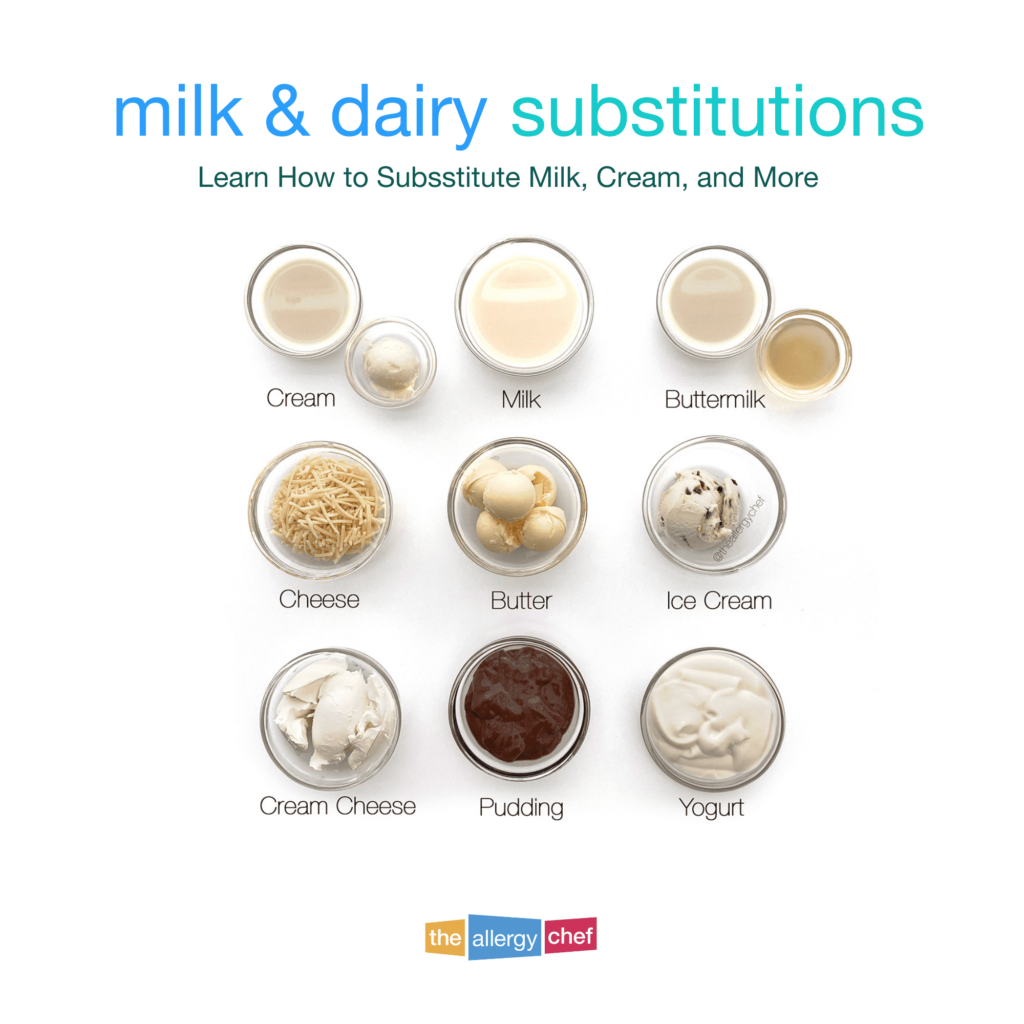
If you’re new to lactose free living, a milk allergy, or perhaps a vegan diet, I thought I’d take a moment to talk about milk and dairy substitutions.
It’s important to know that they are not created equally. Some will be super high quality whilst others are full of oils and fillers (especially in the vegan milk category). On top of that, if you manage a food allergy, shared equipment and shared facilities are details you’ll need to understand. I won’t talk your ear off about it, but instead point you to this article on Cross Contact: What Is It and How to Prevent It.
Choosing Dairy Free Cheese
Whilst this dairy free mashed potatoes recipe doesn’t call for cheese, mashed potatoes and cheese are totally a thing, especially with some chopped fresh chives on top… talk about a *chef’s kiss*.
Choosing the right dairy free cheese alternative starts with the label. One of the BIGGEST mistakes I made when shopping for dairy free cheese when my milk allergy child was little was not really understanding the label. The grocery store had dairy free cheese grouped with things like “non-dairy cheese” which isn’t the same thing. I’m still lowkey pissed about it because I bought something and my kid had a massive allergic reaction to it.
So, learn from that. Read labels slowly and with care and if you don’t know what something is, look it up online. Back in my day, we didn’t have these smart phones that were pocket computers and we couldn’t just, look it up in the middle of the store. I digress.
If you’re not allergic to tree nuts, start with a nut based dairy free cheese. Most people without food allergies agree that these taste the best. Additionally, if you miss the creaminess of cheese, nut based cheeses will deliver better on that front since they have a higher fat content.
After that, it’s going to come down to personal preference and food values. Some labels read like a science experiment whilst others are more approachable. Ultimately, I can’t tell you which one tastes the best since it’s subjective and I’m allergic to all of it, but try one of everything to figure out what you like.
Yes, sampling will be expensive, but in the end, you’ll be better for it. Also note, you can make things like “cashew cheese” at home. There are loads of recipes online and they tend to have great body, pretty good flavour, and work really well with pasta.
Click here to see brands that make dairy free cheese.
How to Choose a Milk Free Butter Substitute
It’s important to understand how to read food labels since some stores group “dairy free butter” with “margarine”. Now, technically, all dairy free butter is considered margarine since it’s a blend of oils to replace mammal butter (official definition). However, not all margarine is dairy free.
Some brands, when you read the ingredients label, at the end, it says “contains milk”. It’s usually not an obvious source of milk either, and it often hides in the flavouring agents. If you see this, it’s not a typo, and you should not purchase these products.
If a product says “Vegan”, that means the product is dairy free, milk free, and lactose free. However, that doesn’t account for lab grown proteins (a newer concern for those with food allergies) and it doesn’t account for shared equipment. But, on the surface, vegan butter is dairy free.
All vegan butter (and dairy free butter) is a 1:1 substitute for cow’s milk butter, ghee, or any mammal based butter that’s called for in a recipe.
Also note that dairy free butter is solid at room temperature. When following recipes, especially baking recipes, it should not be swapped for an oil that’s liquid at room temperature (like olive oil).
Popular brands of dairy free butter include Earth Balance, Country Crock, and Melt. You can read about more products here in this article (use the table of contents to jump around).

Choosing the Best Dairy Free Milk Substitute
Great news! Buying dairy free, vegan, and lactose free milk is probably the easiest task you’ll have. In all my years, I have yet to see a dairy free milk alternative include milk ingredients (unlike the cheese and butter categories).
Most grocery stores have dairy free milk together in two places. First, check the refrigerator section near the cow’s milk. There’s usually a collection of vegan milk that you can choose from. These milks will be the higher quality brands, usually contain less ingredients, and some would argue that they taste better.
After that, there’s the shelf stable dairy free milk options. I’ve seen these in different areas of grocery stores, sometimes near broth and stock, other times near snacks and baking. If you’re lost, just ask someone, it’s much faster than getting lost and frustrated in the store.
These days there are so many variations of dairy free milk on the shelf and it’s almost hard to choose from. Here’s a general set of rules to follow:
- For cooking, choose a plain, unsweetened dairy free milk substitute.
- If you’re baking a lot, plain unsweetened works well, or you can choose a milk substitute that has vanilla added.
- For milk and cereal, you’ll want a vegan milk that has vanilla and added sugar. Alternatively, use a vanilla only milk and add a splash of organic maple syrup to your cereal. Trust me on this one.
- If a recipe calls for “canned coconut milk” the boxed version is not a substitute. It has a very high water content and won’t function properly in the recipe.
- If clean eating is a priority for you, avoid milks that are shelf stable and start with the refrigerator section of plant based milks.
All vegan milk (and dairy free milk) is a 1:1 substitute for cow’s milk, or any mammal based milk that’s called for in a recipe, so long as it calls for “milk”. There are some exceptions (with solutions) and you can read about them in my Ultimate Guide to Dairy Free Substitutes.

OK, But Which Milk Tastes the Best?
Personally, I can’t tell you which of these milks taste good since I’m allergic to them. I had my child with a milk allergy help me with a video review of all sorts of dairy free milks and you can watch them here.
It’s important to know that in baking, you generally won’t taste the difference between the plant based milks because they’re part of a bigger mixture that’s usually flavoured with something (chocolate, cinnamon, etc.).
In cooking, you’ll be able to taste the difference if you’re making a basic creamy pasta sauce, like in this great recipe. You’ll also taste the difference in something like this vegan, dairy free white gravy recipe. Anytime the milk is front and center, you’ll know.
On the flip side, if you’re making an avocado pasta sauce, thinning out a tomato sauce, or using the milk in something like a stew, you won’t usually taste the difference too much because it’s a background note.

A Note on Richness and Dairy Free Products
Creaminess and richness are terms that are usually associated with cream, which is fat. It can also be associated with butter (fat and flavour).
In the dairy free world, to achieve this, you’re going to want to combine your dairy free milk with a fat. Which fat you use will be determined by the type of recipe you’re cooking. For example, in a dessert, you would use dairy free milk + shortening or dairy free butter (I use shortening for stovetop desserts like pie filling and faux curd).
In a creamy pasta, you’ll use dairy free butter + your milk of choice. To reinforce the FEELING of creaminess, you can make a roux based sauce (flour + fat + milk of choice) which will go a long way in delivering mouthfeel.
If you’re not allergic to eggs, you can tap into egg yolks in some situations to drive home the sensation of RICH. Egg won’t deliver on creaminess the same way, but it can a bit. A great example of this is filled ravioli. If you add an egg yolk on top of the filling and carefully close the ravioli, when you break into it, the yolk is still runny and gives you a good hit of rich.
You can also do this with a regular bender (or immersion blender if you don’t have one). Combine dairy free milk with egg yolk, blend until smooth, then use that mixture as the base of a pasta sauce.
Avocado is another option for delivering richness AND creaminess in ice cream, pasta, and other dairy free dishes. The key is pairing it properly so the avocado doesn’t clash with other flavours.
Dairy free cream cheese lends itself to adding creaminess, but not necessarily richness (unless you use it in large amounts). It can really shine in baked pastas and dairy free lasagnas.
Coconut Cream & Coconut Products
Now, I’ve shared all of that and you might be wondering about coconut. It’s got a great fat content, and you can do a lot with it. Heck, you can use coconut oil to make some of the coolest vegan cheesecakes.
When using coconut as a milk alternative, you’ll often run into issues because of the coconut taste. Now, for some people, they love everything about coconut, especially the taste. For them, this is less of a problem.
For others though, especially in a savory dish, the coconut will ruin the recipe (unless it’s a Thai curry, Indian curry, or another dish that’s made for coconut).
Keep this in mind as you go about making dairy free dinners especially. There’s more wiggle room in breakfast because coconut milk can make your dairy free smoothie awesome (especially if it’s tropical flavors). You can also use coconut cream in a French toast situation and come out on top.
One of the best pieces of advice I can give you is this: foods that grow together, go together. Is this a hard and fast rule? No, of course not. But when it comes to coconut, think about island and tropical ingredients (ginger, turmeric, pineapple, mango, etc. etc. etc.). These are the natural pairings for coconut and they’ll result in great things.
Also, look for great recipes online. I don’t have many that include coconut since several tasters are allergic to it, but find a proven dairy free recipe developer and see how they use coconut in sweet and savory applications for fresh ideas.

Dairy + Lactose Free Mashed Potato Recipe Ingredients
Part 1 Ingredients
- 900g Organic Gold Potatoes (32 ounces/2 pounds)
- 785mL Water (28 ounces)
- 5 tsp Sea Salt
Part 2 Ingredients
- 60g Dairy Free Butter of Choice (12 teaspoons/2 ounces)
- 110mL Dairy Free Milk of Choice (4 ounces)
- 1 tsp Sea Salt
Ingredient Substitutions & Notes
Part 1 Sea Salt: You can reduce the amount of salt used in the water, however, this will impact the final flavour.
Milk of Choice: I recommend a plain unsweetened milk such as plain unsweetened almond milk. However, if that’s not your jam or you have an almond allergy, any plant milk will work including rice milk, cashew milk, oat milk, soy milk, and boxed/watery coconut milk.
If you manage a lactose intolerance rather than a milk/dairy allergy and have a lactose free milk you enjoy, use that as your milk of choice.

How to Make Fluffy Dairy-Free Mashed Potatoes (Recipe Instructions)
Start by washing, drying, peeling, and cubing your potatoes. You want to cut them into 1 or 2-inch chunks. Try to be consistent for even cooking. As you cube, place potatoes into a large pot that you can cook and mash them in.
Once they’re all in, add cold cooking water (more on that below). You want to cover the potatoes with water by about an inch. Add the 5 teaspoons of sea salt and give it all a little mix.
Heat the pot on high heat and bring the potatoes to a boil. Allow the potatoes to boil for 5 minutes.
Reduce to low heat and add a lid. Simmer your potatoes until they are easy to pierce with a fork. The simmering cooking time will vary based on the size of your potato cubes. Check on them after 10 minutes then go longer if needs based on the results.
Once done, drain your potatoes in a colander, then return the cooked potatoes to your pot. Immediately add the dairy free butter, dairy-free milk of choice, and 1 teaspoon of salt (Part 2 Ingredients). Using a potato masher, mash your potatoes until you’ve reached the desired consistency.
It’s important that you add the butter and milk quickly, as the heat of your potatoes will melt the butter. I like to mash the potatoes until they’re just about smooth, leaving only a few lumps. If you want to add seasonings such as thyme, rosemary, garlic, onion, or even BBQ seasoning, add them along with the milk and butter. The act of mashing will distribute your seasonings.
That’s it! You’re ready to add these to your holiday meal or random Thursday night dinner and enjoy. One of my kids say these are hands down, the absolute best mashed potatoes when you add crispy bacon bits on top. Said child is also a huge fan of bacon, for context, so you serve how you see fit.

Why Cold Water?
Interestingly, you should start your potatoes off in cold water, and for good reason. Unlike green vegetables with thin cell walls, you can’t add potatoes into boiling water and get the best results.
Since potatoes have a lot more starch, if you add them to boiling water, you end up gelatinizing the starch at the surface much too fast, which will leave you with a mushy exterior that will fall apart in the water.
On the other hand, if you start in cold water, it gives the potatoes a chance to come up to temperature at a better rate, which improves cooking. Starting in cold water will also produce a better end result as you have more even cooking, overall.
Alternative Recipe Directions
If you’d like to make another version of this recipe, which I’m told produces silky smooth, other worldly mashed potatoes, check out this recipe. I’ll warn you. You need to have a potato ricer (this is the one that I have) to make this style.
Is the effort worth it? I’d say yes, every so often, as one of my kids continues to tell me that those potatoes are the real deal and wants to learn how to make them so he can have them whenever his dairy free heart desires.
Sharing My Best Tips For Making Mashed Potatoes
Cook your potatoes in a large pot of salted water. This will add more flavour to the potatoes in the end, as they can absorb some of the salt whilst boiling and simmering.
Experiment with smoked salt. It will add an extra layer of deep flavor to your mashed potatoes in the end.
Avoid using unrefined or refined coconut oil in place of dairy free butter, unless you LOVE coconut flavor, as does everyone else who will be joining you at the dinner table.
Add cold butter to your piping hot potatoes and mash right away. This saves you from having to think about softening butter, or dirtying a dish to melt it down.
If you over-simmer your potatoes, you can end up with runny mashed potatoes. If a fork is able to “disintegrate” your simmered potato, use less butter and milk. Start with half the amount and go from there. This will affect the final taste, so try to avoid over simmering if you can. The goal is to have *just* fork tender potatoes.
Experiment with extra seasonings, spices, and mix-ins. Think cream cheese, bacon, black pepper, white pepper, chives, spicy peppers like chipotle, Parmesan cheese, half a bouillon cube, and so on. One of the best things about this mashed potato recipe is that it’s simple by design, which leaves you space to add more of your favorites. So have at it, and if your dairy free mashed potatoes are Instagram ready, share a photo online and tag me so I can celebrate with you.

Mashed Potato Storage
It’s pretty easy to store leftover mashed potatoes. Transfer any extras you have to an airtight container. Store in your fridge for up to 5 days and eat them them throughout the week. Do not freeze leftover mashed potatoes.
To reheat leftover mashed potatoes, you have a couple of options. First, place a serving in a small pot along with a little vegan milk of choice. Heat on low heat and stir here and there until the potatoes are at the temperature you want.
The other option is to take a small baking tray and line it with parchment paper. Spread the leftovers out and heat in your oven at 375f/190c until the mashed potatoes at the temperature you want. If you’re a fan of crisp texture, once the potatoes are hot, switch your oven over to broil mode.
This will crisp up the top, but watch your potatoes like a hawk. You can go from “ohu that’s nice” to “crap, they’re burning” in a few blinks.

Creative Ways to Use Your Top 9 + Lactose Free Mashed Potatoes
You can take this easy dairy-free mashed potato and turn it into something that’s all your own. Here are a few ideas to get you started:
Shepherd’s Pie: You can use these potatoes as the topping for a traditional shepherd’s pie or cottage pie.
Mashed Potato Tots: You can make pan fried mashed potato tots, or cook them up in your air fryer. This recipe on RAISE show you how to make them.
Taco Inspired Mashed Potatoes: Add taco seasoning to your mashed potatoes in the final step along with the milk and butter. After plating mashed potatoes, add a little dairy free sour cream and scoop of salsa on top. If you enjoy tacos, you’re in for a real treat.
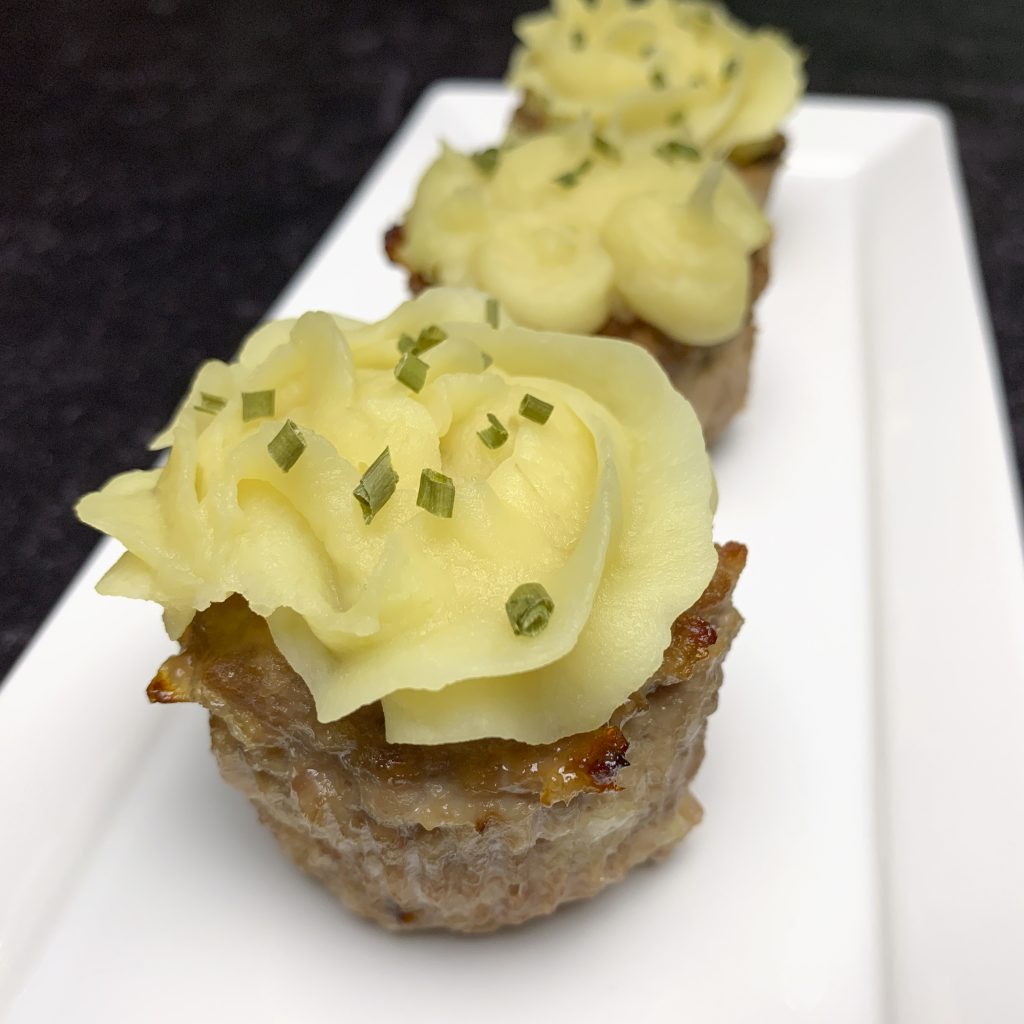
Meatloaf & Mashed Potato Cupcakes: This is an excellent option if you have little kids. Start by making meatballs in a muffin tin. Once they’re out, load mashed potatoes into a disposable decorator bag with a tip of your choice and pipe a design. For best results and easy piping, use a large tip. You can chop a little fresh herbs for garnish, or even load something like dairy free sour cream into a bag without a tip and pipe little white dots all over.
I did this with my kids when they were little, and they had a blast.
More Delicious Potato Recipes
If you’re needing more delicious potato recipes to try this time of year, I’ve got you covered. These are all dairy free, lactose free, gluten free, and top 9 free. Whilst there isn’t a dairy product in sight, and the recipes are super inclusive, don’t let that fool you. I’m told by people without food allergies that these recipes are amazing.
If you’re looking for more side dishes for a holiday meal (or random dinners), check out this article: 100 Free-From Sides for All Occasions.
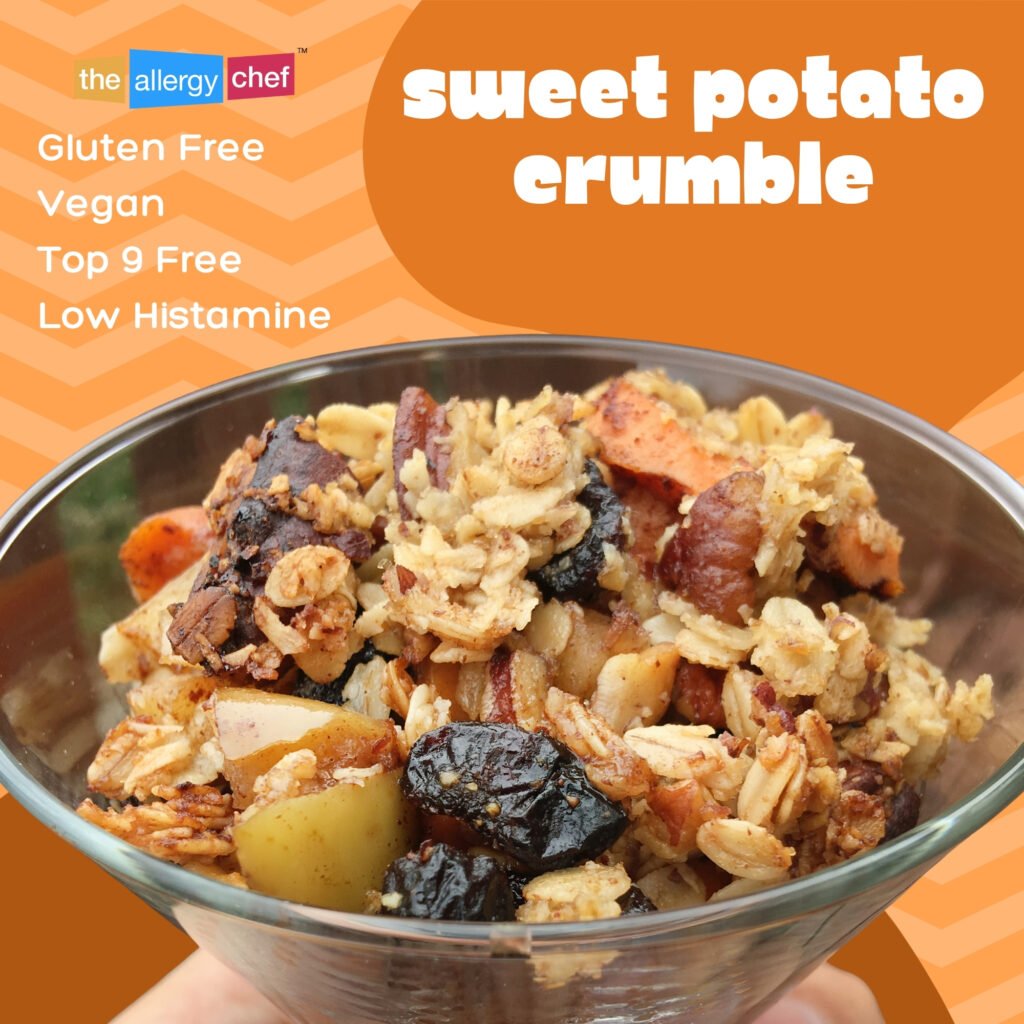
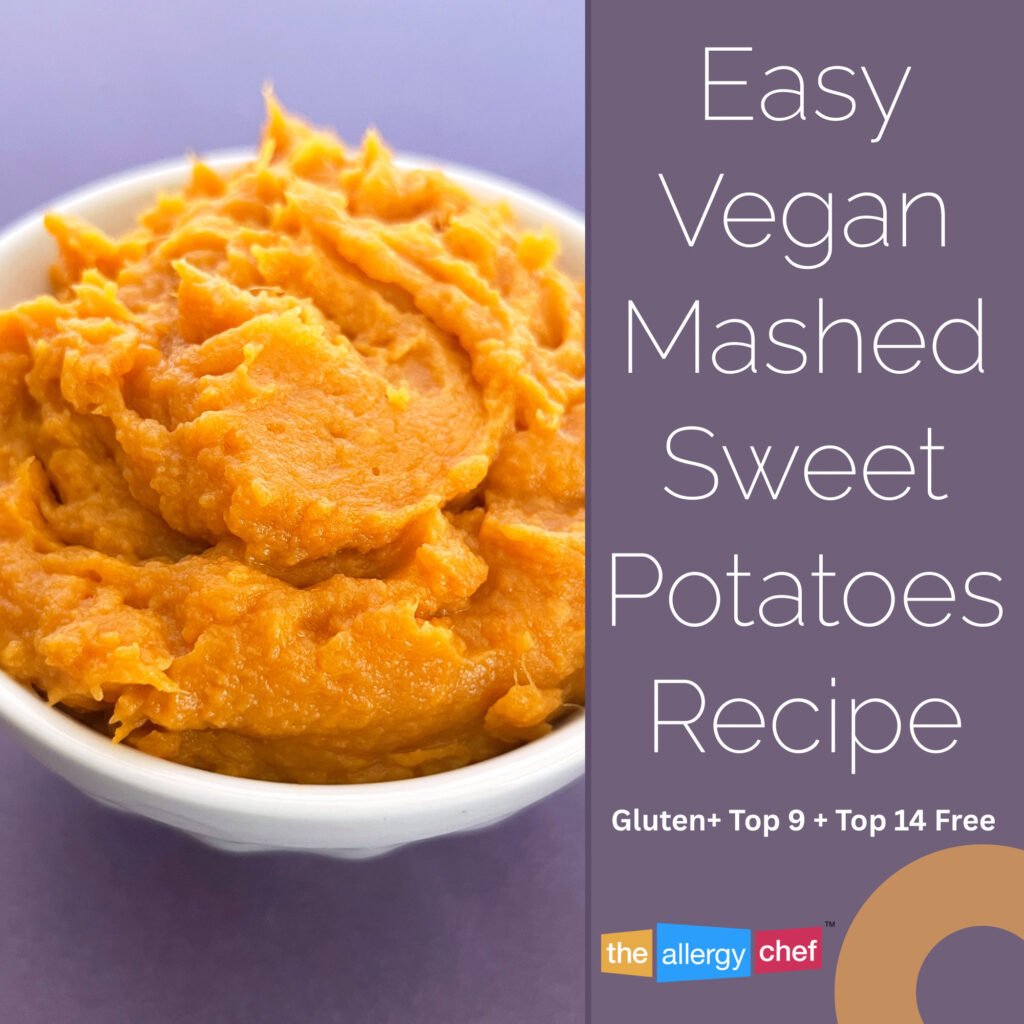
- Vegan Mashed Sweet Potatoes Recipe (my tasters say this is a perfect side dish for Thanksgiving)
- Mushroom & Potato Casserole Recipe (one of my kids’ favorite side dish)
- Creamy Stovetop Dairy Free Breakfast Potatoes Recipe (vegan, top 9 free, low histamine)
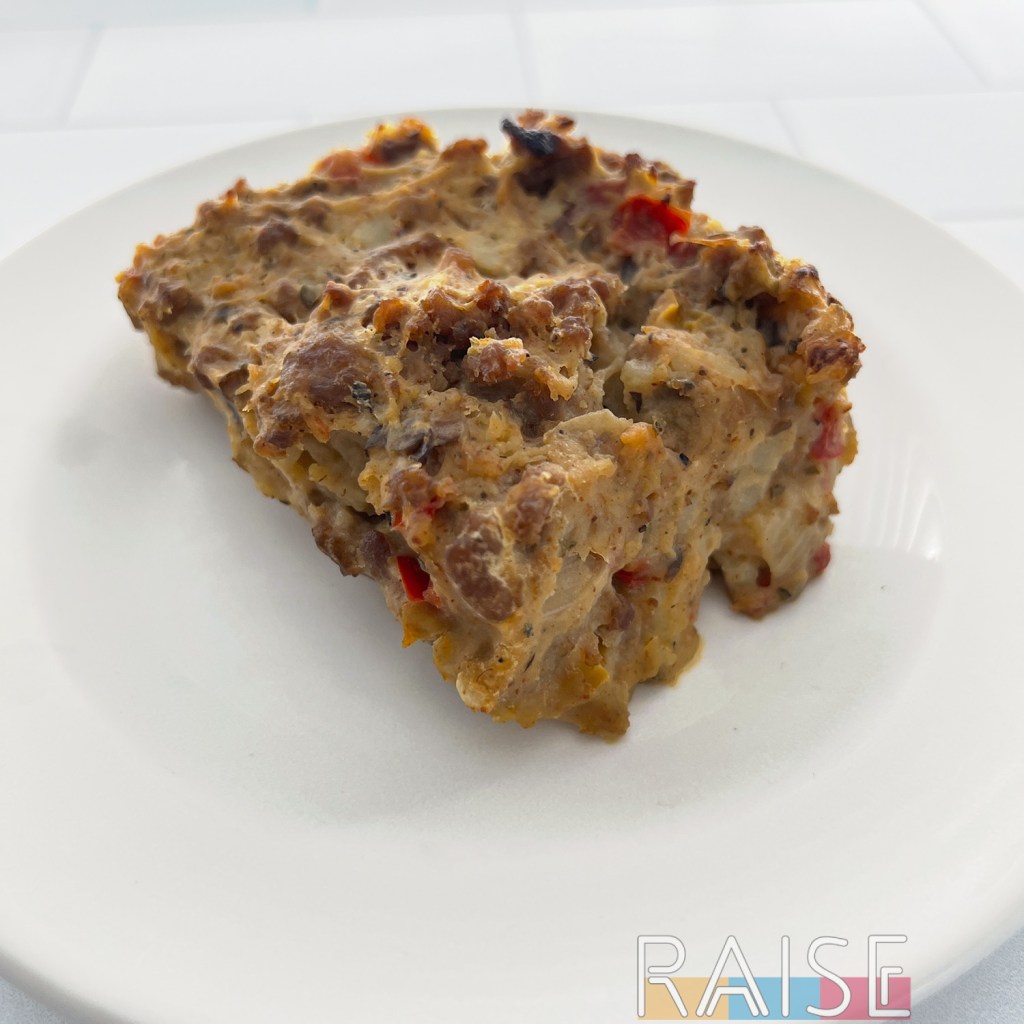
- Egg Free Breakfast Casserole Recipe (potato based, top 9 free, top 14 free)
- Dairy Free + Lactose Free Potato Recipes (there are lots to choose from in this post)
 |
 |
 |
 |
Answering Your Questions About This Dairy + Lactose Free Mashed Potato Recipe
Can I make these lactose free mashed potatoes in a pressure cooker?
Yes, you can use an Instant Pot or pressure cooker. To use a pressure cooker or IP, place the cubed potatoes inside, then add enough water to ensure you won’t have a burn error. I’d cover at least half of the potatoes with water.
Pressure cook on high, and start with 15 minutes. Once you’re happy with the potatoes, drain off the excess water using a colander, then return them to your pressure cooker or IP liner.
Add the remaining ingredients and use a potato masher to mash. Since the liner is basically a huge pot, and the bottom is flat, it’s easy to use it as a mashing vessel. That’s it. You’re ready to serve and enjoy.
Is it possible to use an electric hand mixer instead of a potato masher?
Yes, it is possible. For best results, go slowly, as it’s easy to overwork the potatoes with this method. When mashed potatoes are over-worked, they take on a gluey consistency (you might also say a gummy texture), rather than a fluffy and creamy texture.
To use this method, transfer the drained potatoes into a large bowl, add the remaining ingredients, then mix on low speed to start. Increase the speed a bit until you reach the perfect consistency, then stop.
Is Earth Balance dairy-free butter the best choice for making these mashed potatoes?
Honestly, any plant-based butter (sometimes called a vegan buttery spread) will work. These days most grocery stores carry at least one plant-based butter, and Earth Balance happens to be one of the more popular brands due to the cost, and nationwide distribution.
Some would tell you that Earth Balance is the best choice whilst others would make an argument for other brands, especially nut based brands as they tend to have a deep flavor when compared side-by-side.
Ultimately, any dairy-free butter that you feel has a great taste is the best choice. The last thing you want to do is to use a DF butter that you find to be meh in your mashed potatoes. That’s a recipe for disaster.
If you’re unsure because you’re new to dairy free living, the best way to find out what you like best is to sample all of the options available to you. Always be sure to read the ingredients to ensure they’re safe for you before purchasing. You can really understand the taste and performance of a plant-based butter by spreading it on toast and eating that.
Can I use vegetable broth instead of the milk of choice?
Yes. You could use chicken broth, vegetable broth, stock, or even a bone broth when making these creamy potatoes. Whilst you won’t have the exact same results as the original recipe, I think you’ll still be happy in the end.
Just be sure to manage your expectations when making a swap like this and you’re good to go.
Could I use olive oil instead of dairy free butter?
Yes, you can use olive oil, however, it won’t produce the creamiest mashed potatoes possible. Don’t get me wrong, they’ll still be good, but you’ll miss the slight buttery flavor along with a little bit of the function.
I’ve made mashed potatoes with both oil and butter, and I can tell you that oil is a great way to make the recipe if that’s all you can have.
Is this a good recipe to serve during the holidays? Will people be able to tell it’s dairy free?
Personally, I think this is a great recipe to serve during the holidays. Generally, your guests won’t notice that these are dairy free mashed potatoes.
If you’d like to distract from that point, jazz them up. Add black pepper, bacon bits (or crushed pieces of fresh crispy bacon), some fresh chopped chives, and maybe even a little roughly chopped seared mushrooms.
When you have extra flavouring agents, it’s SUPER easy for taste buds to not pick up on the fact this is a dairy free recipe.
Do eggs count as dairy?
Nope. The easiest way to explain it is like this. Milk comes from a cow. Dairy products are made with milk. Since eggs don’t come from cows, they’re not dairy. They’re sold next to the dairy section at grocery stores, and are sometimes (incorrectly) grouped with milk, butter, and cheese (then someone labels it as dairy, and causes confusion).
Would this recipe taste good with garlic?
Garlic would be a great choice where extra ingredients are concerned. You could use garlic cloves, garlic powder, or my personal fave, garlic granules to incorporate a delicious garlicky flavour.
You’ll want to avoid using too much garlic, especially if you’re serving friends and family, rather than just yourself. And if you’re wondering what too much garlic is, that’s when it’s really all you can taste. You want there to be a balance. They key to not going over is to add a small amount, mix, and sample. If it still needs more, then add. Remember, you can always add more, but you can’t take any away.
What types of main dishes would pair well with these mashed potatoes?
There are so many different main dishes that will pair well with this lactose free mashed potato recipe. For starters, there’s a classic meat and potatoes approach. My kids would all jump at this delicious recipe for oven baked ribs as their top pairing choice.
if you need vegan options, something like this recipe for a faux pulled pork would be a great main dish. If you’re a fan of tofu, crispy smoky firm tofu cubes would be another great option. Big Mountain Foods and Pumfu sell soy free tofu in case you need it.
The cool thing about mashed potatoes is that they’re really a blank canvas and will pair well with just about anything. Heck, you could even make burger patties, skip the bun, and have mashed potatoes on the side instead.