Today we’re going to take a look at daily sugar consumption, how to consume less added sugars, how to eliminate sugar from your diet, low sugar desserts, low sugar cereals, different diet types, and well, all things about cane sugar and sweeteners. Whether you’re curious about all of this, or have been told by your medical team/doctor to consume less sugar, you’re in for a real sugar free treat today. So, buckle up as we explore all things sugar, and sugar free.
Warning: This is a VERY LONG read. Please use the table of contents to jump to sections that you’re most interested in.
Is Cane Sugar Really That Bad For you?
With all of the advice and tips from experts online these days, you may be wondering if it’s all a bunch of noise or of cane sugar really is that bad for you. Honestly, it depends.
First, cane sugar, and ANY type of sweetener consumed in large amounts isn’t going to bring you any health benefits. “All things in moderation” really comes into play here.
Second, no two people are the same. For example, if we take some with diabetes and heart disease and compare the effects of sugar on their system to a healthy young person who exercises regularly, we’re going to see different results.
Honestly, that’s what a lot of these conversations and public discussions are lacking: the nuance of the human body and that each circumstance will yield different results. Now, can we make some generalizations? Sure, of course we can. I can say with a straight face “if you cut your sugar consumption in half, you can reduce your chances of developing heart disease and lower your body weight which can also provide health benefits in the long run.”
Is that statement true for everyone? Just about, but it’s so general and that’s what makes it true. If we put it under a microscope, it may be marginally true for some and profoundly true for others.
So, let’s circle back. Is cane sugar really that bad for you? In EXCESSIVE amounts, especially when highly refined, yes, it really is that bad for you.
Does that mean everyone needs to start a no-sugar diet next week? Nope. However, could we all look at reducing commercial soda consumption and more? Sure. But even then, soda is a tricky topic. In fact, let’s look at why.

Should I Stop Drinking Soda?
Soda, coffee, and other sugar sweetened drinks are a tricky subject because again, no two people are the same. Additionally, not all sodas and sugar sweetened drinks are created equally.
If we take a typical American soda that uses highly processed sugar substitutes and sweeteners that we know can harm the human body over time, then compare that to an organic better-for-you soda, we get different results.
We can even add homemade soda (carbonated water + organic maple syrup + organic vanilla extract) to the mix, and get different results as well.
So, should you stop drinking soda? That depends on what type you drink, along with what else is in your diet.
Here’s another way to think about it. Have you ever met someone who looks totally healthy, have blood tests that show them as healthy, they run marathons, but smoke several times a week and have a little alcohol here and there?
I know I certainly know people like that and what it comes down to is this: overall lifestyle choices. What these type of people highlight is essentially an 80/20 type of lifestyle. 80% of the time, they’re on their A-game. They eat clean and take great care of their body. Then, 10 – 20% of the time, they do what they want. In the long run, it all balances out for them.
So, to answer the original question: should you stop drinking soda? That depends. Are you drinking an organic soda, or one that contains adaptogens? Or are we talking bottom of the barrel cola, because there’s a difference. Additionally, is soda your *one thing*? Because if you’re hitting the gym every morning and eating fish three times a week and doing all the things, I’d bet your soda here and there is fine.
See what I mean? No two people are the same, and I’m going to keep reminding you because ultimately, that’s what all of this is going to come down to. Now, let’s really dive into what sugar is.

The Definition of Sugar
Officially, sugar is a sweet crystalline substance found in various plants, especially in sugar cane and sweet beets. Sucrose is extracted and used to sweeten food and beverages.
We can add to that and say that it’s any class of soluble, crystalline, typically sweet-tasting carbohydrate. If you’ve ever heard that some foods are naturally sweet, this is why. Foods such as apples, sweet potatoes, and dates naturally contain sweet-tasting carbohydrates.
You can also expand a bit more and say that sugar includes sweeteners that aren’t from sugar cane such as coconut sugar, beet sugar, date sugar, agave, and many others (I’ll share a long list of sugars later).
What Does That Sugar Definition Really Mean?
Sugar can be defined in so many different ways. Most people are familiar with is white sugar, also known as cane sugar, table sugar, or refined sugar. Sugar cane is a plant in the grass family and grows in tall stalks (they look a bit similar to bamboo stalks). To get the plant to release it’s sweetness, there’s machinery that presses the canes so they release their sweet juices. If you ever have the chance to drink pure, fresh pressed sugar cane juice, do it. It’s a very interesting flavor, and doesn’t scream SUGAR.
From sugar cane and the juice, there are more sugar products that are produced: molasses, turbinado sugar (sugar in the raw), dark brown sugar, light brown sugar, cane/white/table sugar, cane juice, and glucose.
Also know that anything ending in ‘ose’ refers to a type of sugar (not exclusively cane sugar). Lactose = Milk Sugar. In the case of lactose, it’s a naturally occurring sugar found in milk, the way you’d find natural sugars in carrots and sweet potatoes.
Essentially, the term “sugar” refers to the sugar cane plant, however, there are so many types of sugar that the expanded definition can include a wide range of plants and products.
List of Names of Sugar You May or May Not Know
This is a pretty comprehensive list os the types of sugar that are found in commercial foods. Not all of these sugars are derived from sugar cane or beet sugar. Some of these sugars and sweeteners are naturally occurring sweeteners (think honey) whilst others are a processed product. In some cases, the sweetener is a highly refined version of sugar cane and other cases, it’s a lab/chemically altered product.
- Agave Nectar
- Apple Syrup
- Barley Malt
- Beet Sugar
- Brown Rice Syrup
- Brown Sugar
- Buttered Syrup
- Cane Juice Crystals
- Cane Sugar
- Caramel
- Carob Syrup
- Cassava Syrup
- Castor Sugar
- Corn Syrup
- Corn Syrup Solids
- Confectioner’s Sugar
- Coconut Nectar
- Coconut Sugar
- D-Ribose
- Date Sugar
- Demerara Sugar
- Dextrin
- Dextrose
- Diastatic Malt
- Diastase
- Ethyl Maltol
- Fructose
- Fruit Juice
- Fruit Juice Concentrate
- Galactose
- Glucose
- Glucose Solids
- Golden Sugar
- Grape Sugar
- High Fructose Corn Syrup
- Honey
- Icing Sugar
- Invert Sugar
- Isomalt
- Lactose
- Maltodextrin
- Maltose
- Malt Syrup
- Maple Sugar
- Maple Syrup
- Molasses
- Monk Fruit
- Muscovado Sugar
- Piloncillo (also known as Panela or Panocha)
- Raw Sugar
- Refiner’s Syrup
- Rice Syrup
- Sorbitol
- Sorghum Syrup
- Sucanat
- Sucrose
- Sugar
- Table Sugar
- Tapioca Syrup
- Treacle
- Turbinado Sugar
- Yellow Sugar

Alternative Sweeteners & Sugar Alcohols Used to Sweeten Food
As if the list above wasn’t long enough, there are more sweeteners that are used more as a substitute for cane sugar. Several of these are considered sugar alcohols, which some people are very sensitive to.
Additionally, these sugars aren’t sold in their natural state, but are usually highly processed. Stevia is a great example. The plant is green and the powder is white. There are a lot of steps to get it from plant to plate, so keep that in mind if you’re looking to substitute cane sugar. That doesn’t make the product inherently bad, but know that these products aren’t good for some people.
- Allulose
- Erythritol
- Ethylene Glycol
- Mannitol
- Ribitol
- Sorbitol
- Stevia
- Xylitol
The Big Fat Sweet Lie
Now, you’ve seen this list of sugar substitutes, and it’s time you learned the cold hard truth: many are corn derived. GASP. Bet you didn’t see that one coming.
A lot of food companies put a wide range of buzz words on their no-sugar products to make them sound good, however, at the end of the day, it’s a corn derived product. A great example is allulose. Even though the product says things like “this is a natural sugar found in fruits such as kiwi”, when you call the company and ask what they derive it from, they say corn.
So, if you’re looking to see health benefits from a reduction in sugar consumption, make sure you’re choosing the best sugar substitute that will leave you feeling nourished, and that comes from a source you’re comfortable with.

Refined Sugar vs Unrefined Sugar
You’ll hear me use the term Refined Sugar Free quite a bit. Here’s the thing about sugar: it’s not ALL bad for you, especially in moderation. Trouble (healthwise) really starts with refined, highly refined, and highly processed sugars. Another way to think about this: the more white (in colour) a sugar or sugar substitute product is, the more it’s been stripped of nutrients etc.
Additionally, the further from its natural state a product is, the more refined it is. A great example of this is agave syrup. The plant is green and the syrup is a light golden colour. There’s a LOT of processing involved to get agave syrup, and it’s also pretty high on the glycemic index, so keep that in mind when choosing a sugar substitute.
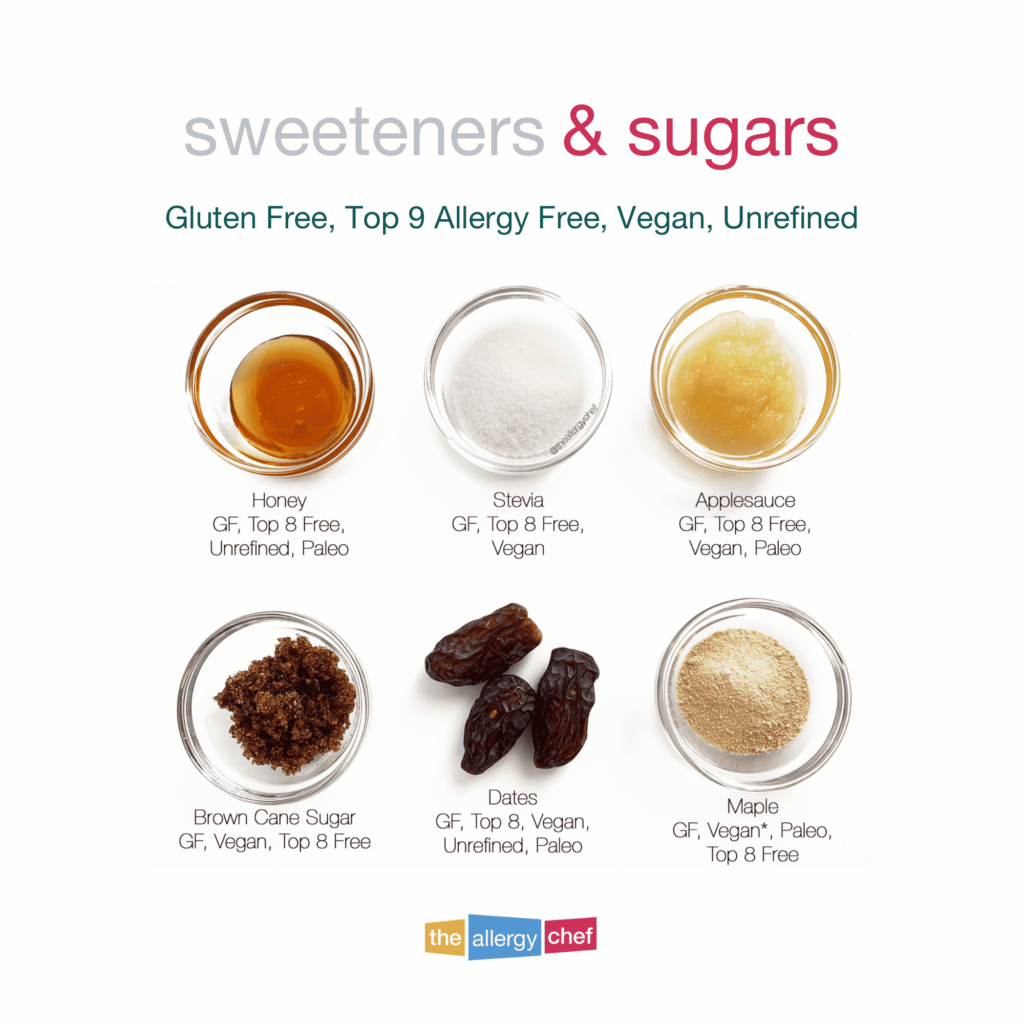
If you’re looking to have sugars closer to their original state, the least refined sweeteners include:
- Applesauce
- Coconut Sugar and Coconut Nectar
- Dates, Date Syrup, and Date Sugar
- Honey
- Maple Sugar and Maple Syrup
As you can see, it’s a pretty short list. You might be wondering why something like stevia isn’t on the list. Let me ask you: is the plant white? Because the powder they use in your food certainly is.
It’s also important to note that not everyone will be able to tolerate these particular sweeteners and will rely on something more processed. It’s not the end of the world, especially in moderation. Where possible, reduce or eliminate highly refined sugars and ones that we KNOW are bad for you. Looking at you high fructose corn syrup.
Where you can’t, enjoy your food and move on with your life. Unless you have a life threatening allergy to a particular sweetener, don’t spend so much time trying to avoid it that you stress yourself out and turn eating into a real burden.

Artificial Sweeteners vs Alternative Sweeteners
These days the market has been flooded with alternative and artificial sweeteners, and it’s important to know the difference between the two.
Artificial sweeteners have been shown to cause SO MANY health problems, especially when consumed in large amounts. Additionally, it’s entirely possible to have reactions to artificial sweeteners. An old friend of mine actually suffered from severe seizures when served artificial sweeteners. Whilst many can consumes these ingredients safely in small amounts, know that people can have a wide range of mild to severe reactions to artificial sweeteners.
Artificial sweeteners you’ve heard of may include:
- Acesulfame Potassium
- Aspartame
- Lactitol
- Neotame
- Saccharin
This is by no means an exhaustive list. In fact, this website has a comprehensive list of artificial sweeteners that also includes safety data. If you take the time to read over all of that information, and you may end up like me: wishing this kind of information were on the label, and taught in schools.
Personally, I think we have a huge gap in food education, and many assume that “if it’s sold in a store, it can’t be bad for me”, not realizing the harsh reality of many of the ingredients.
Alternative sweeteners, on the other hand come from plants, are generally heavily processed (which is why I personally avoid so many), and are sold commercially. These include ingredients such as allulose, monk fruit, and stevia.
For those who manage Celiac Disease, a wheat allergy, or corn allergy, please be incredibly careful when sourcing alternative sweeteners. Some major brands of monkfruit have failed gluten contamination tests, whilst most alternative sweeteners are corn derived (no matter what the packaging says).

My Personal Sugar Preference
In case you’re wondering what someone like me does, my personal preference when cooking and baking for my kids or friends is to use honey, date sugar, and maple. Due to several having a coconut allergy, it’s not something I’d use, but I’m a huge supporter of it for those can have it.
These are my top choices because they’re low-processed sugar substitutes that work beautifully in cookies, cakes, ice cream, beverages, and anything else I create in the kitchen. If you stick around and read what I share, you’ll notice that I’m generally not a supporter of taking colourful foods that are loaded with health benefitting compounds, stripping them away, refining the plant, and turning it into a white powder.
Now, when I want to use something derived from cane sugar, I use organic white sugar, organic light brown sugar, organic dark brown sugar, and organic powdered sugar. I sometimes dabble with caster sugar and muscovado sugar as well.
I’m sure you noticed my list is mostly organic. There are so many health conditions that may bring you to an article like this one, and the deeper you dive into food and ingredients, the more likely you are to realize what’s really going on in the food industry.
In my case, I raised a child with a health condition that required organic food as part of the treatment plan, along with a very specific elimination diet. Having children with restricted diets really got me to understand farming and food, which had me jumping to organic pretty quickly.
Should you choose to make the jump to organic, do so at a pace that makes sense for you. If you have a health condition, jump quickly. If you’re wanting to improve your overall health and have nutrition goals, make the jump at a pace that makes sense. For example, don’t throw away all of your spices and buy new ones tomorrow (talk about expensive). Instead, each time you run out of a spice (or flour etc.), replace it with the organic version. Whilst this is a longer process, it’s a lot less stressful.

What’s the RDA/RDI for sugar?
The RDA here in the US is 50/g a day for added sugar, based on somewhat recent changes. There’s also been a guideline in the past of “added sugar should make up no more than 10% of your daily calories”. The latter will vary from person to person, and will be different for children and adults.
It’s important to note that the new government guidelines are the recommendations for ADDED sugars. If the sugar isn’t natural from the ingredients (think sweet potatoes), then it’s considered an added sugar. For example, a glass of whole milk has 9g of sugar from naturally occurring lactose. Those 9 grams don’t count against you per-say. Once you add your favorite chocolate syrup with 15g – 40g of sugar per serving, that’s where the “added sugar” counting starts.
In the UK the RDA is 90/g per day for adults, and this number INCLUDES sugars from milk, fruit, vegetables, and added sugars.
By no means, in my personal opinion, should anyone be aiming for those numbers in the US or UK. When we look at the 10% statement (which is no longer the norm), if you eat 2,000 calories per day, one could technically consume 200 calories of sugar. Let’s put that in perspective: 200 calories from sugar is roughly 54 grams, or almost 2 ounces.
Even when sticking to government recommendations, if you’re not careful, you’ll hit your RDA before lunch time, especially if you eat like an average American on the SAD. Additionally, if you consume the “allowed” amount of added sugars PLUS loads of natural sugars, I promise, there’s a very good chance you’re eating too much sugar.
The easiest way to understand how much sugar you’re consuming is to keep a detailed food journal. Alternatively, you can use a calorie/nutrition tracking app and plug in your meals. Over the course of a week, you can see what your daily average is, and if you should try to reduce sugar consumption.
Before You Start: Why Are You Going Low/No Sugar?
There are several reasons a person might choose to adopt a low/no sugar diet. The WHY is rather important because it determines what kind of foods you’ll need to eliminate. The most common reasons to adopt a low/no sugar diet include:
- Newly Diagnosed Diabetic
- Fructose Intolerant
- Sugar Cane Allergy or Intolerance
- Grass Family Cross Reactive
- GI/Candida Issues
- Special Diet (Paleo, GAPs, AIP, SCD, Whole 30)
- Other Health Reasons
From there, you can make the best choices for you. For some of you, you’ll need to look at the glycemic (GI) scale of each sweetener and use what’s right for you. Others may need to use what’s legal/allowed on the diet you’re following. For some, none of the options in this article will be an option due to your condition.
As you start this new chapter of your life, don’t be afraid to work with an RD or dietitian to build a sustainable meal plan that will help you meet all of your goals. Additionally, be sure to review your goal and your daily nutritional values as your body composition changes.
Also keep this in mind: there are so many variables that come into play which is why working with professionals such as a nutritionist. They can factor in underlying medical conditions, current body composition, gender, age, and more, as each of these play an important role as to how your body will respond to the changes you make.
Diet Types to Help You Start a Sugar Free Diet
If you’re the kind of person who benefits from having a pre-made meal plan, there are several popular diet types that may be of great service to you, whilst not leaving you feeling overly restricted and stuck with loads of cravings.
Mediterranean Diet
There’s a lot of evidence that shows that a traditional Mediterranean diet is great for your health. Additionally, if you stick with the whole food ingredients, you’ll naturally eliminate a lot of sugar from your diet.
You’ll find that the Mediterranean diet is full of fresh fish including salmon and talapia, loads of produce, especially tomatoes, and fats such as olive oil. This diet has been shown to help with heart health, as it’s rich in fantastic nutrients that can all help your body repair old damage and function better in the long run.
Paleo Diet
It’s important to know that there’s a Paleo diet, and an AIP Paleo diet. The latter is called the Autoimmune Protocol Paleo Diet because it eliminates a wide range of ingredients that have been shown to cause inflammation in those with a damaged immune system, or body that needs a lot of repair. It’s a lot more strict when compared to the Paleo diet, however, if you have any underlying medical conditions, it may be worth exploring.
Back to the Paleo diet. This diet type is naturally free from all refined sugars, mammal dairy (including yogurt and cheese), legumes, and grains. However, this diet type is also full of well meaning authors and recipe developers that loovveeee to share Paleo dessert recipes (myself included). Should you start the Paleo diet, don’t rush towards dessert.
Instead, give yourself time to adjust to a low/no-sugar diet, then, over time, slowly reintroduce treats made with unrefined sugar here and there.
Whole 30 Diet
The Whole 30 Diet has been hailed as an amazing diet for those who are looking to ditch the Standard American Diet (SAD) and eat whole foods that nourish their body.
It’s important to note that Whole 30 not only eliminates refined sugar, but also comes with a few rules about processed foods. For example, on the diet, you can have rice, but you can’t use rice flour to make a cookie, even if every sub ingredient of the cookie is Whole 30 compliant.
I will say this though: outside of the few rules of the diet, it’s one of the most sustainable diet types out there these days. Unlike Paleo, you won’t need to eliminate all grains, which some people really struggle with.
Diet Types to Avoid
As you approach your sugar free diet, I want to advise against choosing any diet type that’s incredibly limiting or extreme, unless, you have a medical condition that requires it, or your doctor/dietitians want you on a diet plan that’s very limiting (there are a lot of valid reasons they would do this).
For everyone else, there’s a lot of evidence that shows if you go with a more sustainable route, you’ll have lasting success in the long run. In addition to that success, you’ll still see a stabilizing of blood sugar levels, blood pressure improvement, better heart health, and so on. So make sure what you’re doing is really working for you.
The most extreme diet types that eliminate sugar include:
- Keto
- Carnivore
- GAPs
- SCD
It’s really important to remember that each of these diets is amazing for the people who need them. In fact, each one was originally created to treat a specific medical condition. For example, the Keto diet has been shown to have a positive effect on those with seizure disorders.
Both the Keto and Carnivore diets have come under scrutiny a bit more in recent times, and that’s really because both diet types lack a significant source of fiber (especially the carnivore diet). Some doctors have weighed in and say that whilst the short term benefits are fantastic, we can’t ignore the long term effects of consuming so little fiber. Honestly, it’s all a balancing act, as some people who start a carnivore diet are so sick from years of food choices that an extreme solution is the best one (at first).
Assuming you don’t have any underlying medical conditions, try to stick with a sustainable diet type, as it can help you kick sugar, once and for all.
How To Eliminate Sugar From Your Diet
There are several starting steps you can take when you want to start a low sugar diet or no sugar diet. The biggest piece of advice I can offer is this: eliminate all pre-made processed foods that come in a package, and make as many of your meals at home as possible.
Whilst it may sound like a great idea to order specific items at restaurants, not only is that expensive, but a lot of average and low quality restaurants will add sugar, unnecessary fats, and other unsavory ingredients into their recipes to cut costs and enhance taste. You can avoid all of those ingredients by cooking at home, and you’ll also know exactly what went into your food which makes it easier to track.
Here are steps to get you started:
Shop the perimeter of your grocery store.
This is usually where you’ll find produce (fruits and vegetables), fish, meat, cheese, dairy, and other essentials that are naturally free from added sugar. In most grocery stores, the bulk of products that contain added sugar will be in the center aisles.
Start reading food labels and nutritional values.
You’ll want to see how much added sugar is in a product. Some foods (sweet potatoes and dates are great examples) contain a good amount of natural sugars, but no added sugars. They also contain fiber, which can help slow down the absorption, and provide other health benefits. Depending on your needs, these foods may be good in moderation, or you may need to avoid them as well.
Talk with your medical team and ask lots of questions.
Your medical team should be able to let you know what your daily limits are for all types of sugars, including naturally occurring sugars. This can help guide you at the grocery store. They should also be able to help you design a sustainable blueprint to stick with.
Cook simple meals at home.
When you cook easy, simple meals, you’re more likely to stick with your sugar free diet. Here are a few examples of super simple breakfasts, lunches, and dinners:
- Scrambled Eggs + Whole Grain Toast + Avocado Slices
- Pan Seared Mushrooms + Seasoned Ground Beef + Oven Roasted Frozen Green Beans
- Easy Tacos + Fresh Fruit Slices
- Pan Seared Pork + Apple Slices + Crushed Pecans + Steamed Rice
- Baked Lemon Salmon + Fingerling Potatoes
- Shredded Chicken Salad + Sprouted Mung Beans
- Overnight Oats + Fresh Berries + Handful of Organic Sprouted Almonds
- Yogurt + Fresh Berries + Homemade Sugar Free Granola
Here are a few tasty recipes to get you started:
 |
 |
 |
 |
Meal Plan & Try to Stick with It
When you have a menu plan, it not only makes grocery shopping easier, but also makes cooking feel less difficult since you don’t have to think about it on busy weeknights. When it comes to meal plan management, I suggest starting with 10 meals/recipes and rotating thru them. From there, expand your options.
If you have the mental bandwidth, you can certainly start with more than 10, or follow a pre-made meal plan. However, for some, the easiest form of meal management is to start with a few easy meals they can eat over and over again.

List of Snack Foods Without Sugar
Let’s face it, many people aren’t ready to fully give up processed foods, especially snacks. If that’s the boat you’re in, the great news is that there are a lot of snack foods that are naturally low in sugar, or have no sugar at all. Here’s a list of snacks to keep on hand that can help when cravings hit.
- Crackers
- Homemade Granola
- Fresh Fruit
- Homemade Hummus
- Nuts
- Popped Sorghum
- Puffed Rice
- Puffed Sweet Potato
- Rice Cakes
- Steamed Sweet Potato Snacks
- Sweet Potato Awesome Air Fried Sweet Potatoes (a super crispy, super delicious snack)
- Seaweed
- Seeds
- Vegetables (many people enjoy bell pepper, broccoli, carrots, celery, cucumber, and zucchini for snacking)

Tips for Sugar Cravings
I’m not going to lie, at the start of a sugar free diet, especially if you’re coming from a Standard American Diet (SAD), you will experience sugar cravings and all sorts of other food cravings. These can be incredibly intense for some people, and lead some to quit their sugar free diet all together. Here are some tips to help you beat sugar cravings.
Take a Walk
It may sound a bit odd to take a walk, but getting outside into a wide open space can help you forget your craving. It also gets your body moving and helps shift your mindset.
Sugar cravings can be two parts: biological from the bad bacteria in your gut, and mental. Physical activity, over time, has a positive effect on both parts.
Drink a Beverage
- The best beverages to help with sugar cravings are going to be:
- Milk (unsweetened)
- Carbonated Water
- Homemade Soda (made with carbonated water and sugar free flavouring agents)
- Hot Tea
- Iced Tea
- Fat Bomb Coffee
- Smoothie with Protein Powder and no Added Sugars
Each of these beverages can help in a different way. For example, carbonated water can leave you feeling pretty full. Additionally, flavouring agents can send a signal to the brain that help you *think* you’ve had sugar, and that’s half the battle.
Eat Fat & Protein
When combined, fat and protein create an amazing fullness that lasts a long time. Whilst it’s not sugar, the feeling of fullness may help distract you from sugar cravings. Here are a few examples for inspiration:
Taco Seasoned Ground Meat + Organic Guacamole (I get big containers of this from Costco for my kids, and it’s freezer friendly)
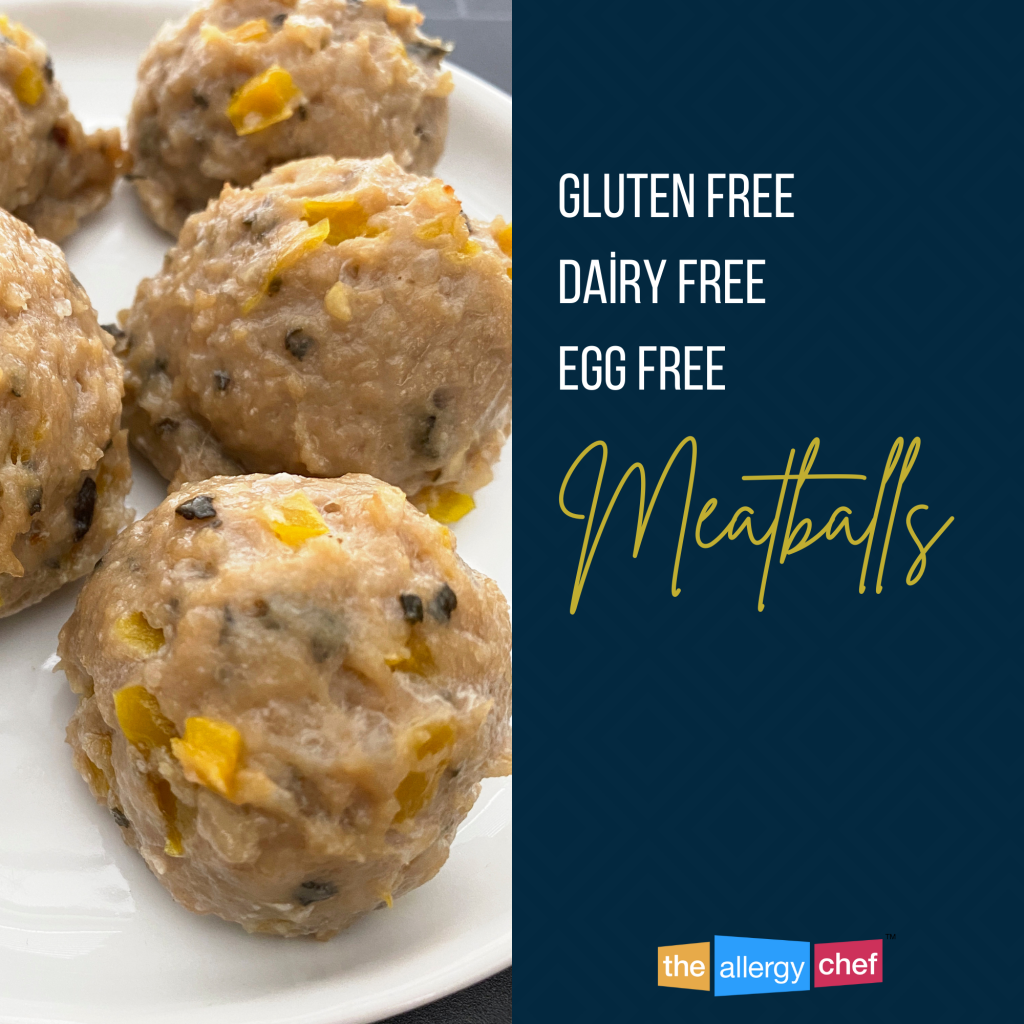
Homemade Pork Meatballs + Cheese Cubes (real cheese, not processed cheeses like cheese slices etc.)
Bottom Line
No matter what you try, I highly suggest keeping your fridge stocked with a delicious range of easy options you can grab on these occasions. When foods are easy to grab, you’re a lot less likely to reach for sugar.
I also suggest keeping a detailed food journal, and each time cravings hit, try something different (and take great notes). Once you find the methods that are successful for you, stick with them, and over time, the sugar cravings will stop.

Tips on Avoiding Hidden Sugar
Rather than look at the obvious sources of sugar such as sugar sweetened drinks or foods found in the candy aisle, let’s take a look at hidden sources of sugar. I’ll also share some great brands that make low/no-sugar products for you to investigate.
- Salad Dressing (especially low fat salad dressings)
- Processed Meats & Lunch Meats
- Condiments such as Ketchup and BBQ Sauce
- Baked Goods Made with Candy (think: candied ginger folded into a batter)
- Energy Drinks & Sports Drinks
- Bottled Coffee Drinks
- “Healthy” Yogurt
- “Low Fat” Foods (they’re often extra sweet to make them more palatable)
Brands Making Awesome Low/No-Sugar Products
Through all of this, there are a few key brands I want to share with you that are making items you may want to try ASAP.
- True Made Foods (their ketchup is AMAZING and the sweetness comes from butternut squash, my kids have been superfans for over a decade)
- SmartSweets (they make a “sugar free” candy that’s pretty good according to my low/no-sugar child)
- OliPop (better-for-you canned sodas)
- Primal Kitchen (they make a wide range of condiments that are pretty tasty)
- Vixen Kitchen (ice cream company, these types of companies are very hard to come by and many go out of business due to cost of goods)
If you’d like to see more brands, download my 99+ Free-From Snack Brands PDF. Whilst this file is gluten free and allergy friendly focused, a good amount of these brands are also grain free, Paleo, and low/no-sugar brands. Several are also using unrefined sweeteners. I’m confident that you’ll find quite a few new options in that file.
Low Sugar Desserts
If you find that low sugar desserts are a good option for you, here are recipes and ideas to get you started. You can also purchase a cookbook (there are so many these days). However, go to a book store to make the purchase so you can se what types of sweeteners the author uses. As mentioned earlier in the article, some people will need to avoid specific types of alternative sweeteners, and there’s no point in purchasing a cookbook you won’t be able to enjoy.
Strawberries & Cream
Whilst this sounds super simple, it can be incredibly delicious. The key to having a mega delicious experience is to start with fresh, highly flavoured strawberries. I find the best options at farmer’s markets in my area during strawberry season. The taste is almost indescribable, and it’s nothing like what you’ll purchase in the average grocery store.
You can purchase whipped cream that’s been lightly sweetened at natural and organic stores such as Whole Foods, Sprouts, or your local Co-Op. You can also make whipped cream or even chantilly cream at home.
Grilled Peaches + Dates + Yogurt + Balsamic Vinegar
If you don’t have an outdoor grill, no worries. You can use an indoor grill pan like the one that I use. To make grilled peaches, I wash and slice them, then place them in a small mixing bowl. I add a little smoked salt, organic date sugar, and organic balsamic vinegar. I mix that up then let them sit for a few minutes.
From there, I grill the peaches indoor, then let them cool down a little bit before serving over a bowl of yogurt. I also like to add a touch of balsamic vinegar before serving so the kick is present and forward, but you don’t have to do that. You can also add a couple of chopped dates or dried date pieces if your peaches aren’t on the sweet side.
Homemade Banana Bread with Raspberries
You can use any recipe of sugar free or refined sugar free banana bread. Top your slices with fresh raspberries for a simple sweet and sour treat.
Homemade Cashew Banana Ice Cream
If you’re looking for a guilt-free indulgence that’s also got a nice amount of protein and fat, look no further than a homemade nice cream as the plant-based and vegan communities like to call them.
You’ll start by getting bananas on your next trip to the store and allowing them to ripen, almost to banana bread levels of ripeness. Once ripe, slice and freeze. You want the slices to be about the size of an ice cube. Be sure to prep a lot of bananas so you have a freezer full of potential ice cream when you need it.
In your blender, combine frozen bananas, cashew pieces (less expensive than whole cashews and will blend easier), 2 teaspoons organic vanilla extract, enough milk of choice to combine, and anything else you’d like to add. The banana, cashew, milk, and vanilla are the base of the recipe.
You can add a whole food sweetener such as dates or an unrefined sweetener such as organic maple syrup, however, taste the base first. Super ripe bananas have a lot of natural sweetness.
Now, what to add. You can add raspberries, strawberries, cacao, dark chocolate, cherries, nutmeg & cinnamon, or anything else that pairs well with banana. Once you blend it up, you’ll have a thick and rich low sugar ice cream substitute that will leave you feeling super satisfied.
Individual Apple Pies
Personally, I love making individual pies and freezing them so they’re always ready to go. This is the low sugar apple pie recipe that I like to use, but you can use any recipe that speaks to you.
The key is the containers. I like to use these Ball glass containers with these plastic lids since I’m not canning. Select a container size that makes sense to you and run with it. I usually purchase the glass containers at a local grocery store that sells them by the dozen, which saves a little money in the long run.
Raw Vegan Cheesecake
This particular style of cheesecake is usually a low sugar dessert, as the raw food community also looks to keep their recipes lower in sugar. These types of cheesecakes lean into dates, almonds, cashews, and coconut oil as the base. There’s also usually a raw nut crust that’s a blend of nuts and dates.
If you have a food processor and are open to trying dessert recipes you may have never considered in the past, a raw vegan cheesecake is one of my top recommendations for you. The good news is that there are thousands of recipes online, so you should be able to find one that sounds good to you.
Grilled Pineapples
Start by cutting your pineapple into rings or cubes, then placing them in a mixing bowl. Add spices and mix well. You can skewer then grill, or place your pineapple directly on the grill. Here are some flavour combinations to try:
- Maple Syrup + Ginger + Cinnamon
- Cinnamon + Nutmeg + Maple Syrup
- Date Syrup + Turmeric + Ginger
- Coconut Sugar + Cayenne Pepper
Serve over yogurt, or top with fresh whipped cream that’s been lightly sweetened.
Oven Roasted Pineapples + Yogurt
Start by cutting your pineapples into rings or dicing into large cubes. Toss in spices of your choosing. Line a baking tray with parchment paper, then transfer the pineapple to the tray. Oven roast at 400f/205c until your pineapples have reached your desired texture.
Allow the pineapple to cool a bit, then serve over whipped cream. Dust with organic maple sugar, coconut sugar, or date sugar and enjoy.
Oven Roasted Cinnamon Apples + Dates + Biscuits
Peel and dice apples. Here’s a list of apples in order from most tart to most sweet, so you know which variety to purchase. Line a baking tray with parchment paper. Place your diced apples into a mixing bowl and add dried date pieces, a little smoked salt, organic ground cinnamon, and a few pinches of organic ground nutmeg. Mix well, then transfer to the baking sheet.
Oven roast until the apples are easy to pierce with a fork. Serve over fresh homemade biscuits. If you’re not a fan of dates, skip them, and drizzle maple syrup over the apples before serving.
For added texture, cut the biscuit in half, toast under the oven broiler, and then serve with the apples.
Pitted Cherries + Dark Chocolate + Greek Yogurt + Homemade Granola
This is a pretty easy homemade treat. You’ll want to make the granola on the weekend when you have extra time. Make it a good sized batch so you can use it over the coming weeks here and there.
To build your bowl, you’ll start with a Greek yogurt you enjoy (plain is preferred so there aren’t any added sugars), then top with dark chocolate (pieces or chips), semi-thawed frozen pitted cherries, and the granola. The cold temperature of the cherries will make the yogurt extra cold and it’s a super satisfying experience.
Raw Vegan Brownies
If you’re a lover of all things chocolate, raw vegan chocolate brownies can absolutely give you the same satisfaction as a brownie, over time. At first, it may be a bit of a shock. However, as your taste buds adjust and you learn to really enjoy sweets made with less sugar or unrefined sweeteners, I think you’ll come to love these.
There are a lot of recipes online for raw vegan brownies. They usually contain almonds, cashews, dates, raw cacao powder (not the same thing as cocoa) or raw chocolate chips that are melted down. If you find a recipe you love, and it’s freezer friendly, make a double batch or triple batch so you always have it available as an option.
Peanut Butter Protein Bites
Protein bites, sometimes called power balls, can be made in a wide range of flavors. When you make peanut butter protein bites, they should absolutely give you peanut butter cookies vibes, or at the very least, peanut butter cookie dough vibes. These no bake sweets have the benefit of containing both fat and protein, so you’ll feel fuller, sooner, when eating them.
For an extra punch of flavor, you can also add low/no-sugar chocolate chips to the batter before scooping and rolling.
Thick Peach (or Fruit) Smoothie
Thick smoothies can absolutely read like an ice cream when done well. To make this smoothie, purchase frozen organic peaches. In your blender, combine frozen peaches, fresh mint leaves, organic vanilla extract, cashew pieces, organic dates, and just enough milk to blend. Get that going and the final result should be a super thick peach drink that has the creaminess of an ice cream.
You can add this to your weekly menu plan and swap the frozen fruit each time. Be sure to try this with frozen raspberries, frozen strawberries, frozen cherries, frozen pineapples, and frozen blueberries. Each combination will give you different vibes. Once you’ve tried them all, keep going back to the flavor combination(s) you really enjoy.
Refined Sugar Free Dessert Recipes I Think You’ll Love
- Grain Free Strawberry Muffins (great if you’re a fan of fruit flavors)
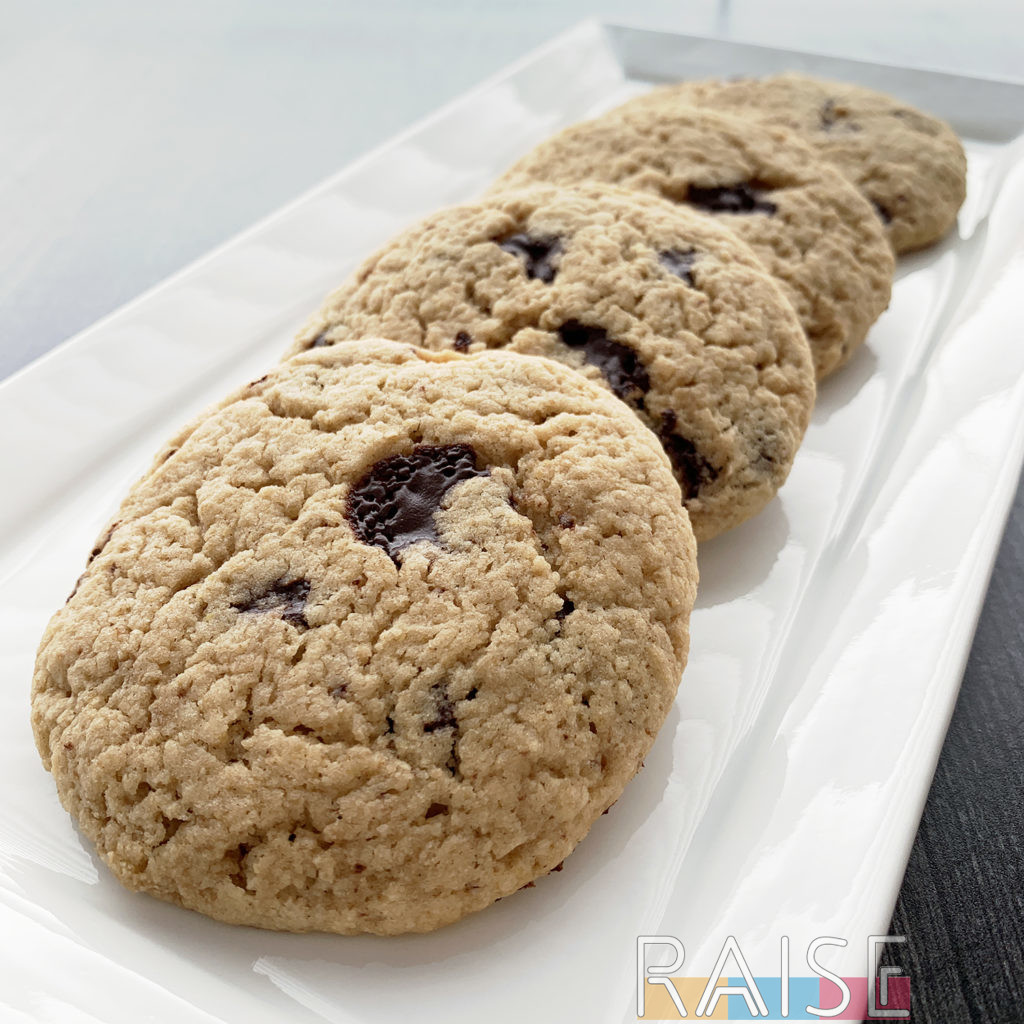
- Refined Sugar Free Chocolate Chip Cookies (GF, V, Top 9 Free, made with zero sugar chocolate chips from Pascha)
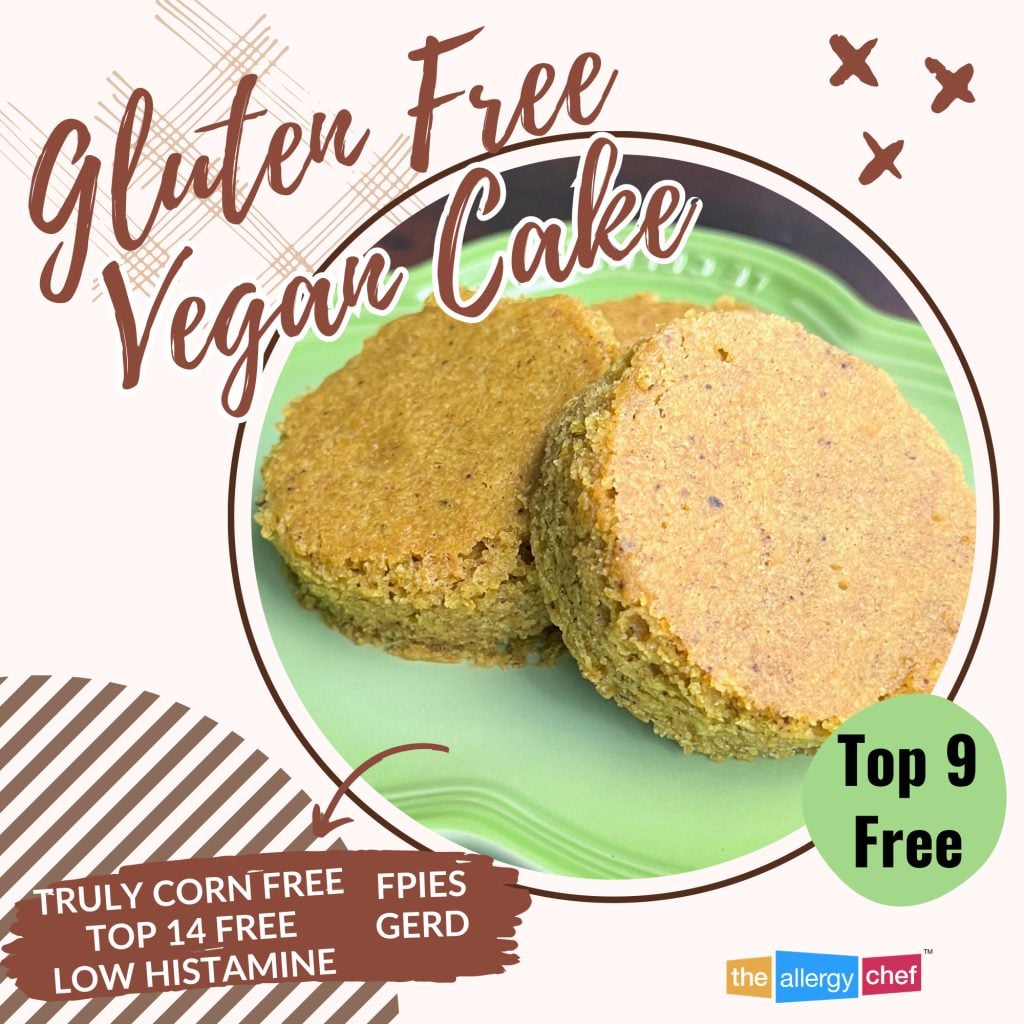
- Ginger Cake Recipe
- Chocolate Cake Date Muffins (an easy recipe, sweetened with dates, and has the flavor profile of moist delicious chocolate cake)
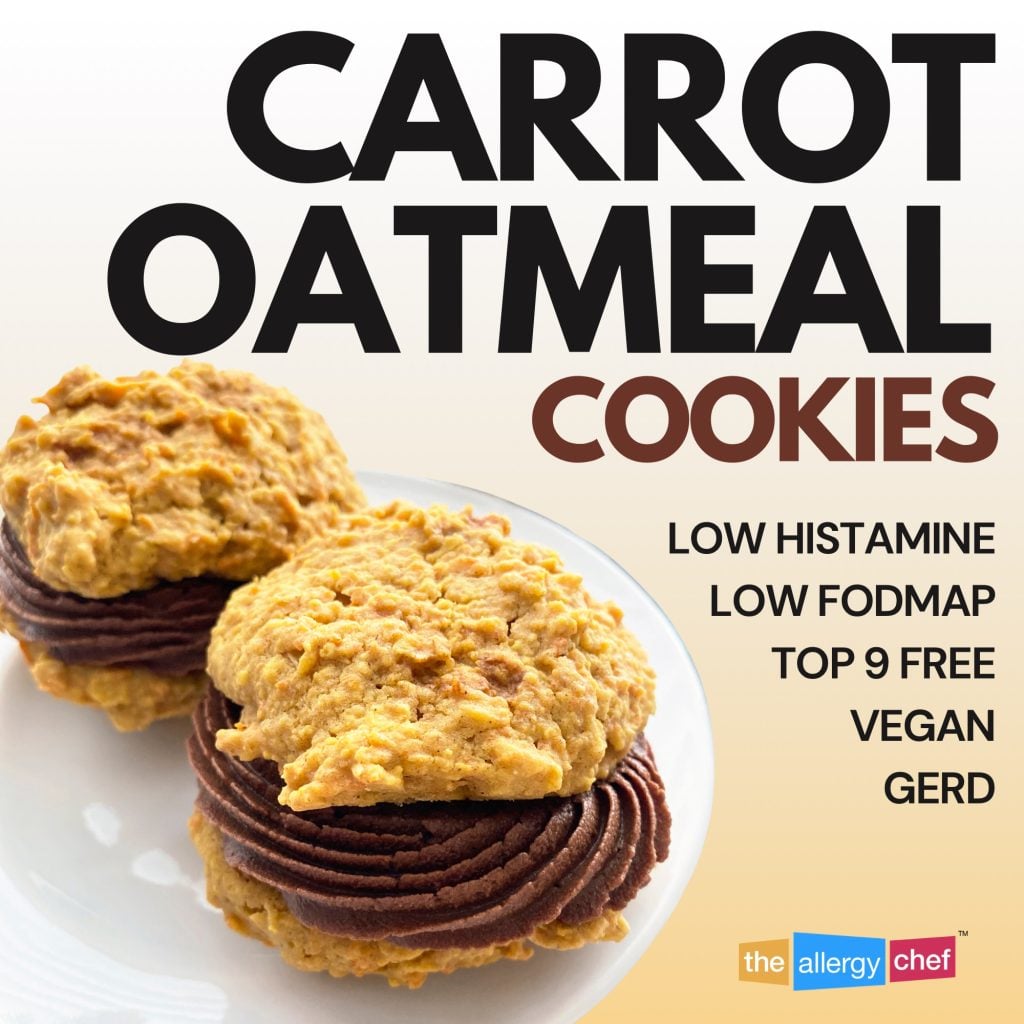
- Carrot Oatmeal Cookies
- Dairy Free Cashew Pumpkin Pudding Recipe (Paleo, Vegan)
 |
 |
 |
 |
 |
 |
Low Sugar Cereals
Before we dive into cereal, there are a couple of things I’d like to point out. First, as a free-from advocate and recipe developer, most of my recommendations will be organic and free from some kind of major allergens. There may be a lot more options outside of my scope.
Second, when choosing breakfast cereals, refer to the serving size, as well as the fiber content before making a final decision. Some cereals look great, but the base ingredients are high on the glycemic index, making them a less than awesome choice for some people.
Breakfast Cereal Brands to Investigate
Here are some brands that make dry cereal that may meet your needs.
- Arrowhead Mills (they make puffed rice and puffed millet cereal, but they don’t stay crunchy long once liquid has been added)
- Awsum Foods (they make a quinoa based cereal)
- Catalina Crunch (grain free)
- Lovebird Foods (cassava based, grain free)
- Magic Spoon
- Seven Sundays
- The Granola Bakery
- The Real Cereal Company
- Three Wishes
Note: several of these cereal brands are also grain free.
Cereal Alternatives
If you can’t find a breakfast cereal that ticks all of your boxes, here are a few more options for an easy breakfast without added sugar.
- Cream of Buckwheat (a gluten-free option, buckwheat is a seed, not a type of wheat)
- Cream of Wheat
- Homemade Granola + Yogurt or Milk
- Museli
- Oatmeal or Overnight Oats
These breakfast cereal alternatives are all easy to make, are a great source of fiber, and you can customize the taste with fruit you love such as fresh strawberries or blueberries.
Final Thoughts
I’m not going to sugar coat it (har har), if you’re going from the Standard American Diet (SAD) to a low/no added sugar diet, there are rough days ahead. However, I also want to encourage you! This is a great time to take control of your health, lower inflammation, improve your overall wellness, and improve your quality of life.
It’s important to remember that no two people are the same. There are a lot of variables that partially determine how an individual will respond to added sugars, including age, gender, genetics, underlying medical conditions, gut health, and more.
From science, medicine, and data, we know that there are a lot of different ways added sugars, when consumed in excessive amounts, can impact children and adults. There’s also a lot we can learn from common sense and intuition. Really focus on that last bit because in recent years, there have been a slew of articles claiming there’s nothing wrong with the current state of the SAD.
Notice I said excessive amounts. And also notice that I said “added”. There are natural sugars found in just about every type of raw ingredient in nature. Additionally, carbs, in the right amounts, are great for most people. Sure there are some who need to avoid them for medical reasons, but for everyone else, you’ll want a balanced diet.
Don’t get super caught up in the marketing messages revolving around food. I’m sure you’ve seen low sugar, low fat, low carb, low sodium, and so on. Know what your body needs and rather than look at buzz words, look at the nutrition facts label. If you need low/no sugar, you’ll want to look at the added sugar line specifically.
From there, strike a balance. Carbs are a good source of energy, and whole grains will generally be the better choice. Fat is critical for your survival. I’m talking clean, healthy, whole food fats here. Fat keeps the brain and other organs moving along nicely. Sodium (salt) is also required for your survival, but not in the amounts you find in SAD processed foods. Vitamins and minerals are also important, so try to choose foods that when looked at over the course of a week, are helping you meet your individual needs.
Whilst those nutrients are important, here’s what a lot of people don’t realize: highly refined and processed sugar, you can absolutely survive without eating another drop. If you never had cane sugar again, you’d be OK. Let that sink in for a moment. That doesn’t mean your diet will be devoid of natural sugars, just that you can absolutely survive without sugar cane.
I really hope this extremely long article has helped you gain a better understanding of how to eliminate sugar from your diet. If you need help with this process, you can book a 1-on-1 consultation with me. I also have bespoke recipe development services available.
Answering Your Questions on Eliminating Sugar From Your Diet
How Can I Eat Low Sugar Foods Easily?
Honestly, it’s going to start by cooking and baking at home, especially if you have a limited budget. Now, if you have loads of cash burning a hole in your pocket, you could find high end restaurants that focus on farm-to-table, or fine dining. They generally use a lot less sugar than the typical American restaurant.
Realistically though, you’re making food at home, and you should focus on eating real, whole foods. Need a quick snack? Get some celery and nut/seed butter. Want breakfast? Heat up oatmeal and stir in a little cinnamon and a chopped date. It’s small choices like these that are going to make eliminating sugar feel a lot easier in the long run.
If you have a sweet tooth and you’re not a baker, see if you can find Keto or Paleo treats in your area. These are generally going to contain either alternative sweeteners or whole food sweeteners.
If you’re stuck on HOW to start, download my free 3 Day Meal Plan: Refined Sugar Free, Gluten Free, Top 8 Allergy Free. It gets you started with ideas, which may be all that you need. You can also look into the Whole 30 Diet which is an easy-ish transition for a lot of people. Above, in the article, I also list other diet types that are naturally low/no sugar, and you could adopt one of those diet types. For each of those diet types, there are lots of cookbooks available that you can purchase, and many come with a meal plan.
Remember though, be careful when adopting special diets. Several were created to treat medical conditions (AIP, GAPs, Keto, SCD) and were not intended for long-term use by healthy individuals. These diets are HIGHLY restrictive and for good reason: the people who need them must eliminate specific foods to heal/recover.
What is a low sugar diet in grams?
This is going to vary by person. In general, I’d say anything that’s 30% or less of the standard RDA, in grams, would be a low sugar diet. However, it’s entirely possible to go the entire day without consuming any added sugars. That’s done by sticking with whole food ingredients as your base and avoiding most packaged foods.
It’s not an easy feat for most, so work with your medical team and keep a detailed food journal so you have a solid understanding of your individual needs and what’s working well for you.
How many grams of natural sugar per day can I have?
How many grams of natural sugar someone can have is going to vary by person. For some people, they have a 10 gram limit per meal whilst others have a 10 gram limit per day. On the flip side, some people don’t have much of a limit so long as the natural sugar is paired with protein and fat.
Ultimately, this is why working with a good medical team and keeping a detailed food journal will be the best bet in the long run. This allows you to track how the natural sugars affect you day in and day out.
Do natural sugars count towards daily sugar intake?
For some people, yes. Most people reading this article won’t need to worry about natural sugars in moderation. For example, if you’re eating 35 dates a day, you should be concerned. That’s a lot of natural sugar to consume. In fact, there’s a lady on Instagram (Glucose Goddess) that has an account dedicated to showing you how natural, artificial, and added sugars ALL spike your blood levels.
She also shows you how meal ordering and exercise can alter the amount of spike. Now, will everyone respond to food identically? Of course not. However, it’s really neat to see the information readout from her blood sugar monitor.
From personal experience with myself and my low/no-sugar kid, I can tell you that natural sugars absolutely count against us. However, I have friends that are the opposite, and that’s why you’ll always hear me saying no two people are the same, and to keep a detailed food journal so you know what your personal needs and limits are.
Can you have too much natural sugar?
This is an individualized question. Generally, the answer is going to be yes, you can have too much natural sugar. However, most people would stop eating naturally from fullness before eating excessive amounts of natural sugar. It’s kind of like apple and orange juice versus eating apples and oranges.
You’d have to eat 5 – 10 apples to get the same amount of apple juice you’d drink in one sitting. Do you really have it in you to eat that many apples in one go? It’s similar with oranges. I know I couldn’t eat that many at once.
Milk on the other hand, which contains a decent amount of natural sugar from the lactose, that’s a lot easier to over-consume. If you knock back a couple of glasses, you’ve consumed quite a few natural sugars, and they’ll hit you all at once.
This is why I’ll always say that a food journal is one of the best tools to employ to help you understand what your limits are.
How do I reduce sugar intake in my diet?
The process of reducing your sugar intake can vary in length depending on what you’re comfortable with. If you want to go all in, a Whole 30 diet for 30 days is a great way to start.
If you’re looking to make long term changes to the everyday things you purchase, start reading labels and then purchase the better-for-you versions of foods. You can find excessive sugar in most pantry goods including nut/seed butters, jellies & jams, cereal, packaged snacks, pasta sauce, condiments, and even bread.
Changing out these kinds of ingredients will automatically reduce your sugar intake. From there, start eating less of foods with added sugars and more of foods with little to no natural sugars. Swap your morning cereal for oatmeal. Instead of cookies at lunch time as a snack, eat carrots instead. These types of swaps will continue to reduce your sugar intake.
Over time, lots of small changes will make a HUGE impact.
How can I satisfy my sweet tooth without sugar?
There are quite a ways you can satisfy your sweet tooth without sugar. Here are a few tasty suggestions to get you started.
Starchy vegetables (carrots, sweet potatoes, etc.) are a great starting point to satisfying a sugar craving without sugar. Whole food sweeteners (medjool dates, applesauce, etc.) are another fantastic option. However, it’s important to note that all of these options will contain natural sugars, so make sure you’re OK with them.
For a quick sugar free kick, pit a date, add a Brazil nut, and sprinkle on salt (smoked salt is even better). It’s the quick and raw version of a Snickers bar.
Power balls made at home are an energy and nutrient dense snack that usually satisfies a sweet tooth. Here’s a chocolate version to try.
Homemade sweet potato pie using unrefined sweeteners is a fantastic dessert. In fact, RAISE has a whole category of refined sugar free desserts. If you have additional dietary restrictions, use the Advanced Recipe Search which has more than 120 filters to choose from.
Dried fruits are going to be a real sweet treat as well. The “trick” is that the water has been removed and the sugars are essentially concentrated. However, remember to eat all sweet things in moderation. Loading up on dried fruits or Paleo desserts is not ideal if you’re eliminating sugar for health reasons.
Is it OK to drink fruit juices when eliminating sugar from my diet?
That’s a question you should ask your healthcare provider. Each person will have a different threshold and daily sugar limit. I know for my low/no-sugar child, fruit juices were absolutely off the menu. Without the fiber content to slow the sugar absorption down, he just couldn’t handle it.
However, if you love the taste of different fruit juices, I suggest getting something like an Aarke or SodaStream, making carbonated water, and adding a small amount of your preferred fruit juice. This will be better than just drinking a full on cup of juice, but will also help satisfy the craving.
What’s the best substitute for white sugar when baking?
The best substitutes will be other granulated sugars that are unrefined. Those are maple sugar, date sugar, and coconut sugar. Each of these substitutes is a 1:1 swap. So if the recipe calls for a cup of white sugar, you’ll use a cup of the unrefined sugar instead (or grams for grams).
Know that unrefined sugars generally taste less sweet when compared to white sugar, so make sure you manage your expectations. Over time though, I think you’ll come to love unrefined sweeteners. I often find that many Americans who make the switch later complain that sweets made with white sugar are “too sweet” for them now.
What are some low sugar cereals kids will enjoy?
It’s hard to say because each child will be different, and what they’re used to is a factor in what they may enjoy moving forward. In terms of taste, my kids would probably say Three Wishes, Nature’s Path, Cascadian Farms, or Magic Spoon. Each brand has some options that are low sugar, but you have to mind the portion size.
It’s really, really, really easy to pour a bowl of cereal that’s three times the listed serving size, so use a kitchen scale when in doubt.
Further Resources
I hope you found this information helpful. If you need more low/no sugar resources, here are several I think you’d enjoy.
- All About Sweeteners and Cane Sugar Alternatives
- 3 Day Meal Plan: Refined Sugar Free, Gluten Free, Top 8 Allergy Free
- RAISE Podcast Episode 18: Sweeteners
- Raw Food Recipes
 |
|