

I’m so glad you’re here because today I’m sharing not one, but five carrot juicing recipes with you. Be sure to use the table of contents to jump around since the whole article is a bit of a read.
We all know that carrots (and their beta carotene) can deliver fantastic health benefits including boosting your immune system, eye health, and more. However, sometimes, you don’t feel like munching on a bunch of baby carrots, or cooking carrots. That is where fresh carrot juice can swoop in and save the day.
Quick Allergy Status (for all five recipes)
Each of the five recipes in this post is: Gluten Free, Top 9 Free, Vegan, Vegetarian, and more. Most are Top 14 Free (one has celery).
The three recipes without pineapple can be made truly corn free, so long as you have a truly source safe of each of the base ingredients (in the United States, almost all pineapples are sprayed with a corn based ripening gas, and getting truly corn free pineapples is incredibly difficult).
None of these recipes are suitable for a low histamine diet, traditional FPIES, or GERD diet.

How to Juice Carrots (and tips)
The good news is, juicing carrots is easy. You’re not about to read through a one thousand word deposition on how to do the task. If you want the absolute best carrot juice, start with raw carrots from a quality farm in your area. Your local farmers market is a good starting point. You’ll find organic, non-organic, and organically grown without certification carrots at a farmers market.
Personally, I choose fresh carrots that are dirty which usually means they haven’t been washed with something I might be allergic to, but to each his own. Take your carrot loot home, wash them well, then run them through your juicer. That’s it!
Yes, you can juice store bought carrots that are pre-washed for ease, and if you aren’t allergic to everything like I am. Optionally, you can remove the carrot tops before juicing your carrots. Also, you don’t need to peel carrots (unless there’s loads of trapped dirt) before juicing them.
Now, the carrot tops. You can use them like you would fresh parsley, cook them with other vegetables, add them to a soup or stew, use them as part of a chimichurri, and the list goes on. You can also just remove the carrot tops and compost them, or toss them if you don’t plan on juicing them.
Carrots are a hard vegetable and release a good amount of juice when juiced. When juicing them alongside other vegetables such as leafy greens, you want to alternate so your juicer can “push out” any remaining leafy greens or other soft vegetables.
If you want to really have fun when juicing carrots, purchase purple carrots, red carrots, and white carrots (not the same thing as parsnips). They can add a fun pop of colour to your juice, along with additional health benefits (different colors = different benefits). And speaking of health benefits, also remember, the health benefits of carrots change if you consume cooked carrots, which is why it’s a good idea to consume a well rounded diet.

What Pairs Well with Carrot Juice
Don’t stop at just juicing carrots (unless a doctor has said otherwise). Where possible, include a range of fresh fruits and fresh vegetables when you make juice at home. When you eat the rainbow, you’re giving your body the building blocks to fight free radicals, develop healthy skin, and really nourish your cells.
Carrot juice will have a natural sweetness (so long as you have good carrots, some can be gross). Knowing that, don’t overwhelm your juice with loads of other sweet ingredients, unless that’s your goal (or you’re making something like popsicles).
If you’re looking to add more juice and volume to your recipes, without loads of natural sugars, cucumbers are an easy fix. The taste is generally pretty neutral (unless you’re using a LOT of them) and since they’re mostly water, they can boost your volume. On the flip side, whilst celery is pretty waterlogged, the taste can be off-putting.
An easy thing to remember in both cooking and juicing: foods that grow together, go together. In the case of carrots, other root vegetables won’t clash when aded to your juice. However, balance has to be part of that picture as well. In the fruit category, carrots pair really well with:
- Apple
- Lemon
- Orange
- Pineapple
- Strawberry
- Tomato
Whilst carrots pair well with a load of other fruits, not all can be juiced (blueberry, mango, etc.). Overall, carrots are like apples in the juicing world: versatile. Personally, I don’t pair them with kiwi, celery, and deep green juices. For everything else, carrots can be on the menu.
Types of Juicers
There are two main types of juicers sold commercially so you can make fresh juice at home: masticating juicer and centrifugal juicer. Many argue that a masticating juicer (sometimes called a slow juicer) is the best type of juicer however, if you’ve been to juice shops, you’ll see that they use centrifuge juicers. I own both, so let me tell you a bit about them.
A centrifuge juicer spins a blade incredibly fast. As the produce hits the blade, soft pulp is ejected to one side whilst juice comes out of the other side. The spinning blade is usually connected to a mesh strainer. You’ll increase the likelihood of clogs in the strainer’s holes if you use the juicer for an extended amount of time. To combat this, in between juices, pour a cup of water into the juicer. That can help clear the strainer’s holes.
Alternatively, a masticating juicer moves slower, but usually produces a higher yield. When we chew, that’s also called mastication. That type of juicer has mechanisms that somewhat behave how our mouthes do when they chew.
What Can They Handle?
Both types of juicers can handle unpeeled ingredients, small-seeded fruits, leafy greens, hard ingredients (carrots, beets, etc.), and more. They both also do well juicing fruits with a hard core, such as pineapple. It’s not advised to juice whole fruits that contain large seeds, as they can damage the blades and mechanisms. If the fruit has large seeds, you’ll want to remove the seeds before juicing. If you’re planning to juice stone fruits (peach, nectarine, etc.), you’ll need to remove the stone (pit) first, no matter what type of juicer you’re using.
With both types of juicers, you’ll want to skip very soft fruit, such as banana. Rather than juice them, it purées them. Be sure to read over the manual of your juicer to fully understand what it can and cannot do well.
I’ll also add this: centrifuge juicers can handle citrus fruits pretty well whilst masticating juicers produce a lower yield. It’s not that they can’t juice the citrus fruits, it’s that they’re less efficient at juicing citrus fruits.

How to Use Carrot Juice Pulp (and Juice Pulp in General)
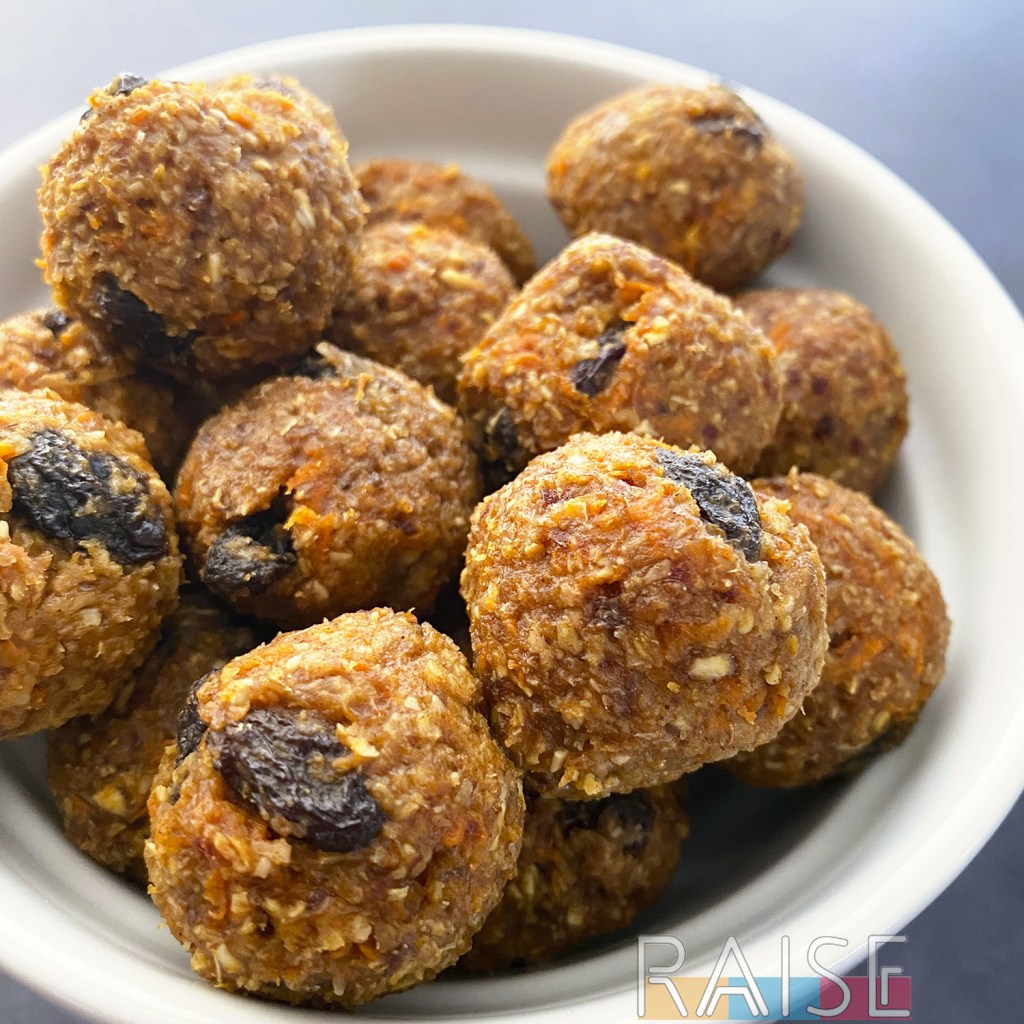
OK, so you’ve bought your fresh carrots, had fun juicing, and now you have all of this pulp left. Should you just toss it? Nope. Carrot juice pulp, and all pulp in general, can be used in other cooking and baking projects. In fact, cooking with the juice pulp is a great way to add more vegetables to your diet if that’s a personal goal that you have.
Tip: If you plan to make something like carrot cake with your pulp, juice the carrots first, remove the pulp and set it aside, then juice everything else.
Another Tip: Freeze juice pulp as ice cubes using a silicone ice cube tray (makes the ejection SOOOOO much easier). You can pop out a few cubes and use them in a soup, stew, chili, or even a smoothie.
More Delicious Ways to Use Your Carrot Juice Pulp
The super cool thing about using juice pulp in recipes is that if you’re feeding a little one or someone that’s a picky/selective eater, mixing it into a sauce etc., is a great way to add nutrition without too much taste. Start with one or two ice cubes in a mixture, then increase that amount over time. Here are tasty ideas to try:
- Carrot Cake (use the carrot juice pulp in place of the shredded carrots in the recipe)
- Carrot & Date Oatmeal (mix 1 carrot juice pulp cube into oatmeal as it cooks along with cinnamon, dash nutmeg, and chopped dates)
- Chocolate Veggie Smoothie (cacao is great at hiding the taste of vegetables [in small amounts], so add pulp cubes to your blender)
- Fruit & Veggie Smoothies (use carrot juice pulp ice cubes in a smoothie, or even a mixed pulp like carrot + kale)
- Lettuce & Carrot Salad (be sure to include additional toppings and a little dressing to boost the flavors)
- Loaded Sloppy Joe (add carrot pulp to the ground meat and when everything is mixed with the sauce and seasonings, you won’t even notice it)
- Pasta Sauce (almost any homemade pasta sauce can be boosted with pulp ice cubes)
- Risotto (the creamy nature of risotto lends itself to allowing you to add 1 or 2 carrot pulp cubes without really noticing)
- Smoked Carrot Pizza (you can mix carrot pulp with liquid smoke, seasonings, and optional ground meat, use that to top a pizza)
- Veggie Oatmeal Cookies (the texture of oatmeal cookies lends itself to allowing for some mix-ins, like a little juice pulp)

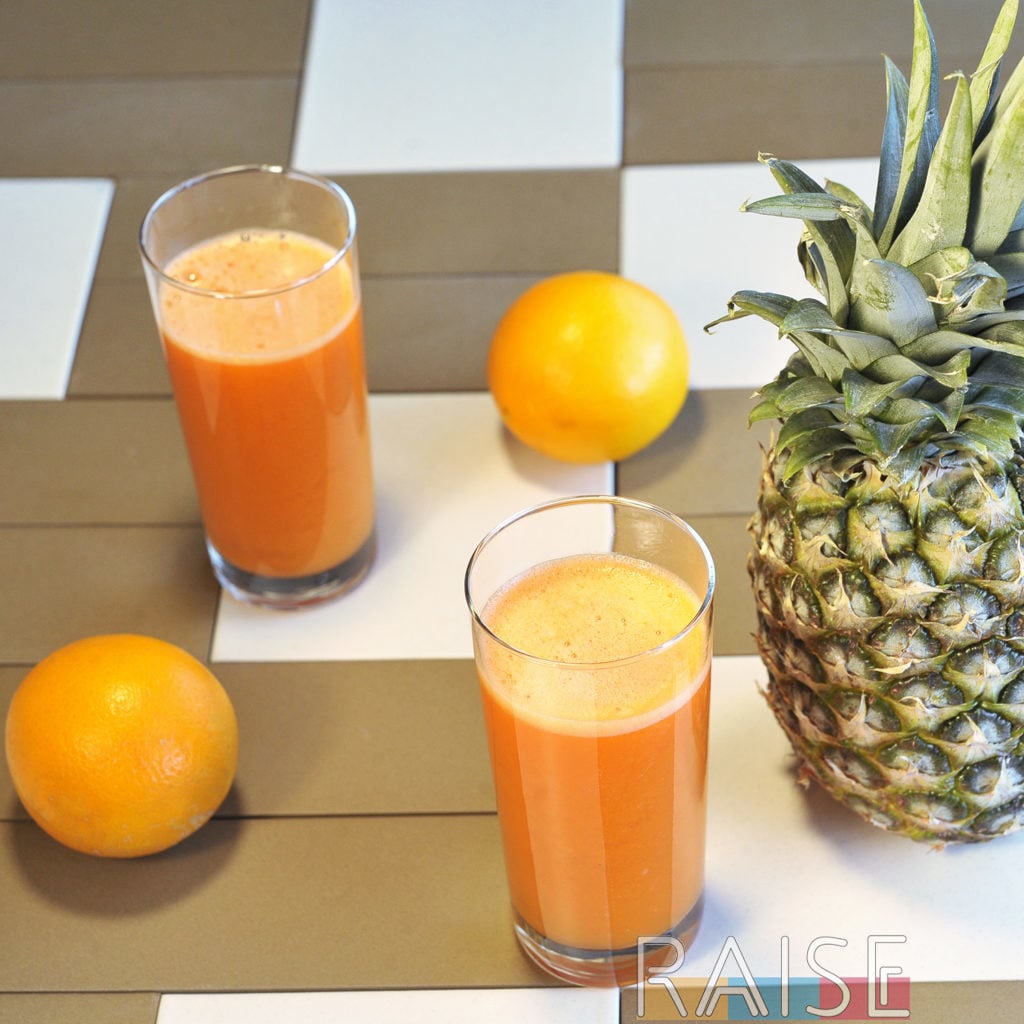
Pineapple Carrot Orange Juice Recipe
This easy carrot juice recipe gives you absolute tropical vibes. Be sure to serve this tasty juice in a cup with a little umbrella.
Yield: 40+ Ounces (1.1L+)
Juice Ingredients
- 1 Large Organic Pineapple
- 1 Organic Papaya
- 4 Large Organic Carrots
- 4 Organic Oranges
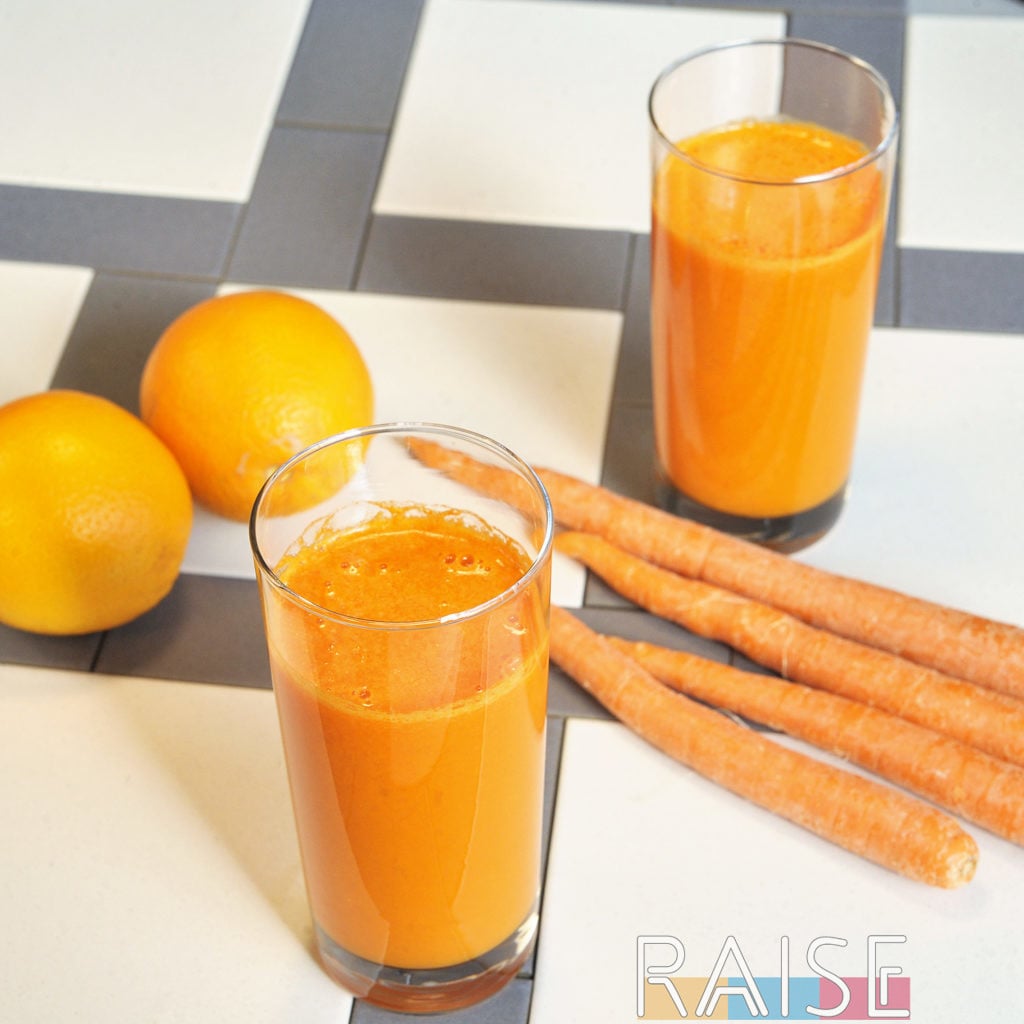
Tangy Citrus Carrot Juice Recipe
Kumquats are a super duper sour fruit, which can be really fun if you’re a fan. If you’re not a fan, swap for a fruit you do enjoy. You can also do something like 2 parts strawberries and one part beets for an interesting flavor profile.
Yield: 50+ Ounces (1.4L+)
Juice Ingredients
- 10 Large Organic Carrots
- 450g Organic Kumquats (16 ounces)
- 5 Organic Oranges
Note: You’ll need to peel the oranges, but you can leave the kumquat skin on.
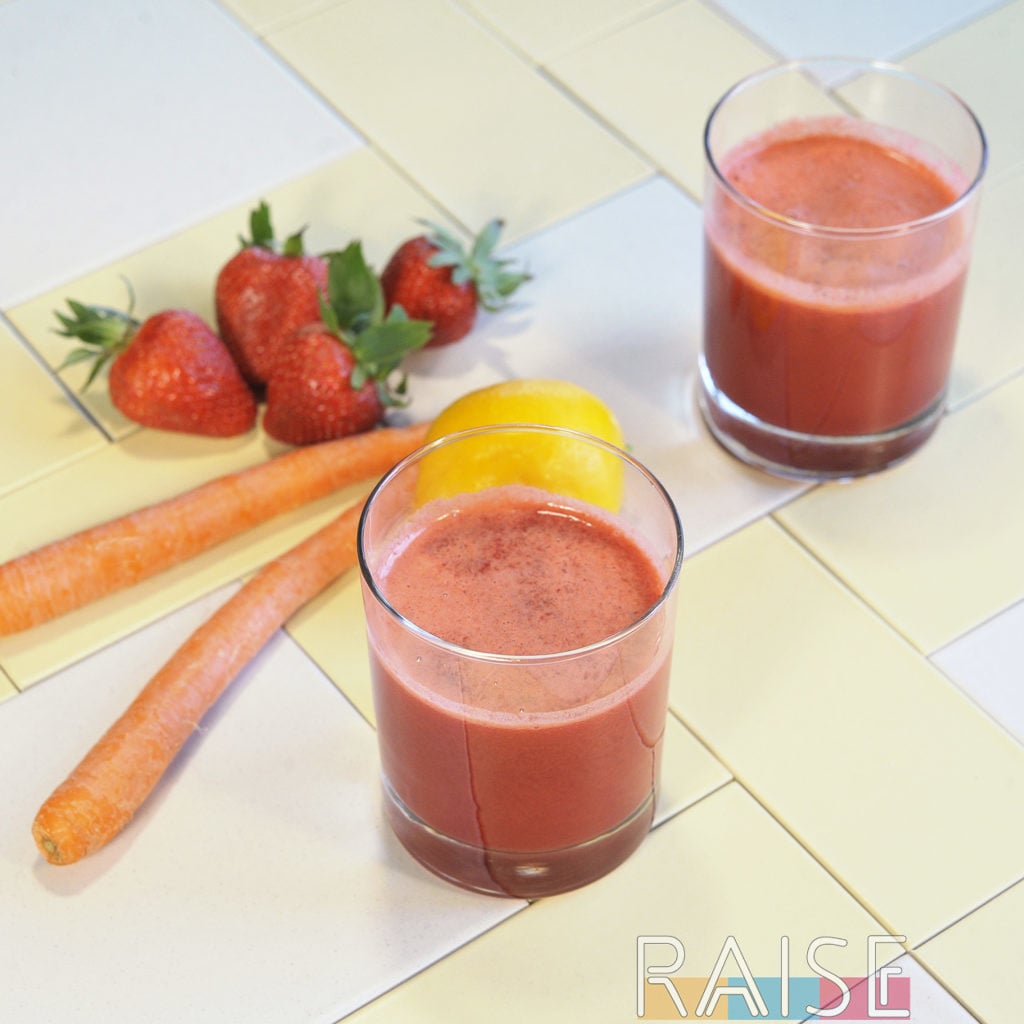
Strawberry Carrot Juice Recipe
If you’re a fan of leafy greens, this carrot juice recipe is a great place to add them into the mix. There’s a lot of natural sweetness that can mask the natural bitterness of said veggies. Also, if you’re a fan of beet juice, or want to have more beets in your diet, this recipe can easily accommodate a couple of beets in the mix.
Yield: 90+ Ounces (2.5L+)
Juice Ingredients
- 1 Large Organic Pineapple
- 900g Organic Strawberries (32 ounces/2 lbs)
- 6 Large Organic Carrots
- 1 Organic Lemon
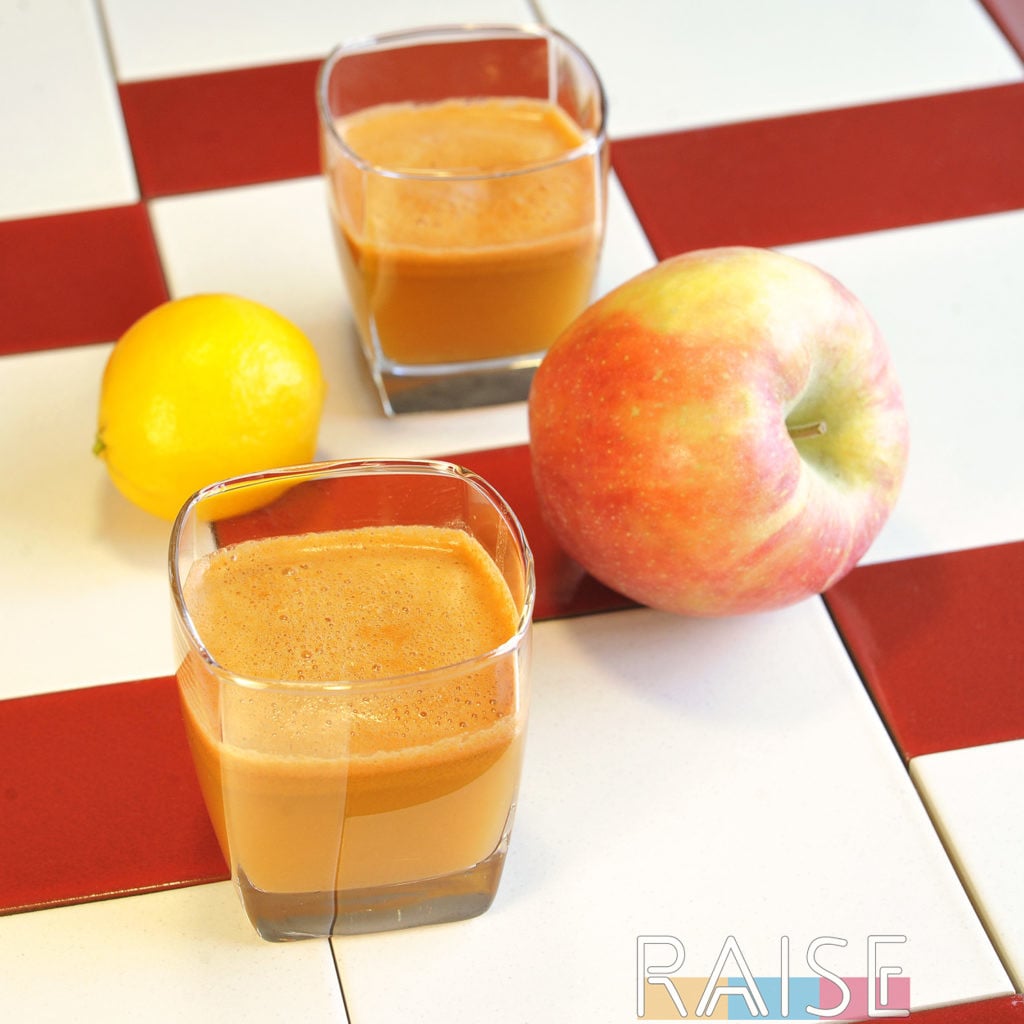
Apple Carrot Celery Juice Recipe
Juice Ingredients
My kids aren’t ginger fans (in reference to juice), but if you are, add fresh ginger to this recipe in an amount that makes sense to you. It can give your homemade juice another layer of nutrition, and put a little pep in your step after the fiery ginger zing.
Yield: 60+ Ounces (1.7L+)
- 8 Medium Organic Orange Carrots
- 2/3 Bunch Organic Celery
- 1 Organic Lemon
- 9 Small Organic Pink Lady Apples
Note: I call for small apples because they fit down the juicer chute and you don’t need to spend extra time cutting them down.
Sweet and Sour Carrot Juice Recipe
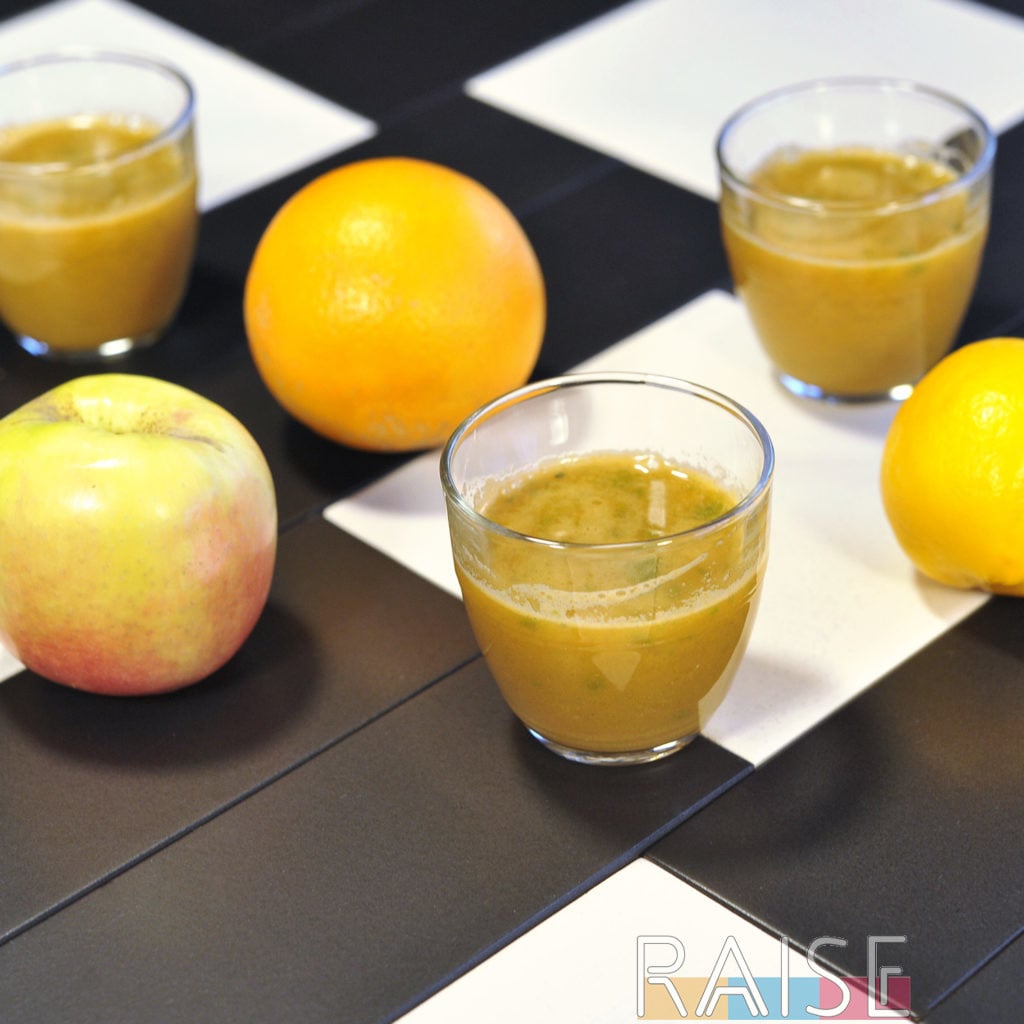
This homemade carrot juice recipe has fantastic sour notes from the lemons. If you’re not a lemon juice fan, or not a sour fan, you can omit the lemons.
Yield: 60+ Ounces (1.7L+)
Juice Ingredients
- 6 Organic Orange Carrots
- 8 Small Organic Pink Lady Apples
- 4 Organic Oranges
- 2 Organic Lemons
- 1 Bunch Organic Flat Leaf Parsley
Note: I call for small apples because they fit down the juicer chute and you don’t need to spend extra time cutting them down.
Carrot Juicing Recipe Directions (for all five recipes)
Here are the steps you’ll want to take for each of these carrot juice recipes:
- Purchase peak/rip fruits and vegetables (for the best juicing results).
- Wash the produce well to remove dirt.
- For citrus fruits, remove the peel. It’s OK if pith remains. If you’re like me and you enjoy batch cooking etc., zest your citrus first, and freeze it for future cooking and baking.
- For pineapples, remove the top, outer skin, and cut the flash away from the core.
- For Papaya, cut a little piece off the bottom so it stands easily. Use a serrated knife or paring knife to remove the skin. Cut in half to open, remove all of the seeds, and it’s ready to be juiced.
- Removing the green tops of strawberries is optional (hulling), but you’ll have a smoother juice if you remove the tops.
- Now that all of the produce is prepped, run it through your juicer. If you use a centrifugal juicer like me, be sure to vary the speed as needed. Softer ingredients such as citrus fruit should be juiced on the lowest speed (1 for me) and hard fruits and vegetables like apples and carrots should be juiced on the highest speed (5 for me).
- Generally, the total time to make a batch of homemade juice is 20 minutes from start to finish.
- After juicing your produce, store any leftovers, then pour a cup of water into the juicer chute to help get the cleaning process started.
- If using a centrifugal juicer, even if the parts are dishwasher safe, as soon as you’re done juicing, use the scrub brush to clean the mesh strainer in your juicer. TRUST ME. You don’t want that to sit because once the pulp dries on it, it gets hard, and becomes difficult to clean.

How to Store Leftover Juice
Fresh homemade juice is raw and perishable. Additionally, as soon as you make the juice, the oxidization process has started, and over the course of several days, your juice will lose some of the nutrients and can develop some bitterness (especially with citrus juices).
Any leftovers you have should be stored in an airtight container in your refrigerator. You can put your juice in a large container, or you can pre-portion it into smaller containers so you can just grab a jar and drink it when you’re ready.
If you can’t get through your juice in the next day or two, plan to freeze leftovers in portion sizes that make sense for you. In the case of citrus juices, sometimes, it’s bitter and gross once thawed, so keep that in mind. You can also do an overnight test freeze/thaw of your juice to see how it tastes if it’s been frozen.
Personally, I tend to make HUGE batches of juice for my kids and leave it in the fridge in jugs with a pour spout and they get through it all in a few days.

Creative Ways to Use Carrot Juice Leftovers
You can absolutely drink your nutritious juice straight, orrrrrrr, you can have some fun. If you ask me, homemade juice is like liquid gold because there’s SO much you can do with it, all whilst adding a nutritional boost to your food creations. Here are just a few creative ways you can use leftover carrot juice:
- Baby Teethers (if you have a little one and want to make cold sugar free popsicles for them to gnaw on, or fill silicone self-feeders, your carrot juice is a good option)
- Braised Carrots (braising carrots in carrot juice is NEXT level)
- Carrot Boosted Smoothies (use carrot juice as part of the liquid content in a smoothie)
- Carrot Cashew Pepper Dip (combine cashews, carrot juice, and bell peppers in a high speed blender, for extra sweetness add a date or two)
- Carrot Muffins (use the juice as part of the liquid content alongside some of the carrot juice pulp)
- Creamy Carrot Risotto (replace some of the milk or broth/stock with your fresh carrot juice)
- Enhanced Carrot Cake (swap some of the milk in your carrot cake recipe for homemade carrot juice)
- Fruit & Veg Popsicles
- Ice Cream (replace half of your milk with your carrot juice for a real treat)
- Make an Enhanced Broth or Stock (you can add your fresh juice to a homemade broth/stock for an enhanced veggie flavour)
- Juice Pasta Sauce (adding carrot juice to pasta sauce brings a nice natural sweetness to the table)
- Pressure Cooker Soup or Stew (use carrot juice as part of the liquid content that goes into your pressure cooker for awesome results)
- Carrot Juice Ice Cubes (store leftovers in a silicone ice cube tray for easy ejecting, and use cubes in smoothies, etc.)
These ideas are only scratching the surface, so dig deep and think of fun ways you can use leftover carrot juice the next time you make fresh juice at home.

The Best Juicer to Use for These Carrot Juice Recipes
When I make these five carrot juice recipes, I use a juicer similar to this one (I have the older version of this model). I also have this juicer, but I don’t love it for citrus juices.
I’d encourage you to use a centrifugal juicer for these recipes, however, if you only have a masticating juicer, use it. It’s better have some juice than no juice.
How to Make Juice Without a Juicer
OK, so you found these great recipes, want to get busy juicing, and you’re like, hold on. I need to spend a bunch of money on a good juicer? Nope, I’m out. I get it, but, there are ways around the juicer, so long as you have time and some elbow grease. For reference, I use a high-speed blender like this one, and you’re going to want POWER if you want to try these options. Here are a few methods to choose from:
Nut Milk Bag + High Speed Blender
This is a nut milk bag (these are reusable bags) and it can generally strain off a good amount of pulp. You can use it to make oat milk, rice milk, tree nut milk, and homemade juice. However, it takes TIME to properly strain. Additionally, the best way to use it is to hang it on a cabinet handle and let the juice drip into a container underneath, but this can also stain your cabinets over time (ask me how I know).
If you don’t mind getting your hands wet and dirty, you can squeeze the bag and that releases the juice a lot faster. Overall, a nut milk bag will be the most cost effective way to get started. You blend everything in your blender, then strain with the nut milk bag.
If your blend is thick, you can always add in a cup of water, blend on high, then strain. The final juice is a little diluted, but it’s also not the end of the world.
Fine Mesh Strainer + High Speed Blender
I can’t lie, this is one of the worst ways to make fruit juices and vegetable juices at home, but! It works. It just takes TIME and more patience than I have, even on a good day.
You blend your produce in a high-speed blender, place the fine mesh strainer over a large bowl, then pour the blender contents in and let it strain. You can also use a spoon to mix it around so the pulp moves out of the way so the juice can strain out.
T I M E <<< That is the issue here. Also, some strainers have holes so small that it seems like the juice is hindered. Like with the nut milk bag method, you can blend a cup of water into your produce to encourage better straining. However, only use this method if for some wild and crazy reason you can’t purchase a nut milk bag.
Cheese Cloth + High Speed Blender
This is a middle of the road option that can get you some juice, but the yield won’t be epic or anything. Plus, you’ll need to get your hands dirty and wet since this is a cloth, not a bag.
Blend your produce (add a cup of water if needed), then lay the cheese cloth over a large pot or bowl. Pour the blender contents over the cloth (you’ll have to work in batches), pull the cloth upward to form a quasi-bag, then squeeze out the liquid. Remove the pulp and repeat.
This method will take even longer than the fine mesh strainer method, so be warned.
The Grand Takeaway
Ultimately, homemade juice can be made with alternative options. However! If you want to consume juice regularly, save up for a proper juicer, or see if Santa will get you one for Christmas.
Answering Your Carrot Juicing Recipe Questions
Should I only juice with organic carrots?
Honestly, that’s going to depend on what kind of food values you have. Personally, I only use organic carrots, however, that’s not always a financial option for everyone. If you’re in that boat, I suggest checking out the EWG Clean 15 and Dirty Dozen each year. They’ll let you know which produce should be prioritized when it comes to spending your organic dollars. The list gives you an overview of pesticides, residue, and more.
You can also get your hands dirty and grow your own organic carrots at home which can be a really fun gardening project.
Are homemade juices healthy?
I get this kind of question all the time, and the hard truth is simple: the term healthy is an unregulated term and will mean something different to each person that you ask. For example, someone who has lived on the Standard American Diet (SAD) for years might think fruit loaded juices are healthy homemade juices.
On the other hand, a gym bro that’s Keto and lifts 5 times a week might look at that same juice and call it devil’s brew (and not in a nice way). Healthy is all about context, nuance, and a persons hyper individual needs.
Another variable is the person’s current state of being. For someone that’s deficient in a wide range of vitamins and minerals, homemade juices might be an excellent option. On the other hand, for someone that needs to lose weight or dial in their consumed sugars, homemade juice may not be the best tool for them.
Ultimately, healthy homemade juices are juices that nourish you, take your needs into consideration, and meet you where you are.
Can I make homemade carrot juice in my food processor?
Technically yes, but also no. The speed of a food processor, along with the blade type isn’t the best option for making homemade carrot juice. You’d be better off with the high-speed blender method, then straining.
Your food processor will be better for making some doughs, chopping vegetables, and so on.
Where can I purchase the best carrots for homemade carrot juice?
Personally, I’ve gotten the best carrots for homemade carrot juice at a farmers market in the city. I’ve also had great results when using CSA boxes and services like Good Eggs where they get the produce from local farms.
My kids will also tell you, the best juice is made with organic produce. However, if that’s not in your budget, don’t worry. It’s better to have something, rather than nothing.
Is drinking homemade juice bad for your blood sugar?
It’s important to remember that this article is not medical advice. In most cases, no, drinking homemade juice isn’t bad for your blood sugar. However, I could ask, is eating raw honey bad for your blood sugar and get a similar answer.
And yet, if we gorge on homemade juice, or raw honey, it’s going to be bad for you at some point. It’s usually going to come down to moderation, and eating foods and drinking beverages that nourish YOU. Not me, not your neighbor, and not the older adults you were talking to at the health food store last week.
Homemade juice starts with simple ingredients, contains vital nutrients, and generally has a great nutrition profile. If you want to get the best bang for your buck, combine fruits, vegetables, and herbs in your juice, rather than just drinking straight fruit juice.
Can I use store bought lemon juice rather than juice fresh lemons?
Fresh organic lemons are going to have a better nutrient profile when compared to store bought lemon juice, and that’s because the juice at the store isn’t raw. To make it shelf stable, it has to be preserved in one manner or another.
However, if you’re short on time or don’t have fresh lemons at your local grocery store or farmers market, you can totally juice raw carrots, then pour a little lemon juice in the mix to liven things up. You could also add a little fresh finger, or even juice a fresh herb like parsley to further boost the nutrition of your home made carrot juice.
Is there a best time to drink homemade juice?
For the average person, no, there’s no best time. Some say it should be the first thing you consume in the morning whilst others say warm water with lemon juice and fresh ginger are the best things to have in the morning. Then there’s the camp that says the first thing you should have in the morning is water with salt. Oh, and the water and baking soda folks as well. See my point?
It’s all going to depend on what expert you ask when the hard truth is, for the average, generally healthy person, you can consume your juice any time of the day that makes you feel good and nourished.
Now, if you’re someone with an underlying medical condition, hormonal issues, weight issues, and so on, it’s important to work with your medical team, as they may advise you to consume your juice at a particular time of the day. They may also have you stop eating and drinking (besides water) after a certain time in the evening to make sure your melatonin, cortisol, and other critical hormones have time to balance out.
Can I juice bell peppers for extra vitamin C?
Technically, yes, you can add raw bell peppers to your juice recipes. I’d suggest using orange, red, or yellow bell peppers since these will register as a little sweeter. However, bell peppers don’t yield a tonne of juice when compared to other fruits and vegetables. You may want to eat a whole raw bell pepper so you have less waste. Well, unless you have an epic plan for the juice pulp.
What’s a good carrot substitute in juice if I have a carrot allergy?
In terms of function, the best carrot substitute will be parsnips. If you’d like to bring back some of the natural sweetness that carrot brings to the table, you could add a little butternut squash to your juice blend, or a naturally sweet fruit such as apples. Just be careful with apples since it’s easy to create sugar bombs and have juice that punches you in the face with sweetness if you use too many, or an apple variety that’s mega sweet.